Kirjojen hintavertailu. Mukana 11 244 527 kirjaa ja 12 kauppaa.

Kirjahaku

Etsi kirjoja tekijän nimen, kirjan nimen tai ISBN:n perusteella.

8 kirjaa tekijältä Harold Kaplan

Henry Adams and the American Naturalist Tradition
The naturalist tradition in American fiction was a product of the tremendous changes wrought in late nineteenth-century America by the development of science and technology and by the intellectual upheavals associated with the ideas of Darwin, Marx, Nietzsche, and Freud. This book is an account of naturalism, perhaps the strongest and most influential intellectual tradition or, as Harold Kaplan would argue, mythology to affect modern American literature and culture.Kaplan approaches the naturalist writers through a study of Henry Adams. He sees in Adams the paradigmatic intelligence of his time a prophetic mind, though not a seminal one and a man absorbed with the twin notions of power and order. Adams's major work illustrates the joining of a literary imagination and moral temperament with an almost obsessive response to the science, economic life, and politics of his world. Adams's work exemplifies what Kaplan calls the myth of metapolitics a view of human struggle and fate profoundly dominated by naturalist concepts of power.Kaplan then turns to the fascination that power in its various manifestations material, moral, social, political held for writers such as Dreiser, Norris, Crane, and others. Their dramatic plots, characters, and allegorical images are examined in detail. In wider reference, this book should concern those who are interested in problems of modern ethics and politics in the effort to harmonize concepts of value with images of power and natural order.
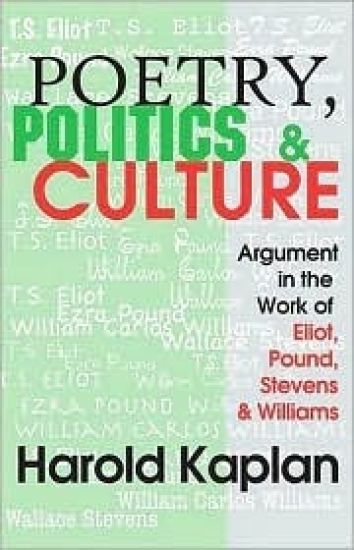
Poetry, Politics, and Culture

Poetry, Politics, and Culture

Harold Kaplan

Routledge
2017
sidottu
A salient feature of modern poetics is its direct connection with cultural history and politics. Among the great American poets of the twentieth century, Wallace Stevens and William Carlos Williams offer a significant contrast with T. S. Eliot and Ezra Pound. Where the latter advocated a theocentric or reactionary response to the cultural crises of modernity, the former affirmed an essentially humanist and democratic social and aesthetic ethos. In Poetry, Politics, and Culture, Harold Kaplan offers a penetrating comparative study of these representative and distinctively influential poets.All four poets wrote in an atmosphere of cultural crisis following World War I, caught as they were between outmoded belief systems and various forms of artistic and political nihilism. While each believed in poetry as a source of cultural values and beliefs, they nevertheless experienced loss of confidence in their own vocation in a world characterized by scientific, rationalist thinking and the mundane struggle for survival. For each, therefore, the poetic imagination was a means of restoring order, or building a new civilization out of chaos. In trying to define a revitalized culture, the four exemplified the perennial quarrel between Europe and America.
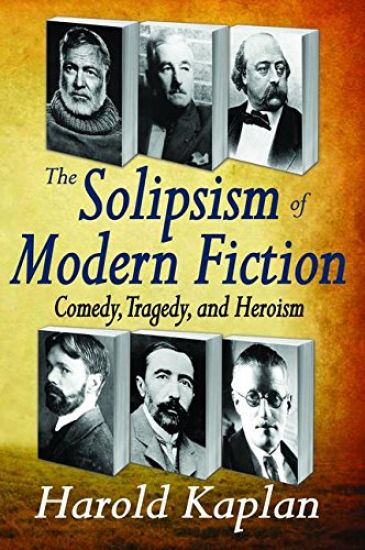
The Solipsism of Modern Fiction

The Solipsism of Modern Fiction

Harold Kaplan

Routledge
2017
sidottu
In The Solipsism of Modern Fiction, Harold Kaplan deals with the problem of action and its adequate motive in the modern novel. In the nineteenth and twentieth centuries modern scientific knowledge abandoned the human-centered view of the universe and thus the fictional modes that had been rooted in religion or myth. The result for fiction was a radical skepticism on the part of the protagonist who now appeared as a reflective, self-critical, passive figure lacking the dynamism of the epic hero or religious seeker.One response to the scientific worldview was the naturalism of Zola and his followers in which the action of characters is determined by social or biological forces. Kaplan, however, focuses his study on such novelists as Flaubert, Joyce, Conrad, Faulkner, Lawrence, and Hemingway who dramatized the isolated individual consciousness in contention with the world and with the ambiguity of their own motivations.The Solipsism of Modern Fiction deals with several related topics that grow from one source, the crisis of knowledge in modern intellectual history. The effects of solipsism and of moral passivity, the split consciousness that divides action and understanding, the perspectives of primitive naturalism and stoic naturalism, the variations of the comic mood, and the example of tragedy, are all themes that are dramatized in Kaplan's readings of Madame Bovary, Light in August, Ulysses, Lord Jim, and other exemplary modern novels that associate themselves with the problem of self-criticism, knowing, and acting. Written by one of the outstanding literary scholars of our time, this book will inspire new generations of readers and writers.
Poetry, Politics, and Culture

Poetry, Politics, and Culture

Harold Kaplan

AldineTransaction
2007
nidottu
A salient feature of modern poetics is its direct connection with cultural history and politics. Among the great American poets of the twentieth century, Wallace Stevens and William Carlos Williams offer a significant contrast with T. S. Eliot and Ezra Pound. Where the latter advocated a theocentric or reactionary response to the cultural crises of modernity, the former affirmed an essentially humanist and democratic social and aesthetic ethos. In Poetry, Politics, and Culture, Harold Kaplan offers a penetrating comparative study of these representative and distinctively influential poets.All four poets wrote in an atmosphere of cultural crisis following World War I, caught as they were between outmoded belief systems and various forms of artistic and political nihilism. While each believed in poetry as a source of cultural values and beliefs, they nevertheless experienced loss of confidence in their own vocation in a world characterized by scientific, rationalist thinking and the mundane struggle for survival. For each, therefore, the poetic imagination was a means of restoring order, or building a new civilization out of chaos. In trying to define a revitalized culture, the four exemplified the perennial quarrel between Europe and America.
The Solipsism of Modern Fiction

The Solipsism of Modern Fiction

Harold Kaplan

AldineTransaction
2010
nidottu
In The Solipsism of Modern Fiction, Harold Kaplan deals with the problem of action and its adequate motive in the modern novel. In the nineteenth and twentieth centuries modern scientific knowledge abandoned the human-centered view of the universe and thus the fictional modes that had been rooted in religion or myth. The result for fiction was a radical skepticism on the part of the protagonist who now appeared as a reflective, self-critical, passive figure lacking the dynamism of the epic hero or religious seeker.One response to the scientific worldview was the naturalism of Zola and his followers in which the action of characters is determined by social or biological forces. Kaplan, however, focuses his study on such novelists as Flaubert, Joyce, Conrad, Faulkner, Lawrence, and Hemingway who dramatized the isolated individual consciousness in contention with the world and with the ambiguity of their own motivations.The Solipsism of Modern Fiction deals with several related topics that grow from one source, the crisis of knowledge in modern intellectual history. The effects of solipsism and of moral passivity, the split consciousness that divides action and understanding, the perspectives of primitive naturalism and stoic naturalism, the variations of the comic mood, and the example of tragedy, are all themes that are dramatized in Kaplan's readings of Madame Bovary, Light in August, Ulysses, Lord Jim, and other exemplary modern novels that associate themselves with the problem of self-criticism, knowing, and acting. Written by one of the outstanding literary scholars of our time, this book will inspire new generations of readers and writers.
Henry Adams and the American Naturalist Tradition
The naturalist tradition in American fiction was a product of the tremendous changes wrought in late nineteenth-century America by the development of science and technology and by the intellectual upheavals associated with the ideas of Darwin, Marx, Nietzsche, and Freud. This book is an account of naturalism, perhaps the strongest and most influential intellectual tradition or, as Harold Kaplan would argue, mythology to affect modern American literature and culture.Kaplan approaches the naturalist writers through a study of Henry Adams. He sees in Adams the paradigmatic intelligence of his time a prophetic mind, though not a seminal one and a man absorbed with the twin notions of power and order. Adams's major work illustrates the joining of a literary imagination and moral temperament with an almost obsessive response to the science, economic life, and politics of his world. Adams's work exemplifies what Kaplan calls the myth of metapolitics a view of human struggle and fate profoundly dominated by naturalist concepts of power.Kaplan then turns to the fascination that power in its various manifestations material, moral, social, political held for writers such as Dreiser, Norris, Crane, and others. Their dramatic plots, characters, and allegorical images are examined in detail. In wider reference, this book should concern those who are interested in problems of modern ethics and politics in the effort to harmonize concepts of value with images of power and natural order.