Kirjojen hintavertailu. Mukana 12 180 879 kirjaa ja 12 kauppaa.

Kirjahaku

Etsi kirjoja tekijän nimen, kirjan nimen tai ISBN:n perusteella.

10 kirjaa tekijältä Harri Englund

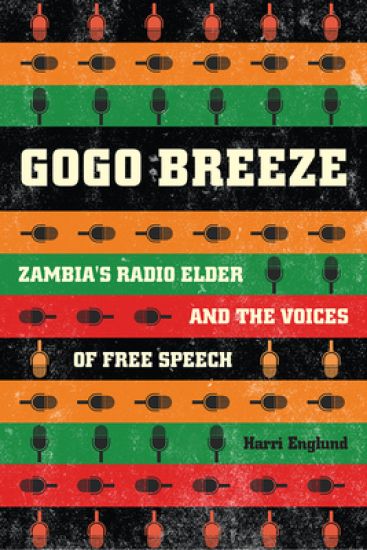
Gogo Breeze

Gogo Breeze

Harri Englund

University of Chicago Press
2018
sidottu
When Breeze FM Radio, in the provincial Zambian town of Chipata, hired an elderly retired school teacher in 2003, no one anticipated the skyrocketing success that would follow. A self-styled grandfather on air, Gogo Breeze seeks intimacy over the airwaves and dispenses advice on a wide variety of grievances and transgressions. Multiple voices are broadcast and juxtaposed through call-ins and dialogue, but free speech finds its ally in the radio elder who, by allowing people to be heard and supporting their claims, reminds authorities of their obligations toward the disaffected. Harri Englund provides a masterfully detailed study of this popular radio personality that addresses broad questions of free speech in Zambia and beyond. By drawing on ethnographic insights into political communication, Englund presents multivocal morality as an alternative to dominant Euro-American perspectives, displacing the simplistic notion of voice as individual personal property an idea common in both policy and activist rhetoric. Instead, Englund focuses on the creativity and polyphony of Zambian radio while raising important questions about hierarchy, elderhood, and ethics in the public sphere. A lively, engaging portrait of an extraordinary personality, Gogo Breeze will interest Africanists, scholars of radio and mass media, and anyone interested in the history and future of free speech.

Gogo Breeze

Gogo Breeze

Harri Englund

University of Chicago Press
2018
nidottu
When Breeze FM Radio, in the provincial Zambian town of Chipata, hired an elderly retired school teacher in 2003, no one anticipated the skyrocketing success that would follow. A self-styled grandfather on air, Gogo Breeze seeks intimacy over the airwaves and dispenses advice on a wide variety of grievances and transgressions. Multiple voices are broadcast and juxtaposed through call-ins and dialogue, but free speech finds its ally in the radio elder who, by allowing people to be heard and supporting their claims, reminds authorities of their obligations toward the disaffected. Harri Englund provides a masterfully detailed study of this popular radio personality that addresses broad questions of free speech in Zambia and beyond. By drawing on ethnographic insights into political communication, Englund presents multivocal morality as an alternative to dominant Euro-American perspectives, displacing the simplistic notion of voice as individual personal property an idea common in both policy and activist rhetoric. Instead, Englund focuses on the creativity and polyphony of Zambian radio while raising important questions about hierarchy, elderhood, and ethics in the public sphere. A lively, engaging portrait of an extraordinary personality, Gogo Breeze will interest Africanists, scholars of radio and mass media, and anyone interested in the history and future of free speech.
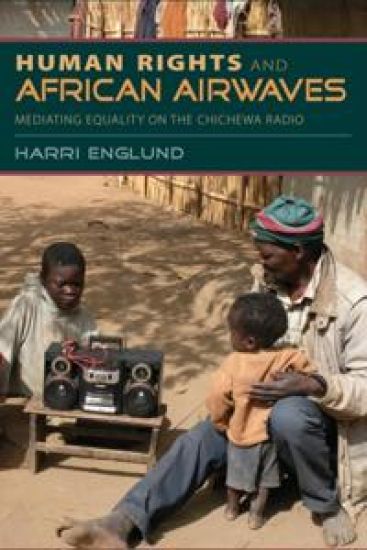
Human Rights and African Airwaves

Human Rights and African Airwaves

Harri Englund

Indiana University Press
2011
pokkari
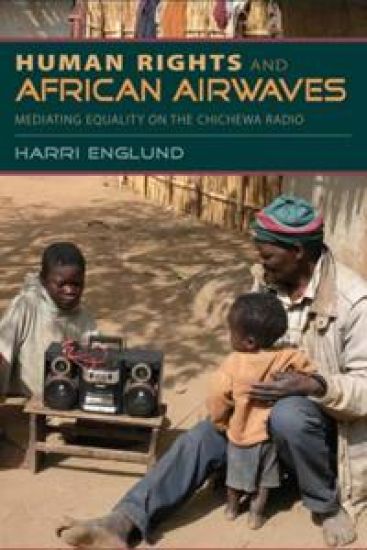
Human Rights and African Airwaves focuses on Nkhani Zam'maboma, a popular Chichewa news bulletin broadcast on Malawi's public radio. The program often takes authorities to task and questions much of the human rights rhetoric that comes from international organizations. Highlighting obligation and mutual dependence, the program expresses, in popular idioms and local narrative forms, grievances and injustices that are closest to Malawi's impoverished public. Harri Englund reveals broadcasters' everyday struggles with state-sponsored biases and a listening public with strong views and a critical ear. This fresh look at African-language media shows how Africans effectively confront inequality, exploitation, and poverty.
Human Rights and African Airwaves

Human Rights and African Airwaves

Harri Englund

Indiana University Press
2011
sidottu
Human Rights and African Airwaves focuses on Nkhani Zam'maboma, a popular Chichewa news bulletin broadcast on Malawi's public radio. The program often takes authorities to task and questions much of the human rights rhetoric that comes from international organizations. Highlighting obligation and mutual dependence, the program expresses, in popular idioms and local narrative forms, grievances and injustices that are closest to Malawi's impoverished public. Harri Englund reveals broadcasters' everyday struggles with state-sponsored biases and a listening public with strong views and a critical ear. This fresh look at African-language media shows how Africans effectively confront inequality, exploitation, and poverty.
Prisoners of Freedom

Prisoners of Freedom

Harri Englund

University of California Press
2006
pokkari
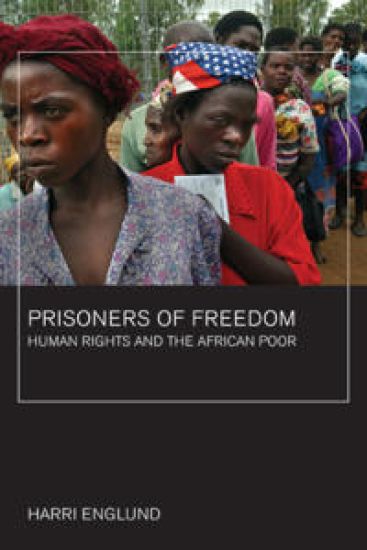
In this vivid ethnography, Harri Englund investigates how ideas of freedom impede struggles against poverty and injustice in emerging democracies. Reaching beyond a narrow focus on the national elite, "Prisoners of Freedom" shows how foreign aid and human rights activism hamper the pursuit of democratic citizenship in Africa. The book explores how activists' aspirations of self-improvement, pursued under harsh economic conditions, find in the human rights discourse a new means to distinguish oneself from the poor masses. Among expatriates, the emphasis on abstract human rights avoids confrontations with the political and business elites. Drawing on long-term research among the Malawian poor, Englund brings to life the personal circumstances of Malawian human rights activists, their expatriate benefactors, and the urban and rural poor as he develops a fresh perspective on freedom - one that recognizes the significance of debt, obligation, and civil virtues.
From War to Peace on the Mozambique-Malawi Borderland

From War to Peace on the Mozambique-Malawi Borderland

Harri Englund

Edinburgh University Press
2001
nidottu
From War to Peace on the Mozambique-Malawi Borderland is the first full-length ethnography to tell villagers' stories from war to peace in Mozambique. Extended case studies of particular villages and families on the Mozambique-Malawi borderland form the core of the book. While tracing their paths to war, exile and post-war reconstruction, the book reveals the human face of national and transnational crises. This detailed study takes the reader beyond the stereotypes which often accompany interventions into humanitarian catastrophes. The villagers in this book are not nameless victims but persons with social relationships; participants, in their own way, in the histories of colonialism, nationalism, labour migration, guerrilla war, exile, repatriation and, most recently, liberal democracy. A major contribution of the book is to show how changing historical circumstances have variously pitted villagers against one another and fostered co-operation. Questions of trust, moral value and legitimate authority inform ethnographic description, leading to an innovative critique of current analytical approaches to social capital. Those interested in humanitarian catastrophes, African politics, refugee studies and development studies will be inspired by its detailed rebuttal of stereotypes which continue to represent Africans as helpless victims.
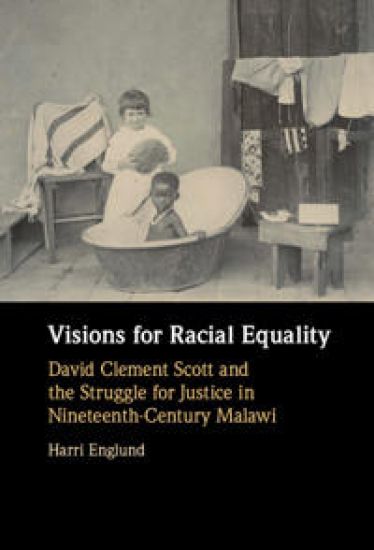
Visions for Racial Equality

Visions for Racial Equality

Harri Englund

Cambridge University Press
2024
pokkari
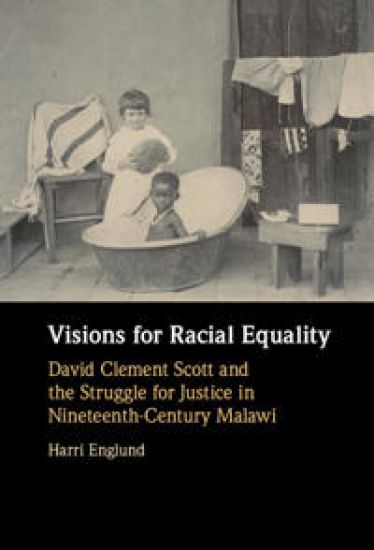
Focusing on David Clement Scott, the head of the Church of Scotland mission in Malawi, who came to see Europeans as learners in Africa, this innovative book narrates the rise and demise of a unique vision for racial equality in nineteenth-century Africa. By immersing himself in the vernacular language and institutions, Scott developed a theology of reversals to pursue justice in race relations. It set him on a collision course with the Church, colonial government and the White commercial interests spearheaded by Cecil Rhodes. Harri Englund shows how Scott's struggle for justice was as much epistemic as political and spiritual - a vision for the future in which White and Black would thrive in their mutual recognition as co-knowers. From linguistic translation to conflicts over land and taxation, from slave trade to personal intimacies, Visions for Racial Equality weaves a rich tapestry of themes in the life and times of a little-known visionary.
Visions for Racial Equality

Visions for Racial Equality

Harri Englund

Cambridge University Press
2022
sidottu
Focusing on David Clement Scott, the head of the Church of Scotland mission in Malawi, who came to see Europeans as learners in Africa, this innovative book narrates the rise and demise of a unique vision for racial equality in nineteenth-century Africa. By immersing himself in the vernacular language and institutions, Scott developed a theology of reversals to pursue justice in race relations. It set him on a collision course with the Church, colonial government and the White commercial interests spearheaded by Cecil Rhodes. Harri Englund shows how Scott's struggle for justice was as much epistemic as political and spiritual - a vision for the future in which White and Black would thrive in their mutual recognition as co-knowers. From linguistic translation to conflicts over land and taxation, from slave trade to personal intimacies, Visions for Racial Equality weaves a rich tapestry of themes in the life and times of a little-known visionary.
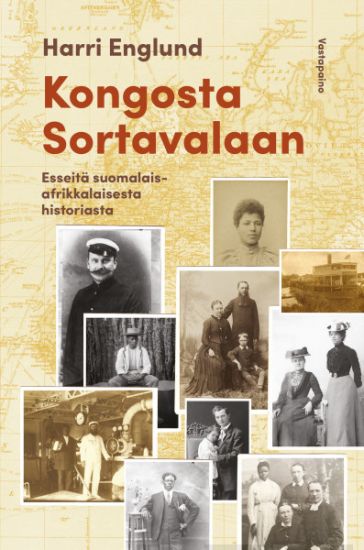
Kongosta Sortavalaan

Kongosta Sortavalaan

Harri Englund

VASTAPAINO
2025
nidottu
Tietorikkaat esseet herättävät eloon historian hahmot itsenäisesti ajattelevina yksilöinä, jotka omilla tavoillaan pyrkivät näkemään afrikkalaisten ja suomalaisten eroja pidemmälle.Kirja tuo ensimmäistä kertaa samojen kansien väliin 2000-luvulla kiinnostusta herättäneet historialliset hahmot. Pääosissa ovat Namibiasta Suomeen tuotu ja myöhemmin Yhdysvaltoihin muuttanut Rosa Lemberg sekä Kongossa laivan konemiehenä toiminut Akseli Leppänen.Rosa haastoi eurooppalaisen sivilisaation valkoisten yksinoikeutena, mutta samalla sepitti taustansa häivyttääkseen afrikkalaisuuttaan. Akseli havaitsi kolonialismin epäoikeudenmukaisuuden, mutta lankesi olosuhteilleen tyypilliseen väkivaltaan.Kirja kytkee historialliset ja henkilökeskeiset yksityiskohdat laajempaan yhteyteen. Se herättää kysymyksiä yksilöiden kyvystä itsenäiseen ajatteluun historian pyörteissä ja haastaa lukijan arvioimaan rodullistamisen psykopatologiaa nykyajassa.Harri Englund on sosiaaliantropologian professori Cambridgen yliopistossa, British Academyn jäsen ja Afrikan-tutkimuksen dosentti Helsingin yliopistossa.