Kirjojen hintavertailu. Mukana 12 016 292 kirjaa ja 12 kauppaa.

Kirjahaku

Etsi kirjoja tekijän nimen, kirjan nimen tai ISBN:n perusteella.

6 kirjaa tekijältä Harrison Akins

The Terrorism Trap

The Terrorism Trap

Harrison Akins

Columbia University Press
2023
sidottu
After two decades and trillions of dollars, the United States’ fight against terrorism has achieved mixed results. Despite the vast resources and attention expended since 9/11, terrorism has increased in many societies that have been caught up in the war on terror. Why have U.S. policies been unable to stem the tide of violence?Harrison Akins reveals how the war on terror has had the unintended consequence of increasing domestic terrorism in U.S. partner states. He examines the results of U.S.-backed counterterrorism operations that targeted al-Qaeda in peripheral regions of partner states, over which their central governments held little control. These operations often provoked a violent backlash from local terrorist groups, leading to a spike in retaliatory attacks against partner states. Senior U.S. officials frequently failed to grasp the implications of the historical conflict between central governments and the targeted peripheries. Instead, they exerted greater pressure on partner states to expand their counterterrorism efforts. This exacerbated the underlying conditions that drove the escalating attacks, trapping these governments in a deadly cycle of tit-for-tat violence with local terrorist groups. This process, Akins demonstrates, accounts for the lion’s share of the al Qaeda network’s global terrorist activity since 2001.Drawing on extensive primary sources—including newly declassified documents, dozens of in-depth interviews with leading government officials in the United States and abroad, and statistical analysis—The Terrorism Trap is a groundbreaking analysis of why counterterrorism has backfired.

The Terrorism Trap

The Terrorism Trap

Harrison Akins

Columbia University Press
2023
pokkari
After two decades and trillions of dollars, the United States’ fight against terrorism has achieved mixed results. Despite the vast resources and attention expended since 9/11, terrorism has increased in many societies that have been caught up in the war on terror. Why have U.S. policies been unable to stem the tide of violence?Harrison Akins reveals how the war on terror has had the unintended consequence of increasing domestic terrorism in U.S. partner states. He examines the results of U.S.-backed counterterrorism operations that targeted al-Qaeda in peripheral regions of partner states, over which their central governments held little control. These operations often provoked a violent backlash from local terrorist groups, leading to a spike in retaliatory attacks against partner states. Senior U.S. officials frequently failed to grasp the implications of the historical conflict between central governments and the targeted peripheries. Instead, they exerted greater pressure on partner states to expand their counterterrorism efforts. This exacerbated the underlying conditions that drove the escalating attacks, trapping these governments in a deadly cycle of tit-for-tat violence with local terrorist groups. This process, Akins demonstrates, accounts for the lion’s share of the al Qaeda network’s global terrorist activity since 2001.Drawing on extensive primary sources—including newly declassified documents, dozens of in-depth interviews with leading government officials in the United States and abroad, and statistical analysis—The Terrorism Trap is a groundbreaking analysis of why counterterrorism has backfired.
Adversary and Ally

Adversary and Ally

Harrison Akins

Columbia University Press
2026
sidottu
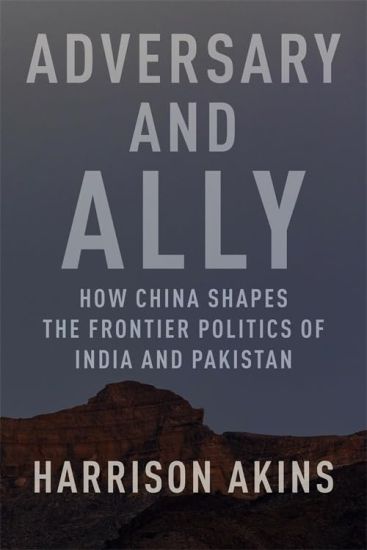
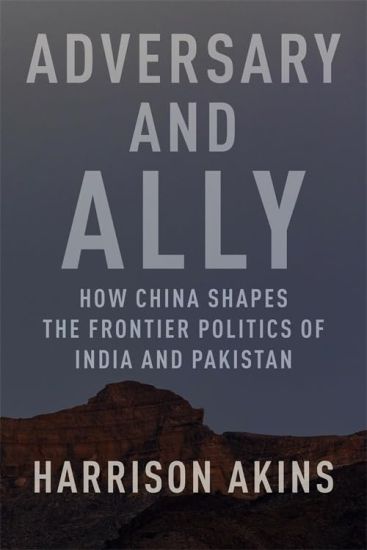
In recent years, China has played an increasingly significant role in international affairs, wielding its economic and political strength to solidify its position as a global power. Within its immediate neighborhood, however, Chinese influence is not new. Chinese actions have affected how the Indian and Pakistani states have perceived and responded to domestic governance and security challenges since the early days of independence. Connecting international politics with domestic security, Harrison Akins shows how India and Pakistan’s engagement with China has shaped the two governments’ policies toward their strategic frontiers over the past seventy years. He focuses on northeastern India and Pakistan’s Balochistan Province, peripheries that have been at the center of both countries’ relationships with China and that continue to present pressing security and development challenges. In contrast to the conventional focus on state-to-state relations, Akins emphasizes frontiers and their ties to central governments. He demonstrates that China’s presence spurred the Indian and Pakistani governments to assert their sovereignty over these border regions, exacerbating conditions that led to the outbreak of antistate violence. Featuring comprehensive research and keen analysis, Adversary and Ally offers new insights into the pressures confronting South Asian governments and the limits of China’s reach.
Adversary and Ally

Adversary and Ally

Harrison Akins

Columbia University Press
2026
pokkari
In recent years, China has played an increasingly significant role in international affairs, wielding its economic and political strength to solidify its position as a global power. Within its immediate neighborhood, however, Chinese influence is not new. Chinese actions have affected how the Indian and Pakistani states have perceived and responded to domestic governance and security challenges since the early days of independence. Connecting international politics with domestic security, Harrison Akins shows how India and Pakistan’s engagement with China has shaped the two governments’ policies toward their strategic frontiers over the past seventy years. He focuses on northeastern India and Pakistan’s Balochistan Province, peripheries that have been at the center of both countries’ relationships with China and that continue to present pressing security and development challenges. In contrast to the conventional focus on state-to-state relations, Akins emphasizes frontiers and their ties to central governments. He demonstrates that China’s presence spurred the Indian and Pakistani governments to assert their sovereignty over these border regions, exacerbating conditions that led to the outbreak of antistate violence. Featuring comprehensive research and keen analysis, Adversary and Ally offers new insights into the pressures confronting South Asian governments and the limits of China’s reach.
Conquering the Maharajas

Conquering the Maharajas

Harrison Akins

MANCHESTER UNIVERSITY PRESS
2023
sidottu
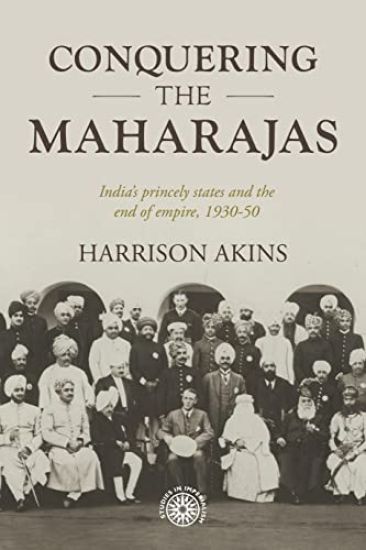
The position of India’s princely states is a relatively under-studied aspect of the British withdrawal from India and the early years of Indian and Pakistani independence. Far from playing second fiddle to events in the British Indian provinces, the princely states played an integral role in the transfer of power in 1947. Under the British Raj, the princely states were politically autonomous, and the rulers of each state had to be cajoled and, in some cases, forced to accede to India or Pakistan. The princes’ commitment to preserving their sovereignty not only threatened the territorial integrity of both South Asian countries but brought them to the brink of war on multiple occasions. Conquering the maharajas tells the often overlooked history of Princely India through the tumultuous end of empire in South Asia and the early years of Indian and Pakistani independence.
Conquering the Maharajas

Conquering the Maharajas

Harrison Akins

MANCHESTER UNIVERSITY PRESS
2025
nidottu
The position of India’s princely states is a relatively under-studied aspect of the British withdrawal from India and the early years of Indian and Pakistani independence. Far from playing second fiddle to events in the British Indian provinces, the princely states played an integral role in the transfer of power in 1947. Under the British Raj, the princely states were politically autonomous, and the rulers of each state had to be cajoled and, in some cases, forced to accede to India or Pakistan. The princes’ commitment to preserving their sovereignty not only threatened the territorial integrity of both South Asian countries but brought them to the brink of war on multiple occasions. Conquering the maharajas tells the often overlooked history of Princely India through the tumultuous end of empire in South Asia and the early years of Indian and Pakistani independence.