Kirjojen hintavertailu. Mukana 11 627 064 kirjaa ja 12 kauppaa.

Kirjahaku

Etsi kirjoja tekijän nimen, kirjan nimen tai ISBN:n perusteella.

16 kirjaa tekijältä Harry Fairhead

Explore Intel Edison

Explore Intel Edison

Harry Fairhead

I/O Press
2016
nidottu
The Intel(R) Edison is a remarkable device. It is as small as an embedded processor, but has enough power to allow it to be used as a tiny server. With its built-in support for WiFi, GPIO, I2C and SPI it is a capable IoT device. However, to make use of its unique qualities you have to take a step beyond its simple Arduino emulation and make use of it as itself, in its native mode. This means using the mini-breakout board and dealing with the fact that it is a 1.8V logic device and programming it using C to bring out its full power. Once you know how, this isn't as difficult as it seems at first. The rewards are well worth the effort. Exploring Intel(R) Edison starts with setting it up for the mini-breakout board. Then it looks at the advantages of choosing C as the language in which to program it, showing how to set up the Intel(R) System Studio IoT Edition IDE. Now we are ready to get building circuits and coding. Using the mraa library is the direct way to work with the GPIO lines and we need to master it before looking at ways of making things faster with memory-mapped I/O, achieving realtime facilities with Linux and using pulse width modulation. From here we are able to start connecting sensors - the HTU21D (I2C), DHT11/22 (custom) and the DS18B20 (1-wire). There are problems to overcome along the way - how to convert from 1.8V to work with higher voltages and how to support a 1-wire bus. The final circuit, to add AtoD, uses the SPI bus and implements a software emulation. Finally we look beyond mraa with a Linux-based approach to working with GPIO lines and how to set the GPIO mode.
Micro: bit IoT In C

Micro: bit IoT In C

Harry Fairhead

I/O Press
2016
nidottu
UPDATED AND EXTENDED SECOND EDITION, COVERING BOTH ORIGINAL AND V2 NOW AVAILABLEThe BBC micro: bit is capable of taking on a variety of roles including that of a powerful IoT device. In order to gain full access to its features and to external devices, however, you need to use C which delivers the speed crucial to programs that communicate with the outside world.Written for the electronics enthusiast, micro: bit IoT In C starts with a first "Hello Blinky" C program with the mbed online compiler, we move to the desktop to using an offline approach using the yotta development environment plus NetBeans to make things even easier. Now we are ready to discover how to control the micro: bit's I/O lines, exploring the basis of using the GPIO. For speed, however, we need to work directly with the raw hardware and also master memory mapping, pulse width modulation and other more sophisticated bus types.From here we can start connecting sensors using first the I2C bus, then by implementing a custom protocol for a one-wire bus, and eventually adding eight channels of 12-bit AtoD with the SPI bus, which involves overcoming some subtle difficulties. We then look at serial connections, one of the oldest ways of connecting devices but still very useful. The micro: bit lacks WiFi connectivity but using a low-cost device we enable a connection to the Internet via its serial port which allows it to become a server.To conclude we look at the micro: bit's LED display. This may only be 5x5, but it is very versatile, especially when you use pulse width modulation to vary the brightness level, something we demonstrate in a classic game, written of course in C.
Raspberry Pi IoT In C

Raspberry Pi IoT In C

Harry Fairhead

I/O Press
2016
nidottu
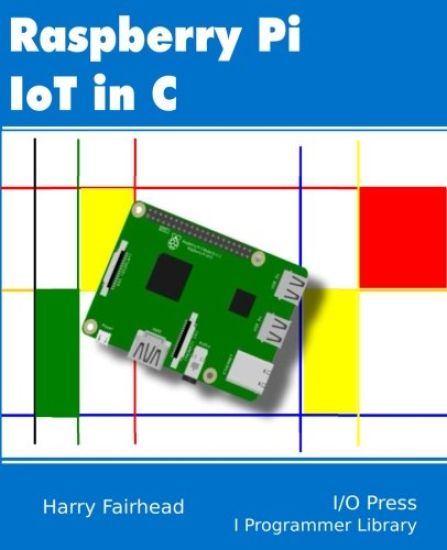
The Raspberry Pi makes an ideal match for the Internet of Things. But to put it to good use in IoT you need two areas of expertise, electronics and programming and because of the way hardware and software engineering tend to occupy separate niches you may need help with combining the two. This book teaches you to think like an IoT programmer.In Raspberry Pi IoT in C you will find a practical approach to understanding electronic circuits and datasheets and translating this to code, specifically using the C programming language. The main reason for choosing C is speed, a crucial factor when you are writing programs to communicate with the outside world. If you are familiar with another programming language, C shouldn't be hard to pick up. Here it is used in conjunction with NetBeans and with the bcm2835 library.The main idea in this book is to not simply install a driver, but to work directly with the hardware. So rather than using Raspberry Pi HATs or other expansion boards we use the Pi's GPIO (General Purpose Input Output) and connect off-the-shelf sensors. If you want to know how to work with the GPIO lines directly, how to work with near realtime Linux and generally take control of the Pi this is the book you need. It explains how to use the standard bus types - SPI, I2C, PWM - and with custom protocols including an in-depth exposition of the 1-wire bus. You will also discover how to put the Internet into the IoT using sockets and the low cost ESP8266.After reading this book you will be in a better position to tackle interfacing anything-with-anything without the need for custom drivers and prebuilt hardware modules.Having written a Blinky program to check that everything we need is installed and working we move on to exploring the basics of using the GPIO and also master memory mapping, pulse width modulation and other more sophisticated bus types. From here we can start connecting sensors, which is a core requirement for IoT. First we'll meet the ubiquitous I2C bus, next we'll implement a custom protocol for a one-wire bus, and eventually we'll add eight channels of 12-bit AtoD with the SPI bus, which involves overcoming some subtle difficulties. Next we look at the traditional serial interface how to use it to communicate with other devices. This paves the way for getting the Pi on the web - after all this is a book about the Internet of Things -using first a USB WiFi adapter and sockets and then the low cost ESP8266, which is particularly useful with the Pi Zero which has only one USB port. Having transformed the Pi into both a web client and a web server we can then use them to exchange information.
Fundamental C: Getting Closer To The Machine
C is a good language to learn. It was designed to do a very different job from most modern languages and the key to understanding it is not to just understand the code, but how this relates to the hardware. Fundamental C takes an approach that is close to the hardware, introducing addresses, pointers, and how things are represented using binary. An important idea is that everything is a bit pattern and what it means can change. As a C developer you need to think about the way data is represented, and Harry Fairhead encourages this. He emphasizes the idea of modifying how a bit pattern is treated using type punning and unions. This power brings with it the scourge of the C world - undefined behavior - which is ignored in many books on C. Here, not only is it acknowledged, it is explained together with ways to avoid it.A particular feature of the book is the way C code is illustrated by the assembly language it generates. This helps you understand why C is the way it is.For beginners, the book covers installing an IDE and GCC before writing a Hello World program and then presents the fundamental building blocks of any program - variables, assignment and expressions, flow of control using conditionals and loops.Once the essentials are in place, data types are explored before looking at arithmetic and representation. Harry then goes deeper into evaluating expressions before looking at functions and their scope and lifetime. Arrays, strings, pointers and structs are covered in separate chapters, as is bit manipulation, a topic that is key to using C, and the idea of a file as the universal approach to I/O. Finally, he looks at the four stages of compilation of a C program, the use of static and dynamic libraries and make. This is C as it was always intended to be written - close to the metal.Harry Fairhead has a hardware background and, having worked with microprocessors and electronics in general, for many years, he is an enthusiastic proponent of the IoT. His recent titles include Raspberry Pi IoT in C and Micro: bit IoT in C. His next, Applying C For The IoT With Linux at intermediate/advanced level is intended as a companion to this book for those working in a Linux/POSIX environment, in particular the Raspberry Pi.
Raspberry Pi IoT In C

Raspberry Pi IoT In C

Harry Fairhead

I/O Press
2020
nidottu
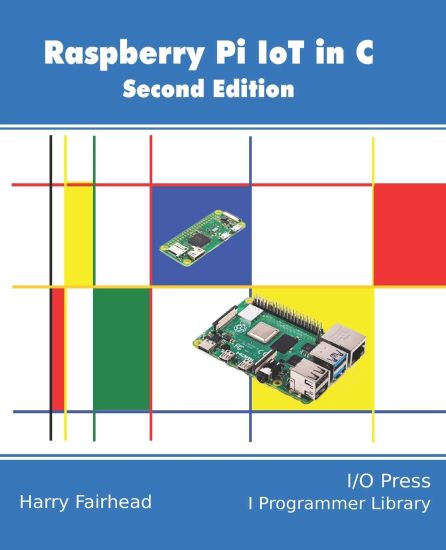
Third Edition Now Available. The Raspberry Pi makes an ideal match for the Internet of Things. But to put it to good use in IoT you need two areas of expertise, electronics and programming and, because of the way hardware and software engineering tend to occupy separate niches, you may need help with combining the two. This book teaches you to think like an IoT programmer.In Raspberry Pi IoT in C you will find a practical approach to understanding electronic circuits and datasheets and translating this to code, specifically using the C programming language. The main reason for choosing C is speed, a crucial factor when you are writing programs to communicate with the outside world. If you are familiar with another programming language, C shouldn't be hard to pick up. This Second Edition has been brought up-to-date and focuses mainly on the Pi 4 and the Pi Zero. There is new material on the recently introduced GPIO character driver and using the Pi 4's additional ports and scheduling.Although NetBeans is used to develop programs, VS Code is now considered an alternative remote development environment and all the book's code, which is available for download, has been tested with VS Code.The main idea in this book is to not simply install a driver, but to work directly with the hardware using the Raspberry Pi's GPIO (General Purpose Input Output) to connect with off-the-shelf sensors. It explains how to use its standard output with custom protocols, including an in-depth exposition of the 1-wire bus. You will also discover how to put the Internet into the IoT using sockets.After reading this book you will be in a better position to tackle interfacing anything-with-anything without the need for custom drivers and prebuilt hardware modules.Harry Fairhead has worked with microprocessors and electronics in general for many years and is an enthusiastic proponent of the IoT. As well as being the Editor of IoT-Programmer.com, he is a regular contributor to I-Programmer.info, where he covers all aspects of hardware. His other recent books include Applying C For The IoT With Linux as well as Fundamental C: Getting Closer To The Machine and Micro: bit IoT in C.
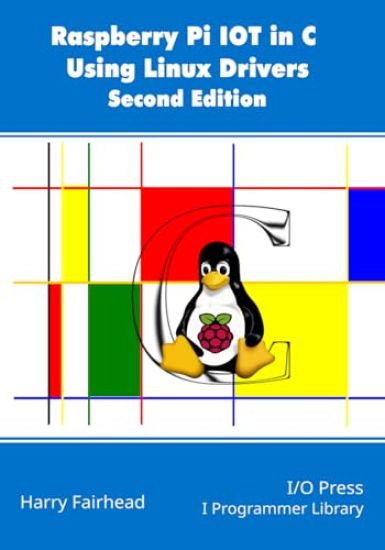
Raspberry Pi IoT In C Using Linux Drivers
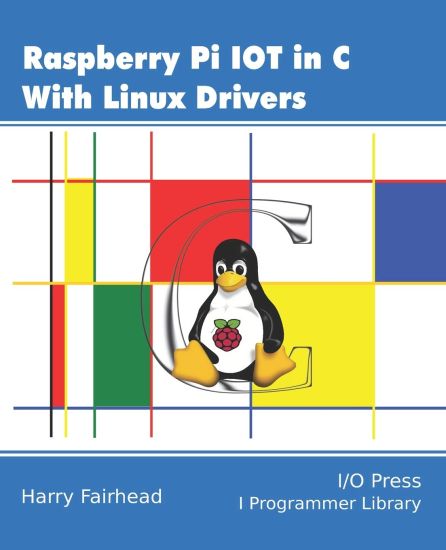
There is a new edition of this book.The Raspberry Pi makes an ideal match for the Internet of Things. To put it to good use in IoT you need two areas of expertise, electronics and programming and this presents a barrier to getting started. However, there is an overlooked route that can provide a shortcut. Pi OS, the Raspberry Pi's operating system is Linux based and Linux drivers are available for many off-the-shelf IoT devices. These provide a very easy-to-use, high-level way of working. The problem that this book solves is that there is very little documentation to help you get started. In it Harry Fairhead explains the principles so that you can tackle new devices and he also guides you through of using external hardware via standard Linux drivers. Throughout this book you will find a practical approach to understanding electronic circuits and datasheets and translating this to code, specifically using the C programming language. The main reason for choosing C is speed, a crucial factor when you are writing programs to communicate with the outside world and if you are familiar with another programming language, C shouldn't be hard to pick up.After a quick tour of the Raspberry Pi ecosystem, Visual Studio Code (VS Code) and how it can be used to develop remotely, is introduced. The first IoT program anyone writes is "blinky" to flash an LED and this book is no exception, but it might not be quite what you expect. Instead of using a GPIO line it uses the Linux LED driver - no hardware and no fuss. The GPIO isn't left out, however, as the next three chapters focus on its use via the new GPIO character driver, which replaces the old and very common sysfs GPIO driver. This is the way to do modern GPIO. A key component in any look at Linux and its relationship to hardware is the relatively new Device Tree. While most accounts of this resource are aimed at device driver writers, this one is aimed at device driver users and to this end we look at the DHT22 temperature and humidity driver. After a brief detour into some basic electronics, we look at Pulse Width Modulation supported via a driver rather than needing to be implemented using the GPIO. From here we tackle the two standard buses, I2C and SPI, first going through the basics and then looking at the two attempts to impose a higher organization, the hardware monitoring system, Hwmon, and Industrial I/O, IIO. The third standard bus, although generally not supported in hardware is the 1-Wire bus. This is covered in detail and even includes an introduction to using Netlink, which uses the sockets API to send messages to and from the kernel to access the driver. The final chapter takes things to the next level and considers creating your own custom overlays by writing fragments to the device tree.Harry Fairhead has worked with microprocessors, and electronics in general, for many years and is an enthusiastic proponent of the IoT. He is the author of Raspberry Pi IoT in C, which has recently been republished in its second edition, updated for Raspberry Pi 4 and co-author of Raspberry Pi IoT in Python Using GPIO Zero. His other recent books include Micro: bit IoT in C, Fundamental C: Getting Closer To The Machine and Applying C For The IoT With Linux.
Micro: bit IoT In C Second Edition

Micro: bit IoT In C Second Edition

Harry Fairhead

I/O Press
2021
nidottu
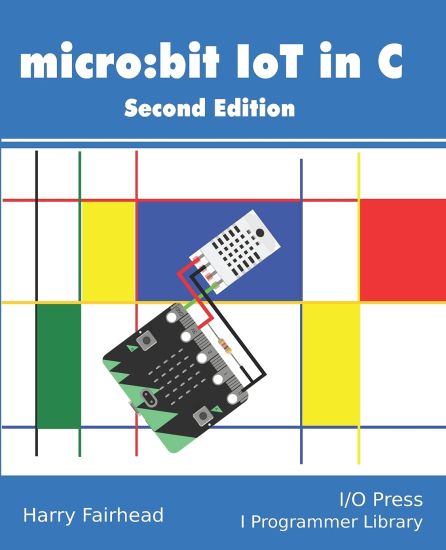
Amazon Reviews Of The First Edition: "If you are serious about using the micro: bit to it's fullest potential, you need this book.""Best Micro: bit book for C developers""This is a great book for low-level (think hardware register level) developers using BBC Micro: bit computers. I really thank the author. Harry Fairhead, for writing on this subject since it is so poorly documented." The BBC micro: bit is capable of taking on a variety of roles including that of a powerful IoT device. In order to gain full access to its features and to external devices, however, you need to use C which delivers the speed which is crucial when you are writing programs to communicate with the outside world.The new V2 version of the micro: bit is fully covered in Micro: bit IoT in C, Second Edition, which now uses the highly popular VS Code for offline development. It covers how to get started the easy way by providing downloadable templates for both V1 and V2 of the micro: bit.Having started with the traditional "Blinky" program, the equivalent of "Hello World" for hardware, we are ready to discover how to control the micro: bit's I/O lines, exploring the basis of using the GPIO. For speed, however, we need to work directly with the raw hardware and also master memory mapping, pulse width modulation and other more sophisticated bus types. From here we can start connecting sensors using first the I2C bus, then by implementing a custom protocol for a one-wire bus, and eventually adding eight channels of 12-bit A-to-D with the SPI bus, which involves overcoming some subtle difficulties. We then look at serial connections, one of the oldest ways of connecting devices, but still very useful. The micro: bit lacks WiFi connectivity but using a low-cost device we enable a connection to the Internet via its serial port which allows it to become a server. Next we look at the micro: bit's LED display. This may only be 5x5, but it is very versatile, especially when you use pulse width modulation to vary the brightness level, something we demonstrate in a classic game, written of course in C. The book rounds out with a new chapter on the micro: bit's radio and the V2's sound capabilities.Harry Fairhead has worked with microprocessors, and electronics in general, for many years and is an enthusiastic proponent of the IoT. He is the author of Raspberry Pi IoT in C, which has recently been republished in its second edition, updated for Raspberry Pi 4, and of Raspberry Pi IoT In C With Linux Drivers. He has also co-authored Python versions of these books - Raspberry Pi IoT in Python Using GPIO Zero and Raspberry Pi IoT In Python With Linux Drivers. His own language of choice is C and he has also written Fundamental C: Getting Closer To The Machine and Applying C For The IoT With Linux.
Programming The Raspberry Pi Pico/W In C, Second Edition
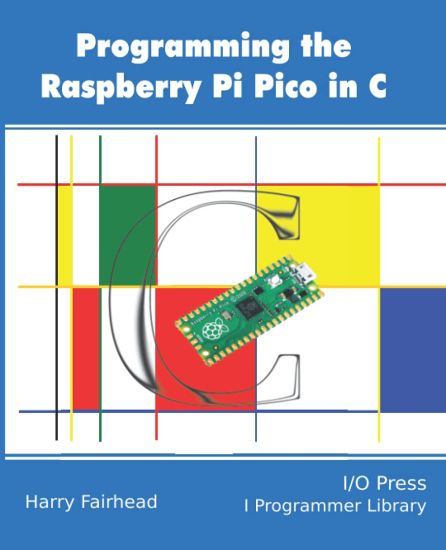
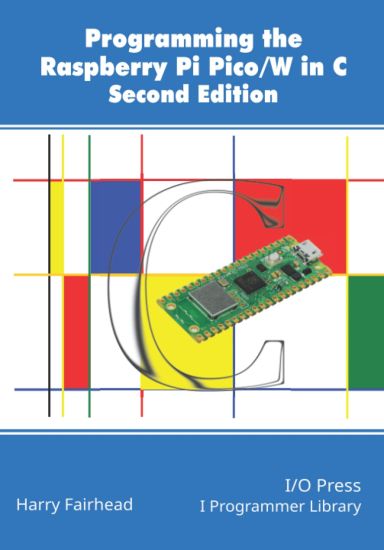
Reviews of the first edition: "One of the best programming books on microcontroller programming I have, and I have many""Often, these sort of books are just a rehash of the manufacturer documentation. This was written in a very clear style by someone who has actually used the Pico and encountered some of the traps and pitfalls. I would highly recommend this to anyone contemplating writing applications for the Pico in C/C++.""As opposed to other books on the subject, this one goes deeply enough so that you can cover most aspects of what is discussed.""This book will be a true time saver however, and the task learning C for programming the Raspberry Pi Pico will seem a little less intimidating"The Raspberry Pi Pico is a remarkable microcontroller. It has a power and sophistication that would have been unthinkable just a short time ago. For the sort of jobs it is ideal for, it has plenty of processing power and enough memory to make tasks that would have once required careful planning, relatively easy. Instead of struggling with the machine, you can now focus on getting a good implementation of your algorithms. To enjoy all of its power and sophistication there is no better language than C. It wastes none of the power and it gives you what you need to get at the new features. However, getting started with the Pico with C is no easy feat, which is what motivated this book. Programming the Raspberry Pi Pico in C uses the highly popular VS Code as its development environment and shows how to use a Raspberry Pi or a desktop PC running Windows as your development machine. The purpose of the book is to reveal what you can do with the Pico's GPIO lines together with widely used sensors, servos and motors and ADCs. After covering the GPIO, outputs and inputs, events and interrupts, it gives you hands-on experience of PWM (Pulse Width Modulation), the SPI bus, the I2C bus and the 1-Wire bus. One of the key advantages of the Pico is its PIO (Programmable I/O) and while this is an advanced feature it is introduced in this book. The original Pico lacked WiFi connectivity, a limitation overcome by the recent launch of the Pico W. You can think of as the Pico W as a superset of the original - everything you can do with an original Pico you can do with a Pico W, but not vice versa. A brand new chapter is dedicated to how to make use of the additional features of the Pico W including how to create a web client and a web server and any differences between the two versions are clearly indicated throughout the book. Harry Fairhead has a hardware background and, having worked with microprocessors and electronics in general, for many years, he is an enthusiastic proponent of the IoT and embedded computing. He is the author of two books intended for C programmers, Fundamental C: Getting Closer To The Machine and Applying C For the IoT With Linux and four books on the using the Raspberry Pi in an IoT context, two using C and two using Python. He is now working on a Python version of this book for the Pico and on Master the Raspberry Pi Pico, which goes deeper into the PIO, the second core, using TLS/HTTPS and FreeRTOS, which is the next book you should read if you want to take Pico programming to the next level.
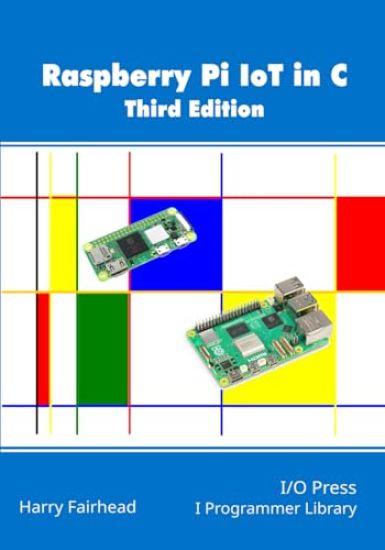
Raspberry Pi IoT In C, 3rd Edition

Raspberry Pi IoT In C, 3rd Edition

Harry Fairhead

I/O Press
2024
pokkari
Reviews of the previous edition: "A complete explanation that makes it straightforward to interface I/O options to the Pi. Good examples are easy to follow and well explained - starting with "Hello World" and then walks through the various interface options available with GPIO. I highly recommend this to anyone using the Pi for any embedded system application requiring various types of interfaces.""This is the book to read to get deep into Raspberry IoT. Programming examples are provided. Great book " The Raspberry Pi makes an ideal match for the Internet of Things. But to put it to good use in IoT you need two areas of expertise, electronics and programming and, because of the way hardware and software engineering tend to occupy separate niches, you may need help with combining the two which is the role of this book.This 3rd Edition was prompted by the arrival of the Pi 5. Unfortunately, as the Pi 5 uses the new RP1 chip to implement its peripherals, it is incompatible with all of the IoT libraries that work directly with the hardware. As a result it is excluded from much of this book. A whole chapter is, however, devoted to getting started with an IoT project with the Pi 5 and it is also covered in chapters on the Linux GPIO driver and on the use of the Pi's serial ports and in a chapter, which describes how to access the Pi 5's registers directly.What is more important than the Pi 5 from the point of view of IoT is the Pi Zero 2W, which is a much faster, quad-core, version of the Pi Zero W making it an excellent choice for IoT projects. It is covered for the first time in this edition. Another reason for a new edition is to update its programs to the new versions of Pi OS, Bookworm and Bullseye. Finally, a major change is that VS Code is now the book's IDE of choice and to make it easy to use as a remote development environment with all versions of Pi from Pi Zero to Pi 5, a set of custom VS Code tasks are supplied, which are downloadable as well as included in the book.The main idea in this book is to work directly with the hardware using the Raspberry Pi's GPIO (General Purpose Input Output) to connect with off-the-shelf sensors. After reading it you will be in a better position to tackle interfacing anything-with-anything without the need for custom drivers and prebuilt hardware modules. Harry Fairhead has worked with microprocessors and electronics for many years and is an enthusiastic proponent of the IoT. C is his programming language of choice and he has written several books on programming the Raspberry Pi and other devices in an IOT context, including Raspberry Pi IoT in C With Linux Drivers, Second Edition, Programming the ESP32 in MicroPython and Fundamental C: Getting Closer To The Machine. Currently, his most popular title is Programming the Raspberry Pi Pico/W in C.
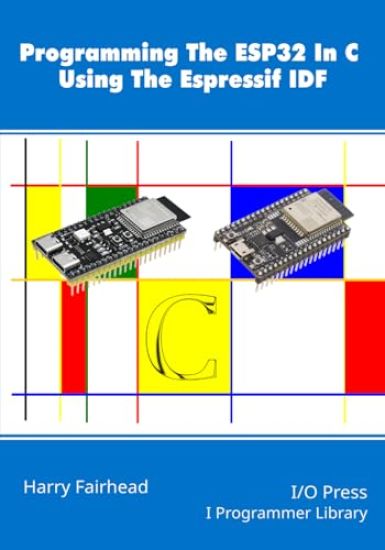
Programming The ESP32 In C Using The Espressif IDF
The Espressif ESP32 is a remarkable device. It is low cost but with many different subsystems that make it more powerful than you might think. You can use it for simple applications because it is cheap, but you can also use it for more sophisticated applications because it is capable. C is the ideal choice of language to program the ESP32, ensuring that your programs are fast and efficient, and here it is used with the Espressif IoT Development Framework, ESP-IDF and VS Code, a combination which makes it simple to get started and provides a wealth of functions not found elsewhere. The purpose of this book is to reveal what you can do with the ESP32's GPIO lines together with widely used sensors, servos and motors and ADCs. After covering the GPIO, outputs and inputs, events and interrupts, it gives you hands-on experience of PWM (Pulse Width Modulation), PWM for Motor control, the SPI bus, the I2C bus and the 1-Wire bus, the UARTs and of course WiFi. To round out, it covers direct access to the hardware, adding an SD Card reader, sleep states to save power, the RTC, RMT and touch sensors. It also devotes a chapter to FreeRTOS which takes us into the realm of asynchronous processing. This is not a projects book, although there isn't much left for you to do to round out the embryonic projects that are used as examples. Instead it is about understanding concepts and the acquisition of skills. The hope is that by the end of the book you will know how to tackle your own projects and get them safely to completion without wasting time in trial and error. Harry Fairhead is the co-author of Programming the ESP32 in MicroPython, but C is his programming language of choice and electronics is his forte. He is the author of Fundamental C: Getting Closer To The Machine and Applying C For The IoT With Linux. His other books on programming single-board computers include Programming the Raspberry Pi Pico/W in C; Raspberry Pi IoT In C; Raspberry Pi IoT in C With Linux Drivers and Micro: bit IoT in C.
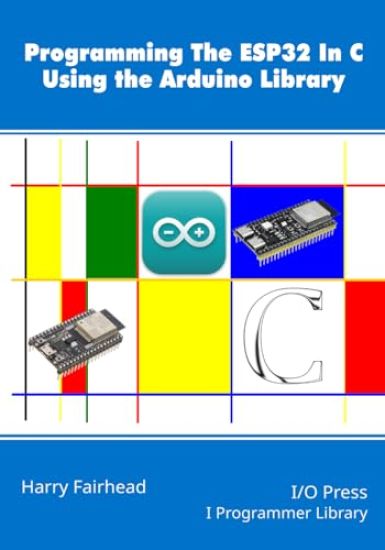
Programming the ESP32 In C Using the Arduino Library
The Espressif ESP32 is a remarkable device. It is low cost but with many different subsystems that make it more powerful than you might think. You can use it for simple applications because it is cheap, but you can also use it for more sophisticated applications because it is capable.C is the ideal choice of language to program the ESP32, ensuring that your programs are fast and efficient, and here it is used with the customized ESP version of the Arduino library and its associated IDE which makes the device as easy to use as possible. The Arduino library runs on top of the official Espressif ESP32 IoT Development Framework as a simplifying layer and you can always drop down a level and make use of its additional features when required.The purpose of this book is to reveal what you can do with the ESP32's GPIO lines together with widely used sensors, servos and motors and ADCs. After covering the GPIO, outputs and inputs, events and interrupts, it gives you hands-on experience of PWM (Pulse Width Modulation), the SPI bus, the I2C bus and the 1-Wire bus, the UARTs and, of course, WiFi. To round out, it covers direct access to the hardware, adding an SD Card reader, sleep states to save power, the RTC, RMT and touch sensors. It also devotes a chapter to FreeRTOS which takes us into the realm of asynchronous processing.This is not a projects book, although there isn't much left for you to do to round out the embryonic projects that are used as examples. Instead it is about understanding concepts and the acquisition of skills. The hope is that by the end of the book you will know how to tackle your own projects and get them safely to completion without wasting time in trial and error.Harry Fairhead is the author of Programming the ESP32 in C Using the Espressif IDF and co-author of Programming the ESP32 in MicroPython. C is his programming language of choice and he is the author of Fundamental C: Getting Closer To The Machine and Applying C For The IoT With Linux. His other books on programming single-board computers include Programming the Raspberry Pi Pico/W in C; Raspberry Pi IoT In C; Raspberry Pi IoT in C With Linux Drivers and Micro: bit IoT in C.