Kirjojen hintavertailu. Mukana 11 627 220 kirjaa ja 12 kauppaa.

Kirjahaku

Etsi kirjoja tekijän nimen, kirjan nimen tai ISBN:n perusteella.

12 kirjaa tekijältä Harry Freedman

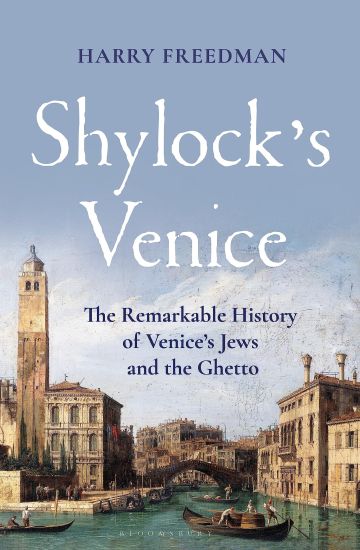
Shylock's Venice

Shylock's Venice

Harry Freedman

BLOOMSBURY PUBLISHING PLC
2024
sidottu
The thrilling story of the Jews in Venice – and the truth behind one of Shakespeare's most famous characters.Millions of visitors flood to Venice every year. Yet many are unaware of its history – one of dramatic expansion but also of rapid decline. And essential to any history of Venice during its glory days is the story of its Jewish population. Venice gave the world the word ghetto. Astonishingly, the ghetto prison turned out to be as remarkable a place as the city of Venice itself.With sound scholarship and a narrator's skill, Harry Freedman tells the story of Venice’s Jews. From the founding of the ghetto in 1516, to the capture of Venice by Napoleon in 1797, he describes the remarkable cultural renaissance that took place in the Venice ghetto. Gates and walls notwithstanding, for the first time in European history Jews and Christians mingled intellectually, learned from each other, shared ideas and entered modernity together. When it came to culture, the ghetto walls were porous.Any history of Venice and its Jews also can’t avoid the story of Shakespeare’s Shylock. The cultural and political revival in the Venice ghetto is often obscured from history by this fictional character. Who, we wonder, was Shylock? Would the people of Venice have recognized him and what did Shakespeare really think of him? Shakespeare’s ambivalent anti-Semitism reflects attitudes to Jews in Elizabethan England – but as Freedman demonstrates, Shakespeare’s myth is wholly ignorant of the literary, cultural and interfaith revival that Shylock would have experienced.
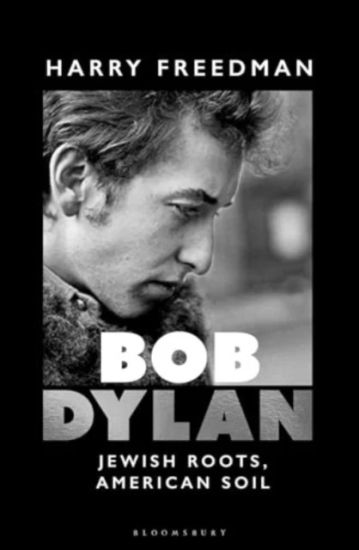
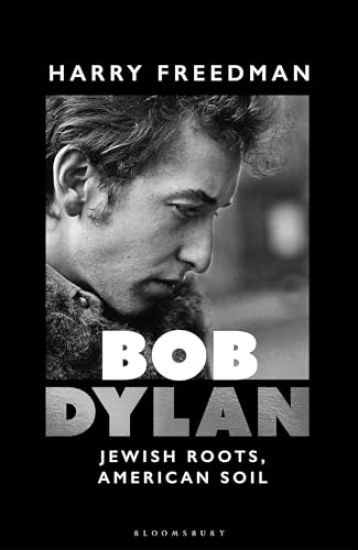
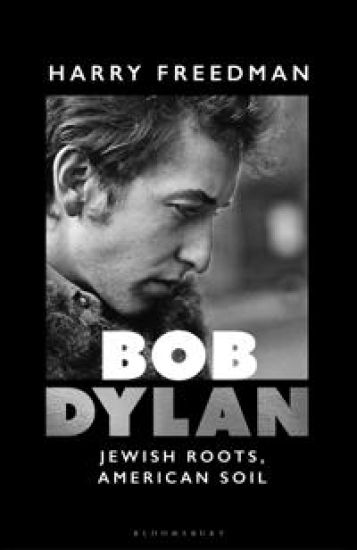
Bob Dylan

Bob Dylan

Harry Freedman

Bloomsbury Publishing Ltd.
2025
nidottu
From the day that Bobby Zimmerman first turned on the radio in his parents' home in Hibbing, he'd had a pretty good idea that big things were happening, that old values were changing, that something new was on the way.
Bob Dylan

Bob Dylan

Harry Freedman

BLOOMSBURY PUBLISHING PLC
2025
sidottu
From the day that Bobby Zimmerman first turned on the radio in his parents’ home in Hibbing, he’d had a pretty good idea that big things were happening.When Bob Dylan arrived in New York one winter morning in 1961 he was a complete unknown. His music and spirit would go on to capture the hearts and minds of a generation, but what no one knew then was that, like so many before him, Dylan was concealing his Jewish origins. Covering the same turbulent years as the hit film starring Timothée Chalamet, this entertaining biography offers new insights into Bob Dylan's early career. For Harry Freedman, Dylan’s roots are the key to grasping how this young musician burst onto the scene and reinvented not only himself, but popular music. The instinct for escape and reinvention has defined Dylan’s long career. Freedman traces the heady atmosphere of the 1960s and the folk-rock revolution spearheaded by Dylan. Right up until the moment in 1966 when Dylan stepped out onto the stage and went electric – exploring how his musical decisions, genius for reinvention and his Jewishness go inescapably hand in hand.
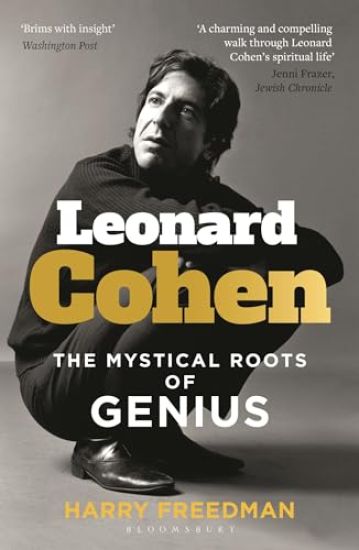
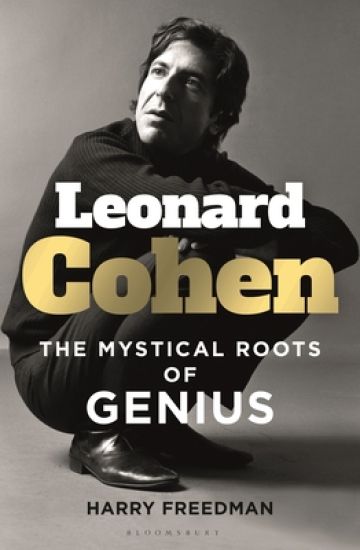
Leonard Cohen

Leonard Cohen

Harry Freedman

BLOOMSBURY PUBLISHING PLC
2024
nidottu
'Leonard Cohen taught us that even in the midst of darkness there is light, in the midst of hatred there is love, with our dying breath we can still sing Hallelujah.' - The late Rabbi Lord Jonathan Sacks'Among the finest volumes on Cohen’s life and lyrics ... An exploration which would have intrigued and engaged Leonard himself.' - John McKenna, writer and friend of Leonard CohenHarry Freedman uncovers the spiritual traditions that lie behind Leonard Cohen's profound and unmistakable lyrics.The singer and poet Leonard Cohen was deeply learned in Judaism and Christianity, the spiritual traditions that underpinned his self-identity and the way he made sense of the world. In this book Harry Freedman, a leading author of cultural and religious history, explores the mystical and spiritual sources Cohen drew upon, discusses their original context and the stories and ideas behind them.Cohen’s music is studded with allusions to Jewish and Christian tradition, to stories and ideas drawn from the Bible, Talmud and Kabbalah. From his 1967 classic ‘Suzanne’, through masterpieces like ‘Hallelujah’ and ‘Who by Fire’, to his final challenge to the divinity, ‘You Want It Darker’ he drew on spirituality for inspiration and as a tool to create understanding, clarity and beauty.Born into a prominent and scholarly Jewish family in Montreal, Canada, Cohen originally aspired to become a poet, before turning to song writing and eventually recording his own compositions. Later, he became immersed in Zen Buddhism, moving in 1990 to a Zen monastery on Mount Baldy, California where he remained for some years. He died, with immaculate timing, on the day before Donald Trump was elected in 2016, leaving behind him a legacy that will be felt for generations to come. Leonard Cohen: The Mystical Roots of Genius looks deeply into the imagination of one of the greatest singers and lyricists of our time, providing a window on the landscape of his soul. Departing from traditional biographical approaches, Freedman explores song by song how Cohen reworked myths and prayers, legends and allegories with an index of songs at the end of the book for readers to search by their favourites.By the end the reader will be left with a powerful understanding of Cohen’s story, together with a far broader insight into the mystical origins of his inimitable work.
Kabbalah: Secrecy, Scandal and the Soul

Kabbalah: Secrecy, Scandal and the Soul

Harry Freedman

Bloomsbury Continuum
2019
sidottu
This book tells the story of the mystical Jewish system known as Kabbalah, from its earliest origins until the present day.We trace Kabbalah’s development, from the second century visionaries who visited the divine realms and brought back tales of their glories and splendours, through the unexpected arrival of a book in Spain that appeared to have lain unconcealed for over a thousand years, and on to the mystical city of Safed where souls could be read and the history of heaven was an open book.Kabbalah’s Christian counterpart, Cabala, emerged during the Renaissance, becoming allied to magic, alchemy and the occult sciences. A Kabbalistic heresy tore apart seventeenth century Jewish communities, while closer to our time Aleister Crowley hijacked it to proclaim ‘Do What Thou Wilt’.Kabbalah became fashionable in the late 1960s in the wake of the hippy counter-culture and with the approach of the new age, and enjoyed its share of fame, scandal and disrepute as the twenty first century approached. This concise, readable and thoughtful history of Kabbalah tells its story as it has never been told before. It demands no knowledge of Kabbalah, just an interest in asking the questions ‘why?’ and ‘how?’
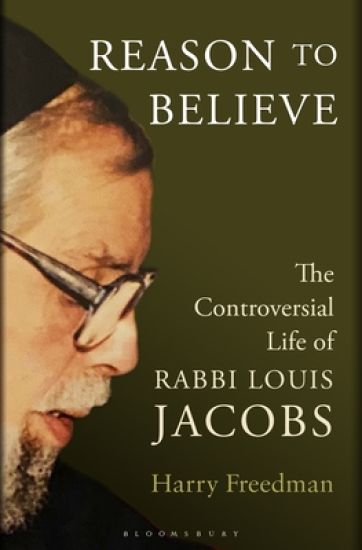
Reason to Believe

Reason to Believe

Harry Freedman

Bloomsbury Continuum
2020
sidottu
Louis Jacobs was Britain’s most gifted Jewish scholar. A Talmudic genius, outstanding teacher and accomplished author, cultured and easy-going, he was widely expected to become Britain’s next Chief Rabbi. Then controversy struck. The Chief Rabbi refused to appoint him as Principal of Jews’ College, the country’s premier rabbinic college. He further forbade him from returning as rabbi to his former synagogue. All because of a book Jacobs had written some years earlier, challenging from a rational perspective the traditional belief in the origins of the Torah. The British Jewish community was torn apart. It was a scandal unlike anything they had ever previously endured. The national media loved it. Jacobs became a cause celebre, a beacon of reason, a humble man who wouldn’t be compromised. His congregation resigned en masse and created a new synagogue for him in Abbey Road, the heart of fashionable 1960s London. It became the go-to venue for Jews seeking reasonable answers to questions of faith. A prolific author of over 50 books and hundreds of articles on every aspect of Judaism, from the basics of religious belief to the complexities of mysticism and law, Louis Jacobs won the heart and affection of the mainstream British Jewish community. When the Jewish Chronicle ran a poll to discover the Greatest British Jew, Jacobs won hands down. He said it made him feel daft. Reason To Believe tells the dramatic and touching story of Louis Jacobs’s life, and of the human drama lived out by his family, deeply wounded by his rejection.
Britain's Jews

Britain's Jews

Harry Freedman

BLOOMSBURY PUBLISHING PLC
2023
pokkari
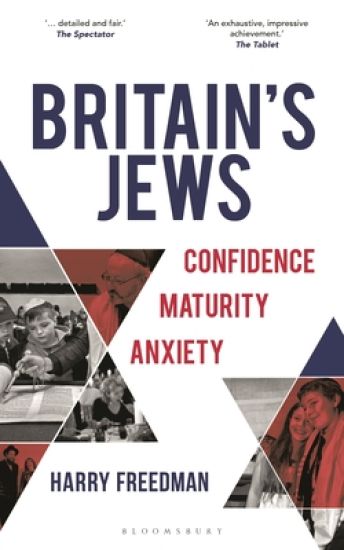
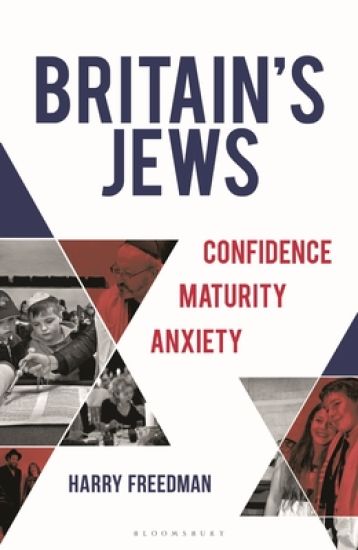
‘…detailed and fair.’ - The Spectator‘An exhaustive, impressive achievement.’ - The TabletAs a minority, Jews in Britain are confident, their institutions competent and mature. And yet within Jewish life in Britain there is a pervading sense of anxiety.Jews in Britain have risen to the top of nearly every profession, they run major companies, sit at the top tables in politics, make their voices heard in the media, are prominent in science and the arts. Of course there is serious poverty and gross disadvantage, just as there is in any community. But on any objective measure, British Jews have done well. Particularly when we consider where they came from, the impoverished, often oppressed lives that many Jews lived in Eastern Europe and the Ottoman Empire less than 200 years ago.Jews have lived in Britain longer than any other minority. They’ve been here so long, and are so ingrained into the national fabric, that they are often not considered to be a minority at all. Until a periodic outburst of antisemitism or a flare up in the Middle East, or both, turns the spotlight on them once again.British Jews have another distinction too. They have lived safely and securely, continuously, in Britain longer than any other modern Jewish community has lived anywhere else in the world. They have organised themselves in a way that serves as a model both to more recent immigrant communities in Britain and to Jewish communities elsewhere. Being British, they wear their distinctions lightly, they don’t trumpet their achievements, in fact they rarely make a noise at all. But they give back quietly: established Jewish organisations help more recently arrived minorities to create their own structures, charities draw on the Jewish experience of dislocation and persecution to help oppressed people in the developing world, philanthropists support causes far beyond the boundaries of their own communities.Britain’s Jews is a challenging look at Jewish life in the UK today. Based on conversations with Jews from all walks of life, it depicts, in ways that are at times disturbing, at other times inspiring, what it is like to be Jewish in 21st century Britain. And why Jewish life is still a subject of fascination.
Britain's Jews

Britain's Jews

Harry Freedman

BLOOMSBURY PUBLISHING PLC
2022
sidottu
‘…detailed and fair.’ - The Spectator‘An exhaustive, impressive achievement.’ - The TabletAs a minority, Jews in Britain are confident, their institutions competent and mature. And yet within Jewish life in Britain there is a pervading sense of anxiety.Jews in Britain have risen to the top of nearly every profession, they run major companies, sit at the top tables in politics, make their voices heard in the media, are prominent in science and the arts. Of course there is serious poverty and gross disadvantage, just as there is in any community. But on any objective measure, British Jews have done well. Particularly when we consider where they came from, the impoverished, often oppressed lives that many Jews lived in Eastern Europe and the Ottoman Empire less than 200 years ago.Jews have lived in Britain longer than any other minority. They’ve been here so long, and are so ingrained into the national fabric, that they are often not considered to be a minority at all. Until a periodic outburst of antisemitism or a flare up in the Middle East, or both, turns the spotlight on them once again.British Jews have another distinction too. They have lived safely and securely, continuously, in Britain longer than any other modern Jewish community has lived anywhere else in the world. They have organised themselves in a way that serves as a model both to more recent immigrant communities in Britain and to Jewish communities elsewhere. Being British, they wear their distinctions lightly, they don’t trumpet their achievements, in fact they rarely make a noise at all. But they give back quietly: established Jewish organisations help more recently arrived minorities to create their own structures, charities draw on the Jewish experience of dislocation and persecution to help oppressed people in the developing world, philanthropists support causes far beyond the boundaries of their own communities.Britain’s Jews is a challenging look at Jewish life in the UK today. Based on conversations with Jews from all walks of life, it depicts, in ways that are at times disturbing, at other times inspiring, what it is like to be Jewish in 21st century Britain. And why Jewish life is still a subject of fascination.
Gospels` Veiled Agenda, The – Revolution, Priesthood and The Holy Grail
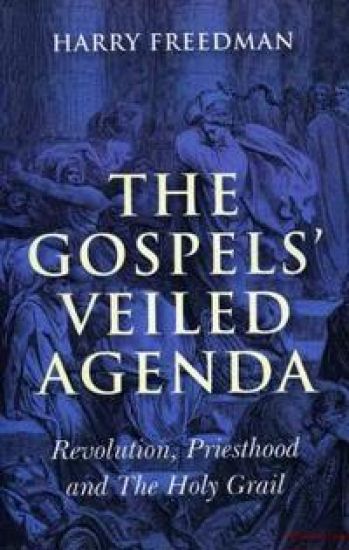
The gospel writers were masters of 'Midrash', a popular literary technique in the ancient Jewish world. Midrash enables authors to promote their ideas by weaving them into well known biblical themes. The gospels contain coded, midrashic, messages that would have resonated with their contemporary Jewish audience. Approaching the "New Testament" from a midrashic perspective leads to a radically new picture of Jesus as a political leader. Not, as is often claimed a revolutionary against Roman occupation. One prominent theme, that of the Holy Grail, which is central to an understanding of the revolutionary agenda, was virtually (but not quite) written out the gospels, only to resurface in medieval Christian folk lore. The failure of Jesus' revolution came about, not with his crucifixion, but long before with the imprisonment and subsequent execution of John the Baptist, the only qualifying candidate for high office in the revolutionary scheme. From this time forward Jesus and his disciples faced an uphill struggle. Their ultimate demise was inevitable, and Jesus knew this, as the narrative bears out.
The THE TALMUD: A BIOGRPAHY

The THE TALMUD: A BIOGRPAHY

Harry Freedman

Keren Publications
2019
nidottu
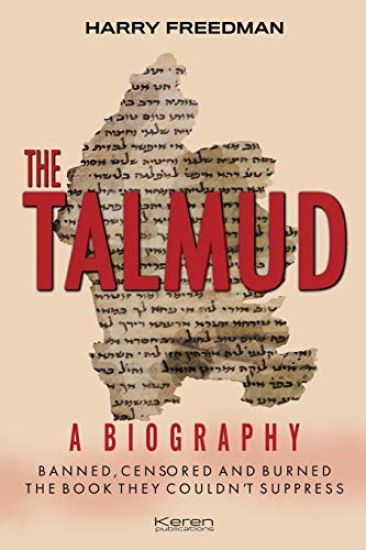
Containing nearly two million words in 37 volumes, the Talmud covers topics as diverse as law, faith, medicine, magic, ethics, sex, humour and prayer. It is a highly complex, profoundly logical and frequently impenetrable work with a history like no other.In its 1500 year history the Talmud has been banned, censored and burned, dissected by scholars and rabbis, probed by philosophers, poets, republicans and kings.In The Talmud: A Biography, Harry Freedman tells the engrossing story of an ancient classic, the legal and mystical pillar of Judaism and recounts the story of a book which, in many ways, parallels the history of the Jewish people.From its origins as a record of discussions amongst scholars in towns and villages close to modern-day Baghdad, Freedman traces the spiralling paths of the Jewish diaspora and explores the story of the Talmud's early origins in Babylon, its role during the Enlightenment and its influence over traditional Judaism. A compelling fusion of law, storytelling and spirituality, the Talmud's story is a fascinating insight into the history of Judaism and Harry Freedman's The Talmud: A Biography is a remarkable account of one of the most important cultural, historical and religious works of our time.
Bob Dylan

Bob Dylan

Harry Freedman

BLOOMSBURY PUBLISHING PLC
2026
nidottu
From the day that Bobby Zimmerman first turned on the radio in his parents’ home in Hibbing, he’d had a pretty good idea that big things were happening. When Bob Dylan arrived in New York one winter morning in 1961 he was a complete unknown. His music and spirit would go on to capture the hearts and minds of a generation, but what no one knew then was that, like so many before him, Dylan was concealing his Jewish origins. Covering the same turbulent years as the hit film starring Timothée Chalamet, this entertaining biography offers new insights into Bob Dylan's early career. For Harry Freedman, Dylan’s roots are the key to grasping how this young musician burst onto the scene and reinvented not only himself, but popular music. The instinct for escape and reinvention has defined Dylan’s long career. Freedman traces the heady atmosphere of the 1960s and the folk-rock revolution spearheaded by Dylan. Right up until the moment in 1966 when Dylan stepped out onto the stage and went electric – exploring how his musical decisions, genius for reinvention and his Jewishness go inescapably hand in hand.
Leonard Cohen

Leonard Cohen

Harry Freedman

Bloomsbury Continuum
2021
sidottu
'Leonard Cohen taught us that even in the midst of darkness there is light, in the midst of hatred there is love, with our dying breath we can still sing Hallelujah.' - The late Rabbi Lord Jonathan Sacks 'Among the finest volumes on Cohen’s life and lyrics ... An exploration which would have intrigued and engaged Leonard himself.' - John McKenna, writer and friend of Leonard Cohen Harry Freedman uncovers the spiritual traditions that lie behind Leonard Cohen's profound and unmistakable lyrics. The singer and poet Leonard Cohen was deeply learned in Judaism and Christianity, the spiritual traditions that underpinned his self-identity and the way he made sense of the world. In this book Harry Freedman, a leading author of cultural and religious history, explores the mystical and spiritual sources Cohen drew upon, discusses their original context and the stories and ideas behind them. Cohen’s music is studded with allusions to Jewish and Christian tradition, to stories and ideas drawn from the Bible, Talmud and Kabbalah. From his 1967 classic ‘Suzanne’, through masterpieces like ‘Hallelujah’ and ‘Who by Fire’, to his final challenge to the divinity, ‘You Want It Darker’ he drew on spirituality for inspiration and as a tool to create understanding, clarity and beauty. Born into a prominent and scholarly Jewish family in Montreal, Canada, Cohen originally aspired to become a poet, before turning to song writing and eventually recording his own compositions. Later, he became immersed in Zen Buddhism, moving in 1990 to a Zen monastery on Mount Baldy, California where he remained for some years. He died, with immaculate timing, on the day before Donald Trump was elected in 2016, leaving behind him a legacy that will be felt for generations to come. Leonard Cohen: The Mystical Roots of Genius looks deeply into the imagination of one of the greatest singers and lyricists of our time, providing a window on the landscape of his soul. Departing from traditional biographical approaches, Freedman explores song by song how Cohen reworked myths and prayers, legends and allegories with an index of songs at the end of the book for readers to search by their favourites. By the end the reader will be left with a powerful understanding of Cohen’s story, together with a far broader insight into the mystical origins of his inimitable work.