Kirjojen hintavertailu. Mukana 11 342 296 kirjaa ja 12 kauppaa.

Kirjahaku

Etsi kirjoja tekijän nimen, kirjan nimen tai ISBN:n perusteella.

4 kirjaa tekijältä Harry Justin Elam

The Past as Present in the Drama of August Wilson

The Past as Present in the Drama of August Wilson

Harry Justin Elam

The University of Michigan Press
2006
nidottu
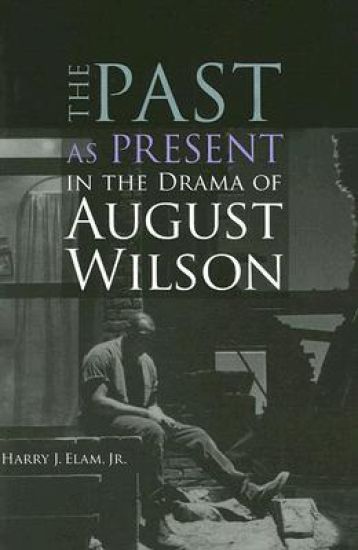
Pulitzer-prizewinning playwright August Wilson, author of Fences, Ma Rainey's Black Bottom, and The Piano Lesson, among other dramatic works, is one of the most well respected American playwrights on the contemporary stage. The founder of the Black Horizon Theater Company, his self-defined dramatic project is to review twentieth-century African American history by creating a play for each decade. Theater scholar and critic Harry J. Elam examines Wilson's published plays within the context of contemporary African American literature and in relation to concepts of memory and history, culture and resistance, race and representation. Elam finds that each of Wilson's plays recaptures narratives lost, ignored, or avoided to create a new experience of the past that questions the historical categories of race and the meanings of blackness. Harry J. Elam, Jr. is Professor of Drama at Stanford University and author of Taking It to the Streets: The Social Protest Theater of Luis Valdez and Amiri Baraka (The University of Michigan Press).
Taking It to the Streets

Taking It to the Streets

Harry Justin Elam

The University of Michigan Press
2001
nidottu
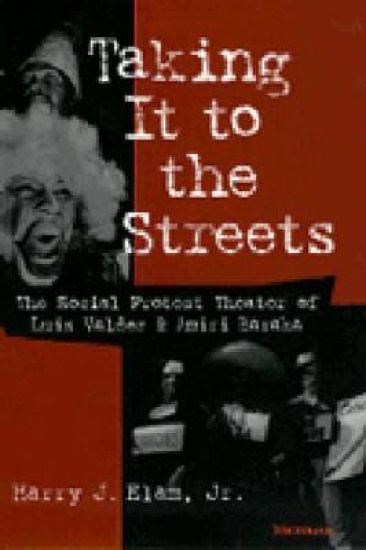
The performances of Luis Valdez's El Teatro Campesino, the farmworkers' theater, and Amiri Baraka's (LeRoi Jones's) Black Revolutionary Theater (BRT) during the 1960s and 1970s, offer preeminent examples of social protest theater during a momentous and tumultuous historical juncture. The performances of these groups linked the political, the cultural, and the spiritual, while agitating against the dominant power structure and for the transformation of social and theatrical practices in the U.S. Founded during the Delano Grape Pickers' Strike and Black Power rebellions of the mid-1960s, both El Teatro and the BRT professed cultural pride and group unity as critical corollaries to self-determination and revolutionary social action. Taking It to the Streets compares the performance methodologies, theories, and practices of the two groups, highlighting their cross-cultural commonalties, and providing insights into the complex genre of social protest performance and its interchange with its audience. It examines the ways in which ritual can be seen to operate within the productions of El Teatro and the BRT, uniting audience and performers in subversive, celebratory protest by transforming spectators into active participants within the theater walls --and into revolutionary activists outside. During this critical historical period, these performances not only encouraged community empowerment, but they inculcated a spirit of collective faith and revolutionary optimism. Elam's critical reexamination and recontextualization of the ideologies and practices of El Teatro and the BRT aid in our understanding of contemporary manipulations of identity politics, as well as current strategies for racial representation and cultural resistance."A major contribution to our understanding of how social protest came to be so strong and how Black and Chicano theatre contributed to the synergy of those times." --Janelle Reinelt, University of California, DavisHarry J. Elam, Jr., is Associate Professor of Drama and Director of the Committee on Black Performing Arts, Stanford University.
Taking It to the Streets

Taking It to the Streets

Harry Justin Elam

The University of Michigan Press
1997
sidottu
The performances of Luis Valdez's El Teatro Campesino, the farmworkers' theater, and Amiri Baraka's (LeRoi Jones's) Black Revolutionary Theater (BRT) during the 1960s and 1970s, offer preeminent examples of social protest theater during a momentous and tumultuous historical juncture. The performances of these groups linked the political, the cultural, and the spiritual, while agitating against the dominant power structure and for the transformation of social and theatrical practices in the U.S. Founded during the Delano Grape Pickers' Strike and Black Power rebellions of the mid-1960s, both El Teatro and the BRT professed cultural pride and group unity as critical corollaries to self-determination and revolutionary social action. Taking It to the Streets compares the performance methodologies, theories, and practices of the two groups, highlighting their cross-cultural commonalties, and providing insights into the complex genre of social protest performance and its interchange with its audience. It examines the ways in which ritual can be seen to operate within the productions of El Teatro and the BRT, uniting audience and performers in subversive, celebratory protest by transforming spectators into active participants within the theater walls --and into revolutionary activists outside. During this critical historical period, these performances not only encouraged community empowerment, but they inculcated a spirit of collective faith and revolutionary optimism. Elam's critical reexamination and recontextualization of the ideologies and practices of El Teatro and the BRT aid in our understanding of contemporary manipulations of identity politics, as well as current strategies for racial representation and cultural resistance."A major contribution to our understanding of how social protest came to be so strong and how Black and Chicano theatre contributed to the synergy of those times." --Janelle Reinelt, University of California, DavisHarry J. Elam, Jr., is Associate Professor of Drama and Director of the Committee on Black Performing Arts, Stanford University.
The Past as Present in the Drama of August Wilson

The Past as Present in the Drama of August Wilson

Harry Justin Elam

The University of Michigan Press
2004
sidottu
Pulitzer-prizewinning playwright August Wilson, author of Fences, Ma Rainey's Black Bottom, and The Piano Lesson, among other dramatic works, is one of the most well respected American playwrights on the contemporary stage. The founder of the Black Horizon Theater Company, his self-defined dramatic project is to review twentieth-century African American history by creating a play for each decade. Theater scholar and critic Harry J. Elam examines Wilson's published plays within the context of contemporary African American literature and in relation to concepts of memory and history, culture and resistance, race and representation. Elam finds that each of Wilson's plays recaptures narratives lost, ignored, or avoided to create a new experience of the past that questions the historical categories of race and the meanings of blackness. Harry J. Elam, Jr. is Professor of Drama at Stanford University and author of Taking It to the Streets: The Social Protest Theater of Luis Valdez and Amiri Baraka (The University of Michigan Press).