Kirjojen hintavertailu. Mukana 12 016 292 kirjaa ja 12 kauppaa.

Kirjahaku

Etsi kirjoja tekijän nimen, kirjan nimen tai ISBN:n perusteella.

16 kirjaa tekijältä Harry Levin

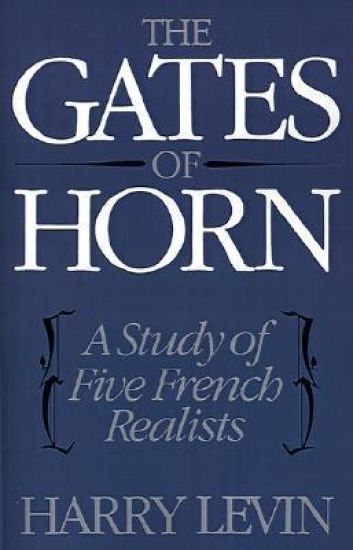
The Gates of Horn

The Gates of Horn

Harry Levin

Oxford University Press Inc
1986
nidottu
"The author explores this tradition in depth and defines it with a breadth of vision, a dynamic vigor and freedom rarely paralleled today....His method, flexible, generous, humane in the best sense of the word, eschews pedantry, dogma, useless theorizing and scholastic argumentation."--The New York Times Book Review. "I wish to make it clear that The Gates of Horn represents an outstanding critical accomplishment."--Saturday Review. In the Odyssey, Homer describes two gates of the imagination: one of ivory through which fictitious dreams pass, and the other of horn, through which nothing but the truth may pass. Realism is the type of literature that passes through the horn, and in this significant study of the genre Levin examines a major form of Realism--the French novel--and focuses on five of its masters--Stendahl, Balzac, Flaubert, Zola, and Proust. Now available in paperback, Levin's study is a veritable reconstruction of the artistic and intellectual life of a nation.
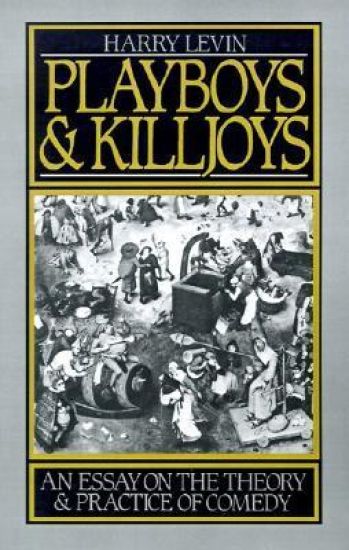
Playboys and Killjoys

Playboys and Killjoys

Harry Levin

Oxford University Press Inc
1994
nidottu
Harry Levin--one of America's major literary critics--offers a brilliant and original study of the whole world of comedy, concentrating on playwrights through the centuries, from Aristophanes and Plautus in classical times to Bernard Shaw and Bertolt Brecht and their recent successors. Viewing the comic repertory as a richly varied yet broadly unified whole, Levin provides a synthesis of theories and practice. Isolating two fundamental aspects of comedy--the ludicrous and irreverent "playboy," whom we laugh with, and the ridiculous and forbidding "killjoy," whom we laugh at--he traces the dialectical interplay of these components throughout history and across various cultures and media. While mainly focusing on the plays and the stage, with discussions of such major dramatists as Shakespeare, Ben Jonson, Molière, and William Congreve, Levin also includes essays on such related topics as humor, satire, and games.
James Joyce: A Critical Introduction

James Joyce: A Critical Introduction

Harry Levin

NEW DIRECTIONS PUBLISHING CORPORATION
1960
nidottu
Because Harry Levin's view is large, as opposed to the many necessary exegeses and close textual studies, he leads the reader easily into the delights to be found in Joyce, from the comparatively simple prose of Dubliners, through Ulysses and into the complexities of Finnegans Wake. The insight and brilliance of this "critical introduction," first published by New Directions in 1941, make it as rewarding for the expert as the student. For this revised edition, Mr. Levin, who is Irving Babbitt Professor of Comparative Literature at Harvard, has made revisions and added a new preface and a long "postscript" which he calls "Revising Joyce." He examines the works that have come to light in the last few years and some of the important later biographical writings about Joyce.
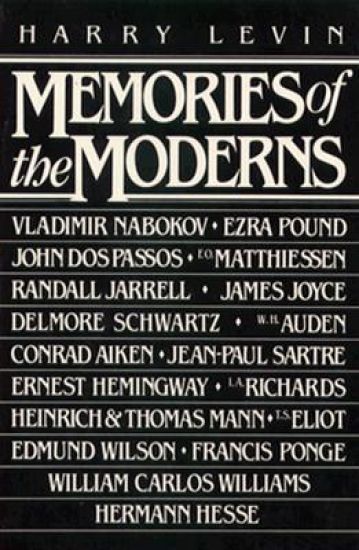
Memories of the Moderns: Critical Essays

Memories of the Moderns: Critical Essays

Harry Levin

NEW DIRECTIONS PUBLISHING CORPORATION
1982
nidottu
Harry Levin's Memories of the Moderns, originally published by New Directions in 1980, is now presented in New Directions Paperbook format. This gathering of prose pieces--reviews, essays, lectures, introductions, personal recollections, and epistles, written for the most part during the 1970s--combines criticism with reminiscence and is both an exploration of the idea of modernism within the international frame of comparative literature and a valediction. By now, what was so avant-garde, experimental, difficult, and sometimes shocking in the writings of the twentieth-century modernists has permanently altered our literature--the groundbreakers have become our classics. Discussed here are Ezra Pound, T. S. Eliot, James Joyce, Heinrich and Thomas Mann, Hermann Hesse, Ernest Hemingway, John Dos Passos, William Carlos Williams, Conrad Aiken, Jean-Paul Sartre (writing on Flaubert), Francis Ponge, W. H. Auden, Delmore Schwartz, Randall Jarrell, I. A. Richards, Edmund Wilson, Vladimir Nabokov, and F. O. Mathiessen. There is as well an opening letter to James Laughlin, who published Harry Levin's seminal book on James Joyce in 1941.
Scenes from Shakespeare

Scenes from Shakespeare

Harry Levin

CRC Press Inc
2000
sidottu
The late Harry Levin had an international reputation as the world's foremost comparatiste, and he was among the most knowledgeable Shakespeare scholars in the world. Before he died, Harry Levin had planned to publish this essay collection which examines key scenes in a number of Shakespeare's plays.
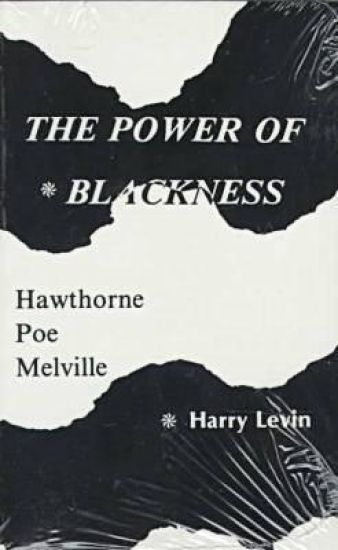
The Power of Blackness

The Power of Blackness

Harry Levin

Ohio University Press
1980
pokkari
The Power of Blackness is a profound and searching reinterpretation of Hawthorne, Poe and Melville, the three classic American masters of fiction. It is also an experiment in critical method, an exploration of the myth-making process by way of what may come to be known as literary iconology.
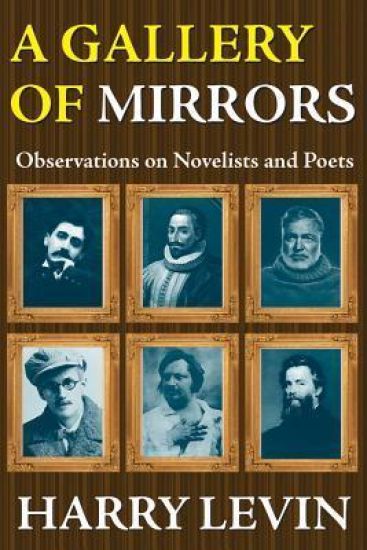
A Gallery of Mirrors

A Gallery of Mirrors

Harry Levin

Routledge
2017
sidottu
The essays in this classic volume range from broad concerns with critical theory and aesthetic formulation to specific analysis of forms and texts. Levin discusses such matters as the symbolic interpretation of literature, the development of literary criticism during the past half-century, European attitudes toward contemporary American writers, and re-evaluations of Joyce, Proust, Balzac, Cervantes, Melville, and Hemingway. Because Levin is both a learned scholar and imaginative critic, there is no comparable book that offers the wit, taste, and learning one finds in these pages. His historical and comparative approaches to literary theory enable Levin to place a given work precisely by relating it to other works and manifestations of culture. World literature is not the province of this work. But Levin views it as the horizon against which our own traditions may be measured. Just as anthropologists discover similar processes working through diverse cultures, so through can we glean understanding of common patterns through the analysis of world literature, our own peculiarly specialized branch of the science of man. The effect of convention, in shaping the extent to which literature may be conceived as an institution, has been widely discussed. A Gallery of Mirrors raises theoretical questions that touch the methodology of humanistic scholarship, with regard to other disciplines, and the status of art, with regard to other modes of knowledge. With changing schools of critical thought, Levin relies considerably on semantics as a precision instrument for defining concepts in the terms of those for whom they were most meaningful.
Scenes from Shakespeare

Scenes from Shakespeare

Harry Levin

Routledge
2015
nidottu
The late Harry Levin had an international reputation as the world's foremost comparatiste, and he was among the most knowledgeable Shakespeare scholars in the world. Before he died, Harry Levin had planned to publish this essay collection which examines key scenes in a number of Shakespeare's plays.
Symbolism and Fiction

Symbolism and Fiction

Harry Levin

Literary Licensing, LLC
2011
sidottu
""Symbolism and Fiction"" by Harry Levin is a comprehensive exploration of the use of symbolism in literature. In this book, Levin examines the ways in which writers use symbolism to convey deeper meanings and themes in their works. He provides a detailed analysis of various literary works, including novels, poems, and plays, and explores the use of symbolism in each of them. Levin delves into the various types of symbols used in literature, such as allegory, metaphor, and allusion, and explains how they contribute to the overall meaning of a work. He also examines the historical and cultural contexts in which these symbols were created and how they have evolved over time. The book is divided into several sections, each of which focuses on a different aspect of symbolism in literature. Levin discusses the works of notable authors such as James Joyce, William Faulkner, and Franz Kafka, and provides insightful analyses of their use of symbolism. Overall, ""Symbolism and Fiction"" is a valuable resource for anyone interested in understanding the complex world of literary symbolism. It is a well-written and engaging book that offers a wealth of information and analysis on this important aspect of literature.This scarce antiquarian book is a facsimile reprint of the old original and may contain some imperfections such as library marks and notations. Because we believe this work is culturally important, we have made it available as part of our commitment for protecting, preserving, and promoting the world's literature in affordable, high quality, modern editions, that are true to their original work.
A Gallery of Mirrors

A Gallery of Mirrors

Harry Levin

AldineTransaction
2011
nidottu
The essays in this classic volume range from broad concerns with critical theory and aesthetic formulation to specific analysis of forms and texts. Levin discusses such matters as the symbolic interpretation of literature, the development of literary criticism during the past half-century, European attitudes toward contemporary American writers, and re-evaluations of Joyce, Proust, Balzac, Cervantes, Melville, and Hemingway. Because Levin is both a learned scholar and imaginative critic, there is no comparable book that offers the wit, taste, and learning one finds in these pages. His historical and comparative approaches to literary theory enable Levin to place a given work precisely by relating it to other works and manifestations of culture. World literature is not the province of this work. But Levin views it as the horizon against which our own traditions may be measured. Just as anthropologists discover similar processes working through diverse cultures, so through can we glean understanding of common patterns through the analysis of world literature, our own peculiarly specialized branch of the science of man. The effect of convention, in shaping the extent to which literature may be conceived as an institution, has been widely discussed. A Gallery of Mirrors raises theoretical questions that touch the methodology of humanistic scholarship, with regard to other disciplines, and the status of art, with regard to other modes of knowledge. With changing schools of critical thought, Levin relies considerably on semantics as a precision instrument for defining concepts in the terms of those for whom they were most meaningful.