Kirjojen hintavertailu. Mukana 11 717 486 kirjaa ja 12 kauppaa.

Kirjahaku

Etsi kirjoja tekijän nimen, kirjan nimen tai ISBN:n perusteella.

21 kirjaa tekijältä Harry Redner

Malign Masters Gentile Heidegger Lukács Wittgenstein
A politically oriented study of the thought of the founders of the main schools of contemporary academic philosophy, those which dominate nearly all universities throughout the world. It concentrates on four key masters: Wittgenstein, who founded both Logical Positivism and the so-called Common Language or Analytic school; Heidegger, the acknowledged master of Hermeneutic Philosophy or the so-called Continental school; Lukacs, the founder of Hegelian Marxism and the leading Communist philosopher of the Soviet period; and, finally, the now lesser-known Gentile, the Hegelian Idealist.
A New Science of Representation

A New Science of Representation

Harry Redner

Routledge
2019
sidottu
The astonishing aim of this bold and original study is no less than the construction of a comprehensive theory of culture–a theory that challenges many established approaches in disciplines such as philosophy, semiotics, sociology, political theory, aesthetics, and history itself. Building on the thesis that crucial changes in human cultural history correlate with fundamental transformations in modes of representation, Redner traces human development from primitive culture to that of the present age. He defines four modes of representation to account for the epochal stages in cultural history: fetishistic (primitive culture), iconic (early civilization), mimetic (the so-called Axial cultures), and representationalist (modernity from the Reformation to the present). Although there is much that is both enlightening and provocative about the cultural past here, it is our present age that most interests Redner. He argues that its fundamental mode, representationalism mediated by electronics, is still essentially modernist. Thus Redner denies that our culture can meaningfully be called postmodern. In the tradition of Vico, Comte, Weber, Norbert Elias, and Charles E. Lindblom, A New Science of Representation is a major statement by an original thinker on both the nature of cultural development and the interpretation of our confused present.
A New Science Of Representation

A New Science Of Representation

Harry Redner

Routledge
2020
nidottu
This book deals with representation in science, politics and art both in its historical dimensions and in its contemporary expression. It aims to reveal the current trends of culture and guide these towards the goal of a future culture for the coming global technological civilization.
The Ends Of Science

The Ends Of Science

Harry Redner

Routledge
2019
sidottu
In this path-breaking and controversial book, Harry Redner provides a systematic study of how the epistemologically interesting features of contemporary science are to be understood. Taking “science†to include knowledge from the social sciences and humanities as well as the physical sciences, Redner shows how the history of science, philosophical theory, and current scientific research reveal connections between scientific developments and features of the social organization of science. Redner argues that the shift from Classical science to a more complex and less orderly World science after World War II has changed the way scientific research is done and how its knowledge is organized. His aim, however, “is not merely to interpret science, but to change it.†Thus, this examination is more than a survey and critique—it is a positive program for the development of future science. Remarkable for its breadth and insight, the book is especially valuable for its discussions of authority and social organization (with the accompanying themes of academic politics, competition, power, and corruption) and for its catalog of the various contemporary critiques of science. Some of these are European in origin and will be new to many U.S. readers. A tour de force on several levels, this book is essential reading for scientists, philosophers, sociologists of science, historians of ideas, critics of contemporary culture and, indeed, for anyone who takes a serious interest in scientific research and higher learning.
The Ends Of Science

The Ends Of Science

Harry Redner

Routledge
2021
nidottu
In this path-breaking and controversial book, Harry Redner provides a systematic study of how the epistemologically interesting features of contemporary science are to be understood. Taking “science†to include knowledge from the social sciences and humanities as well as the physical sciences, Redner shows how the history of science, philosophical theory, and current scientific research reveal connections between scientific developments and features of the social organization of science. Redner argues that the shift from Classical science to a more complex and less orderly World science after World War II has changed the way scientific research is done and how its knowledge is organized. His aim, however, “is not merely to interpret science, but to change it.†Thus, this examination is more than a survey and critique—it is a positive program for the development of future science. Remarkable for its breadth and insight, the book is especially valuable for its discussions of authority and social organization (with the accompanying themes of academic politics, competition, power, and corruption) and for its catalog of the various contemporary critiques of science. Some of these are European in origin and will be new to many U.S. readers. A tour de force on several levels, this book is essential reading for scientists, philosophers, sociologists of science, historians of ideas, critics of contemporary culture and, indeed, for anyone who takes a serious interest in scientific research and higher learning.
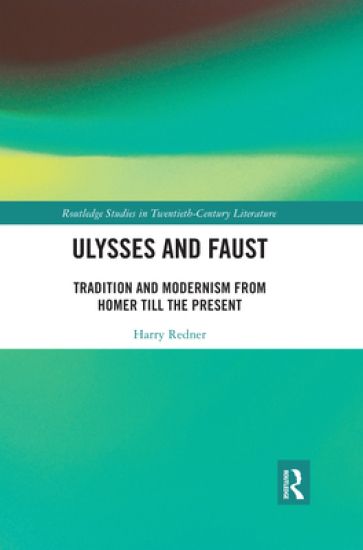
Ulysses and Faust

Ulysses and Faust

Harry Redner

Routledge
2020
nidottu
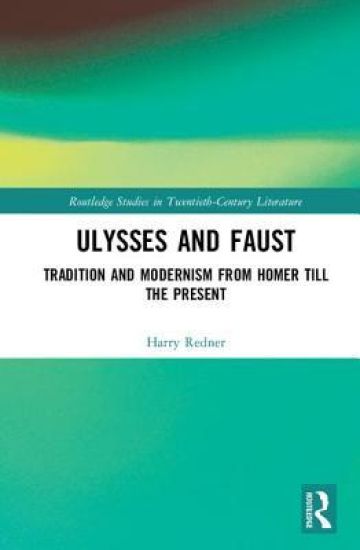
Ulysses and Faust: Tradition and Modernism from Homer till the Present examines the most important authors of Western literature: Homer, Virgil, Dante, Shakespeare, Cervantes, Marlowe, Goethe, Joyce, Eliot, Mann, Bulgakov and Pasternak, who based their works on one or other of the two key myths of the West, Ulysses and Faust. This volume provides a synoptic view of Western literature, as a foundation text for literary studies at all levels and as a way of encouraging people to once more engage with the major authors of our literary heritage. Ulysses and Faust considers the artistic revolution known as Modernism at the start of the twentieth century and the subsequent events in Europe, such as the World Wars and the totalitarian regimes, which led to a major break in Western civilization reflected in its literature. Consequently, these detailed critical studies illuminate their authors’ Weltanschauung, their view of life as it was lived in their time.
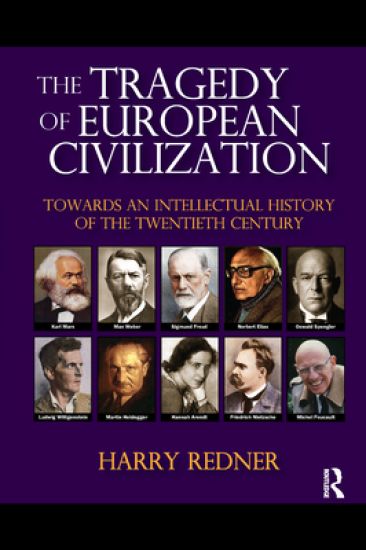
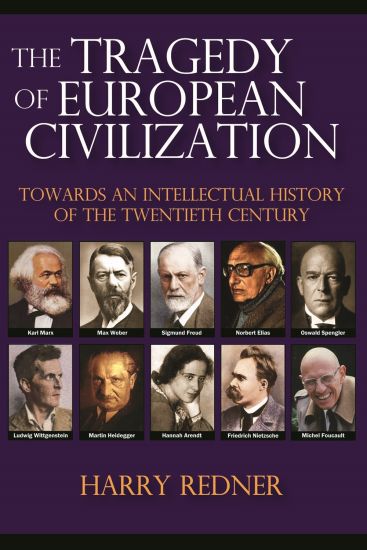
The Tragedy of European Civilization
The tragedy of European civilization is a protracted historical event spanning the twentieth century and in many ways is ongoing. During this time some of the greatest modern thinkers were active, producing works that both reflected what was happening in history and contributed towards shaping it. This work is a critique of their ideas. Harry Redner establishes where and how they went wrong, in some cases with apocalyptic consequences for Europe and the world.The great intellectuals of the age, at once philosophers, sociologists, political theorists, historians and much else besides, include Marx, Weber, Freud, Elias, Spengler, Wittgenstein, Heidegger, Arendt, Nietzsche, and Foucault. All of them had a historical impact, even if only in molding academic disciplines and shaping of public opinion, as was the case with the philosophers Wittgenstein and Arendt.This book explores the close links between anti-Semitism and cultural pessimism and the relation between psychology and sociology. Other themes range from the history and theory of the state, to the misconception of language and power. Suitable for students of sociology, philosophy, political theory, history, and cultural studies, this brilliant exploration of our civilization and its tragedies will also be of interest to intellectual general readers.
In the Beginning was the Deed

In the Beginning was the Deed

Harry Redner

University of California Press
2018
pokkari
Now that the collective death of mankind has become a possibility, no other thought can remain unimpaired. Harry Redner traces historically the onset of this acute state of Nihilism from what might be called the Faustian revolution, symbolized by Faust's pronouncement “In the beginning was the Deed.” Redner reflects on the passage of the three main Fausts, from Marlowe’s to Goethe’s to Thomas Mann’s, and this reflection serves as the dramatic metaphor for a review of the relationship of Progress to Nihilism in modern civilization. Starting with an exposition of the key Faustian thinkers—Marx, Nietzsche, Wittgenstein, and Heidegger—the book proceeds by examining the dominant modern ideas on Man, Time, and Nihilism with reference to Foucault, Derrida, and Althusser. It focuses on Language, which is a key preoccupation of all these thinkers but has not yet been taken far enough to afford a basis for the explanation of fundamental changes in civilization. Language in its creative and destructive functions, as constituting both the conscious and unconscious of a culture, is reconceived so as to account for the hidden link between Progress and Nihilism. The author then explores sociologically the dominant aspects of Progress in terms of the ideas of Weber, Adorno, and Marcuse on Technology, Subjectivity, and Activism. Finally, an extensive literary study of the three main Fausts concludes with a coda on the future of music. In the Beginning Was the Deed is lucid and direct, tinged with wry humor. Redner represent Man in the nuclear age and reflects on that representation, seeking to comprehend our era, draw ethical and political conclusions, and explore action as a response to the threat of annihilation. This title is part of UC Press's Voices Revived program, which commemorates University of California Press’s mission to seek out and cultivate the brightest minds and give them voice, reach, and impact. Drawing on a backlist dating to 1893, Voices Revived makes high-quality, peer-reviewed scholarship accessible once again using print-on-demand technology. This title was originally published in 1982.
In the Beginning was the Deed

In the Beginning was the Deed

Harry Redner

University of California Press
2024
sidottu
Now that the collective death of mankind has become a possibility, no other thought can remain unimpaired. Harry Redner traces historically the onset of this acute state of Nihilism from what might be called the Faustian revolution, symbolized by Faust's pronouncement “In the beginning was the Deed.” Redner reflects on the passage of the three main Fausts, from Marlowe’s to Goethe’s to Thomas Mann’s, and this reflection serves as the dramatic metaphor for a review of the relationship of Progress to Nihilism in modern civilization. Starting with an exposition of the key Faustian thinkers—Marx, Nietzsche, Wittgenstein, and Heidegger—the book proceeds by examining the dominant modern ideas on Man, Time, and Nihilism with reference to Foucault, Derrida, and Althusser. It focuses on Language, which is a key preoccupation of all these thinkers but has not yet been taken far enough to afford a basis for the explanation of fundamental changes in civilization. Language in its creative and destructive functions, as constituting both the conscious and unconscious of a culture, is reconceived so as to account for the hidden link between Progress and Nihilism. The author then explores sociologically the dominant aspects of Progress in terms of the ideas of Weber, Adorno, and Marcuse on Technology, Subjectivity, and Activism. Finally, an extensive literary study of the three main Fausts concludes with a coda on the future of music. In the Beginning Was the Deed is lucid and direct, tinged with wry humor. Redner represent Man in the nuclear age and reflects on that representation, seeking to comprehend our era, draw ethical and political conclusions, and explore action as a response to the threat of annihilation. This title is part of UC Press's Voices Revived program, which commemorates University of California Press’s mission to seek out and cultivate the brightest minds and give them voice, reach, and impact. Drawing on a backlist dating to 1893, Voices Revived makes high-quality, peer-reviewed scholarship accessible once again using print-on-demand technology. This title was originally published in 1982.

Ethical Life

Ethical Life

Harry Redner

Rowman Littlefield Publishers
2001
nidottu
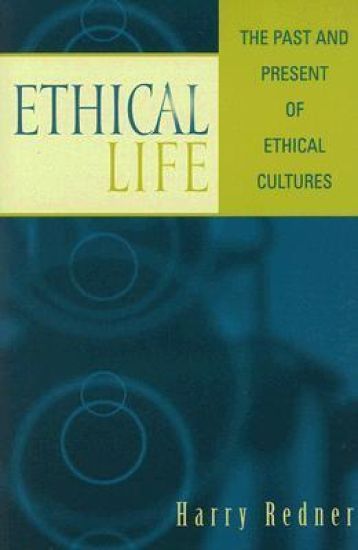
Ethical Life sets out to act as a guide for those of us who want to better understand ethics. It offers answers to the two simplest and yet most difficult questions facing individuals who have fallen into the perplexities of contemporary life: Why be ethical, and how? Redner enlightens his readers with a comprehensive survey of the nature of ethics, touching briefly in his introduction on present ethical concerns and then drawing his readers into a deeper examination of the ethical systems and cultures from which those concerns emerge. The author poses the question: To what extent is our global technological civilization conducive or averse to ethical matters, and how does it compare in this respect to the cultures of the past, both in the West and the East? The book is an excellent and thought provoking introduction to ethics, and an engaging resource for new students of ethics and moral theory. Ethical Life is distinctive in its format and approach, synthesizing in one book both an historical and comparative account of ethical systems, and an engaging discussion of contemporary ethical challenges. The book begins with an introduction to the ethics of ancient Israel, Greece, China, India, and Persia, before moving on to a diagnosis of the twentieth century crisis in ethics, and finally, a discussion of contemporary ethical concerns, exploring our social, cultural, and individual responses to them.
Conserving Cultures

Conserving Cultures

Harry Redner

Rowman Littlefield Publishers
2004
nidottu
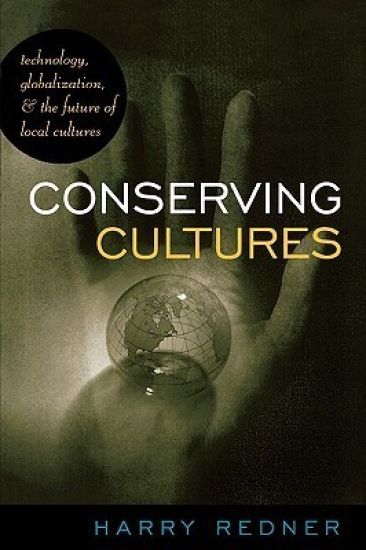
As the forests are felled, cultures are destroyed. In our technological civilization, the forces of globalization are a threat to both nature and culture. The many and varied cultures of the world are beset by the homogenizing impact of the global media, which represents the triumph of technics. The fate can only be averted by a concerted effort at culture conservation. Nature and culture must be protected to preserve a humanly habitable world. Conserving Cultures is the first book to link nature and culture conservation. The threat to nature is now well understood, how it relates to cultures is not. This book both describes and analyzes theoretically the danger to culture and proposes practical remedial measures.
Aesthetic Life

Aesthetic Life

Harry Redner

University Press of America
2007
nidottu
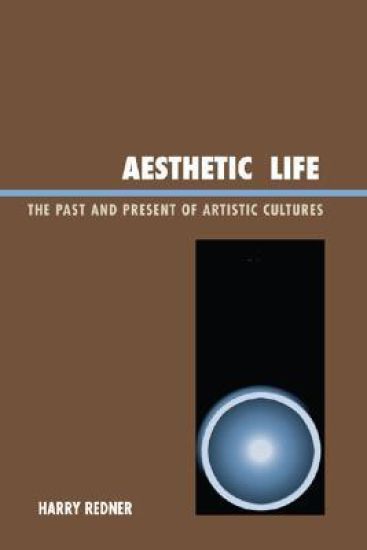
Harry Redner's Aesthetic Life examines the arts - all the arts from the earliest Paleolithic painting to the latest post-Modern music. Its aim is to account for the nature of art in its historical totality and to assess the role it has played in human life throughout the ages. In seeking to review the history of art in all civilizations and separate cultures, this work is intensely aware of the critical state of the arts towards which this history seems to be heading. None of the great artistic cultures has survived intact as a living tradition. All have been more or less consigned to museums, the mausoleums of dead art. India, China, Japan, Byzantium, Persia, all the sources of the heritage of great art have dwindled away. The last of these, Europe, also faltered in the course of the twentieth century, which began with so much hope - it seemed for a while that the Modernist upsurge of rebellious energy was to be the first stage of a new culture. In the present anarchic age of post-Modernism, where 'anything goes,' it has become apparent that Modernism was merely the last stage of European culture. With all these great traditions gone, Aesthetic Life asks 'What is to be done about art now?'-and considers possible answers.
Ulysses and Faust

Ulysses and Faust

Harry Redner

CRC Press Inc
2018
sidottu
Ulysses and Faust: Tradition and Modernism from Homer till the Present examines the most important authors of Western literature: Homer, Virgil, Dante, Shakespeare, Cervantes, Marlowe, Goethe, Joyce, Eliot, Mann, Bulgakov and Pasternak, who based their works on one or other of the two key myths of the West, Ulysses and Faust. This volume provides a synoptic view of Western literature, as a foundation text for literary studies at all levels and as a way of encouraging people to once more engage with the major authors of our literary heritage. Ulysses and Faust considers the artistic revolution known as Modernism at the start of the twentieth century and the subsequent events in Europe, such as the World Wars and the totalitarian regimes, which led to a major break in Western civilization reflected in its literature. Consequently, these detailed critical studies illuminate their authors’ Weltanschauung, their view of life as it was lived in their time.
The Humanities, the Social Sciences and the University
The Humanities, the Social Sciences and the University is an intellectual history of research in the humanities and social sciences. It scrutinizes the priorities, values, objectives and publishing agendas of the modern university in order to assess the institutional pressures on research in major disciplines such as literature, history, sociology and economics. It argues that all these disciplines are currently experiencing a deep malaise – though to different degrees – due to loss of faith in the Enlightenment project, which entailed the pursuit of knowledge through reason. Extreme scepticism, promoted since the 1970s by French Theory, which regards knowledge as an instrument of power, is a major factor in this disorientation. Overall, the book concludes that though universities have grown stronger, wealthier and more powerful in the last century, the quality and seriousness of the research they typically produce are weaker and intellectually less important and the institution is in danger of losing its way.An accessible and compelling read, this book will appeal to scholars of sociology, education and intellectual history with interests in higher education policy and academic life.
The Humanities, the Social Sciences and the University
The Humanities, the Social Sciences and the University is an intellectual history of research in the humanities and social sciences. It scrutinizes the priorities, values, objectives and publishing agendas of the modern university in order to assess the institutional pressures on research in major disciplines such as literature, history, sociology and economics. It argues that all these disciplines are currently experiencing a deep malaise – though to different degrees – due to loss of faith in the Enlightenment project, which entailed the pursuit of knowledge through reason. Extreme scepticism, promoted since the 1970s by French Theory, which regards knowledge as an instrument of power, is a major factor in this disorientation. Overall, the book concludes that though universities have grown stronger, wealthier and more powerful in the last century, the quality and seriousness of the research they typically produce are weaker and intellectually less important and the institution is in danger of losing its way.An accessible and compelling read, this book will appeal to scholars of sociology, education and intellectual history with interests in higher education policy and academic life.
Malign Masters Gentile Heidegger Lukács Wittgenstein
A politically oriented study of the thought of the founders of the main schools of contemporary academic philosophy, those which dominate nearly all universities throughout the world. It concentrates on four key masters: Wittgenstein, who founded both Logical Positivism and the so-called Common Language or Analytic school; Heidegger, the acknowledged master of Hermeneutic Philosophy or the so-called Continental school; Lukacs, the founder of Hegelian Marxism and the leading Communist philosopher of the Soviet period; and, finally, the now lesser-known Gentile, the Hegelian Idealist.
Totalitarianism, Globalization, Colonialism

Totalitarianism, Globalization, Colonialism

Harry Redner

AldineTransaction
2014
sidottu
The century that began in 1914 with the outbreak of the First World War was catastrophic. Over the course of that one-hundred-year span, civilizations were destroyed in the Old World, the New World, and the Third World, the latter represented by China, India, and Islam.In Europe the main agent of destruction was totalitarianism; in America it was globalization, ushered in by modernity; and in the non-Western world it was colonialism, followed later by totalitarianism and globalization. Harry Redner examines each of these processes, providing theoretical and historical accounts of their emergence. He considers the effects of Nazism and Bolshevism on the morale and morals of Europe; studies the effects on the United States of the nation's emergence as a major world power; and describes the impact of modernization on China, India, and Islam as they underwent Europeanization, Sovietization, and Americanization.Redner confronts us with a paradox: in the midst of unprecedented material affluence and organizational efficiency, one that uses advanced technologies and cutting-edge scientific knowledge, we are also sinking into an unprecedented cultural, moral, intellectual, and spiritual decline. He locates the origins of this condition in the violently contradictory processes of the twentieth century.
The Tragedy of European Civilization

The Tragedy of European Civilization

Harry Redner

AldineTransaction
2015
sidottu
The tragedy of European civilization is a protracted historical event spanning the twentieth century and in many ways is ongoing. During this time some of the greatest modern thinkers were active, producing works that both reflected what was happening in history and contributed towards shaping it. This work is a critique of their ideas. Harry Redner establishes where and how they went wrong, in some cases with apocalyptic consequences for Europe and the world.The great intellectuals of the age, at once philosophers, sociologists, political theorists, historians and much else besides, include Marx, Weber, Freud, Elias, Spengler, Wittgenstein, Heidegger, Arendt, Nietzsche, and Foucault. All of them had a historical impact, even if only in molding academic disciplines and shaping of public opinion, as was the case with the philosophers Wittgenstein and Arendt.This book explores the close links between anti-Semitism and cultural pessimism and the relation between psychology and sociology. Other themes range from the history and theory of the state, to the misconception of language and power. Suitable for students of sociology, philosophy, political theory, history, and cultural studies, this brilliant exploration of our civilization and its tragedies will also be of interest to intellectual general readers.
Totalitarianism, Globalization, Colonialism

Totalitarianism, Globalization, Colonialism

Harry Redner

AldineTransaction
2016
nidottu
The century that began in 1914 with the outbreak of the First World War was catastrophic. Over the course of that one-hundred-year span, civilizations were destroyed in the Old World, the New World, and the Third World, the latter represented by China, India, and Islam.In Europe the main agent of destruction was totalitarianism; in America it was globalization, ushered in by modernity; and in the non-Western world it was colonialism, followed later by totalitarianism and globalization. Harry Redner examines each of these processes, providing theoretical and historical accounts of their emergence. He considers the effects of Nazism and Bolshevism on the morale and morals of Europe; studies the effects on the United States of the nation's emergence as a major world power; and describes the impact of modernization on China, India, and Islam as they underwent Europeanization, Sovietization, and Americanization.Redner confronts us with a paradox: in the midst of unprecedented material affluence and organizational efficiency, one that uses advanced technologies and cutting-edge scientific knowledge, we are also sinking into an unprecedented cultural, moral, intellectual, and spiritual decline. He locates the origins of this condition in the violently contradictory processes of the twentieth century.
The Triumph and Tragedy of the Intellectuals

The Triumph and Tragedy of the Intellectuals

Harry Redner

AldineTransaction
2016
sidottu
This fourth instalment of Harry Redner's tetralogy on the history of civilization argues that intellectuals have a brilliant past, a dubious present, and possibly no future. He contends that the philosophers of the seventeenth century laid the ground for the intellectuals of the eighteenth century, the Age of Enlightenment. They, in turn, promoted a fundamental transformation of human consciousness: they literally intellectualized the world. The outcome was the disenchantment of the world in all its cultural dimensions: in art, religion, ethics, politics, and philosophy.In this fascinating study, Redner demonstrates how secularization took the sting out of both the dread and promise of an afterlife and intellectuals learned to die without the hope of immortality popularized by philosophy and religion. Ultimately, they produced the ideologies that generated the totalitarian regimes of the twentieth century, which subsequently exterminated these intellectuals through mass murder on a scale never before experienced. The book traces the sources of this fatal entanglement and goes on to examine the contemporary condition of intellectuals in America and the world.Wherein lies the future of the intellectuals? Redner suggest that in the present state of globalization, dominated by technocrats, experts, and professionals, their fate remains uncertain.