Kirjojen hintavertailu. Mukana 11 605 960 kirjaa ja 12 kauppaa.

Kirjahaku

Etsi kirjoja tekijän nimen, kirjan nimen tai ISBN:n perusteella.

5 kirjaa tekijältä Harry Waldman

Missing Reels

Missing Reels

Harry Waldman

McFarland Co Inc
2007
pokkari
During the first half of this century, motion pictures were often considered disposable once their circulations were over. The recycling of used film and the use of components for war efforts contributed to the loss of many movies, as did the unstable nature of the nitrate film itself. The loss of extant works has created gaps in the national cinematic history of the United States and most European countries. Eighty percent of all Western-made films produced before World War I are considered lost, while 15 percent of the films made from 1930 to 1950 are also missing. Here are descriptions of nearly 1,000 of the lost American and European films produced between 1900 and 1950, featuring the talents of the still famous as well as the now obscure. The films are arranged by country and reveal the remarkably prolific early filmmaking in countries like the Netherlands and Sweden. Each entry includes production information, cast, synopsis, history, and insights from reviews when available. Photographs from these films provide glimpses of what once was. An extensive index is included.
Maurice Tourneur

Maurice Tourneur

Harry Waldman

McFarland Co Inc
2008
pokkari
Maurice Tourneur (1876-1961), the French and American director, actor, and theatrical manager, is the focus of this work. He began in France during the years 1912-1914, and then spent 1914-1926 in New Jersey and Hollywood, directing more than 50 films, using his French interests and talents to help shape the industry, and bringing "stylization" to the screen.
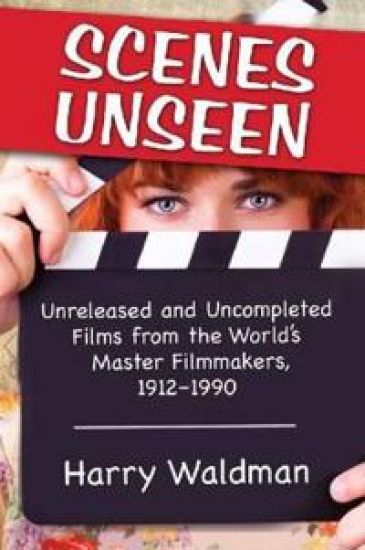
Scenes Unseen

Scenes Unseen

Harry Waldman

McFarland Co Inc
2014
pokkari
In a hundred years of filmmaking dozens of potentially great films of master directors and artists were either never completed or not released. Many of these films are lost forever, but their little-known histories illustrate what fiction writers have known all along: People's failures often make stories more compelling than their successes. The reasons these might-have-beens never came to fruition are almost as varied as the plots themselves: Love spurned (L'Ecole des Femmes, 1941, Max Olphuls), unmanageable stars (I Loved a Soldier, 1936, Henry Hathaway), government suppression (Bezhin Meadow, 1935, Sergei Eisenstein) and fear of reprisal (Metall, 1931-33, Hans Richter) are but a few. A detailed discussion of each attempt is accompanied by cast and production credits (when available) and excerpts from scripts and other sources. Rare stills are interspersed throughout.
Paramount In Paris

Paramount In Paris

Harry Waldman

Scarecrow Press
1998
sidottu
The years 1930-1933 were a time of experimentation and change. Sound (in English, French, German, Italian, and Spanish) was being added to image by the world's film studios. Motion Picture News warned that foreign-version "talkers" were "the only means of breaking into film markets abroad." Fans around the world made it clear that they were eager to hear movies in their own languages and had little tolerance for sound films in languages other than their own. In an ambitious and risky attempt to dominate the international sound film market, Paramount invested money abroad where great filmmaking talent was at hand. In the process, Paramount rendered an important service to film history: it put together one of the most complete film records of the talent of an era ever assembled by an institution in the industry. The company set up a huge studio complex in Joinville, near Paris. Robert T. Kane, an experienced Paramount executive, filled the Paris studios with an unprecedented collection of talent and captured on film an era that is now long gone. Waldman offers a look at the 300 films Paramount produced in Paris and the filmmakers who loaned their genius to an effort that has been unjustly overlooked by film historians.
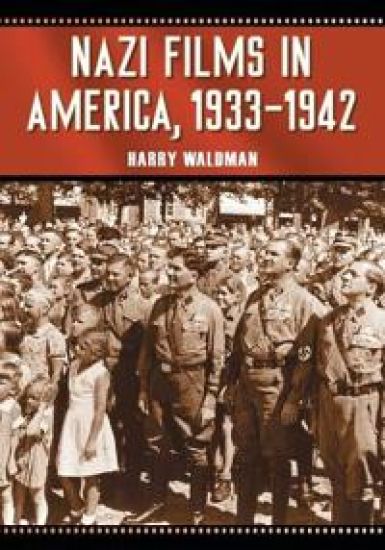
Nazi Films in America, 1933-1942

Nazi Films in America, 1933-1942

Harry Waldman

McFarland Co Inc
2020
pokkari
From 1933 until America's entry into World War II in 1941, nearly 500 Nazi films were shown in American theaters, accounting for nearly half of all foreign language film imports during the period. These poorly disguised propaganda films were produced by Germany's top studios and featured prominent pro-German and Nazi actors, directors and technicians. The films were replete with overt and covert anti-Jewish imagery and themes, but in spite of this obvious intent to use the medium to justify Nazi ascendancy, viewers and film critics from such prominent publications as the New York Times, Variety, the Washington Post and the Chicago Times consistently overlooked the films' anti-Semitic message, dubbing them harmless entertainment. This is the complete history of German films shown in America from the founding of the Nazi government to America's involvement in the war. Summaries, descriptions and discussions of these almost 500 films serve to examine the major filmmakers and distributors who kept the German film industry alive during the rule of Hitler and the Third Reich. Special emphasis is placed on films directly commissioned by Joseph Goebbels, head of the German Ministry for the Enlightenment of the People and Propaganda and the man directly responsible for ensuring that the anti-Semitic ideology of the new regime was reflected in all films produced after January 30, 1933. Rarely seen photographs and illustrations complete an in-depth study of the Nazi use of this global medium.