Kirjojen hintavertailu. Mukana 11 244 527 kirjaa ja 12 kauppaa.

Kirjahaku

Etsi kirjoja tekijän nimen, kirjan nimen tai ISBN:n perusteella.

35 kirjaa tekijältä Hartmut Rosa

Social Acceleration

Social Acceleration

Hartmut Rosa

Columbia University Press
2013
sidottu
Hartmut Rosa advances an account of the temporal structure of society from the perspective of critical theory. He identifies three categories of change in the tempo of modern social life: technological acceleration, evident in transportation, communication, and production; the acceleration of social change, reflected in cultural knowledge, social institutions, and personal relationships; and acceleration in the pace of life, which happens despite the expectation that technological change should increase an individual's free time. According to Rosa, both the structural and cultural aspects of our institutions and practices are marked by the "shrinking of the present," a decreasing time period during which expectations based on past experience reliably match the future. When this phenomenon combines with technological acceleration and the increasing pace of life, time seems to flow ever faster, making our relationships to each other and the world fluid and problematic. It is as if we are standing on "slipping slopes," a steep social terrain that is itself in motion and in turn demands faster lives and technology. As Rosa deftly shows, this self-reinforcing feedback loop fundamentally determines the character of modern life.
Social Acceleration

Social Acceleration

Hartmut Rosa

Columbia University Press
2015
pokkari
Hartmut Rosa advances an account of the temporal structure of society from the perspective of critical theory. He identifies three categories of change in the tempo of modern social life: technological acceleration, evident in transportation, communication, and production; the acceleration of social change, reflected in cultural knowledge, social institutions, and personal relationships; and acceleration in the pace of life, which happens despite the expectation that technological change should increase an individual's free time. According to Rosa, both the structural and cultural aspects of our institutions and practices are marked by the "shrinking of the present," a decreasing time period during which expectations based on past experience reliably match the future. When this phenomenon combines with technological acceleration and the increasing pace of life, time seems to flow ever faster, making our relationships to each other and the world fluid and problematic. It is as if we are standing on "slipping slopes," a steep social terrain that is itself in motion and in turn demands faster lives and technology. As Rosa deftly shows, this self-reinforcing feedback loop fundamentally determines the character of modern life.
Resonance

Resonance

Hartmut Rosa

Polity Press
2019
sidottu
The pace of modern life is undoubtedly speeding up, yet this acceleration does not seem to have made us any happier or more content. If acceleration is the problem, then the solution, argues Hartmut Rosa in this major new work, lies in “resonance.” The quality of a human life cannot be measured simply in terms of resources, options, and moments of happiness; instead, we must consider our relationship to, or resonance with, the world. Applying his theory of resonance to many domains of human activity, Rosa describes the full spectrum of ways in which we establish our relationship to the world, from the act of breathing to the adoption of culturally distinct worldviews. He then turns to the realms of concrete experience and action – family and politics, work and sports, religion and art – in which we as late modern subjects seek out resonance. This task is proving ever more difficult as modernity’s logic of escalation is both cause and consequence of a distorted relationship to the world, at individual and collective levels. As Rosa shows, all the great crises of modern society – the environmental crisis, the crisis of democracy, the psychological crisis – can also be understood and analyzed in terms of resonance and our broken relationship to the world around us. Building on his now classic work on acceleration, Rosa’s new book is a major new contribution to the theory of modernity, showing how our problematic relation to the world is at the crux of some of the most pressing issues we face today. This bold renewal of critical theory for our times will be of great interest to students and scholars across the social sciences and humanities.
Resonance

Resonance

Hartmut Rosa

Polity Press
2021
nidottu
The pace of modern life is undoubtedly speeding up, yet this acceleration does not seem to have made us any happier or more content. If acceleration is the problem, then the solution, argues Hartmut Rosa in this major new work, lies in “resonance.” The quality of a human life cannot be measured simply in terms of resources, options, and moments of happiness; instead, we must consider our relationship to, or resonance with, the world. Applying his theory of resonance to many domains of human activity, Rosa describes the full spectrum of ways in which we establish our relationship to the world, from the act of breathing to the adoption of culturally distinct worldviews. He then turns to the realms of concrete experience and action – family and politics, work and sports, religion and art – in which we as late modern subjects seek out resonance. This task is proving ever more difficult as modernity’s logic of escalation is both cause and consequence of a distorted relationship to the world, at individual and collective levels. As Rosa shows, all the great crises of modern society – the environmental crisis, the crisis of democracy, the psychological crisis – can also be understood and analyzed in terms of resonance and our broken relationship to the world around us. Building on his now classic work on acceleration, Rosa’s new book is a major new contribution to the theory of modernity, showing how our problematic relation to the world is at the crux of some of the most pressing issues we face today. This bold renewal of critical theory for our times will be of great interest to students and scholars across the social sciences and humanities.
The Uncontrollability of the World

The Uncontrollability of the World

Hartmut Rosa

Polity Press
2020
sidottu
The driving cultural force of that form of life we call ‘modern’ is the desire to make the world controllable. Yet it is only in encountering the uncontrollable that we really experience the world – only then do we feel touched, moved and alive. A world that is fully known, in which everything has been planned and mastered, would be a dead world. Our lives are played out on the border between what we can control and that which lies outside our control. But because we late-modern human beings seek to make the world controllable, we tend to encounter the world as a series of objects that we have to conquer, master or exploit. And precisely because of this, ‘life,’ the experience of feeling alive and truly encountering the world, always seems to elude us. This in turn leads to frustration, anger and even despair, which then manifest themselves in, among other things, acts of impotent political aggression. For Rosa, to encounter the world and achieve resonance with it requires us to be open to that which extends beyond our control. The outcome of this process cannot be predicted, and this is why moments of resonance are always concomitant with moments of uncontrollability. This short book – the sequel to Rosa’s path-breaking work on social acceleration and resonance – will be of great interest students and scholars in sociology and the social sciences and to anyone concerned with the nature of modern social life.
The Uncontrollability of the World

The Uncontrollability of the World

Hartmut Rosa

Polity Press
2020
nidottu
The driving cultural force of that form of life we call ‘modern’ is the desire to make the world controllable. Yet it is only in encountering the uncontrollable that we really experience the world – only then do we feel touched, moved and alive. A world that is fully known, in which everything has been planned and mastered, would be a dead world. Our lives are played out on the border between what we can control and that which lies outside our control. But because we late-modern human beings seek to make the world controllable, we tend to encounter the world as a series of objects that we have to conquer, master or exploit. And precisely because of this, ‘life,’ the experience of feeling alive and truly encountering the world, always seems to elude us. This in turn leads to frustration, anger and even despair, which then manifest themselves in, among other things, acts of impotent political aggression. For Rosa, to encounter the world and achieve resonance with it requires us to be open to that which extends beyond our control. The outcome of this process cannot be predicted, and this is why moments of resonance are always concomitant with moments of uncontrollability. This short book – the sequel to Rosa’s path-breaking work on social acceleration and resonance – will be of great interest students and scholars in sociology and the social sciences and to anyone concerned with the nature of modern social life.
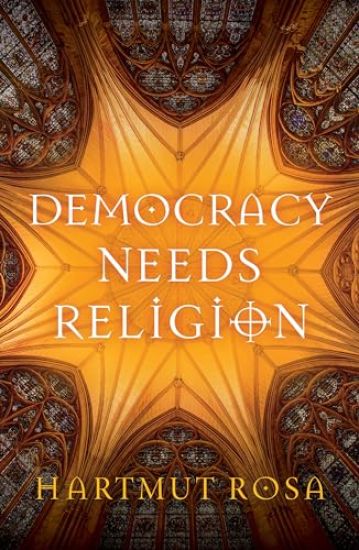
Democracy Needs Religion

Democracy Needs Religion

Hartmut Rosa

JOHN WILEY AND SONS LTD
2024
sidottu
What role does religion play in modern societies? Is it merely an anachronism that hinders our economic growth? Is it a kind of superstition that people should be left to enjoy in private but should refrain from discussing in public? It is no secret that the Christian churches in Western societies have massive problems – quite apart from the recent scandals. Shrinking congregations are just one sign of their diminishing relevance. But what would happen to democracy if the resonance of religion were to fade entirely? Leading sociologist Hartmut Rosa addresses this fundamental question in a way that makes us think afresh about religion and the role it plays in our contemporary democratic societies. He argues that religion fosters a culture of dialogue, listening and reflection that allows us to form connections with others and experience the world as meaningful. This, in turn, helps citizens cultivate a democratic sensibility that can serve as an anchor in unstable times. With his characteristic clarity and insight, Rosa analyses our contemporary societies and dares to ponder what would happen if the centuries-old reservoir of wisdom embedded in religion were to be lost in an ultra-modern age.
Democracy Needs Religion

Democracy Needs Religion

Hartmut Rosa

JOHN WILEY AND SONS LTD
2024
nidottu
What role does religion play in modern societies? Is it merely an anachronism that hinders our economic growth? Is it a kind of superstition that people should be left to enjoy in private but should refrain from discussing in public? It is no secret that the Christian churches in Western societies have massive problems – quite apart from the recent scandals. Shrinking congregations are just one sign of their diminishing relevance. But what would happen to democracy if the resonance of religion were to fade entirely? Leading sociologist Hartmut Rosa addresses this fundamental question in a way that makes us think afresh about religion and the role it plays in our contemporary democratic societies. He argues that religion fosters a culture of dialogue, listening and reflection that allows us to form connections with others and experience the world as meaningful. This, in turn, helps citizens cultivate a democratic sensibility that can serve as an anchor in unstable times. With his characteristic clarity and insight, Rosa analyses our contemporary societies and dares to ponder what would happen if the centuries-old reservoir of wisdom embedded in religion were to be lost in an ultra-modern age.
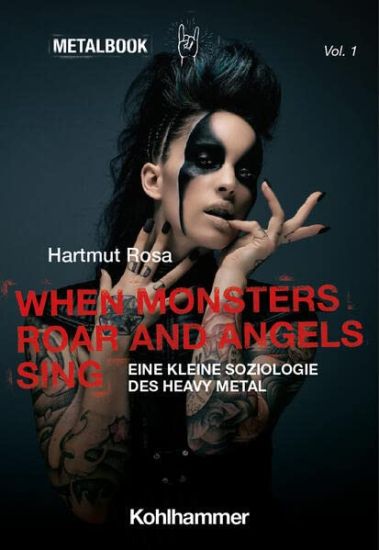
When Monsters Roar and Angels Sing: Eine Kleine Soziologie Des Heavy Metal
Ehemals Musik junger Abgehangter und Outlaws, ist Heavy Metal heute mehr und mehr in der Mitte der Gesellschaft angekommen: Wohl mehr als 10 Millionen Deutsche horen Heavy Metal. Aber warum tun sie das? Was suchen und was finden sie in dieser Musik, die von Aussenstehenden oft als purer Larm empfunden wird? Warum wimmelt es im Heavy Metal nur so von Monstern und Teufeln - und wieso schweigen auch die Gotter und die Engel nicht? Was erleben Metal-Fans, wenn sie ihre Musik horen - und welche Erfahrung treibt sie immer wieder ins Konzert? Wieso lesen sie standig Musikzeitschriften und horen nicht auf, CDs zu kaufen? Wie ist es zu erklaren, dass 40 Prozent der Metal-Fans behaupten, die Musik habe ihr Leben gerettet? Und warum ist Heavy Metal starker als die Musikindustrie? Worum geht es im Heavy Metal wirklich? Diese Fragen und mehr beantwortet Hartmut Rosa in dieser kleinen Soziologie des Heavy Metal.