Kirjojen hintavertailu. Mukana 11 342 296 kirjaa ja 12 kauppaa.

Kirjahaku

Etsi kirjoja tekijän nimen, kirjan nimen tai ISBN:n perusteella.

5 kirjaa tekijältä Harvey Starr

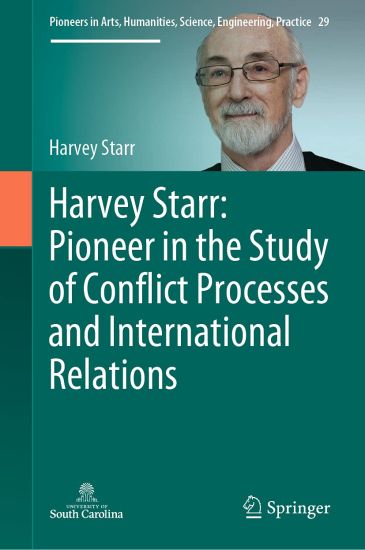
Harvey Starr: Pioneer in the Study of Conflict Processes and International Relations
This book sets out, through Starr’s personal story, his interest in how the ideas of “intellectual trajectories” and “political memories” could be incorporated into intellectual autobiography, thus exploring how the personal lives of individual academics intersected with their professional interests. By following the development of his approach to research, interdisciplinarity, the logic of inquiry, and the opportunity and willingness framework scholars and researchers will see how his groundbreaking research in Conflict Processes and International Relations Theory developed and were interlinked (especially diffusion, geography and spatiality; the democratic peace and integration; decision making). In addition, graduate students and junior faculty should find useful hints about how to navigate their way through the complexities of becoming both a professional and successful academic and scholar.• This book provides the most complete treatment of the workand contributions of Harvey Starr, a former President of the International Studies Association. • Important for contemporary students of international relations, and their understanding of IR theory and methods.• Demonstrates an eclectic linking of theoretical, logical, and empirical approaches to the study of IR—providing a critical logic of inquiry to do research.• Provides insights and blueprints for how to develop interdisciplinary and multidisciplinary scholarship, highlighting geography and social-psychology.• Affords graduate students and recent Ph.D.s guidance in the development of research, becoming a professional, and the choices to be made in one’s academic career.
Harvey Starr: Pioneer in the Study of Conflict Processes and International Relations
This book sets out, through Starr’s personal story, his interest in how the ideas of “intellectual trajectories” and “political memories” could be incorporated into intellectual autobiography, thus exploring how the personal lives of individual academics intersected with their professional interests. By following the development of his approach to research, interdisciplinarity, the logic of inquiry, and the opportunity and willingness framework scholars and researchers will see how his groundbreaking research in Conflict Processes and International Relations Theory developed and were interlinked (especially diffusion, geography and spatiality; the democratic peace and integration; decision making). In addition, graduate students and junior faculty should find useful hints about how to navigate their way through the complexities of becoming both a professional and successful academic and scholar.• This book provides the most complete treatment of the workand contributions of Harvey Starr, a former President of the International Studies Association. • Important for contemporary students of international relations, and their understanding of IR theory and methods.• Demonstrates an eclectic linking of theoretical, logical, and empirical approaches to the study of IR—providing a critical logic of inquiry to do research.• Provides insights and blueprints for how to develop interdisciplinary and multidisciplinary scholarship, highlighting geography and social-psychology.• Affords graduate students and recent Ph.D.s guidance in the development of research, becoming a professional, and the choices to be made in one’s academic career.
Anarchy, Order and Integration

Anarchy, Order and Integration

Harvey Starr

The University of Michigan Press
2000
nidottu
Most observers agree that the global arena is in the midst of multiple changes. The elements that create and intensify global interdependencies have been expanding rapidly, generating questions about the viability of the state and the viability of the state-centric system that has existed for over 500 years, as well as what sorts of structures and behaviors might replace them. And yet much of the analysis is not helpful in understanding the condition of the international system because it either fails to define the meaning of terms such as interdependence and order or treats these as new problems ignoring many important ideas that have developed over the years about international politics. One of our most accomplished scholars in international affairs, Harvey Starr offers a fresh and original analysis of the nature of the international system. Starr argues that the global system can best be understood as the consequence of states adapting to changing interdependencies. States do remain important in this system, but the reality they adapt to is changing. Thus the environment surrounding states is important not because it is "anarchic," as argued by structural realists such as Waltz, but because environmental conditions have changed, thereby changing the meaning and significance of such structural characteristics as "anarchy." Starr argues that we must recognize that the modes by which states adapt to change in the international system lead to changes in both the states themselves and in their environment. This book will appeal to scholars of international relations in political science and economics as well as to policy makers and analysts interested in understanding change in the international system. Harvey Starr is Dag Hammarskjöld Professor of International Affairs in the Department of Government and International Studies, University of South Carolina. He is the coauthor with Randolph Siverson of The Diffusion of War: A Study of Opportunity and Willingness.
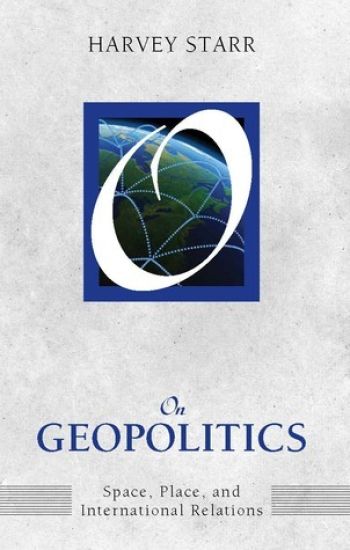
On Geopolitics

On Geopolitics

Harvey Starr

Paradigm
2013
sidottu
On Geopolitics shows how the 'new geopolitics' combines the fields of geography and international relations to create a comprehensive overview of current political developments. Using recent developments in geographical technology as well as traditional theories and methods, Harvey Starr explores themes of spatiality and territoriality as they connect to international affairs. He also examines geopolitical dynamics beyond borders in a world now buffeted by non state actors and subject to intergovernmental institutions and norms. On Geopolitics is a brilliant synthesis of Starr's ongoing work on conflict and co-operation, alliances, opportunity, and willingness, within a geographic framework. At the same time, Starr points the way toward new tools and techniques for the study of globalisation and world politics.
On Geopolitics

On Geopolitics

Harvey Starr

Paradigm
2014
nidottu
On Geopolitics shows how the 'new geopolitics' combines the fields of geography and international relations to create a comprehensive overview of current political developments. Using recent developments in geographical technology as well as traditional theories and methods, Harvey Starr explores themes of spatiality and territoriality as they connect to international affairs. He also examines geopolitical dynamics beyond borders in a world now buffeted by non state actors and subject to intergovernmental institutions and norms. On Geopolitics is a brilliant synthesis of Starr's ongoing work on conflict and co-operation, alliances, opportunity, and willingness, within a geographic framework. At the same time, Starr points the way toward new tools and techniques for the study of globalisation and world politics.