Kirjojen hintavertailu. Mukana 11 244 527 kirjaa ja 12 kauppaa.

Kirjahaku

Etsi kirjoja tekijän nimen, kirjan nimen tai ISBN:n perusteella.

11 kirjaa tekijältä Hazard Adams

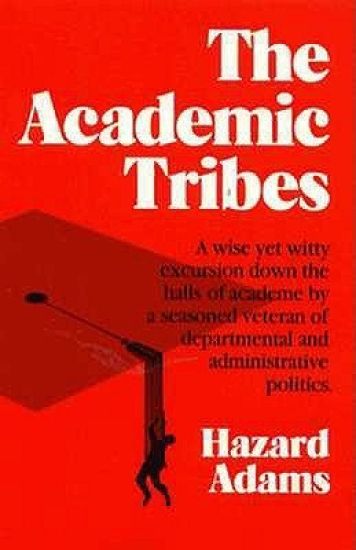
Academic Tribes

Academic Tribes

Hazard Adams

University of Illinois Press
1987
nidottu
In The Academic Tribes, an English professor who has survived stints as a dean and a vice-chancellor "takes a gentle, satiric sideswipe at academia, its foibles, follies, and myths" (ALA Booklist). Hazard Adams' parody of anthropological analysis describes the principles and antinomies of academic politics, campus stereotypes, the various tribes divided by discipline, the agonies accompanying each stage on the way to full professorship, and, of course, the power struggle between faculties and academic administrators. This first paperback edition also includes a new preface looking back at the decade since the book's original publication and an appendix that adds three relevant essays.
The Offense of Poetry

The Offense of Poetry

Hazard Adams

University of Washington Press
2007
sidottu
There is something offensive and scandalous about poetry, judging by the number of attacks on it and defenses of it written over the centuries. Poetry, Hazard Adams argues, exists to offend - not through its subject matter but through the challenges it presents to the prevailing view of what language is for. Poetry's main cultural value is its offensiveness; it should be defended as offensive.Adams specifies four poetic offenses - gesture, drama, fiction, and trope - and devotes a chapter to each, ranging across the landscape of traditional literary criticism and exploring the various attitudes toward poetry, including both attacks and defenses, offered by writers from Plato and Aristotle to Sidney, Vico, Blake, Yeats, and Seamus Heaney, among others. "Criticism," Adams writes, "needs renewal in every age to free poetry from the prejudices of that age and the unintended prejudices of even the best critics of the past, to free poetry to perform its provocative, antithetical cultural role."Poetry achieves its cultural value by opposing the binary oppositions - form and content, fact and fiction, reason and emotion - that structure and polarize most understandings of literature and of life. Adams takes a position antithetical to the extremes of both abstract formalism and the politicization of literary content. He concludes with an appreciation of what he calls the double offense of "great bad poetry," poetry so exceptionally bad that it transcends its shortcomings and leads to gaiety. He reminds us that Blake, in The Marriage of Heaven and Hell, identified angels with the settled and coercive and assigned the qualities of energy and creativity to his devils. According to Adams, poetry, in its broad and traditional sense of all imaginative writing, may be identified with Blake's devils.
The Offense of Poetry

The Offense of Poetry

Hazard Adams

University of Washington Press
2007
pokkari
There is something offensive and scandalous about poetry, judging by the number of attacks on it and defenses of it written over the centuries. Poetry, Hazard Adams argues, exists to offend - not through its subject matter but through the challenges it presents to the prevailing view of what language is for. Poetry's main cultural value is its offensiveness; it should be defended as offensive.Adams specifies four poetic offenses - gesture, drama, fiction, and trope - and devotes a chapter to each, ranging across the landscape of traditional literary criticism and exploring the various attitudes toward poetry, including both attacks and defenses, offered by writers from Plato and Aristotle to Sidney, Vico, Blake, Yeats, and Seamus Heaney, among others. "Criticism," Adams writes, "needs renewal in every age to free poetry from the prejudices of that age and the unintended prejudices of even the best critics of the past, to free poetry to perform its provocative, antithetical cultural role."Poetry achieves its cultural value by opposing the binary oppositions - form and content, fact and fiction, reason and emotion - that structure and polarize most understandings of literature and of life. Adams takes a position antithetical to the extremes of both abstract formalism and the politicization of literary content. He concludes with an appreciation of what he calls the double offense of "great bad poetry," poetry so exceptionally bad that it transcends its shortcomings and leads to gaiety. He reminds us that Blake, in The Marriage of Heaven and Hell, identified angels with the settled and coercive and assigned the qualities of energy and creativity to his devils. According to Adams, poetry, in its broad and traditional sense of all imaginative writing, may be identified with Blake's devils.
The Book of Yeats's Vision

The Book of Yeats's Vision

Hazard Adams

The University of Michigan Press
1995
nidottu
In this sequel to his critical study of Yeats's poems, Hazard Adams turns to Yeats's odd, eccentric, comic, and finally serious prose work A Vision. A Vision has long exasperated some readers with its occultist connections and strange, pseudo-geometrical diagrams, and intrigued others with its odd origins and complex thought. Adams argues that the book is of extraordinary interest for its literary merit, its place in intellectual history as an example of romanticism's persistence in modernism, and its oblique defense of poetic fiction-making. Rather than treating the book in terms of its historical and biographical genesis, Adams discusses the finished product as it appeared in 1937, a uniquely woven fictional fabric in which Yeats invents himself as a character. The "technical" sections of A Vision are presented as part of this drama and are illustrated by charts that appeared originally in A Vision and explanatory ones by the author. In addition to his careful reading of the text, Adams shows that A Vision also presents a theory of poetry, art, and myth that goes under the Yeatsian term "antitheticality." This notion, which governs all of the dimensions of A Vision—philosophical, aesthetic, historical, and psychological—is drawn from a tradition stretching back to pre-Socratic ideas of warring opposites, through Giambattista Vico's account of "poetic wisdom" and William Blake's concept of "contraries." The Book of Yeats's Vision is essential reading for literary theorists, students, and scholars of Irish literature, and admirers of Yeats interested in his creative intellectual life.
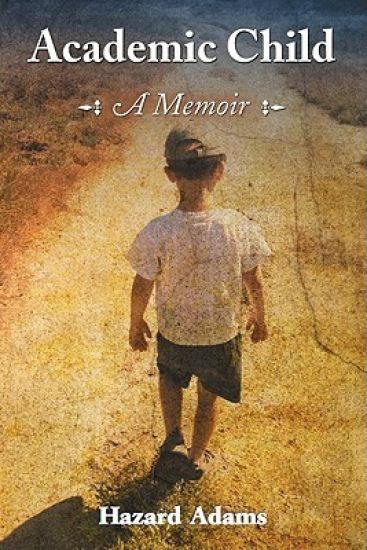
Academic Child

Academic Child

Hazard Adams

McFarland Co Inc
2008
pokkari
A leading scholar of English romanticism and literary theory and criticism, Hazard Adams writes of a lifetime as a student, a teacher and an academic administrator. The child of academically-minded parents, both teachers at Cleveland's Hawken School, Adams tells of his family's experiences at Hawken and later Seattle's Lakeside School, then his Marine Corps service and education at Princeton and the University of Washington. In addition to an illuminating account of his academic career--his experiences researching and teaching in Ireland, his administrative work in the founding faculty at the University of California's Irvine campus, and finally his experiences under the first endowed professorship in the humanities at the University of Washington--the memoir also voyages into memories of family, friends and colleagues and offers singularly well-informed comments on the current state of higher education and the academic experience.
Blake's Margins

Blake's Margins

Hazard Adams

McFarland Co Inc
2009
pokkari
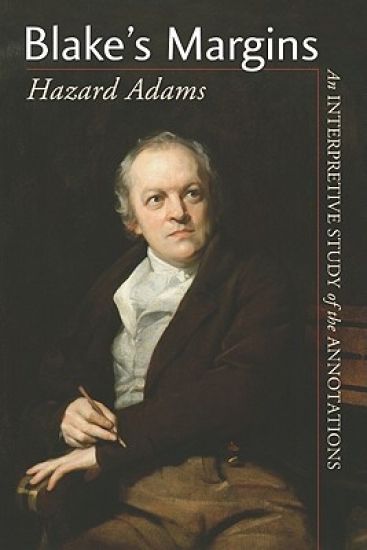
Known for his prophetic and imaginative works of poetry, painting, and printmaking, William Blake was also a prolific reader and annotator of other writers' works. This is the first work of criticism to consider Blake's annotations in their entirety, and it covers such topics as art, poetry, theology, madness and philosophy, as well as the authors Lavater, Swedenborg, Bacon, Spurzheim, Berkeley, and Wordsworth, among others.
William Blake on His Poetry and Painting

William Blake on His Poetry and Painting

Hazard Adams

McFarland Co Inc
2010
pokkari
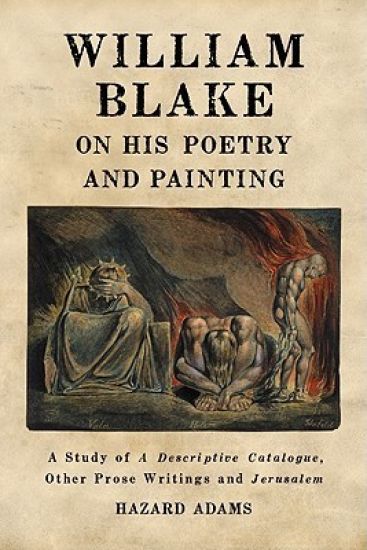
Blake was not only a poet, but also a prolific commentator on both his own art and art in general. This is the first text to discuss all of the writings except the annotations to Reynolds' Discourses, covered in a previous volume, Blake's Margins (McFarland, 2009). Topics include his opinions on his predecessors and his contemporaries, his reaction to critics, and his artistic intentions. This valuable addition to Blake scholarship includes reproductions of some of the drawings and paintings in Blake's one exhibition of 1809, plus reproductions of other prose texts by Blake.
Thinking Through Blake

Thinking Through Blake

Hazard Adams

McFarland Co Inc
2014
pokkari
A seminal figure in Romantic poetry and visual arts, William Blake continues to influence modern literary criticism. In this book, Blake scholar Hazard Adams presents a selection of essays that span his long career exploring the work and thought of the groundbreaking artist. Topics range from the symbolic form in Blake's poem Jerusalem, the world view of Blake in relation to cultural policy and the notion of contrariety in Blake's writings to the relation of Chinese literary thought to that of the West, the critical work of Northrop Frye and Murray Krieger and the cultural and academic status of the humanities. The essays chart the evolution of Adams' own neo-Blakean literary thought over the past four decades, chronicling an effort to seek not merely a method but a philosophical base for the practice of literary criticism.
The Book of Yeats's Poems

The Book of Yeats's Poems

Hazard Adams

University Press of Florida
1989
nidottu
A study of all of the poems Yeats wished to include in his volume of collected poetry, which reveals a canon carefully constructed to tell a dramatic-mimetic story. Not only in the poems, but in the spaces between, Adams finds the creating life of the fictive poet named Yeats - shaped, over the years, as the author Yeats revised and ordered his poems to tell this story. Many have commented on the significance of the order of Yeats' poems. This study articulates this significance poem by poem for all of the poet's work. While providing a comprehensive reading of the poems, Adam's commentary is informed by the current theoretical, critical and scholarly debates surrounding both the text of Yeats' poems and the nature of textuality itself.
The Farm at Richwood and Other Poems

The Farm at Richwood and Other Poems

Hazard Adams

University of Washington Press
1999
pokkari
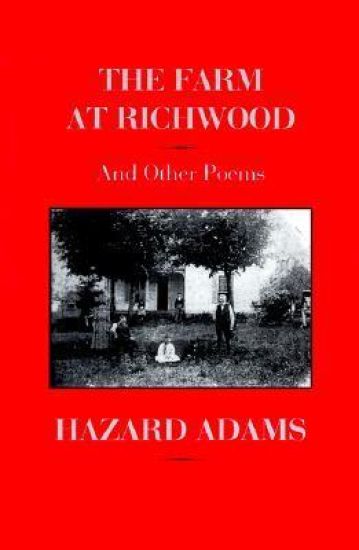
In his Afterword to this finely honed and memorable collection, written over some 40 years' time, Hazard Adams characterizes these poems as "those I am willing to stand by." He has chosen well. This is a radiant volume, rich with imagery and enlivened with a wry and witty sensibility, its five parts charged with the sweep of a small drama. These are poems that wear well and welcome repeated reading. They are a pleasure to read aloud.Adams opens with a series of strong, spare, bittersweet elegies to his parents and grandparents and to his own rural beginnings as he wrestles with the shifting roles of child and man, actor and observer. He ranges over many subjects and themes, through the bemused "Nine Academic Pieces" of the late 1960s and the marvelously absurdist "Rhinoceros Who Became Dean," through the insightful perspective of times abroad and at home, through such deeply moving and contemplative pieces as his elegy on the death of a small child. He is a persuasive and versatile master of the poetic line, moving with skill between deftly rhythmical free verse and trenchantly epigrammatic observations, to the lyrical sonnet whose grace notes conclude the book.
Home

Home

Hazard Adams

State University of New York Press
2001
sidottu
A history professor experiences disturbing parallels between the furor over hiring decisions and an alleged case of sexual harassment on his own campus, and the harassment of an anarchist commune on south Puget Sound in 1902. Fact meets fiction in Hazard Adams's latest novel. Using an actual turn-of-the-century anarchist commune on Washington's south Puget Sound as the backdrop, Adams tells the story of Edward Williams, a present-day history professor and former vice president at nearby State University. As he studies and imagines the lives of those who participated in the commune, which came under vicious attack after the assassination of President McKinley in 1901, Williams is drawn into disputes on his campus over the proposed appointment of a distinguished feminist professor of American studies and an alleged case of sexual harassment. Both comic and tragic events ensue. Employing photographs taken at Home in 1902 and 2000 and parts of diaries kept by visitors to the commune, Adams dramatizes the parallels and contrasts between the events of 1902 and those of 1990–91 as they are experienced by a variety of characters in both periods. With Home, Adams completes his fictive account of academic life in the latter half of the twentieth century, begun with The Horses of Instruction, set in the fifties, and continued with Many Pretty Toys, set in 1970–71.