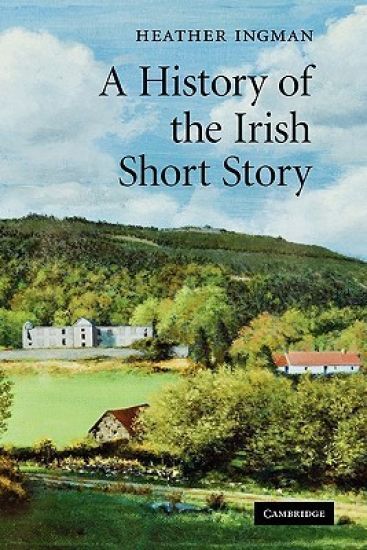
Though the short story is often regarded as central to the Irish canon, this text was the first comprehensive study of the genre for many years. Heather Ingman traces the development of the modern short story in Ireland from its beginnings in the nineteenth century to the present day. Her study analyses the material circumstances surrounding publication, examining the role of magazines and editors in shaping the form. Ingman incorporates recent critical thinking on the short story, traces international connections, and gives a central part to Irish women's short stories. Each chapter concludes with a detailed analysis of key stories from the period discussed, featuring Joyce, Edna O'Brien and John McGahern, among others. With its comprehensive bibliography and biographies of authors, this volume will be a key work of reference for scholars and students both of Irish fiction and of the modern short story as a genre.
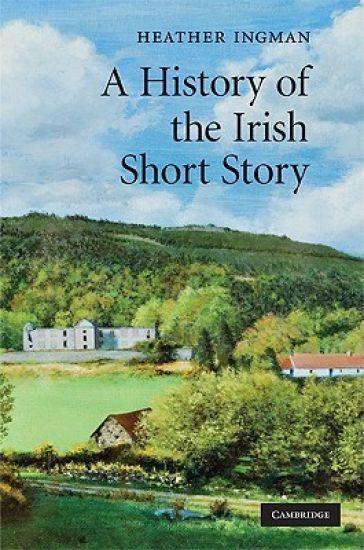
Though the short story is often regarded as central to the Irish canon, this text was the first comprehensive study of the genre for many years. Heather Ingman traces the development of the modern short story in Ireland from its beginnings in the nineteenth century to the present day. Her study analyses the material circumstances surrounding publication, examining the role of magazines and editors in shaping the form. Ingman incorporates recent critical thinking on the short story, traces international connections, and gives a central part to Irish women's short stories. Each chapter concludes with a detailed analysis of key stories from the period discussed, featuring Joyce, Edna O'Brien and John McGahern, among others. With its comprehensive bibliography and biographies of authors, this volume will be a key work of reference for scholars and students both of Irish fiction and of the modern short story as a genre.
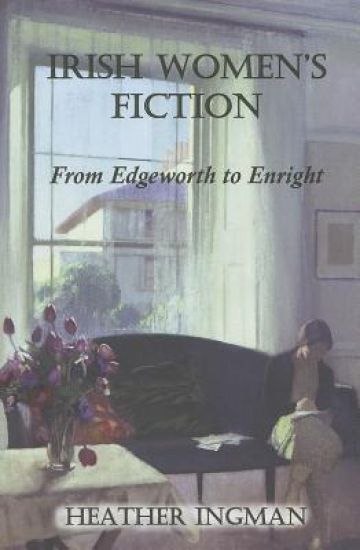
Irish Women's Fiction examines women's novels up to and following the establishment of the Irish state, the period of the Second World War, the Second Wave feminism of the 1970s, to postmodernism in the 1990s. Heather Ingman discusses Irish women's writing across all major genres both literary and popular, including children's writing, crime fiction, and in the discussion of the writing of the Celtic Tiger era, the phenomenal success of Irish chick lit. The topic of Irish women's writing is still a neglected one, with women's novels too often sidelined, despite the international recognition gained by prize-winning novels by Anne Enright and Emma Donoghue among others. Describing the circumstances of women's writing lives, as well as the themes with which they deal, Irish Women's Fiction is written in an accessible style and is the first ever single-volume survey of Irish women's writing and writers, bringing Irish women writers back in to the canon of Irish literature.
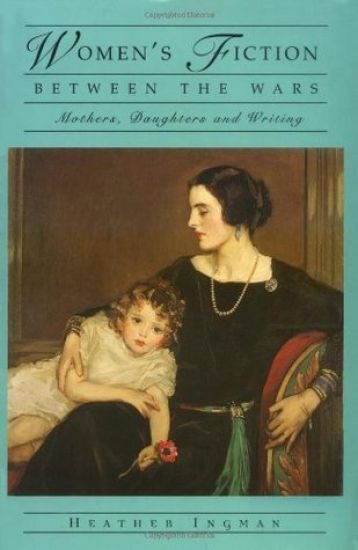
Taking six key writers of the inter-war period, this original study looks at the way they explore the mother-daughter relationship, finding in it a key to their identity as women and asartists. Providing in-depth critical analyses of Virginia Woolf, Dorothy Richardson, Ivy Compton-Burnett, Elizabeth Bowen, Rose Macaulay and Jean Rhys, this study for the first time enables you to draw parallels between their work and that of female psychoanalysts Helene Deutsch, Melanie Klein and Karen Horney during the inter-war period. It combines theoretical and textual criticism within a specific historical context in an especially useful way. The book concludes that these writers look to the mother to empower them and challenges the view of the mother as a regressive influence.
During much of the twentieth century, Irish women's position was on the boundaries of national life. Using Julia Kristeva's theories of nationhood, often particularly relevant to Ireland, this study demonstrates that their marginalization was to women's, and indeed the nation's, advantage as Irish women writers used their voice to subvert received pieties both about women and about the Irish nation. Kristevan theories of the other, the foreigner, the semiotic, the mother, and the sacred are explored in authors as diverse as Elizabeth Bowen, Kate O'Brien, Edna O'Brien, Mary Dorcey, Jennifer Johnston, and Eilis Ni Dhuibhne, as well as authors from Northern Ireland like Deirdre Madden, Polly Devlin, and Mary Morrissy. These writers, whose voices have frequently been sidelined or misunderstood because they write against the grain of their country's cultural heritage, finally receive their due in this important contribution to Irish and gender studies.
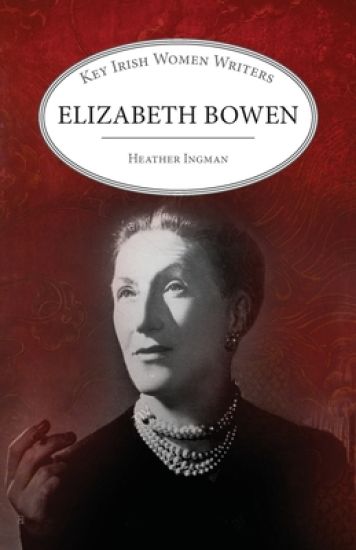
This study provides a concise, up to date critical account of Elizabeth Bowen's work, setting it in the turbulent historical, political and social contexts in which she lived and wrote. / Heather Ingman discusses Bowen's ten novels as well as her numerous short stories, her essays, reviews, interviews and broadcasts in order to give readers an idea of the range and diversity of her work. Bowen is recognised as one of the foremost short story writers of the twentieth century. / Recent scholarship has reshaped the way we view Bowen - taking her out of the previously confining categories of Big House novelist, middlebrow woman's novelist, heir to Bloomsbury etc., in order to portray the sheer diversity and unnerving perspicacity of her work. / The focus of this study is on her Irish background as a guiding thread through interpretation of her work. It draws on recent research and linking these to the complexities of her Anglo-Irish identity. Feminist theories of female identity, writing and motherhood also feature. / The consolidation of Bowen's reputation as one of the greatest writers of the twentieth century has been achieved by scholars working in different fields and employing a variety of theoretical models. This study aims to capture the diversity of possible approaches to reading Bowen while also highlighting current gaps in our knowledge. Though the richness and complexity of Bowen's fiction make impossible any single ideological reading of her work, the Irish resonances in her work are pursued throughout the chapters. / Bowen's novels included The Hotel (1927), The Last September (1929), Friends and Relations (1931), To the North (1932), The House in Paris (1935), The Death of the Heart (1938), The Heat of the Day (1949) A World of Love (1955), The Little Girls (1964) and her final novel, Eva Trout (1969). Her historical work included Bowen's Court (1942) and Seven Winters (1942). / Elizabeth Bowen is now recognised as one of the foremost writers of fiction of the twentieth century, but that has not always been the case. Following on her 1980s and 1990s recuperation by scholars in the fields of Irish Studies and feminist theory, a considerable number of monographs, chapters and articles analysing her work from a variety of theoretical and political viewpoints has appeared. The time is now ripe for an accessible, up to date critical guide through these differing readings, taking into account recently published volumes of her essays, reviews, broadcasts, interviews and correspondence. As well as appealing to the general reader and featuring on school syllabuses, Bowen's work is widely taught in Irish, American and English universities in a number of different contexts, including Irish writing, Big House fiction, modernism, women's writing, war writing and postmodernism, so the study will meet the wants of a large readership. / Contents: Methodology. Organization. Timeline: key biographical and publication dates. Introduction: Reading Elizabeth Bowen. Ch.1: The Female Bildungsroman. Ch.2: Interwar Femininity. Ch.3: Widening the Scene. Ch.4: The Short Stories. Ch.5: War Writing. Ch.6: Time and Trauma. Conclusion.
This study provides a concise, up to date critical account of Elizabeth Bowen's work, setting it in the turbulent historical, political and social contexts in which she lived and wrote. / Heather Ingman discusses Bowen's ten novels as well as her numerous short stories, her essays, reviews, interviews and broadcasts in order to give readers an idea of the range and diversity of her work. Bowen is recognised as one of the foremost short story writers of the twentieth century. / Recent scholarship has reshaped the way we view Bowen - taking her out of the previously confining categories of Big House novelist, middlebrow woman's novelist, heir to Bloomsbury etc., in order to portray the sheer diversity and unnerving perspicacity of her work. / The focus of this study is on her Irish background as a guiding thread through interpretation of her work. It draws on recent research and linking these to the complexities of her Anglo-Irish identity. Feminist theories of female identity, writing and motherhood also feature. / The consolidation of Bowen's reputation as one of the greatest writers of the twentieth century has been achieved by scholars working in different fields and employing a variety of theoretical models. This study aims to capture the diversity of possible approaches to reading Bowen while also highlighting current gaps in our knowledge. Though the richness and complexity of Bowen's fiction make impossible any single ideological reading of her work, the Irish resonances in her work are pursued throughout the chapters. / Bowen's novels included The Hotel (1927), The Last September (1929), Friends and Relations (1931), To the North (1932), The House in Paris (1935), The Death of the Heart (1938), The Heat of the Day (1949) A World of Love (1955), The Little Girls (1964) and her final novel, Eva Trout (1969). Her historical work included Bowen's Court (1942) and Seven Winters (1942). / Elizabeth Bowen is now recognised as one of the foremost writers of fiction of the twentieth century, but that has not always been the case. Following on her 1980s and 1990s recuperation by scholars in the fields of Irish Studies and feminist theory, a considerable number of monographs, chapters and articles analysing her work from a variety of theoretical and political viewpoints has appeared. The time is now ripe for an accessible, up to date critical guide through these differing readings, taking into account recently published volumes of her essays, reviews, broadcasts, interviews and correspondence. As well as appealing to the general reader and featuring on school syllabuses, Bowen's work is widely taught in Irish, American and English universities in a number of different contexts, including Irish writing, Big House fiction, modernism, women's writing, war writing and postmodernism, so the study will meet the wants of a large readership. / Contents: Methodology. Organization. Timeline: key biographical and publication dates. Introduction: Reading Elizabeth Bowen. Ch.1: The Female Bildungsroman. Ch.2: Interwar Femininity. Ch.3: Widening the Scene. Ch.4: The Short Stories. Ch.5: War Writing. Ch.6: Time and Trauma. Conclusion.
Age is a missing category in Irish literary criticism and this book is the first to explore a range of familiar and not so familiar Irish texts through a gerontological lens. Drawing on the latest writing in humanistic, critical and cultural gerontology, this study examines the portrayal of ageing in fiction by Elizabeth Bowen, Molly Keane, Deirdre Madden, Anne Enright, Iris Murdoch, John Banville, John McGahern, Norah Hoult and Edna O’Brien, among others. The chapters follow a logical thematic progression from efforts to hold back time, to resisting the decline narrative of ageing, solitary ageing versus ageing in the community, and dementia and the world of the bedbound and dying. One chapter analyses the changing portrayal of older people in the Irish short story. Recent demographic shifts in Ireland have focused attention on an increasing ageing population, making this study a timely intervention in the field of literary gerontology.
Oxford, Bern, Berlin, Bruxelles, Frankfurt/M., New York, Wien. This book applies insights from feminist theology to highlight spiritual themes in twentieth-century fiction by women writers. The author traces the way women writers of the twentieth century have not only challenged religious discourse but employed spiritual themes in order to explore more fluid possibilities of gender and identity. The book is wide-ranging in its choice of authors. As well as British and American writers, Irish, African-American, Canadian, Jewish and Caribbean women writers are discussed. Spirituality in women's fiction embraces a wide range of themes. After an introductory chapter sketching out developments in feminist theology for the non-specialist reader, there are chapters on the convent school and the role of the Virgin Mary, the Goddess, the female mystic, womanist spirituality and ecofeminism. The book demonstrates the way in which many women writers attempt to preserve a dialogue between traditional religious discourse and women's contemporary religious experience. The determinedly secular stance of much feminist literary criticism has led to a downplaying of spiritual themes in twentieth-century women's fiction. This study provides a bridge between feminist literary criticism and feminist theology. Contents: Twentieth-century women's spirituality - Twentieth-century women's fiction - Brief introduction to feminist theology - Catholicism and the convent school - The Goddess - Ecofeminism - Womanist theology - The female mystic - Women writers' rebellions against patriarchal religions - Analysis of the following writers: Margaret Atwood, Zee Edgell, Rose Macaulay, Iris Murdoch, Eilis Ni Duibhne,Edna O'Brien, Kate O'Brien, Kathleen Raine, Michele Roberts, May Sinclair, Alice Walker, Sylvia Townsend Warner, Antonia White, Virginia Woolf and Anzia Yezierska.
Age is a missing category in Irish literary criticism and this book is the first to explore a range of familiar and not so familiar Irish texts through a gerontological lens. Drawing on the latest writing in humanistic, critical and cultural gerontology, this study examines the portrayal of ageing in fiction by Elizabeth Bowen, Molly Keane, Deirdre Madden, Anne Enright, Iris Murdoch, John Banville, John McGahern, Norah Hoult and Edna O’Brien, among others. The chapters follow a logical thematic progression from efforts to hold back time, to resisting the decline narrative of ageing, solitary ageing versus ageing in the community, and dementia and the world of the bedbound and dying. One chapter analyses the changing portrayal of older people in the Irish short story. Recent demographic shifts in Ireland have focused attention on an increasing ageing population, making this study a timely intervention in the field of literary gerontology.