Kirjojen hintavertailu. Mukana 11 717 486 kirjaa ja 12 kauppaa.

Kirjahaku

Etsi kirjoja tekijän nimen, kirjan nimen tai ISBN:n perusteella.

5 kirjaa tekijältä Heather J. Sharkey

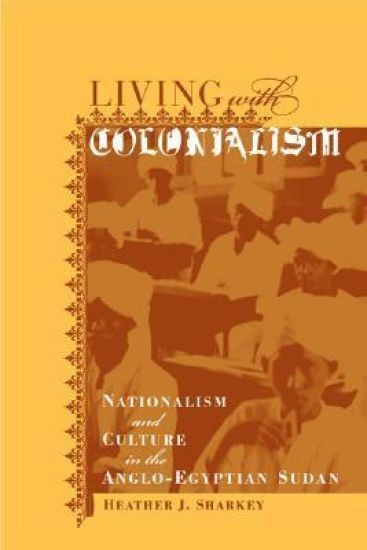
Living with Colonialism

Living with Colonialism

Heather J. Sharkey

University of California Press
2003
pokkari
Histories written in the aftermath of empire have often featured conquerors and peasant rebels but have said little about the vast staffs of locally recruited clerks, technicians, teachers, and medics who made colonialism work day-to-day. Even as these workers maintained the colonial state, they dreamed of displacing imperial power. This book examines the history of the Anglo-Egyptian Sudan (1898-1956) and the Republic of Sudan that followed in order to understand how colonialism worked on the ground, affected local cultures, influenced the rise of nationalism, and shaped the postcolonial nation-state. Relying on a rich cache of Sudanese Arabic literary sources, including poetry, essays, and memoirs, as well as on colonial documents and photographs, this perceptive study examines colonialism from the viewpoint of those who lived and worked in its midst. By integrating the case of Sudan with material on other countries, particularly India, Sharkey gives her book broad comparative appeal. She shows that colonial legacies--such as inflexible borders, atomized multi-ethnic populations, and autocratic governing structures--have persisted, hobbling postcolonial nation-states. Thus countries like Sudan are still living with colonialism, struggling to achieve consensus and stability within borders that a fallen empire has left behind.
A History of Muslims, Christians, and Jews in the Middle East

A History of Muslims, Christians, and Jews in the Middle East

Heather J. Sharkey

Cambridge University Press
2017
pokkari
Across centuries, the Islamic Middle East hosted large populations of Christians and Jews in addition to Muslims. Today, this diversity is mostly absent. In this book, Heather J. Sharkey examines the history that Muslims, Christians, and Jews once shared against the shifting backdrop of state policies. Focusing on the Ottoman Middle East before World War I, Sharkey offers a vivid and lively analysis of everyday social contacts, dress, music, food, bathing, and more, as they brought people together or pushed them apart. Historically, Islamic traditions of statecraft and law, which the Ottoman Empire maintained and adapted, treated Christians and Jews as protected subordinates to Muslims while prescribing limits to social mixing. Sharkey shows how, amid the pivotal changes of the modern era, efforts to simultaneously preserve and dismantle these hierarchies heightened tensions along religious lines and set the stage for the twentieth-century Middle East.
A History of Muslims, Christians, and Jews in the Middle East

A History of Muslims, Christians, and Jews in the Middle East

Heather J. Sharkey

Cambridge University Press
2017
sidottu
Across centuries, the Islamic Middle East hosted large populations of Christians and Jews in addition to Muslims. Today, this diversity is mostly absent. In this book, Heather J. Sharkey examines the history that Muslims, Christians, and Jews once shared against the shifting backdrop of state policies. Focusing on the Ottoman Middle East before World War I, Sharkey offers a vivid and lively analysis of everyday social contacts, dress, music, food, bathing, and more, as they brought people together or pushed them apart. Historically, Islamic traditions of statecraft and law, which the Ottoman Empire maintained and adapted, treated Christians and Jews as protected subordinates to Muslims while prescribing limits to social mixing. Sharkey shows how, amid the pivotal changes of the modern era, efforts to simultaneously preserve and dismantle these hierarchies heightened tensions along religious lines and set the stage for the twentieth-century Middle East.
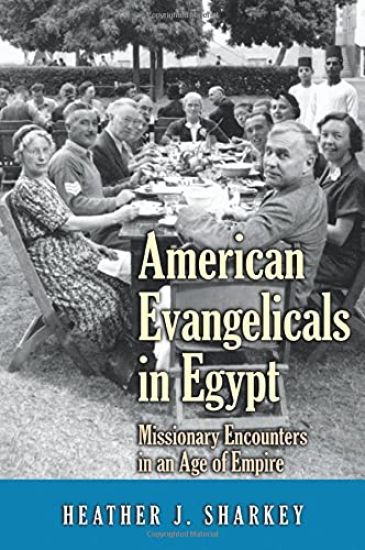
American Evangelicals in Egypt

American Evangelicals in Egypt

Heather J. Sharkey

Princeton University Press
2015
pokkari
In 1854, American Presbyterian missionaries arrived in Egypt as part of a larger Anglo-American Protestant movement aiming for worldwide evangelization. Protected by British imperial power, and later by mounting American global influence, their enterprise flourished during the next century. American Evangelicals in Egypt follows the ongoing and often unexpected transformations initiated by missionary activities between the mid-nineteenth century and 1967--when the Six-Day Arab-Israeli War uprooted the Americans in Egypt. Heather Sharkey uses Arabic and English sources to shed light on the many facets of missionary encounters with Egyptians. These occurred through institutions, such as schools and hospitals, and through literacy programs and rural development projects that anticipated later efforts of NGOs. To Egyptian Muslims and Coptic Christians, missionaries presented new models for civic participation and for women's roles in collective worship and community life. At the same time, missionary efforts to convert Muslims and reform Copts stimulated new forms of Egyptian social activism and prompted nationalists to enact laws restricting missionary activities. Faced by Islamic strictures and customs regarding apostasy and conversion, and by expectations regarding the proper structure of Christian-Muslim relations, missionaries in Egypt set off debates about religious liberty that reverberate even today. Ultimately, the missionary experience in Egypt led to reconsiderations of mission policy and evangelism in ways that had long-term repercussions for the culture of American Protestantism.
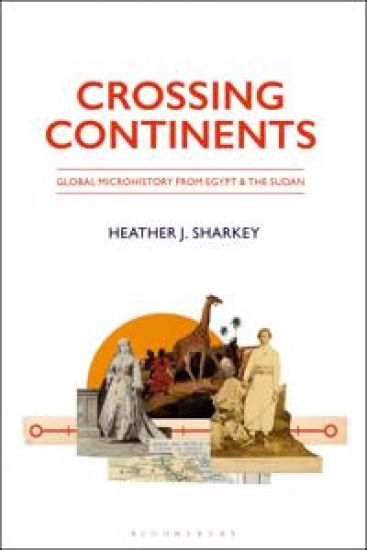
Crossing Continents

Crossing Continents

Heather J. Sharkey

BLOOMSBURY PUBLISHING PLC
2026
sidottu
1825, a giraffe boarded a boat at Sennar, near the junction of the Blue and White Niles in the Sudan and sailed for Paris. In the next year, also at Sennar, a Kurdish cavalry officer named Mahu Bey Urfali, representing the Muhammad Ali Pasha regime of Egypt, died of smallpox in a military encampment. What was a Kurd from Urfa, now in southeastern Turkey, doing in the Sudan? Why did a giraffe make the long trip to Paris? And how did a sleepy town 300 km southeast of Khartoum, once the capital of a sultanate, figure in their life journeys? This book answers such questions by viewing the lives of seven remarkable individuals through the lens of global microhistory, to reveal a kaleidoscopic story of peoples, places, objects and ideas as they moved through the Nile Valley and wider world. The book connects small places and little things to big events across two centuries. It asks: Who or what counts as important in history? Which details deserve attention? And how can we assemble fragmentary sources about ordinary people to give meaningful accounts of the past? Addressing these questions, this learned but accessible study will appeal to university students and scholars of Middle Eastern, African, and global history.