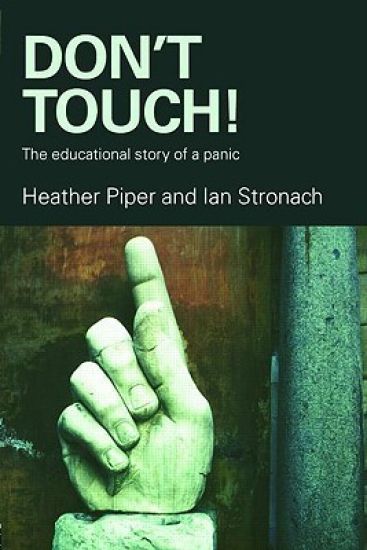
This book explores the problems involved in ‘touching’ children in an educational environment. It uses real-life examples taken from groundbreaking research into the mentality of today’s risk culture, and highlights a maddening state of affairs in which ordinary well-meaning professionals feel they cannot offer even very young children basic levels of comforting or affection. This fascinating and long-overdue book examines the ‘no-touch’ pandemic in early years settings, by use of extensive interviews with practitioners, parents and pupils, which: outline the confusion experienced by many in knowing if, when and how to touch and the more recent backlash by those who attempted to buck the trend suggest why this issue is important now (for example, at a time when men are being encouraged to work in early years settings) consider explanations such as panic, risk, society and fear. This book also examines and explains where the law stands on these issues, and keeps its key focus on practice throughout; representing an unsensationalized and sensible approach to an issue that causes so much professional anxiety, and it will be welcomed by the entire teaching profession, child care professionals, along with academics and researchers within education and the social sciences.
This book explores the problems involved in ‘touching’ children in an educational environment. It uses real-life examples taken from groundbreaking research into the mentality of today’s risk culture, and highlights a maddening state of affairs in which ordinary well-meaning professionals feel they cannot offer even very young children basic levels of comforting or affection. This fascinating and long-overdue book examines the ‘no-touch’ pandemic in early years settings, by use of extensive interviews with practitioners, parents and pupils, which: outline the confusion experienced by many in knowing if, when and how to touch and the more recent backlash by those who attempted to buck the trend suggest why this issue is important now (for example, at a time when men are being encouraged to work in early years settings) consider explanations such as panic, risk, society and fear. This book also examines and explains where the law stands on these issues, and keeps its key focus on practice throughout; representing an unsensationalized and sensible approach to an issue that causes so much professional anxiety, and it will be welcomed by the entire teaching profession, child care professionals, along with academics and researchers within education and the social sciences.
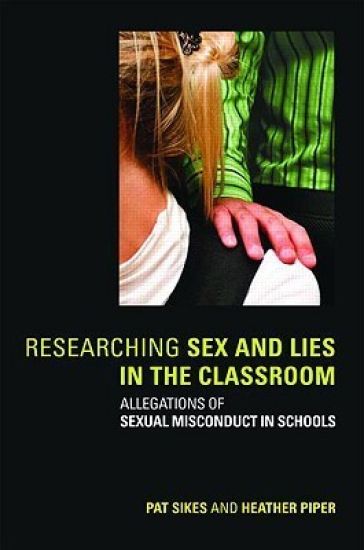
The Anglophone world is gripped by a moral panic centred on child abuse in general and fear of the paedophile in particular. Evidence suggests an alarming rise in the number of false allegations of sexual abuse being made against teachers, and demonstrates that the fallout from being falsely accused is far-reaching and sometimes tragic. Many people in this position cannot sustain family relationships, have breakdowns, and are often unable to return to the classroom when their ordeal is over.Researching Sex and Lies in the Classroom draws on in-depth qualitative research exploring the experiences, perceptions and consequences for those who have been falsely accused of sexual misconduct with pupils, and for the family members, friends and colleagues affected by or involved in the accusation process. The book also highlights the dilemmas and difficulties the authors themselves have faced researching this field, such as: ethical and methodological concerns over whether or not the teachers had indeed been falsely accused, or were guilty and taking advantage of this project to construct an alternative, innocent identity the difficulty of obtaining institutional ethical clearance to undertake and publish research which challenges master narratives concerning children and their protection the reluctance of funders to support research in controversial and sensitive areas. Researching Sex and Lies in the Classroom reveals findings which are both informative and shocking. It interrogates the appropriateness of current investigative and judicial procedures and practices, and it raises general questions about the surveillance and control of research and academic voice. It will be of great benefit to academics and researchers interested in this field, as well as postgraduate students, teachers and other professionals working with the fear of allegations of abuse.
The Anglophone world is gripped by a moral panic centred on child abuse in general and fear of the paedophile in particular. Evidence suggests an alarming rise in the number of false allegations of sexual abuse being made against teachers, and demonstrates that the fallout from being falsely accused is far-reaching and sometimes tragic. Many people in this position cannot sustain family relationships, have breakdowns, and are often unable to return to the classroom when their ordeal is over.Researching Sex and Lies in the Classroom draws on in-depth qualitative research exploring the experiences, perceptions and consequences for those who have been falsely accused of sexual misconduct with pupils, and for the family members, friends and colleagues affected by or involved in the accusation process. The book also highlights the dilemmas and difficulties the authors themselves have faced researching this field, such as: ethical and methodological concerns over whether or not the teachers had indeed been falsely accused, or were guilty and taking advantage of this project to construct an alternative, innocent identity the difficulty of obtaining institutional ethical clearance to undertake and publish research which challenges master narratives concerning children and their protection the reluctance of funders to support research in controversial and sensitive areas. Researching Sex and Lies in the Classroom reveals findings which are both informative and shocking. It interrogates the appropriateness of current investigative and judicial procedures and practices, and it raises general questions about the surveillance and control of research and academic voice. It will be of great benefit to academics and researchers interested in this field, as well as postgraduate students, teachers and other professionals working with the fear of allegations of abuse.
This text combines pedagogical interest with a sound philosophical base at both undergraduate and postgraduate levels. It will appeal to both research specialists and undergraduates of Ed Studies and PGCE courses. This title is particularly important with the emerging agenda of 'student as researcher' at this level.This monograph foregrounds the theme of citizenship education, identity and nationhood, taking a slant which examines some of the contradictions between philosophy and practice, policy and pedagogy.Since the beginning of the 21st century, citizenship education has been revived as a theoretical discourse and focus for pedagogical enquiry, with specific concern for practice in schools. These have taken particular directions where citizenship has sometimes appeared as a statutory subject and at others as a cross-curricular theme, both ways generating ideas and contestations, as well as prescriptions for classroom practitioners.Such philosophical and pedagogical momentum has occurred at a time of unprecedented global change, accompanied by an ongoing struggle to conceptualise citizenship in a manner that is inclusive and acceptable to all British inhabitants.Concerns in this area have led to a flood of texts offering guidance to teachers delivering citizenship education. Additionally, others have contributed to the debate more philosophically. However, with scarce exceptions at present there is a dearth of literature that effectively combines pedagogical interests with a sound philosophical base, especially in the arena of Education Studies, at both undergraduate and postgraduate levels of education.Thus, the aim of this book is to give a high level discourse that would be central to scholars of education, including advanced undergraduate students and research specialists, whilst not precluding interest from critically inquisitive classroom practitioners. This will be achieved by developing a series of entry points to themes that presently articulate with the statutory order for citizenship education: human rights, politics of identity, race, ethnicity, social justice, monarchy and subject-hood, and the challenge of global inter-dependence.The book will also raise critical issues that articulate with notions of identity and self and other, and which underpin key debates of the themes for contemporary citizenship.Attempts at developing critical thinking within young people is more rhetorical than real. In an attempt to redress the balance this book takes a look at a range of subjects/interests that are informed by the authors' research and theoretical excursions.