Kirjojen hintavertailu. Mukana 11 699 587 kirjaa ja 12 kauppaa.

Kirjahaku

Etsi kirjoja tekijän nimen, kirjan nimen tai ISBN:n perusteella.

6 kirjaa tekijältä Heike Behrend

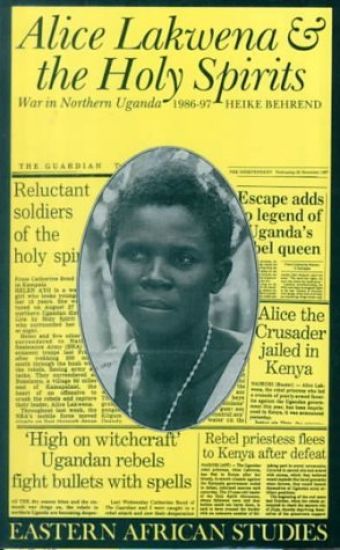
Alice Lakwena and the Holy Spirits

Alice Lakwena and the Holy Spirits

Heike Behrend

Ohio University Press
2000
sidottu
In August 1986, Alice Auma, a young Acholi woman in northern Uganda, proclaiming herself under the orders of a Christian spirit named Lakwena, raised an army called the "Holy Spirit Mobile Forces." With it she waged a war against perceived evil, not only an external enemy represented by the National Resistance Army of the government, but internal enemies in the form of "impure" soldiers, witches, and sorcerers. She came very close to her goal of overthrowing the government but was defeated and fled to Kenya. This book provides a unique view of Alice's movement, based on interviews with its members and including their own writings, examining their perceptions of the threat of external and internal evil. It concludes with an account of the successor movements into which Alice's forces fragmented and which still are active in the civil wars of the Sudan and Uganda.
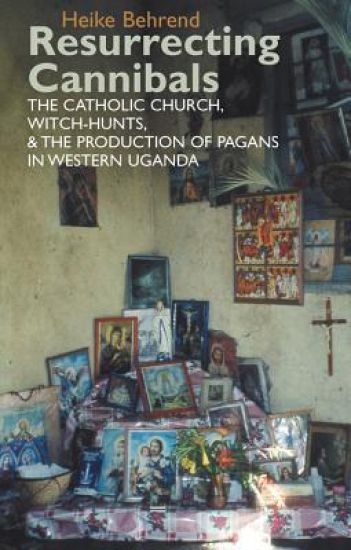
Resurrecting Cannibals

Resurrecting Cannibals

Heike Behrend

James Currey
2011
sidottu
This is the first ethnography of the Uganda Martyrs Guild [UMG], a lay movement of the Catholic Church, and its organized witch-hunts in the kingdom of Tooro, Western Uganda. This book explores cannibalism, food, eating and being eaten in its many variations. It deals with people who feel threatened by cannibals, churches who combat cannibals and anthropologists who find themselves suspected of being cannibals. It describes how different African and European images of the cannibal intersected and influenced each other in Tooro, Western Uganda, where the figure of the resurrecting cannibal draws on both pre-Christian ideas andchurch dogma of the bodily resurrection and the ritual of Holy Communion. In Tooro cannibals are witches: they bewitch people so that they die only to be resurrected and eaten. This is how they were perceived in the 1990s when a lay movement of the Catholic Church, the Uganda Martyrs Guild [UMG] organized witch-hunts to cleanse the country. The UMG was responding to an extended crisis: growing poverty, the retreat and corruption of the local government, a guerrilla war, a high death rate through AIDS, accompanied by an upsurge of occult forces in the form of cannibal witches. By trying to deal, explain and "heal" the situation of "internal terror", the UMG reinforced the perception of the reality of witches and cannibals while at the same time containing violence and regaining power for the Catholic Church in competition for "lost souls" with other Pentecostal churches and movements. This volumeincludes the DVD of a video film by Armin Linke and Heike Behrend showing a "crusade" to identify and cleanse witches and cannibals organized by the UMG in the rural area of Kyamiaga in 2002. With a heightened awareness and reflective use of the medium, UMG members created a domesticated version of their crusade for Western (and local) consumption as part of a "shared ethnography". Heike Behrend is Professor of Anthropology and African Studies at the University of Cologne, Germany, the author of Alice Lakwena and the Holy Spirits [James Currey, 1999], and co-editor of Spirit Possession, Modernity and Power in Africa[James Currey, 1999]
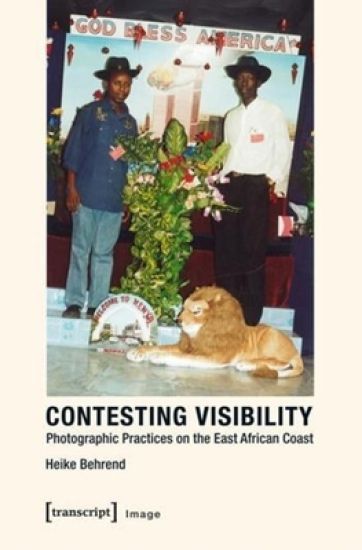
Contesting Visibility

Contesting Visibility

Heike Behrend

Transcript Verlag
2013
nidottu
Since the introduction of photography by commercial studio photographers and the colonial state in Kenya, this global medium has been intensely debated and contested among Muslims on the cosmopolitan East African coast. This book does not only explore the making, circulation, and consumption of popular photographs, but also the other side, their rejection and obliteration, an essential aspect of a medium's history that should not be neglected. It deals with various »social spaces of refusal« in the local Muslim milieu and in that of »traditional« spirit mediums in which (gendered) visibility was (and is) contested in various and creative ways. It focuses on the »aesthetics of withdrawal«: the various ways and techniques that process the photographic act as well as the photographic image to theatricalize the surface of the image in new ways by veiling, masking, and concealing. In a fragmented historical perspective, Heike Behrend seeks to complement, decenter, and counter the history of photography as it has been told by the West and to narrate another history beginning with preceding local media such as textiles and spirit possession.
Alice Lakwena and the Holy Spirits

Alice Lakwena and the Holy Spirits

Heike Behrend

Ohio University Press
2000
pokkari
In August 1986, Alice Auma, a young Acholi woman in northern Uganda, proclaiming herself under the orders of a Christian spirit named Lakwena, raised an army called the "Holy Spirit Mobile Forces." With it she waged a war against perceived evil, not only an external enemy represented by the National Resistance Army of the government, but internal enemies in the form of "impure" soldiers, witches, and sorcerers. She came very close to her goal of overthrowing the government but was defeated and fled to Kenya. This book provides a unique view of Alice's movement, based on interviews with its members and including their own writings, examining their perceptions of the threat of external and internal evil. It concludes with an account of the successor movements into which Alice's forces fragmented and which still are active in the civil wars of the Sudan and Uganda.