Kirjojen hintavertailu. Mukana 11 699 587 kirjaa ja 12 kauppaa.

Kirjahaku

Etsi kirjoja tekijän nimen, kirjan nimen tai ISBN:n perusteella.

2 kirjaa tekijältä Heineman Kenneth J.

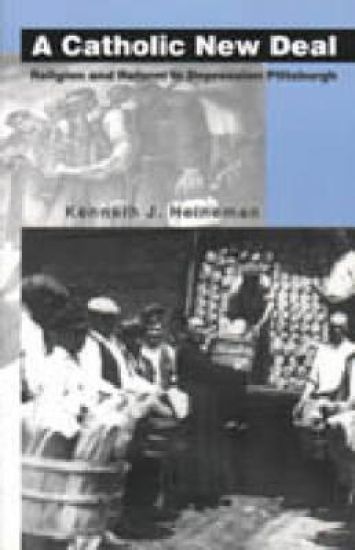
A Catholic New Deal

A Catholic New Deal

Heineman Kenneth J.

Pennsylvania State University Press
1999
sidottu
Our popular image of the era of the Great Depression is one of bread lines, labor wars, and leftist firebrands. Absent from this picture are religiously motivated social reformers, notably Catholic clergy and laity. In A Catholic New Deal, Kenneth Heineman rethinks the religious roots of labor organizing and social reform in America during the 1930s. He focuses on Pittsburgh, the leading industrial city of the time, a key center for the rise of American labor, and a critical Democratic power base, thanks in large part to Mayor David Lawrence and the Catholic vote.Despite the fact that Catholics were the core of the American industrial working class in the 1930s, historians (and many contemporary observers) have underestimated or ignored the religious component of labor activism in this era. In fact, many labor historians have argued that workers could not have formed successful industrial unions without first severing their religious ties. Heineman disputes this, arguing that there would have been no steelworkers union without Pittsburgh Catholics such as James Cox, Patrick Fagan, Carl Hensler, Phil Murray, and Charles Owen Rice. He presents a complex portrait of American Catholicism in which a large number of activist priests and laity championed a distinctly Catholic vision of social justice. This vision was anti-Communist, anti-Fascist, and anti-laissez faire. These Catholics, in turn, helped to make the Democratic Party and the CIO powerful organizations. A Catholic New Deal shows conclusively the important role that religion played in the history of organized labor in America.
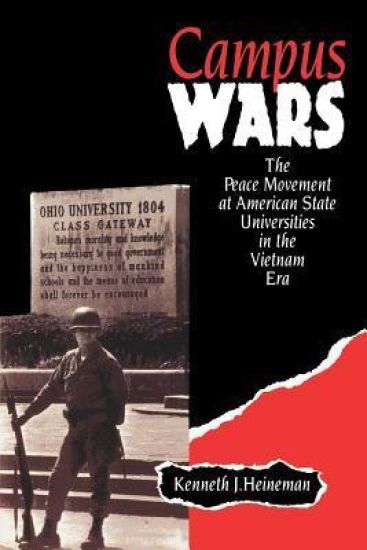
Campus Wars

Campus Wars

Heineman Kenneth J.

New York University Press
1994
pokkari
"At the same time that the dangerous war was being fought in the jungles of Vietnam, Campus Wars were being fought in the United States by antiwar protesters. Kenneth J. Heineman found that the campus peace campaign was first spurred at state universities rather than at the big-name colleges. His useful book examines the outside forces, like military contracts and local communities, that led to antiwar protests on campus." ?Herbert Mitgang, The New York Times "Shedding light on the drastic change in the social and cultural roles of campus life, Campus Wars looks at the way in which the campus peace campaign took hold and became a national movement." ?History Today "Heineman's prodigious research in a variety of sources allows him to deal with matters of class, gender, and religion, as well as ideology. He convincingly demonstrates that, just as state universities represented the heartland of America, so their student protest movements illustrated the real depth of the anguish over US involvement in Vietnam. Highly recommended." ?Choice "Represents an enormous amount of labor and fills many gaps in our knowledge of the anti-war movement and the student left." ?Irwin Unger, author of These United States The 1960s left us with some striking images of American universities: Berkeley activists orating about free speech atop a surrounded police car; Harvard SDSers waylaying then-Secretary of Defense Robert McNamara; Columbia student radicals occupying campus buildings; and black militant Cornell students brandishing rifles, to name just a few. Tellingly, the most powerful and notorious image of campus protest is that of a teenage runaway, arms outstretched in anguish, kneeling beside the bloodied corpse of Jeff Miller at Kent State University. While much attention has been paid to the role of elite schools in fomenting student radicalism, it was actually at state institutions, such as Kent State, Michigan State, SUNY, and Penn State, where anti-Vietnam war protest blossomed. Kenneth Heineman has pored over dozens of student newspapers, government documents, and personal archives, interviewed scores of activists, and attended activist reunions in an effort to recreate the origins of this historic movement. In Campus Wars, he presents his findings, examining the involvement of state universities in military research ? and the attitudes of students, faculty, clergy, and administrators thereto ? and the manner in which the campus peace campaign took hold and spread to become a national movement. Recreating watershed moments in dramatic narrative fashion, this engaging book is both a revisionist history and an important addition to the chronicle of the Vietnam War era.