Kirjojen hintavertailu. Mukana 11 699 587 kirjaa ja 12 kauppaa.

Kirjahaku

Etsi kirjoja tekijän nimen, kirjan nimen tai ISBN:n perusteella.

14 kirjaa tekijältä Heinrich Meier

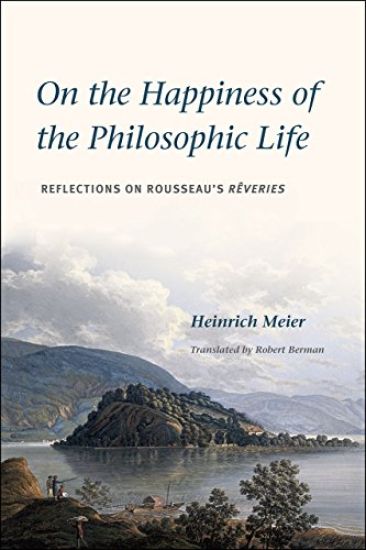
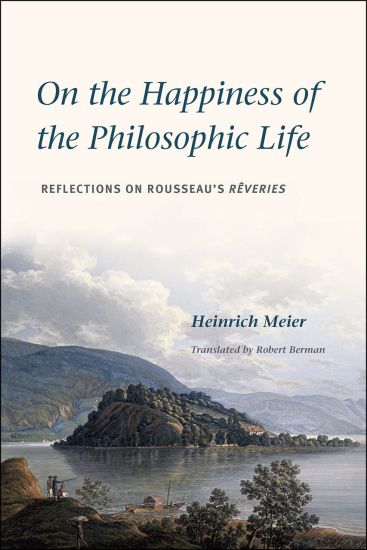
On the Happiness of the Philosophic Life

On the Happiness of the Philosophic Life

Heinrich Meier

University of Chicago Press
2016
sidottu
On the Happiness of the Philosophic Life presents Heinrich Meier’s confrontation with Rousseau’s Rêveries, the philosopher’s most beautiful and daring work, as well as his last and least understood. Bringing to bear more than thirty years of study of Rousseau, Meier unfolds his stunningly original interpretation in two parts. The first part of On the Happiness of the Philosophic Life approaches the Rêveries not as another autobiographical text in the tradition of the Confessions and the Dialogues, but as a reflection on the philosophic life and the distinctive happiness it provides. The second turns to a detailed analysis of a work referred to in the Rêveries, the “Profession of Faith of the Savoyard Vicar,” which triggered Rousseau’s political persecution when it was originally published as part of Émile. In his examination of this most controversial of Rousseau’s writings, which aims to lay the foundations for a successful nonphilosophic life, Meier brings to light the differences between natural religion as expressed by the Vicar and Rousseau’s natural theology. Together, the two reciprocally illuminating parts of this study provide an indispensable guide to Rousseau and to the understanding of the nature of the philosophic life. “[A] dense but precise and enthralling analysis.”—New Yorker
Political Philosophy and the Challenge of Revealed Religion

Political Philosophy and the Challenge of Revealed Religion

Heinrich Meier

University of Chicago Press
2017
sidottu
Heinrich Meier's guiding insight in Political Philosophy and the Challenge of Revealed Religion is that philosophy must prove its right and its necessity in the face of the claim to truth and demand obedience of its most powerful opponent, revealed religion. Philosophy must rationally justify and politically defend its free and unreserved questioning, and, in doing so, turns decisively to political philosophy. In the first of three chapters, Meier determines four intertwined moments constituting the concept of political philosophy as an articulated and internally dynamic whole. The following two chapters develop the concept through the interpretation of two masterpieces of political philosophy that have occupied Meier's attention for more than thirty years: Leo Strauss's Thoughts on Machiavelli and Jean-Jacques Rousseau's Social Contract. Meier provides a detailed investigation of Thoughts on Machiavelli, with an appendix containing Strauss's original manuscript headings for each of his paragraphs. Linking the problem of Socrates (the origin of political philosophy) with the problem of Machiavelli (the beginning of modern political philosophy), while placing between them the political and theological claims opposed to philosophy, Strauss's most complex and controversial book proves to be, as Meier shows, the most astonishing treatise on the challenge of revealed religion. The final chapter, which offers a new interpretation of the Social Contract, demonstrates that Rousseau's most famous work can be adequately understood only as a coherent political-philosophic response to theocracy in all its forms.
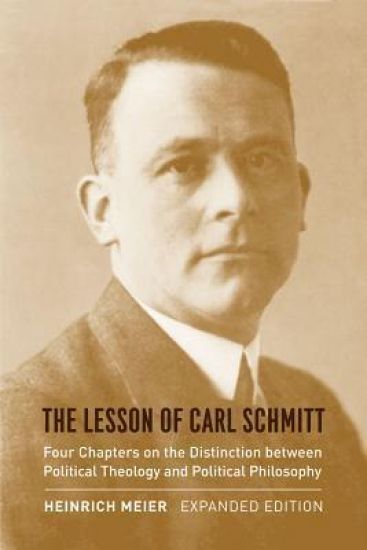
The Lesson of Carl Schmitt

The Lesson of Carl Schmitt

Heinrich Meier

University of Chicago Press
2011
nidottu
Heinrich Meier's work on Carl Schmitt has dramatically reoriented the international debate about Schmitt and his significance for twentieth-century political thought. In "The Lesson of Carl Schmitt", Meier identifies the core of Schmitt's thought as political theology - that is, political theorizing that claims to have its ultimate ground in the revelation of a mysterious or suprarational God. This radical, but half-hidden, theological foundation underlies the whole of Schmitt's often difficult and complex oeuvre, rich in historical turns and political convolutions, intentional deceptions and unintentional obfuscations. In four chapters on morality, politics, revelation, and history, Meier clarifies the difference between political philosophy and Schmitt's political theology and relates the religious dimension of his thought to his support for National Socialism and his continuing anti-Semitism. New to this edition are two essays that address the recently published correspondence of Schmitt - particularly with Hans Blumberg - and the light it sheds on his conception of political theology.
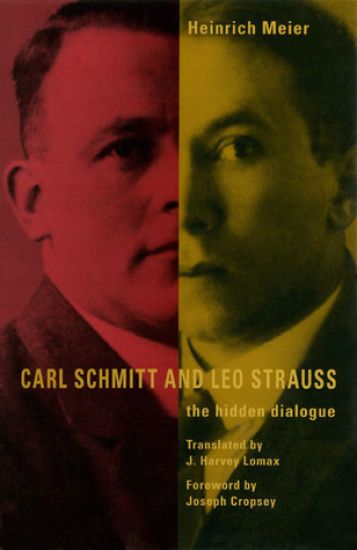
Carl Schmitt and Leo Strauss

Carl Schmitt and Leo Strauss

Heinrich Meier

University of Chicago Press
2006
nidottu
Carl Schmitt was the most famous and controversial defender of political theology in the twentieth century. But in his best-known work, The Concept of the Political, issued in 1927, 1932, and 1933, political considerations led him to conceal the dependence of his political theory on his faith in divine revelation. In 1932 Leo Strauss published a critical review of Concept that initiated an extremely subtle exchange between Schmitt and Strauss regarding Schmitt’s critique of liberalism. Although Schmitt never answered Strauss publicly, in the third edition of his book he changed a number of passages in response to Strauss’s criticisms. Now, in this elegant translation by J. Harvey Lomax, Heinrich Meier shows us what the remarkable dialogue between Schmitt and Strauss reveals about the development of these two seminal thinkers.Meier contends that their exchange only ostensibly revolves around liberalism. At its heart, their “hidden dialogue” explores the fundamental conflict between political theology and political philosophy, between revelation and reason­and ultimately, the vital question of how human beings ought to live their lives. “Heinrich Meier’s treatment of Schmitt’s writings is morally analytical without moralizing, a remarkable feat in view of Schmitt’s past. He wishes to understand what Schmitt was after rather than to dismiss him out of hand or bowdlerize his thoughts for contemporary political purposes.”—Mark Lilla, New York Review of Books
Political Philosophy and the Challenge of Revealed Religion

Political Philosophy and the Challenge of Revealed Religion

Heinrich Meier

University of Chicago Press
2018
pokkari
Heinrich Meier's guiding insight in Political Philosophy and the Challenge of Revealed Religion is that philosophy must prove its right and its necessity in the face of the claim to truth and demand obedience of its most powerful opponent, revealed religion. Philosophy must rationally justify and politically defend its free and unreserved questioning, and, in doing so, turns decisively to political philosophy. In the first of three chapters, Meier determines four intertwined moments constituting the concept of political philosophy as an articulated and internally dynamic whole. The following two chapters develop the concept through the interpretation of two masterpieces of political philosophy that have occupied Meier's attention for more than thirty years: Leo Strauss's Thoughts on Machiavelli and Jean-Jacques Rousseau's Social Contract. Meier provides a detailed investigation of Thoughts on Machiavelli, with an appendix containing Strauss's original manuscript headings for each of his paragraphs. Linking the problem of Socrates (the origin of political philosophy) with the problem of Machiavelli (the beginning of modern political philosophy), while placing between them the political and theological claims opposed to philosophy, Strauss's most complex and controversial book proves to be, as Meier shows, the most astonishing treatise on the challenge of revealed religion. The final chapter, which offers a new interpretation of the Social Contract, demonstrates that Rousseau's most famous work can be adequately understood only as a coherent political-philosophic response to theocracy in all its forms.
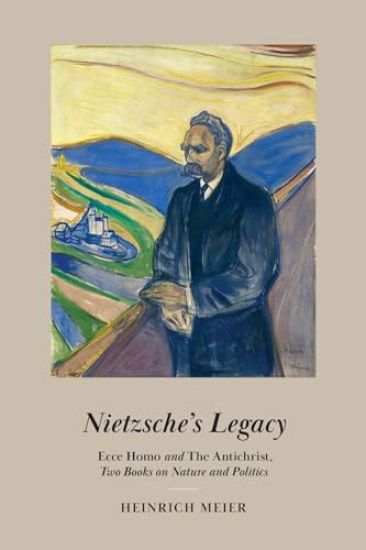
Nietzsche's Legacy

Nietzsche's Legacy

Heinrich Meier

THE UNIVERSITY OF CHICAGO PRESS
2024
sidottu
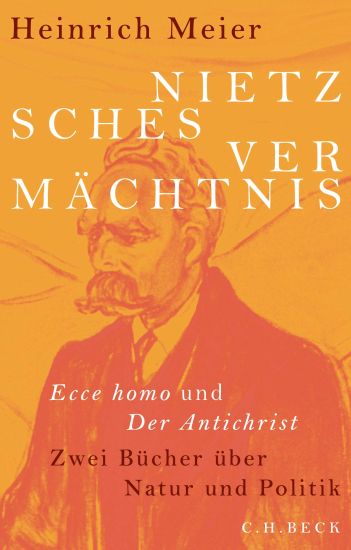
A reappraisal of Ecce Homo and The Antichrist within Nietzsche’s oeuvre.Nietzsche's Legacy takes on the most challenging and misunderstood works in Nietzsche’s oeuvre to illuminate his view of what a philosopher is and what constitutes a philosophic life. Interpreting Ecce Homo and The Antichrist as twin books meant to replace the abandoned Will to Power project, Heinrich Meier recovers them from the stigma of Nietzsche’s late mental collapse, showing that these works are, above all, a lucid self-assessment. The carefully written pair contains both the highest affirmation—the Yes of the “revaluation of all values”—and the most resolute negation—the No to Christianity. How the Yes and the No go together, how the relation between nature and politics is to be determined, how Nietzsche’s intention is governing the political-philosophical double-face: this is the subject of Nietzsche’s Legacy, which opens up a new understanding of Nietzsche’s philosophy as a whole.
On the Happiness of the Philosophic Life

On the Happiness of the Philosophic Life

Heinrich Meier

THE UNIVERSITY OF CHICAGO PRESS
2026
nidottu
A paradigm-shifting, original examination of Rousseau’s final work, Rêveries. On the Happiness of the Philosophic Life presents Heinrich Meier’s confrontation with Rousseau’s Rêveries, the philosopher’s most beautiful and daring work, as well as his last and least understood. Bringing to bear more than thirty years of study of Rousseau, Meier unfolds his stunningly original interpretation in two parts. The first part of On the Happiness of the Philosophic Life approaches the Rêveries not as another autobiographical text in the tradition of the Confessions and the Dialogues, but as a reflection on the philosophic life and the distinctive happiness it provides. The second turns to a detailed analysis of a work referred to in the Rêveries, the “Profession of Faith of the Savoyard Vicar,” which triggered Rousseau’s political persecution when it was originally published as part of Émile. In his examination of this most controversial of Rousseau’s writings, which aims to lay the foundations for a successful nonphilosophic life, Meier brings to light the differences between natural religion as expressed by the Vicar and Rousseau’s natural theology. Together, the two reciprocally illuminating parts of this study provide an indispensable guide to Rousseau and to the understanding of the nature of the philosophic life.
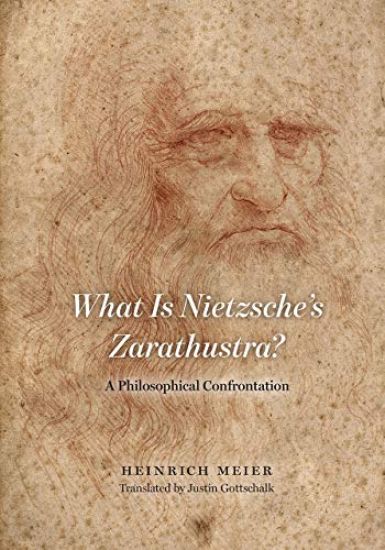
What is Nietzsche's Zarathustra?

What is Nietzsche's Zarathustra?

Heinrich Meier

THE UNIVERSITY OF CHICAGO PRESS
2026
nidottu
A masterful, nuanced, and novel examination of Nietzsche’s Zarathustra. Thus Spoke Zarathustra is Nietzsche’s most famous and most puzzling work, one in which he makes the greatest use of poetry to explore the questions posed by philosophy. But in order to understand the movement of this drama, we must first understand the character of its protagonist: we must ask, What Is Nietzsche’s Zarathustra? Heinrich Meier attempts to penetrate the core of the drama, following as a guiding thread the question of whether Zarathustra is a philosopher or a prophet, or, if he is meant to be both, whether Zarathustra is able to unite philosopher and prophet in himself. Via a close reading that uncovers the book’s hidden structure, Meier develops a highly stimulating and original interpretation of this much-discussed but still ill-understood masterwork of German poetic prose. In the process, he carefully overturns long-established canons in the academic discourse of Nietzsche interpretation. The result is a fresh and surprising grasp of Nietzsche’s well-known teachings of the overman, the will to power, and the eternal return.
Leo Strauss and the Theologico-Political Problem

Leo Strauss and the Theologico-Political Problem

Heinrich Meier

Cambridge University Press
2006
sidottu
This book, by one of the most prominent interpreters of Leo Strauss's thought, was the first to address the problem that Leo Strauss himself said was the theme of his studies: the theologico-political problem or the confrontation with the theological and the political alternative to philosophy as a way of life. In his theologico-political treatise, which comprises four parts and an appendix, Heinrich Meier clarifies the distinction between political theology and political philosophy and reappraises the unifying center of Strauss's philosophical enterprise. The book is the culmination of Meier's work on the theologico-political problem. It will interest anyone who seeks to understand both the problem caused by revelation for philosophy and the challenge posed by political-religious radicalism. The appendix makes available for the first time two lectures by Strauss that are immediately relevant to the subject of this book and that will open the way for future research and debate on the legacy of Strauss.
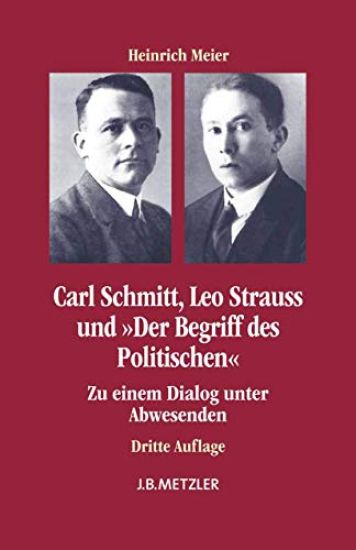
Carl Schmitt, Leo Strauss und "Der Begriff des Politischen"

Carl Schmitt, Leo Strauss und "Der Begriff des Politischen"

Heinrich Meier

Springer-Verlag Berlin and Heidelberg GmbH Co. KG
2013
nidottu
Heinrich Meiers Dialog unter Abwesenden hat wie kein anderes Buch der letzten Jahrzehnte die internationale Debatte über Carl Schmitt und die Politische Theologie verändert. 1988 erschienen, bestimmte es zum ersten Mal das Zentrum und den Zusammenhang von Schmitts Werk als Politische Theologie. Die 3. Auflage enthält neben dem Epilog von 1988, der sich mit Derridas Politik der Freundschaft auseinandersetzt, ein neues Nachwort.