Kirjojen hintavertailu. Mukana 11 699 587 kirjaa ja 12 kauppaa.

Kirjahaku

Etsi kirjoja tekijän nimen, kirjan nimen tai ISBN:n perusteella.

6 kirjaa tekijältä Helen Carr

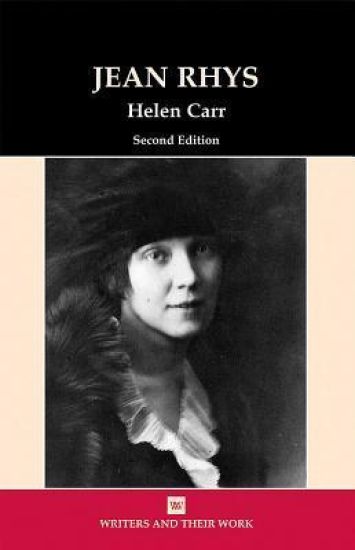
Jean Rhys

Jean Rhys

Helen Carr

Northcote House Publishers Ltd
2012
nidottu
Neglected and forgotten for many years, the arresting, elliptical novels written by Dominican-born Jean Rhys are now widely acclaimed. Her last and most famous novel, Wide Sargasso Sea, her retelling of Jane Eyre, is a central text for the imaginative re-examination of gender and colonial power relations. Helen Carr’s account draws on both recent feminism and postcolonial theory, and places Rhys’s work in relation to modernist and postmodernist writing. First published in 1996, Helen Carr’s revised edition takes full cognizance of the wide critical attention paid to Rhys since that date.
Inventing the American Primitive

Inventing the American Primitive

Helen Carr

New York University Press
1996
sidottu
American mainstream culture has always been fascinated with the notion of the primitive, particularly as embodied by Native Americans. In Inventing the American Primitive, Helen Carr illustrates how responses to the existence of Native American traditions have shaped ideas of American identity and American literature. Inventing the American Primitive examines a body of work, both literary and anthropological, that describes, inscribes, translates and transforms Native American myths and poetry. Drawing on post-colonial and feminist theory, as well as ethnography's recent textual turn, Carr reveals the conflicts and ambivalence in these texts. Through their writings, the writers and anthropologists studied were attempting to preserve a culture which their country, with their help or connivance, sought to destroy. The contradictions and tensions of this position run throughout their work. Although there is no simple narrative of progress in this story, as it moves from the eighteenth-century primitivism to twentieth-century modernism, the book shows the process by which the richness and complexity of Native American traditions came to be acknowledged.Inventing the American Primitive offers a radical new reading of American literary history, as well as fresh insights into the powerful pull of primitivism in United States culture, and into the interactions of gender and race ideologies.
Inventing the American Primitive

Inventing the American Primitive

Helen Carr

New York University Press
1996
pokkari
American mainstream culture has always been fascinated with the notion of the primitive, particularly as embodied by Native Americans. In Inventing the American Primitive, Helen Carr illustrates how responses to the existence of Native American traditions have shaped ideas of American identity and American literature. Inventing the American Primitive examines a body of work, both literary and anthropological, that describes, inscribes, translates and transforms Native American myths and poetry. Drawing on post-colonial and feminist theory, as well as ethnography's recent textual turn, Carr reveals the conflicts and ambivalence in these texts. Through their writings, the writers and anthropologists studied were attempting to preserve a culture which their country, with their help or connivance, sought to destroy. The contradictions and tensions of this position run throughout their work. Although there is no simple narrative of progress in this story, as it moves from the eighteenth-century primitivism to twentieth-century modernism, the book shows the process by which the richness and complexity of Native American traditions came to be acknowledged.Inventing the American Primitive offers a radical new reading of American literary history, as well as fresh insights into the powerful pull of primitivism in United States culture, and into the interactions of gender and race ideologies.
The Red Prince

The Red Prince

Helen Carr

Oneworld Publications
2022
pokkari
War, revolution, treason and love – the thrilling tale of Sir John of Gaunt brought to life by medieval history's rising star. ‘The Red Prince announces Helen Carr as one of the most exciting new voices in narrative history.’ Dan Jones Son of Edward III, brother to the Black Prince, father to Henry IV and the sire of all the Tudors. Always close to the English throne, John of Gaunt left a complex legacy. Too rich, too powerful, too haughty… did he have his eye on his nephew’s throne? Why was he such a focus of hate in the Peasants’ Revolt? In examining the life of a pivotal medieval figure, Helen Carr paints a revealing portrait of a man who held the levers of power on the English and European stage, passionately upheld chivalric values, pressed for the Bible to be translated into English, patronised the arts, ran huge risks to pursue the woman he loved… and, according to Shakespeare, gave the most beautiful of all speeches on England. *** A TIMES AND SUNDAY TIMES BEST BOOK OF 2021. SHORTLISTED FOR THE ELIZABETH LONGFORD PRIZE FOR HISTORICAL BIOGRAPHY ‘In Shakespeare’s Richard II, John of Gaunt gives the “this scepter’d isle… this England” speech. This vivid history brings to life his princely ambitions and passion.’ The Times, Best Books of 2021 ‘Superb, gripping and fascinating, here is John of Gaunt and a cast of kings, killers and queens brought blazingly, sensitively and swashbucklingly to life. An outstanding debut.’ Simon Sebag Montefiore ‘Helen Carr is one of the most exciting and talented young historians out there. She has a passion for medieval history which is infectious and is always energetic and engaging, whether on the printed page or the screen.’ Dan Snow
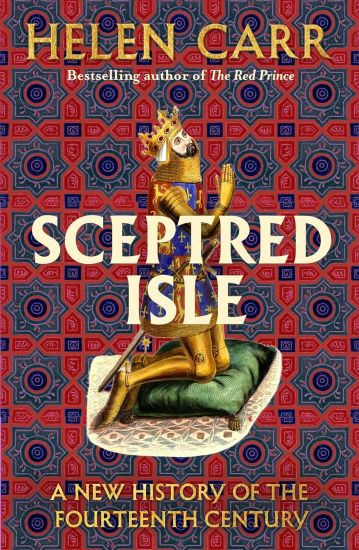
Sceptred Isle

Sceptred Isle

Helen Carr

Cornerstone
2025
sidottu
'A sparkling popular history'Dan Jones'Tells the story of the 14th-century Plantagenets with verve'The Times'Informative, anecdotal and entertaining'Financial TimesTHE TIMES BOOKS TO LOOK OUT FOR IN 2025The death of Edward I in 1307 marked the beginning of a period of intense turmoil and change in England. The fourteenth century ushered in the beginning of the bloody Hundred Years’ War with France, an epic conflict with Scotland that would last into the sixteenth century, famine in Northern Europe and the largest human catastrophe in known history, the Black Death.Through the epic drama of regicide, war, the prolonged spectre of bubonic plague, religious antagonism, revolt and the end of a royal dynasty, this book tells the story of the fourteenth century via the lives of Edward II, Edward III and Richard II – three very different monarchs, each with their own egos and ambitions, each with their own ideas about England and what it meant to wield power.Alongside the lives of the last Plantagenets, it also uncovers lesser-known voices and untold stories to give a new portrait of a fractured monarchy, the birth of the struggle between Europeanism and nationalism, social rebellion and a global pandemic.Sceptred Isle is a thrilling narrative account of a century of revolution, shifting power and great change – social, political and cultural – shedding new light on a pivotal period of English history and the people who lived it.
Sceptred Isle

Sceptred Isle

Helen Carr

Cornerstone
2026
pokkari
From the bestselling author Helen Carr, a thrilling new history of the fourteenth century – a time of catastrophe and conflict that shaped England for centuries to come. ***THE TOP TEN BESTSELLER*** 'A sparkling popular history which brings the Middle Ages' most terrible century to life for a new generation' Dan Jones 'Tells the story of the 14th-century Plantagenets with verve' The Times 'A highly engaging re-evaluation of a tumultuous century' Observer The death of Edward I in 1307 marked the beginning of a period of intense turmoil and change in England. The fourteenth century ushered in the beginning of the bloody Hundred Years’ War with France, an epic conflict with Scotland that would last into the sixteenth century, famine in Northern Europe and the largest human catastrophe in known history, the Black Death. Through the epic drama of regicide, war, the prolonged spectre of bubonic plague, religious antagonism, revolt and the end of a royal dynasty, this book tells the story of the fourteenth century via the lives of Edward II, Edward III and Richard II – three very different monarchs, each with their own egos and ambitions, each with their own ideas about England and what it meant to wield power. Alongside the lives of the last Plantagenets, it also uncovers lesser-known voices and untold stories to give a new portrait of a fractured monarchy, the birth of the struggle between Europeanism and nationalism, social rebellion and a global pandemic. Sceptred Isle is a thrilling narrative account of a century of revolution, shifting power and great change – social, political and cultural – shedding new light on a pivotal period of English history and the people who lived it. Praise for Sceptred Isle 'A sweeping look at an era of upheaval, panic and change. Gripping, powerful history' Hallie Rubenhold 'A cannily timed new history... [Sceptred Isle] tells the story of the 14th-century Plantagenets with verve' The Times 'A highly engaging re-evaluation of a tumultuous century' Observer 'Informative, anecdotal and entertaining... So many of the events of that tumultuous century find echoes today' Financial Times 'Gripping... Carr is an eloquent guide to the human realities of a century that often has a hallucinatory quality: vivid, desperate and haunting in its glories and its terrors' Spectator 'Fast-paced and thrilling... a remarkably evocative account of the high drama, excessive bloodshed and significant societal change during this tumultuous age... hugely enjoyable' Country Life 'Excellent' Clive Anderson, Loose Ends (BBC Radio4) 'In this vivid, finely researched book, Helen Carr takes us deep into England’s deadly fourteenth century and finds life and human colour. This is a sparkling popular history which brings the Middle Ages' most terrible century to life for a new generation' Dan Jones 'Full of colour, with headlong energy, Sceptred Isle brings England’s calamitous fourteenth century to life vividly. While Fortune’s Wheel turns through cycles of famine, plague and war, Helen Carr’s engrossing narrative never loses sight of the complexity, and hope, of human experience' Helen Castor