Kirjojen hintavertailu. Mukana 12 016 292 kirjaa ja 12 kauppaa.

Kirjahaku

Etsi kirjoja tekijän nimen, kirjan nimen tai ISBN:n perusteella.

12 kirjaa tekijältä Helen Doe

One Crew: The RNLI's Official 200-Year History
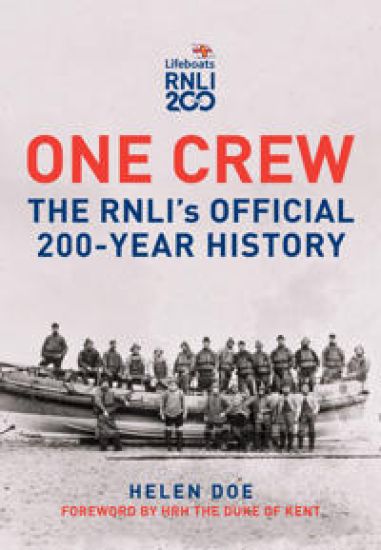
In the 200 years since it was founded, the RNLI has saved more than 144,000 lives. It all began with a meeting in London in 1824 to act on a proposal by Sir William Hillary: the formation of a National Institution for the Preservation of Life from Shipwreck. It is his vision that still drives the RNLI today. The vast majority of its crews are volunteers, backed up by large numbers of fundraisers from every walk of life. And the charity today saves lives in more ways, in more places – through lifeguards, water safety and international work. But, since the RNLI’s foundation, it has not always been plain sailing. In April 1852, the Lifeboat Journal observed that ‘lifeboats have been too few in number, of imperfect form and construction, and often unsuited to the nature of the locality where stationed’. This book takes a fresh look at the creation of the Institution and its early founders, and examines how it has responded over 200 years to the inevitable stresses and external pressures. It provides information on many hitherto unsung heroes and heroines and lesser-known rescues, as well as the well-known events. The RNLI has overcome many obstacles and is now one of the UK and Ireland’s most respected organisations. How it became so is a story of determination, acumen, skill and bravery. More than 700 names are inscribed on the RNLI Memorial at RNLI Support Centre in Poole, Dorset. The author and publishers hope that this book is a fitting tribute to such self-sacrifice.
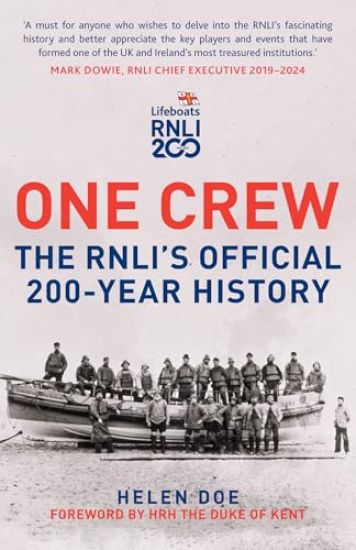
One Crew: The RNLI's Official 200-Year History
In the 200 years since it was founded, the RNLI has saved more than 144,000 lives. It all began with a meeting in London in 1824 to act on a proposal by Sir William Hillary: the formation of a National Institution for the Preservation of Life from Shipwreck. It is his vision that still drives the RNLI today. The vast majority of its crews are volunteers, backed up by large numbers of fundraisers from all walks of life. And the charity today saves lives in more ways, in more places – through lifeguards, water safety and international work. But, since the RNLI’s foundation, it has not always been plain sailing. In April 1852, the Lifeboat Journal observed that ‘lifeboats have been too few in number, of imperfect form and construction, and often unsuited to the nature of the locality where stationed’. This book takes a fresh look at the creation of the Institution and its early founders, and examines how it has responded over 200 years to the inevitable stresses and external pressures. It provides information on many hitherto unsung heroes and heroines and lesser-known rescues, along with the well-known events. The RNLI has overcome many obstacles and is now one of the UK and Ireland’s most respected organisations. How it became so is a story of determination, acumen, skill and bravery. More than 700 names are inscribed on the RNLI Memorial at the RNLI Support Centre in Poole, Dorset. The author and publishers hope that this book is a fitting tribute to such self-sacrifice.
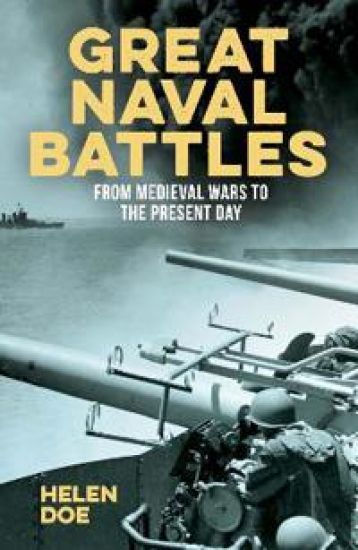
Great Naval Battles: From Medieval Wars to the Present Day
This fascinating and accessible account steers a course through the most epic engagements on the high seas over the last 800 years, written by the renowned naval historian Dr Helen Doe. Charting a course from medieval to modern times, Great Naval Battles dissects over 50 key naval operations which have changed the course of history as ships evolved from wooden vessels powered by sail and oar to nuclear-powered submarines and aircraft carriers. Arranged chronologically, the overview of each battle will describe where and why they took place, who was in command, the technologies and weapon systems available to them, and the battle tactics they used. Includes: - Battle of Sandwich (1217) - the first battle known to be fought at sea under sail- Battle of Gravelines (1588) - when the Spanish Armada was repelled by the English- The Battle of Trafalgar (1805) - the victory that establish Britain's Royal Navy as the world's preeminent sea-power for the next hundred years and more- The Battle of Hampton Roads - the first battle between ironclad warships, which took place in the American Civil War - The Battle of Jutland (1916) - the largest naval engagement of the First World War - The Battle of Midway (1942) - which turned the tide against the Japanese in the Pacific theater in World War II Featuring maps, photographs and illustrations, and a glossary of terms, this fascinating book charts the key role of naval warfare through this and explores how technology, leadership, luck, and even the weather, have played their part in defining the world we live in today.
Fighter Pilot

Fighter Pilot

Helen Doe

Amberley Publishing
2016
pokkari
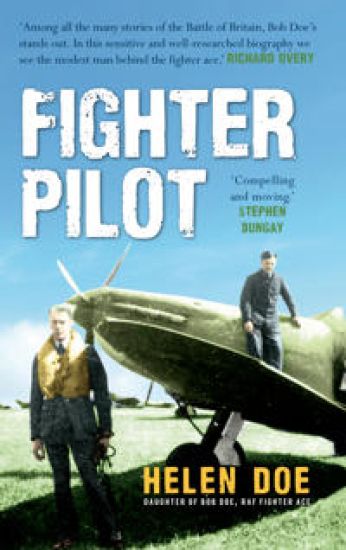
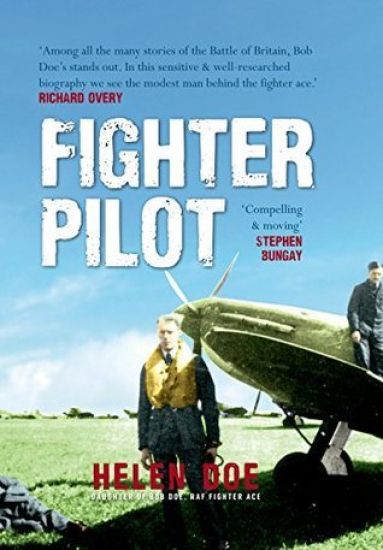
‘I saw a mass of ME 109s and went up to attack. I looked behind and found three on each side diving to attack me.’ Bob Doe, Combat Report 16 August 1940 In June 1940, at the age of twenty, Bob Doe believed himself to be the worst pilot in his squadron. Just three months later he was a highly decorated hero of the Battle of Britain. This is the story of the pilot who, in his own estimation, was not promising material for a fighter pilot. He left school at fourteen and had none of the qualifications or background of his fellow officers, but he found his place in the Battle of Britain, shooting down fourteen enemy aircraft and sharing in two others. He became the third-highest-scoring pilot of the Battle, and was unusual in achieving these victories in both Spitfires and Hurricanes. This biography, written by his daughter, a noted professional historian, tells the story of Bob’s remarkable career, including his time in Burma leading an Indian Air Force squadron against the Japanese. He was a modest man who spoke for many veterans when he asked that they should not be considered as heroes but remembered for what they did. This book celebrates Bob’s achievements and also those of the men who fought alongside him.
Brunel's Ships and Boats

Brunel's Ships and Boats

Helen Doe

Amberley Publishing
2018
nidottu
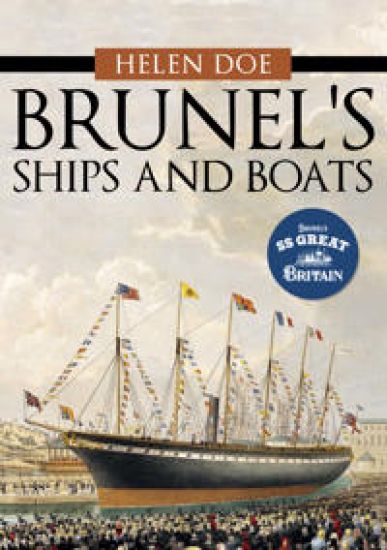
This book provides for the first time a complete look at all of Isambard Kingdom Brunel’s contributions to the great age of steamship design. From modelling boats as a child to his youthful dreams of leading a fleet of ships, he was excited by maritime ventures. Brunel was fortunate to be part of an exciting age of maritime steam and he was the great innovator, bringing together the best of the emerging technologies. His first ship was the Great Western, a wooden paddle steamer launched in 1837, and he is well known for the Great Britain and the Great Eastern. But these are not his only vessels and here they are all revealed. From humble industrial craft, his work with the Admiralty on the first screw propelled warships to vast ocean liners, Brunel was constantly sketching out his ideas. His ships travelled the world, speeding up communications and carrying large numbers of passengers across the oceans. This book provides an overview of all of Brunel’s vessels, small and large, from boats to ships, leisure craft to gunboats, and follows his progression as he pushed boundaries and tested new technology. Dr Helen Doe is a maritime historian, specialising in the nineteenth century. She is a Fellow of the University of Exeter, Vice Chairman of the British Commission for Maritime History, Fellow of the Royal Historical Society and a Trustee of the SS Great Britain. She has published extensively and her previous book was The First Atlantic Liner: Brunel’s Great Western Steamship.
Enterprising Women and Shipping in the Nineteenth Century
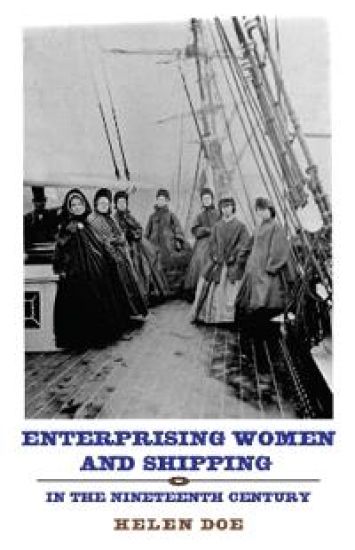
An examination of women entrepreneurs who invested in, and often managed, non-feminine businesses such as shipping and shipbuilding in the late eighteenth and nineteenth centuries. Far from the genteel notion of Victorian women as milliners and haberdashers, this book shows that women could and did manage male businesses and manage men. Women invested in the expanding shipping industry throughout the late eighteenth and the nineteenth century and actively ran non feminine businesses such as shipbuilding. By setting the businesswomen firmly in the context of the industry, the book examines the business challenges from the woman's perspective. It demonstrates how a woman needed to understand the business requirements while in some cases also being a single parent. As business managers, they had to manage a male workforce, deal with large and important customersand ensure they maintained their firm's reputation and continued to win orders. Nor were these women mere caretakers for the next generation, in many cases continuing to run the business in an active manner after their son or sons were of age. This book reveals communities of independent women in England who were active entrepreneurs and investors, in a period when women were increasingly supposed to be relegated to a more domestic role. It includes briefbiographies of many of these women entrepreneurs who were also conventional mothers, wives and daughters. Helen Doe is an Honorary Fellow of the Centre for Maritime Historical Studies, University of Exeter; a Council Member ofthe Society for Nautical Research; chair of their marketing committee; a member of the British Commission for Maritime History; on the Advisory Council of the SS Great Britain; and a Trustee of the National Maritime Museum Cornwall.
Stanford Tuck

Stanford Tuck

Helen Doe

Grub Street Publishing
2023
sidottu
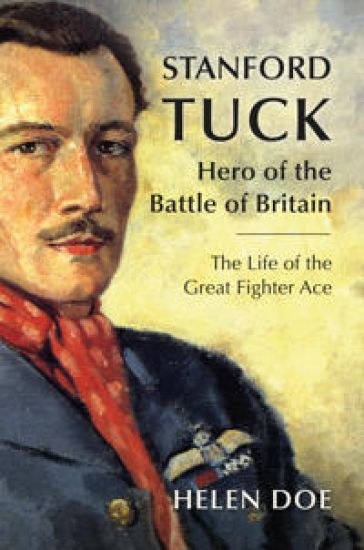
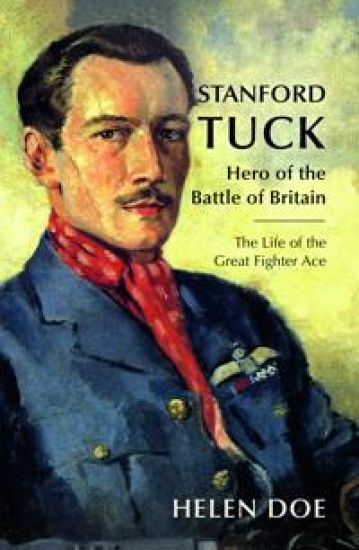
The first full reappraisal of one of Britain's great fighter aces, this book examines the truth behind Tuck's 1956 biography, Fly for Your Life. It looks at the evidence behind the myths, checks out some of the exaggerated stories and reveals the real Stanford Tuck. In January 1942 Bob Tuck was the top-scoring British fighter ace with an official score of 29 enemy aircraft destroyed. With film-star looks he was the glamorous role model for the RAF publicity machine and an eager press and public wanting wartime heroes. He had joined the RAF in 1935 and quickly showed his excellent flying skills. In 1940 his Spitfire squadron was fighting over Dunkirk where he proved himself an expert shot. During the Battle of Britain his legendary prowess grew and he was posted to command a leaderless and demoralised squadron, this time flying Hurricanes. He continued to prove he was an outstanding fighter ace, gaining the rare distinction of three DFCs and then the DSO for his leadership. He was shot down over France in January 1942. Imprisoned in Stalag Luft III. His room-mate was Roger Bushell, the mastermind of the Great Escape and Tuck worked with him on the committee and was to be his partner in the escape. In January 1944 however, around 20 POWs, including Tuck, were purged to a new camp. Still determined to escape, when his camp was moved out on the Long March westwards, Tuck and a Polish officer took a risky chance and made their way east to Russian forces and thence to England. This book reveals a more complex man than the one-dimensional hero of the previous biography. Post war, he became good friends with the Luftwaffe ace, Adolf Galland, and was a key advisor with him on the film, Battle of Britain, and, often with his other friend, Douglas Bader, made many media appearances. His health suffered in later years from the impact of his war service and his imprisonment and he died aged 70 in 1987.
Stanford Tuck

Stanford Tuck

Helen Doe

Grub Street Publishing
2025
nidottu
The first full reappraisal of one of Britain's great fighter aces, this book examines the truth behind Tuck's 1956 biography, Fly for Your Life. It looks at the evidence behind the myths, and reveals the real Stanford Tuck, a more complex man than the one-dimensional hero of the previous biography. During the Second World War, Bob Tuck was a top-scoring British fighter ace with an official score of 29 enemy aircraft destroyed by January 1942, and became the glamorous role model for the RAF publicity machine. He had joined the RAF in 1935 and quickly showed his excellent flying skills. In 1940 his Spitfire squadron was fighting over Dunkirk where he first proved himself an expert shot. During the Battle of Britain his legendary prowess grew and he was posted to command a leaderless and demoralised squadron, this time flying Hurricanes, where he continued to prove himself an outstanding fighter ace, gaining the rare distinction of three DFCs and then the DSO for his leadership. Shot down over France in January 1942, he was imprisoned in Stalag Luft III alongside Roger Bushell, the mastermind of the Great Escape. In January 1944, he was purged along with around 20 other POWs to a new camp. Still determined to escape, he took a risky chance during the Long March along with a Polish officer, making their way east to Russian forces and thence to England. Post-war he became good friends with the Luftwaffe ace, Adolf Galland, and was a key advisor with him on the film, Battle of Britain, and, often with his other friend, Douglas Bader, made many media appearances. His health suffered in later years from the impact of his war service and his imprisonment and he died aged 70 in 1987.
Fighter Pilot

Fighter Pilot

Helen Doe

Amberley Publishing
2015
sidottu
In June 1940, at the age of twenty, Bob Doe believed himself to be the worst pilot in his squadron. Just three months later he was a highly decorated hero of the Battle of Britain. This is the story of the pilot who, in his own estimation, was not promising material for a fighter pilot. He left school at fourteen and had none of the qualifications or background of his fellow officers. But he found his place in the Battle of Britain, shooting down fourteen enemy aircraft and sharing in two others (he was the third highest scoring pilot of the Battle). He was unusual in achieving these victories in both Spitfires and Hurricanes. This biography, written by his daughter, a noted professional historian, tells the story of Bob’s remarkable career, including his time in Burma leading an Indian Air Force squadron against the Japanese. He was a modest man who spoke for many veterans when he asked that they should not be considered as heroes but remembered for what they did. This book celebrates Bob’s achievements and also those of the men who fought alongside him.