Kirjojen hintavertailu. Mukana 11 634 096 kirjaa ja 12 kauppaa.

Kirjahaku

Etsi kirjoja tekijän nimen, kirjan nimen tai ISBN:n perusteella.

8 kirjaa tekijältä Helen Hills

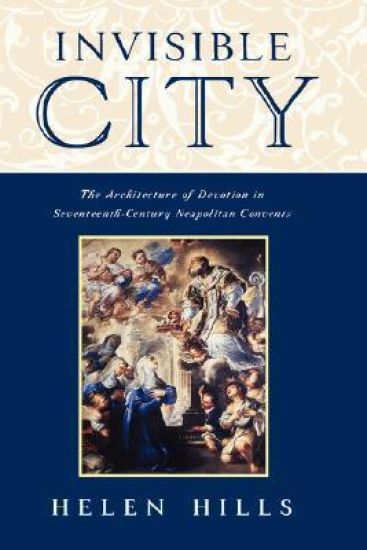
Invisible City

Invisible City

Helen Hills

Oxford University Press Inc
2004
sidottu
More than any other European city, Baroque Naples was dominated by convents. Behind their imposing facades and highly decorated churches, the convents of Naples housed the daughters of the city's most exclusive families, women who, despite their cloistered existence, were formidable players in the city's power structure. Invisible City vividly portrays the religious world of seventeenth-century Naples, a city of familial and internecine rivalries, of religious devotion and intense urban politics, of towering structures built to house the virgin daughters of the aristocracy. Helen Hills demonstrates how the architecture of the convents and the nuns' bodies they housed existed both in parallel and in opposition to one another. She discusses these women as subjects of enclosure, as religious women, and as art patrons, but also as powerful agents whose influence extended beyond the convent walls. Though often ensconced in convents owing to their families' economic circumstances, many of these young women were able to extend their influence as a result of the role convents played both in urban life and in art patronage. The convents were rich and powerful organizations, riven with feuds and prey to the ambitions of viceregal and elite groups, which their thick walls could not exclude. Even today, Neapolitan convents figure prominently in the city's fabric. In analyzing the architecture of these august institutions, Helen Hills skillfully reads conventual architecture as a metaphor for the body of the aristocratic virgin nun, mapping out the dialectic between flesh and stone.

Autumn Light

Autumn Light

Helen Hills

iUniverse
2001
pokkari
Autumn Light is the ideal bedside book for the thoughtful reader. It is inspirational without being shallow. Its insightful anecdotes, stories, and fables are sometimes poignant, often humorous, and always thought-provoking. Author Helen Hills converses with the reader, sharing her often intimate musings and observations in a direct, frank, and engaging manner.
Representing Emotions

Representing Emotions

Helen Hills

Ashgate Publishing Limited
2005
sidottu
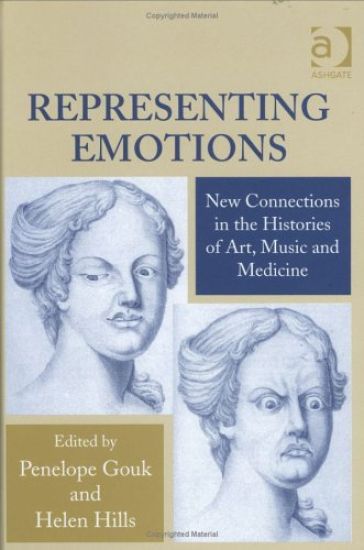
Juxtaposing artistic and musical representations of the emotions with medical, philosophical and scientific texts in Western culture between the Renaissance and the twentieth century, the essays collected in this volume explore the ways in which emotions have been variously conceived, configured, represented and harnessed in relation to broader discourses of control, excess and refinement. Since the essays explore the interstices between disciplines (e.g. music and medicine, history of art and philosophy) and thereby disrupt established frameworks within the histories of art, music and medicine, traditional narrative accounts are challenged. Here larger historical forces come into perspective, as these papers suggest how both artistic and scientific representations of the emotions have been put to use in political, social and religious struggles, at a variety of different levels.
New Approaches to Naples c.1500-c.1800

New Approaches to Naples c.1500-c.1800

Helen Hills

TAYLOR FRANCIS LTD
2024
nidottu
Early modern Naples has been characterized as a marginal, wild and exotic place on the fringes of the European world, and as such an appropriate target of attempts, by Catholic missionaries and others, to ’civilize’ the city. Historiographically bypassed in favour of Venice, Florence and Rome, Naples is frequently seen as emblematic of the cultural and political decline in the Italian peninsula and as epitomizing the problems of southern Italy. Yet, as this volume makes plain, such views blind us to some of its most extraordinary qualities, and limit our understanding, not only of one of the world's great capital cities, but also of the wider social, cultural and political dynamics of early modern Europe. As the centre of Spanish colonial power within Europe during the vicerealty, and with a population second only to Paris in early modern Europe, Naples is a city that deserves serious study. Further, as a Habsburg dominion, it offers vital points of comparison with non-European sites which were subject to European colonialism. While European colonization outside Europe has received intense scholarly attention, its cultural impact and representation within Europe remain under-explored. Too much has been taken for granted. Too few questions have been posed. In the sphere of the visual arts, investigation reveals that Neapolitan urbanism, architecture, painting and sculpture were of the highest quality during this period, while differing significantly from those of other Italian cities. For long ignored or treated as the subaltern sister of Rome, this urban treasure house is only now receiving the attention from scholars that it has so long deserved. This volume addresses the central paradoxes operating in early modern Italian scholarship. It seeks to illuminate both the historiographical pressures that have marginalized Naples and to showcase important new developments in Neapolitan cultural history and art history. Those developments showcased here include bot
Representing Emotions

Representing Emotions

Helen Hills

Routledge
2019
nidottu
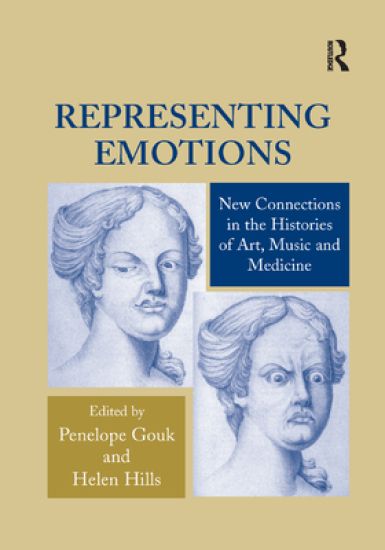
Juxtaposing artistic and musical representations of the emotions with medical, philosophical and scientific texts in Western culture between the Renaissance and the twentieth century, the essays collected in this volume explore the ways in which emotions have been variously conceived, configured, represented and harnessed in relation to broader discourses of control, excess and refinement. Since the essays explore the interstices between disciplines (e.g. music and medicine, history of art and philosophy) and thereby disrupt established frameworks within the histories of art, music and medicine, traditional narrative accounts are challenged. Here larger historical forces come into perspective, as these papers suggest how both artistic and scientific representations of the emotions have been put to use in political, social and religious struggles, at a variety of different levels.
New Approaches to Naples c.1500-c.1800

New Approaches to Naples c.1500-c.1800

Helen Hills

Ashgate Publishing Limited
2013
sidottu
Early modern Naples has been characterized as a marginal, wild and exotic place on the fringes of the European world, and as such an appropriate target of attempts, by Catholic missionaries and others, to ’civilize’ the city. Historiographically bypassed in favour of Venice, Florence and Rome, Naples is frequently seen as emblematic of the cultural and political decline in the Italian peninsula and as epitomizing the problems of southern Italy. Yet, as this volume makes plain, such views blind us to some of its most extraordinary qualities, and limit our understanding, not only of one of the world's great capital cities, but also of the wider social, cultural and political dynamics of early modern Europe. As the centre of Spanish colonial power within Europe during the vicerealty, and with a population second only to Paris in early modern Europe, Naples is a city that deserves serious study. Further, as a Habsburg dominion, it offers vital points of comparison with non-European sites which were subject to European colonialism. While European colonization outside Europe has received intense scholarly attention, its cultural impact and representation within Europe remain under-explored. Too much has been taken for granted. Too few questions have been posed. In the sphere of the visual arts, investigation reveals that Neapolitan urbanism, architecture, painting and sculpture were of the highest quality during this period, while differing significantly from those of other Italian cities. For long ignored or treated as the subaltern sister of Rome, this urban treasure house is only now receiving the attention from scholars that it has so long deserved. This volume addresses the central paradoxes operating in early modern Italian scholarship. It seeks to illuminate both the historiographical pressures that have marginalized Naples and to showcase important new developments in Neapolitan cultural history and art history. Those developments showcased here include bot