Helen Hunt Jackson's passionate crusade for Indian rights comes to life in this collection of more than 200 letters, most of which have never been published before. With Valerie Sherer Mathes's helpful notes, the letters reveal the behind-the-scenes drama of Jackson's involvement in Indian reform, which led her to write A Century of Dishonor and her protest novel, Ramona.Ralph Waldo Emerson described Jackson as the ""greatest American woman poet."" These stirring letters will intrigue anyone interested in Indian affairs, nineteenth-century women's studies, or the social history of Victorian America, where Jackson made her mark despite the restrictions on women. Among her correspondents were Oliver Wendell Holmes, Henry Wadsworth Longfellow, Moncure D. Conway, Henry B. Whipple, Henry L. Dawes, Henry Teller, Carl Schurz, and of course, commissioners of Indian affairs and such prominent editors as Whitelaw Reid, Charles Dudley Warner, and Richard Watson Gilder.The letters are presented in sections on the Ponca and Mission Indian causes, allowing readers to focus on the time period and Indian group of choice.
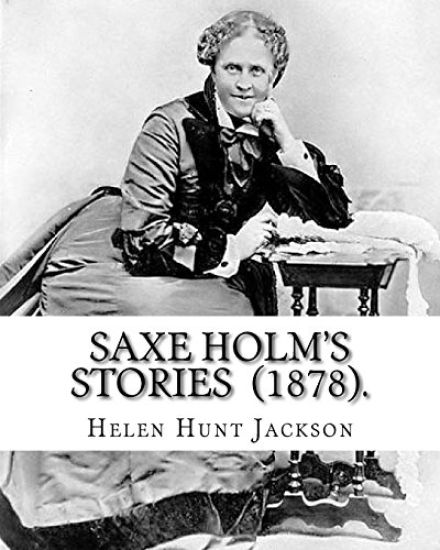
Helen Maria Hunt Jackson, born Helen Fiske (October 15, 1830 - August 12, 1885), was an American poet and writer who became an activist on behalf of improved treatment of Native Americans by the U.S. government. She described the adverse effects of government actions in her history A Century of Dishonor (1881). Her novel Ramona (1884) dramatized the federal government's mistreatment of Native Americans in Southern California after the Mexican-American War and attracted considerable attention to her cause. Commercially popular, it was estimated to have been reprinted 300 times and most readers liked its romantic and picturesque qualities rather than its political content.The novel was so popular that it attracted many tourists to Southern California who wanted to see places from the book.She was born Helen Maria Fiske in Amherst, Massachusetts, the daughter of Nathan Welby Fiske and Deborah Waterman Vinal Fisk. Helen's father was a minister, author, and professor of Latin, Greek, and philosophy at Amherst College. She had two brothers, both of whom died soon after birth, and a sister Anne. They were raised as Unitarian.Anne became the wife of E. C. Banfield, a federal government official who served as Solicitor of the United States Treasury. The girls lost their mother in 1844, when Helen was fifteen. Three years later their father died. He had provided financially for Helen's education and arranged for an uncle to care for her. Fiske attended Ipswich Female Seminary and the Abbott Institute, a boarding school in New York City run by Reverend J.S.C. Abbott. She was a classmate of Emily Dickinson, also from Amherst; Emily became a renowned poet. The two corresponded for the rest of their lives, but few of their letters have surviveed.In 1852 at age 22, Fiske married U.S. Army Captain Edward Bissell Hunt. They had two sons, one of whom, Murray Hunt, died as an infant in 1854 of a brain disease. In 1863, her husband died in a military accident. Her second son Rennie Hunt died of diphtheria in 1865. Hunt traveled widely. In the winter of 1873-1874 she was in Colorado Springs, Colorado at the resort of Seven Falls, seeking rest in hopes of a cure for tuberculosis, which was often fatal before the invention of antibiotics. (See Tuberculosis treatment in Colorado Springs).While in Colorado Springs, Hunt met William Sharpless Jackson, a wealthy banker and railroad executive. They married in 1875 and she took the name Jackson, under which she was best known for her later writings.Helen Hunt began writing after the deaths of her family members. She published her early work anonymously, usually under the name "H.H."Ralph Waldo Emerson admired her poetry and used several of her poems in his public readings. He included five of them in his Parnassus: An Anthology of Poetry (1880). Over the next two years, she published three novels in the anonymous No Name Series, including Mercy Philbrick's Choice and Hetty's Strange History.She also encouraged a contribution from Emily Dickinson to A Masque of Poets as part of the same series
Helen Maria Hunt Jackson (pen name, H.H.; October 15, 1830 - August 12, 1885), was an American poet and writer who became an activist on behalf of improved treatment of Native Americans by the United States government. She described the adverse effects of government actions in her history A Century of Dishonor (1881). Her novel Ramona (1884) dramatized the federal government's mistreatment of Native Americans in Southern California after the Mexican-American War and attracted considerable attention to her cause. Commercially popular, it was estimated to have been reprinted 300 times and most readers liked its romantic and picturesque qualities rather than its political content. The novel was so popular that it attracted many tourists to Southern California who wanted to see places from the book. Early years and education Helen Maria Fiske was born in Amherst, Massachusetts, the daughter of Nathan Welby Fiske and Deborah Waterman Vinal Fiske. Helen's father was a minister, author, and professor of Latin, Greek, and philosophy at Amherst College. She had two brothers, Humphrey Washburn Fiske (?-1833) and David Vinal Fiske (1829-1829), both of whom died soon after birth, and a sister Anne. They were raised as Unitarian. Anne became the wife of E. C. Banfield, a federal government official who served as Solicitor of the United States Treasury. The girls' mother died in 1844, when Helen was fourteen. Three years later, their father died. He had provided financially for Helen's education and arranged for an uncle to care for her. Fiske attended Ipswich Female Seminary and the Abbott Institute, a boarding school in New York City run by Reverend John Stevens Cabot Abbott. She was a classmate of Emily Dickinson, also from Amherst; Emily became a renowned poet. The two corresponded for the rest of their lives, but few of their letters have survived. WORK: Bits of Travel (1872) Bits about Home Matters (1873) Saxe Holm's Stories (1874) The Story of Boon (1874) Mercy Philbrick's Choice (1876) Hetty's Strange History (1877) Bits of Talk in Verse and Prose for Young Folks (1876) Bits of Travel at Home (1878) Nelly's Silver Mine: A Story of Colorado Life (1878) Letters from a Cat (1879) A Century of Dishonor (1881) Ramona (1884) Zeph: A Posthumous Story (1885) Glimpses of Three Coasts (1886) Between Whiles (1888) A Calendar of Sonnets (1891) Ryan Thomas (1892) The Hunter Cats of Connorloa (1894) Poems by Helen Jackson Roberts Bros, Boston (1893) Pansy Billings and Popsy: Two Stories of Girl Life (1898) Glimpses of California (1914)
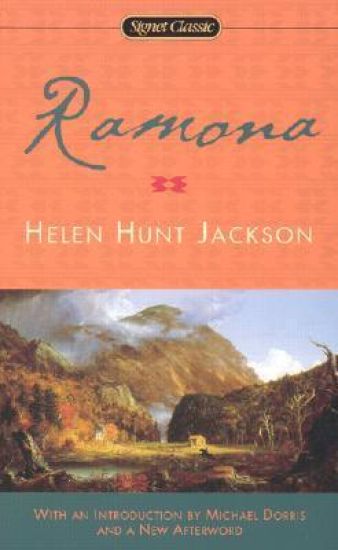
A moving love story with grand melodramatic touches, Ramona was linked with Uncle Tom's Cabin as one of the great ethical novels of the 19th century. A bestseller in 1884, Ramona was both a political and literary success and will continue to move modern readers with its sympathetic characters and its depiction of the Native American's struggle in the early West.