Discover the number one bestselling phenomenon that is a powerful and profound mediation on grief expressed through the trials of training a goshawk. As a child, Helen Macdonald was determined to become a falconer, learning the arcane terminology and reading all the classic books.
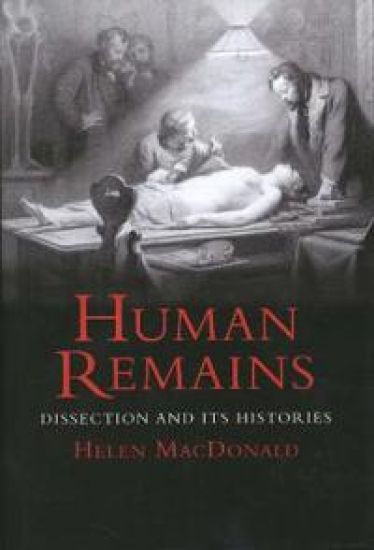
Until 1832, when an Act of Parliament began to regulate the use of bodies for anatomy in Britain, public dissection was regularly—and legally—carried out on the bodies of murderers, and a shortage of cadavers gave rise to the infamous murders committed by Burke and Hare to supply dissection subjects to Dr. Robert Knox, the anatomist.This book tells the scandalous story of how medical men obtained the corpses upon which they worked before the use of human remains was regulated. Helen MacDonald looks particularly at the activities of British surgeons in nineteenth-century Van Diemen’s Land, a penal colony in which a ready supply of bodies was available. Not only convicted murderers, but also Aborigines and the unfortunate poor who died in hospitals were routinely turned over to the surgeons.This sensitive but searing account shows how abuses happen even within the conventions adopted by civilized societies. It reveals how, from Burke and Hare to today’s televised dissections by German anatomist Dr. Gunther von Hagens, some people’s bodies become other people’s entertainment.
This book unravels the institutions surrounding witchcraft in the central Indian state of Chhattisgarh through theoretical and empirical research on witchcraft, violence and modernity in contemporary times. The author pieces together ‘fragments’ of stories gathered utilising ethnographic methods to examine the meanings associated with witches and witchcraft, and how they connect with social relations, gender, notions of agency, law, media and the state.The volume uses the metaphor of the shattered urn to tell the story of the accusations, punishment, rescue and the aftermath of the events of the trial of women accused of being witches. It situates the ?onhi or witch as a key elaborating symbol that orders behaviour to determine who the socially included and excluded are in communities. Through the personal interviews and other ethnographic methods conducted over the course of many years, the author delves into the stories and practices related to witchcraft, its relations with modernity, and the relationship between violence and ideological norms in society.Insightful and detailed, this book will be of great interest to academics and researchers of anthropology, development studies, sociology, history, violence, gender studies, tribal studies and psychology. It will also be useful for readers in both historic and contemporary witchcraft practices as well as policy makers.
This book unravels the institutions surrounding witchcraft in the central Indian state of Chhattisgarh through theoretical and empirical research on witchcraft, violence and modernity in contemporary times. The author pieces together ‘fragments’ of stories gathered utilising ethnographic methods to examine the meanings associated with witches and witchcraft, and how they connect with social relations, gender, notions of agency, law, media and the state.The volume uses the metaphor of the shattered urn to tell the story of the accusations, punishment, rescue and the aftermath of the events of the trial of women accused of being witches. It situates the ?onhi or witch as a key elaborating symbol that orders behaviour to determine who the socially included and excluded are in communities. Through the personal interviews and other ethnographic methods conducted over the course of many years, the author delves into the stories and practices related to witchcraft, its relations with modernity, and the relationship between violence and ideological norms in society.Insightful and detailed, this book will be of great interest to academics and researchers of anthropology, development studies, sociology, history, violence, gender studies, tribal studies and psychology. It will also be useful for readers in both historic and contemporary witchcraft practices as well as policy makers.
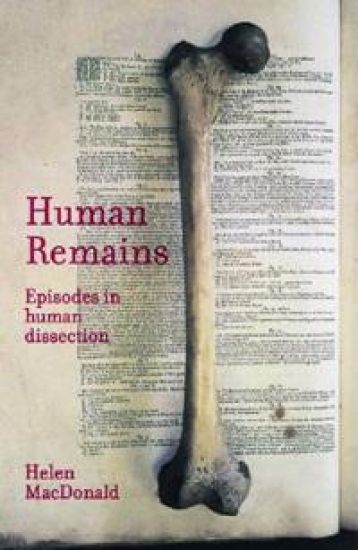
What should happen to the dead? Bone collecting, body snatching and the politics of the trade in human remains is a gothic tale that still haunts contemporary life. Human Remains tells the scandalous story of how medical men obtained the corpses upon which they worked before anatomy was regulated in Australia and Britain. Moving back and forth between Britain and the island penal colony of Tasmania, the book examines an era when convicted murderers received the double sentence of both death and dissection, the poor who died in hospital were routinely turned over to the surgeon for study, and great men traded in human remains, including those of Aboriginal people.
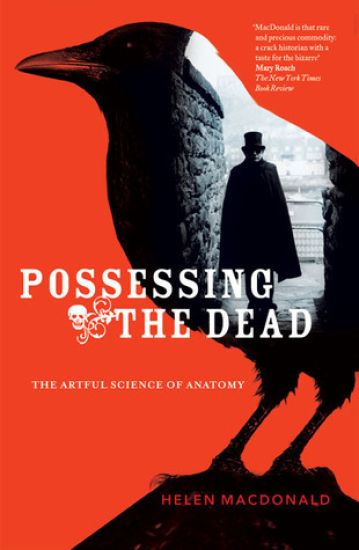
London, 1868: visiting Australian Aboriginal cricketer Charles Rose has died in Guy's Hospital. What happened next is shrouded in mystery. The only certainty is that Charles Rose's body did not go directly to a grave.Written with clarity and verve, and drawing on a rich array of material, Possessing the Dead explores the disturbing history of the cadaver trade in Scotland, England and Australia, where laws once gave certain officials possession of the dead, and no corpse lying in a workhouse, hospital, asylum or gaol was entirely safe from interference.With a rare blend of curiosity, delight in the unexpected and an eye for detail, award-winning historian Helen MacDonald brings to life this gruesome past to reveal the chicanery at play behind the procuring of bodies for dissections, autopsies and collections.
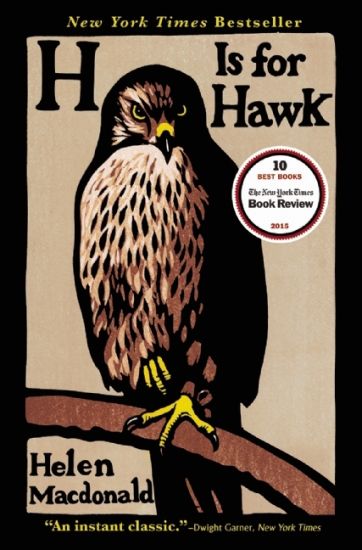
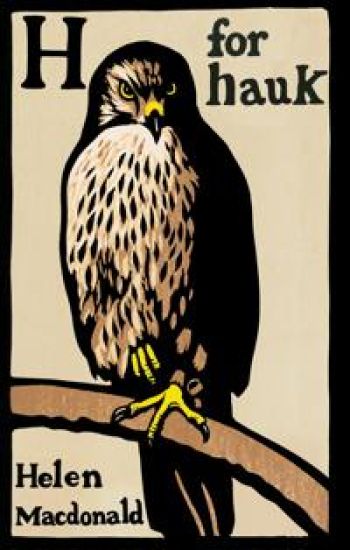
One of the New York Times Book Review's 10 Best Books of the Year One of Slate's 50 Best Nonfiction Books of the Last 25 YearsON MORE THAN 25 BEST BOOKS OF THE YEAR LISTS: including TIME (#1 Nonfiction Book), NPR, O, The Oprah Magazine (10 Favorite Books), Vogue (Top 10), Vanity Fair, Washington Post, Boston Globe, Chicago Tribune, Seattle Times, San Francisco Chronicle (Top 10), Miami Herald, St. Louis Post Dispatch, Minneapolis Star Tribune (Top 10), Library Journal (Top 10), Publishers Weekly, Kirkus Reviews, Slate, Shelf Awareness, Book Riot, Amazon (Top 20)The instant New York Times bestseller and award-winning sensation, Helen Macdonald's story of adopting and raising one of nature's most vicious predators has soared into the hearts of millions of readers worldwide. Fierce and feral, her goshawk Mabel's temperament mirrors Helen's own state of grief after her father's death, and together raptor and human "discover the pain and beauty of being alive" (People). H Is for Hawk is a genre-defying debut from one of our most unique and transcendent voices.
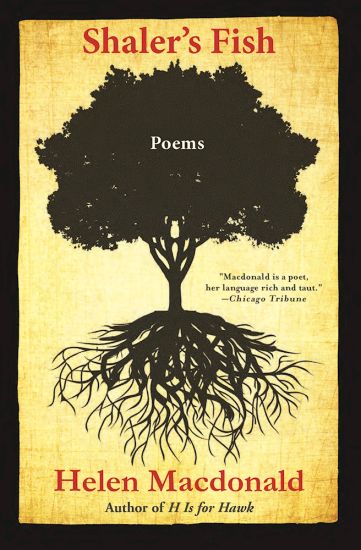
Before Helen Macdonald rose to international acclaim with her "beautiful and nearly feral" (New York Times) bestselling memoir H Is for Hawk, she wrote a collection of poetry, Shaler's Fish. In robust, lyrical verse, Shaler's Fish roams both the outer and inner landscapes of the poet's universe, seamlessly fusing reflections on language, science, and literature, with the loamy environments of the natural worlds around her. Moving between the epic--war, history, art, myth, philosophy--and the specific--CNN, Ancient Rome, Auden, Merleau-Ponty--Macdonald examines with humor and intellect what it means to be awake and watchful in the world. These are poems that probe and question, within whose nimble ecosystems we are as likely to encounter Schubert as we are "a hand of violets," Isaac Newton as a "winged quail on turf." Nothing escapes Macdonald's eye and every creature herein--from the smallest bird to the loftiest thinker--holds a significant place in her poems. This is an unparalleled collection from one of greatest nature writers, and a poet of dazzling music and vision.
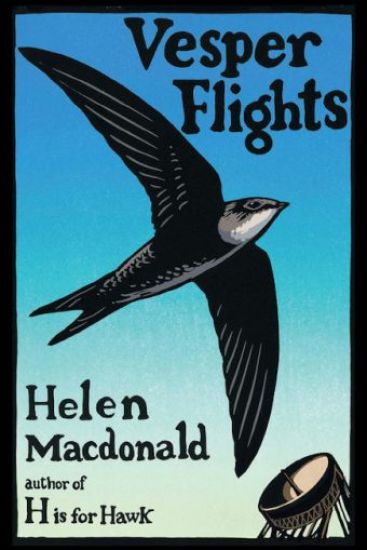
Animals don't exist in order to teach us things, but that is what they have always done, and most of what they teach us is what we think we know about ourselves.In Vesper Flights Helen Macdonald brings together a collection of her best loved essays, along with new pieces on topics ranging from nostalgia for a vanishing countryside to the tribulations of farming ostriches to her own private vespers while trying to fall asleep.Meditating on notions of captivity and freedom, immigration and flight, Helen invites us into her most intimate experiences: observing the massive migration of songbirds from the top of the Empire State Building, watching tens of thousands of cranes in Hungary, seeking the last golden orioles in Suffolk's poplar forests. She writes with heart-tugging clarity about wild boar, swifts, mushroom hunting, migraines, the strangeness of birds' nests, and the unexpected guidance and comfort we find when watching wildlife.By one of this century's most important and insightful nature writers, Vesper Flights is a captivating and foundational book about observation, fascination, time, memory, love and loss and how we make sense of the world around us.
Animals don't exist in order to teach us things, but that is what they have always done, and most of what they teach us is what we think we know about ourselves. In Vesper Flights Helen Macdonald brings together a collection of her best loved essays, along with new pieces on topics ranging from nostalgia for a vanishing countryside to the tribulations of farming ostriches to her own private vespers while trying to fall asleep. Meditating on notions of captivity and freedom, immigration and flight, Helen invites us into her most intimate experiences: observing the massive migration of songbirds from the top of the Empire State Building, watching tens of thousands of cranes in Hungary, seeking the last golden orioles in Suffolk's poplar forests. She writes with heart-tugging clarity about wild boar, swifts, mushroom hunting, migraines, the strangeness of birds' nests, and the unexpected guidance and comfort we find when watching wildlife. By one of this century's most important and insightful nature writers, Vesper Flights is a captivating and foundational book about observation, fascination, time, memory, love and loss and how we make sense of the world around us.
The fastest animal alive, the falcon deserves attention not just for the combination of speed, power, beauty and ferocity that have made it an object of fascination for thousands of years, but for the light it sheds on the cultures through which it has flown. This book, bridging science and cultural history, surveys the practical and symbolic uses of falcons in human culture in new and exciting ways.Bestselling natural history writer Helen Macdonald follows the movements of the falcon, her personal experience and knowledge of falconry enriching the history and lore of this bird of prey. She ranges across the globe and over many millennia, taking in natural history, myth and legend, falconry, science and conservation, and falcons in the military, in urban settings and the corporate world. Along the way we discover how falcons were mobilized in secret military projects, their links with espionage, the Third Reich and the space programme, and even how they have featured in erotic stories.Originally published in 2006, this new format edition features a new introduction. Combining in-depth practical, personal and scientific knowledge, Macdonald offers a fascinating account of the place of these birds in human history. Falcon is for lovers of the countryside, birdwatchers or anyone fascinated by these captivating birds.
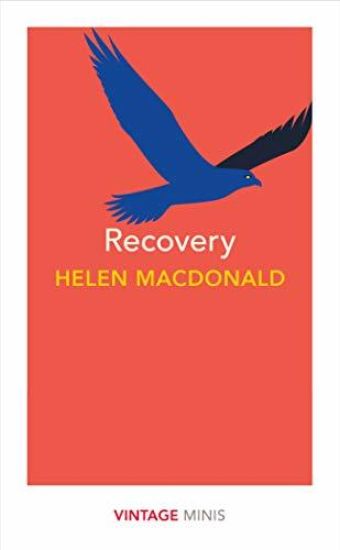
The hawk was everything I wanted to be: solitary, self-possessed, free from grief, and numb to the hurts of human life. How do we carry on when someone close to us dies? Is it simply a case of putting one foot in front of the other in a bleak new world or do we need something more? Reeling with grief after the sudden death of her father, Helen Macdonald found herself turning to the wild for comfort. With breathtaking honesty and insight, she recounts her months spent taming a goshawk and how, finally, this strange kinship led her to the first tentative steps to recovery. Selected from H is for Hawk VINTAGE MINIS: GREAT MINDS. BIG IDEAS. LITTLE BOOKS. A series of short books by the world’s greatest writers on the experiences that make us human. Discover the Vintage Minis ‘Head Space’ series: Therapy by Stephen Grosz Family by Mark Haddon
Da hun var liten, ville Helen Macdonald bli falkoner, falketemmer. Hun leste alt hun kom over av bøker om emnet og lærte seg alle de gammelmodige fagbegrepene. Helen endte opp med å bli historiker og forfatter, men hun beholdt interessen for de ville fuglene. Så, rett før hun fyller førti, mister Helen faren sin. Midt i mørket og fortvilelsen er det bare én ting hun kjenner, kaldt og klart: Hun vil temme en hauk. Hun vil lære seg å temme den ondeste og villeste og mest skremmende av alle rovfugler: hønsehauken. Hun kjøper hauken Mabel for åtte hundre pund i en hustrig havneby i Skottland, og den ser på henne med de store øynene sine. Vel hjemme i Cambridge fyller Helen fryseren med haukemat, skrur av mobiltelefonen og tar fatt på en reise hun ikke aner hvor vil ende. H for hauk fikk umiddelbart status som en moderne klassiker da den kom ut i Storbritannia i 2014. Det er en bok om dyr og menneske, om ensomhet og fellesskap, sivilisasjon og villskap, liv og død. Det er en historie omsorg, fortvilelse og forvirring - men også en forbløffendefascinerende beretning om arbeidet for å temme en av naturens mest urokkelige skapninger. Og mens fuglen langsomt lærer å lystre - lærer Helen hva det vil si å bli fri.
H for hauk er en bok om dyr og menneske, om ensomhet og fellesskap, sivilisasjon og villskap, liv og død. Det er en historie omsorg, fortvilelse og forvirring - men også en forbløffendefascinerende beretning om arbeidet for å temme en av naturens mest urokkelige skapninger.Da hun var liten, ville Helen Macdonald bli falkoner, falketemmer. Hun leste alt hun kom over av bøker om emnet og lærte seg alle de gammelmodige fagbegrepene. Helen endte opp med å bli historiker og forfatter, men hun beholdt interessen for de ville fuglene. Så, rett før hun fyller førti, mister Helen faren sin. Midt i mørket og fortvilelsen er det bare én ting hun kjenner, kaldt og klart: Hun vil temme en hauk. Hun vil lære seg å temme den ondeste og villeste og mest skremmende av alle rovfugler: hønsehauken. Hun kjøper hauken Mabel for åtte hundre pund i en hustrig havneby i Skottland, og den ser på henne med de store øynene sine. Vel hjemme i Cambridge fyller Helen fryseren med haukemat, skrur av mobiltelefonen og tar fatt på en reise hun ikke aner hvor vil ende. H for hauk fikk umiddelbart status som en moderne klassiker da den kom ut i Storbritannia i 2014. Vinner av Samuel Johnson-prisen 2014 Vinner av Costa-prisen 2014Les utdrag fra boka