Kirjojen hintavertailu. Mukana 12 016 292 kirjaa ja 12 kauppaa.

Kirjahaku

Etsi kirjoja tekijän nimen, kirjan nimen tai ISBN:n perusteella.

8 kirjaa tekijältä Helen Paynter

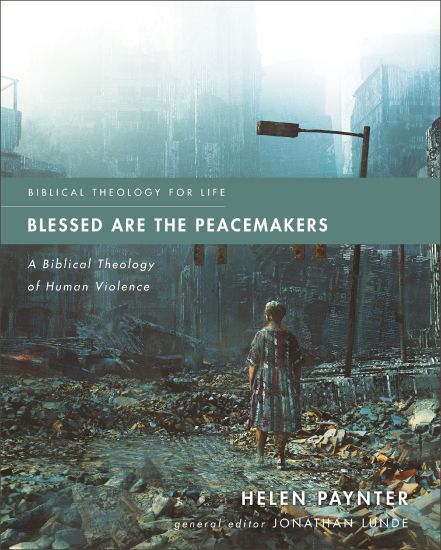
Blessed Are the Peacemakers

Blessed Are the Peacemakers

Helen Paynter

ZONDERVAN
2023
nidottu
This volume in Biblical Theology for Life series dives deeply into the topic of human violence. Before exploring what the Bible says about violence, Old Testament scholar Helen Paynter sets out the contours for the study ahead by addressing the various definitions of violence and the theories of its origins, prevalence, and purpose. What is violence? Is there such a thing as "natural violence"? Is violence a human or social construct or can we describe natural phenomena as violent? How does the concept of violence relate to the concept of evil? Violence is everywhere; is it escapable? How do we resist violence?Having queued up the questions, Paynter takes us to the Bible for answers. Starting with the creation narratives in Genesis considered in comparison with the ancient Near Eastern myths and moving to the conquest of Canaan--the most problematic of biblical narratives--she investigates how these deep myths speak to the origins of human violence and its consequences. The prevalence of violence through biblical history is inescapable. Scripture reveals the hydra-like nature of human violence, investigating types of violence including but not limited to: structural violence, verbal violence, sexual violence, violence as public /political act, racialised violence, including "othering." Through the voices of the prophets and then in the teaching of Jesus, the Bible reveals that the seeds of violence exist within every human heart. Even though we see evidence of resistance movements in the Bible, such as the responses to attempted genocide in Exodus and Esther, it is only on the cross that an absorption of violence by God takes place: a defeat of violence by self-sacrifice. Along the way, Paynter considers other relevant biblical themes, including the apocalypse, "crushing the serpent's head," and the concept of divine vengeance, culminating in the resurrected Christ's lack of vengeance against those who did him to death. In light of the New Testament, we will consider how the first Christians responded to the structural violence of slavery and patriarchy and how they began to apply Jesus' redemptive, non-vengeful theology to their own day.The book concludes by discussing of what this means for Christians today. For many of us who live without routine encounters with or threats of violence, we must consider our responsibility in a world where our experience is the exception. With attention to the multi-headed hydra that is violence and the concealed structures of violence in our own Western society, Paynter challenges readers to consider their own, perhaps inherited, privilege and complicity. The question of how we regard "others," both as individuals and as societies, is a deeply relevant and urgent one for the church: The church can and should be a wholly non-othering body. So what implications does this have for the church and, for example, Black Lives Matter or the rampant xenophobia in our society or immigration and global migration issues? How do we resist evil? What does it mean to turn the other cheek when the cheek that has been slapped is not our own? How do we resist the monster without becoming the monster?
Telling Terror in Judges 19

Telling Terror in Judges 19

Helen Paynter

Routledge
2020
sidottu
Telling Terror in Judges 19 explores the value of performing a ‘reparative reading’ of the terror-filled story of the Levite’s pilegesh (commonly referred to as the Levite’s concubine) in Judges 19, and how such a reparative reading can be brought to bear upon elements of modern rape culture. Historically, the story has been used as a morality tale to warn young women about what constitutes appropriate behaviour. More recently, (mainly male) commentators have tended to write the woman out of the story, by making claims about its purpose and theme which bear no relation to her suffering. In response to this, feminist critics have attempted to write the woman back into the story, generally using the hermeneutics of suspicion. This book begins by surveying some of the traditional commentators, and the three great feminist commentators of the text (Bal, Exum and Trible). It then offers a reparative reading by attending to the pilegesh’s surprising prominence, her moral and marital agency, and her speaking voice. In the final chapter, there is a detailed comparison of the story with elements of modern rape culture.
God of Violence Yesterday, God of Love Today?

God of Violence Yesterday, God of Love Today?

Helen Paynter

BRF (The Bible Reading Fellowship)
2019
pokkari
Do you find the violence in the Old Testament a problem? Does it get in the way of reading the Bible – and of faith itself? While acknowledging that there are no easy answers, in God of Violence Yesterday, God of Love Today?, Helen Paynter faces the questions head-on and offers a fresh, accessible approach to a significant issue. For all those seeking to engage with the Bible and gain confidence in the God it portrays, she provides tools for reading and interpreting biblical texts, and points to ways of dealing with the overall trajectories of violence. 'In lucid prose Helen Paynter argues that violence featured in the biblical canon should not be ignored or denied but acknowledged and faced honestly. While history is played out in a broken and often violent world the author shows how the movement of scripture is toward God’s creative intention for healing and wholeness. Without providing final answers Paynter offers ways of interpreting even the most violent passages so that we may hear God’s word for today.' John Meredith, Editor of Word & Worship 'A rigorous yet accessible exploration of Old Testament violence ideal for individuals or groups wishing to engage with these troubling texts and the issues they raise. I would wholeheartedly recommend this book to anyone interested in the questions it explores. If you are new to the subject, it offers a comprehensive introduction and the reassurance that you are being guided by a capable and safe pair of hands as you begin to engage with challenging and important issues.' Peter King, Diocese of Chichester
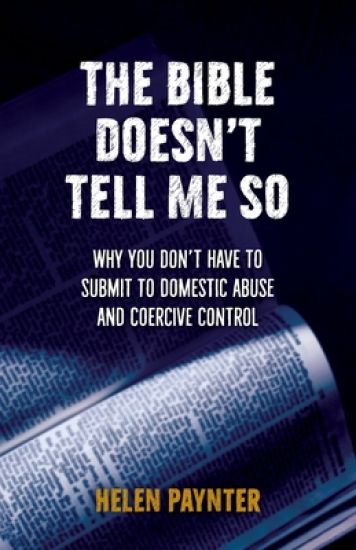
The Bible Doesn't Tell Me So

The Bible Doesn't Tell Me So

Helen Paynter

BRF (The Bible Reading Fellowship)
2020
pokkari
This book is addressed directly to women experiencing domestic abuse, and to those who seek to support them, including pastoral leaders, friends and support organisations. It debunks the myths – perpetuated by some abusers and, unwittingly, by many churches – which prevent women from getting out of harm’s way. It helps them realise that the Bible does not belong to their abuser but is a text of liberation. Written with careful attention to pastoral issues, it closely examines and clearly explains the relevant scriptural texts.
Telling Terror in Judges 19

Telling Terror in Judges 19

Helen Paynter

TAYLOR FRANCIS LTD
2022
nidottu
Telling Terror in Judges 19 explores the value of performing a ‘reparative reading’ of the terror-filled story of the Levite’s pilegesh (commonly referred to as the Levite’s concubine) in Judges 19, and how such a reparative reading can be brought to bear upon elements of modern rape culture. Historically, the story has been used as a morality tale to warn young women about what constitutes appropriate behaviour. More recently, (mainly male) commentators have tended to write the woman out of the story, by making claims about its purpose and theme which bear no relation to her suffering. In response to this, feminist critics have attempted to write the woman back into the story, generally using the hermeneutics of suspicion. This book begins by surveying some of the traditional commentators, and the three great feminist commentators of the text (Bal, Exum and Trible). It then offers a reparative reading by attending to the pilegesh’s surprising prominence, her moral and marital agency, and her speaking voice. In the final chapter, there is a detailed comparison of the story with elements of modern rape culture.
God of Violence Yesterday, God of Love Today?: Wrestling Honestly with the Old Testament
Do you find the violence in the Old Testament a problem? Does it get in the way of reading the Bible--and of faith itself? While acknowledging that there are no easy answers, in God of Violence Yesterday, God of Love Today?, Helen Paynter faces the tough questions head-on and offers a fresh, accessible approach to a significant issue. For all those seeking to engage with the Bible and gain confidence in the God it portrays, she provides tools for reading and interpreting biblical texts, and points to ways of dealing with the overall trajectories of violence.
God of Violence Yesterday, God of Love Today?: Wrestling Honestly with the Old Testament
Do you find the violence in the Old Testament a problem? Does it get in the way of reading the Bible--and of faith itself? While acknowledging that there are no easy answers, in God of Violence Yesterday, God of Love Today?, Helen Paynter faces the tough questions head-on and offers a fresh, accessible approach to a significant issue. For all those seeking to engage with the Bible and gain confidence in the God it portrays, she provides tools for reading and interpreting biblical texts, and points to ways of dealing with the overall trajectories of violence.
Reduced Laughter

Reduced Laughter

Helen Paynter

BRILL
2016
sidottu
In this book Helen Paynter offers a radical re-evalution of the central section of Kings. Reading with attention to the literary devices of carnivalization and mirroring, she demonstrates that it contains a florid satire on kings, prophets and nations. Building on the work of humorists, literary critics and biblical scholars, the author constructs diagnostic criteria for carnivalization (seriocomedy), and identifies an abundance of these features within the Elijah/Elisha and Aram narratives, showing how literary mirroring further enhances their satirical effect. This book will be of particular interest to students and scholars concerned with the Hebrew Bible as literature but will be valued by those who favour more historical approaches for its insights into the Hebrew text.