Kirjojen hintavertailu. Mukana 12 390 323 kirjaa ja 12 kauppaa.

Kirjahaku

Etsi kirjoja tekijän nimen, kirjan nimen tai ISBN:n perusteella.

7 kirjaa tekijältä Helena Hamerow

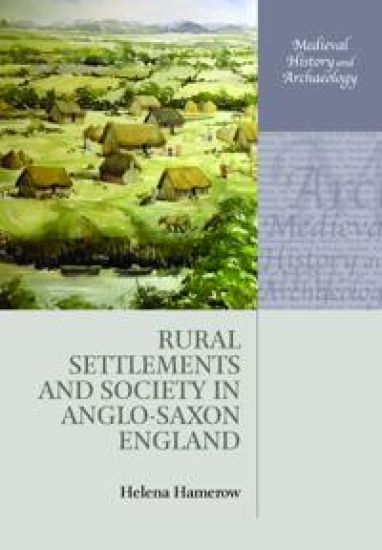
Rural Settlements and Society in Anglo-Saxon England

Rural Settlements and Society in Anglo-Saxon England

Helena Hamerow

Oxford University Press
2014
nidottu
In the course of the fifth century, the farms and villas of lowland Britain were replaced by a new, distinctive form of rural settlement: the settlements of the Anglo-Saxons. This volume presents the first major synthesis of the evidence - which has expanded enormously in recent years - for such settlements from across England and throughout the Anglo-Saxon period, and what it reveals about the communities who built and lived in them, and whose daily lives went almost wholly unrecorded. Helena Hamerow examines the appearance, function, and 'life-cycles' of their buildings; the relationship of Anglo-Saxon settlements to the Romano-British landscape and to later medieval villages; the role of ritual in daily life; and the relationship between farming regimes and settlement forms. A central theme throughout the book is the impact on rural producers of the rise of lordship and markets, and how this impact is reflected in the remains of their settlements. Hamerow provides an introduction to the wealth of information yielded by settlement archaeology, and to the enormous contribution that it makes to our understanding of Anglo-Saxon society.
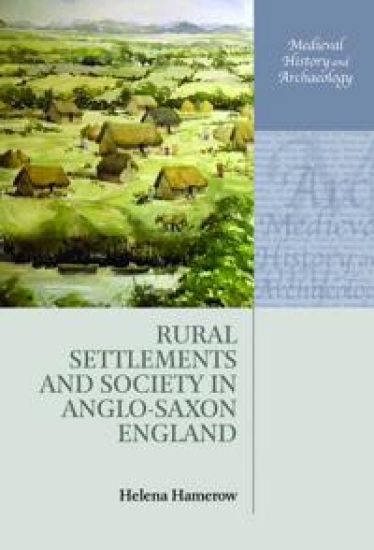
Rural Settlements and Society in Anglo-Saxon England

Rural Settlements and Society in Anglo-Saxon England

Helena Hamerow

Oxford University Press
2012
sidottu
In the course of the fifth century, the farms and villas of lowland Britain were replaced by a new, distinctive form of rural settlement: the settlements of Anglo-Saxon communities. This volume presents the first major synthesis of the evidence - which has expanded enormously in recent years - for such settlements from across England and throughout the Anglo-Saxon period, and what it reveals about the communities who built and lived in them, and whose daily lives went almost wholly unrecorded. Helena Hamerow examines the appearance, 'life-cycles', and function of their buildings; the relationship of Anglo-Saxon settlements to the Romano-British landscape and to later medieval villages; the role of ritual in daily life; what distinguished 'rural' from 'urban' in this early period; and the relationship between farming regimes and settlement forms. A central theme throughout the book is the impact on rural producers of the rise of lordship and markets and how this impact is revealed through the remains of their settlements. Hamerow provides an introduction to the wealth of information yielded by settlement archaeology and to the enormous contribution that it makes to our understanding of Anglo-Saxon society.
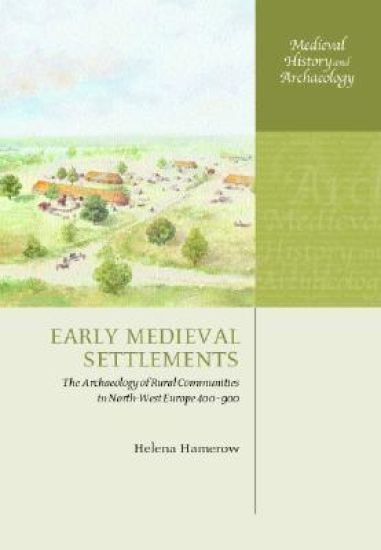
Early Medieval Settlements

Early Medieval Settlements

Helena Hamerow

Oxford University Press
2002
sidottu
The excavation of settlements has in recent years transformed our understanding of north-west Europe in the early Middle Ages. We can for the first time begin to answer fundamental questions such as: what did houses look like and how were they furnished? how did villages and individual farmsteads develop? how and when did agrarian production become intensified and how did this affect village communities? what role did craft production and trade play in the rural economy? In a period for which written sources are scarce, archaeology is of central importance in understanding the 'small worlds' of early medieval communities. Helena Hamerow's extensively illustrated and accessible study offers the first overview and synthesis of the large and rapidly growing body of evidence for early medieval settlements in north-west Europe, as well as a consideration of the implications of this evidence for Anglo-Saxon England. SERIES DESCRIPTION The volumes in this series bring together archaeological, visual, and historical methods to offer new approaches to aspects of medieval society, economy, and material culture. The series seeks to present and interpret archaeological evidence in ways readily accessible to historians, while providing a historical perspective and context for the material culture of the period.
Early Medieval Settlements

Early Medieval Settlements

Helena Hamerow

Oxford University Press
2004
nidottu
The excavation of settlements has in recent years transformed our understanding of north-west Europe in the early Middle Ages. We can for the first time begin to answer fundamental questions such as: what did houses look like and how were they furnished? how did villages and individual farmsteads develop? how and when did agrarian production become intensified and how did this affect village communities? what role did craft production and trade play in the rural economy? In a period for which written sources are scarce, archaeology is of central importance in understanding the 'small worlds' of early medieval communities. Helena Hamerow's extensively illustrated and accessible study offers the first overview and synthesis of the large and rapidly growing body of evidence for early medieval settlements in north-west Europe, as well as a consideration of the implications of this evidence for Anglo-Saxon England. SERIES DESCRIPTION The aim of the series is to reflect the creative dialogue that is developing between the disciplines of medieval history and archaeology. It will integrate archaeological and historical approaches to aspects of medieval society, economy, and culture. A range of archaeological evidence will be presented and interpreted in ways accessible to historians, while providing a historical perspective and context for those studying the material culture of the period.
Feeding Medieval England

Feeding Medieval England

Helena Hamerow; Mark McKerracher; Amy Bogaard; Mike Charles; Emily Forster; Matilda Holmes; Christopher Bronk Ramsey; Elizabeth Stroud; Richard Thomas

Oxford University Press
2025
sidottu
This is an open access title available under the terms of a CC BY-NC-ND 4.0 International license. It is free to read at on Oxford Academic and offered as a free PDF download from OUP and selected open access locations. The population of England grew steeply in the Middle Ages, especially between the tenth and thirteenth centuries. This volume investigates how medieval farmers managed to produce the large harvests needed to sustain this growth, growth that in turn fuelled a major expansion of towns and markets. New evidence is presented for the development of the medieval farming regimes that shaped the English landscape in ways still visible today. Medieval farming is a contentious topic, not least because of the different approaches taken by historians, archaeologists and geographers and no consensus has been reached about the cultivation regimes that underpinned medieval cereal production. This volume presents a new perspective on this question, based on the results of a project that analysed the remains of medieval crops, arable weeds, livestock and pollen from hundreds of excavations. The new evidence that this generated reveals the conditions in which medieval crops were grown and how land use changed between the late Roman period and the Black Death. The authors relate the results to archaeological and written evidence for farms and farming, bringing an ecological perspective to the debate about the so-called medieval 'agricultural revolution'. The 'cerealisation' of England emerges as a regionally varied process lasting several centuries, whose overall impact was nevertheless revolutionary.
Form and Order in the Anglo-Saxon World, AD 400-1100

Form and Order in the Anglo-Saxon World, AD 400-1100

Helena Hamerow; Leslie Webster

Oxford University School of Archaeology
2009
nidottu
The aim of this volume is to explore Anglo-Saxon perceptions of form and order in their different manifestations, through two main strands texts of all kinds, and art, architecture and archaeology. Contributors come from many different specialisms, enabling wide-ranging discussion, as well contributions from other Insular cultures and a continental European perspective.
Transforming Townscapes

Transforming Townscapes

Neil Christie; Oliver Creighton; Matt Edgeworth; Helena Hamerow

Legenda
2013
nidottu
Transforming Townscapes details the results of a major archaeological project based on and around the historic town of Wallingford in south Oxfordshire. Founded in the late Saxon period as a key defensive and administrative focus next to the Thames, the settlement also contained a substantial royal castle established shortly after the Norman Conquest. The volume traces the pre-town archaeology of Wallingford and then analyses the town’s physical and social evolution, assessing defences, churches, housing, markets, material culture, coinage, communications and hinterland.