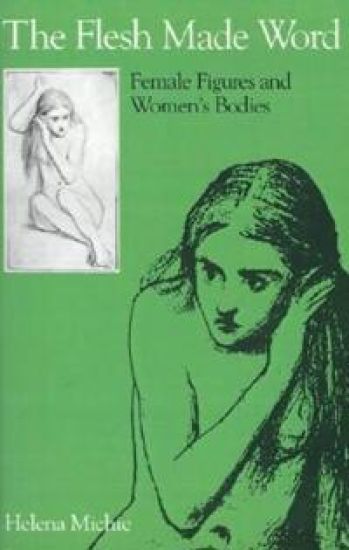
Examining the works of such Victorian writers as the Brontës, Dickens, Eliot, Trollope, and Hardy, Michie discusses the codes and taboos which distance the reader from the female body, allowing `safe' bodily parts - like hands - and `safe' physical activities - like eating - to stand for other, unspeakable aspects of female physicality. She reveals how these codes function as safe textual spaces for the entrance of the seemingly excluded female body, and shows that in the stylized discourses of synecdoche, euphemism, physiognomy, and metaphor lie the possibilities of their own subversion.
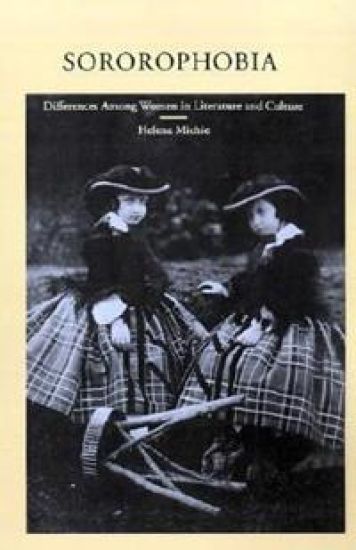
Helena Michie takes the notion of `otherness' as it has traditionally been used by Simone de Beauvoir and other feminists to designate the space between men and women, and transcribes it instead to the places between and among women. Its goal is to describe women's relations to each other and how these relations have been textually and culturally represented.
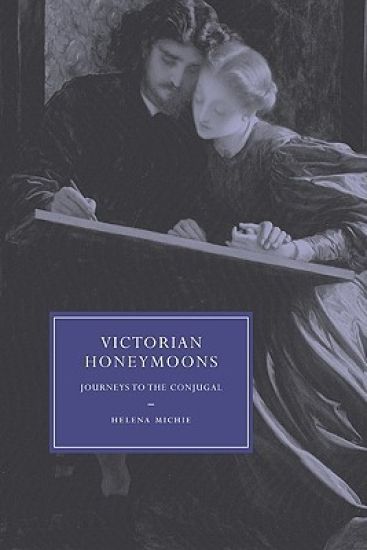
While Victorian tourism and Victorian sexuality have been the subject of much critical interest, there has been little research on a characteristically nineteenth-century phenomenon relating to both sex and travel: the honeymoon, or wedding journey. Although the term 'honeymoon' was coined in the eighteenth century, the ritual increased in popularity throughout the Victorian period, until by the end of the century it became a familiar accompaniment to the wedding for all but the poorest classes. Using letters and diaries of 61 real-life honeymooning couples, as well as novels from Frankenstein to Middlemarch that feature honeymoon scenarios, Michie explores the cultural meanings of the honeymoon, arguing that, with its emphasis on privacy and displacement, the honeymoon was central to emerging ideals of conjugality and to ideas of the couple as a primary social unit.
While Victorian tourism and Victorian sexuality have been the subject of much critical interest, there has been little research on a characteristically nineteenth-century phenomenon relating to both sex and travel: the honeymoon, or wedding journey. Although the term 'honeymoon' was coined in the eighteenth century, the ritual increased in popularity throughout the Victorian period, until by the end of the century it became a familiar accompaniment to the wedding for all but the poorest classes. Using letters and diaries of 61 real-life honeymooning couples, as well as novels from Frankenstein to Middlemarch that feature honeymoon scenarios, Michie explores the cultural meanings of the honeymoon, arguing that, with its emphasis on privacy and displacement, the honeymoon was central to emerging ideals of conjugality and to ideas of the couple as a primary social unit.
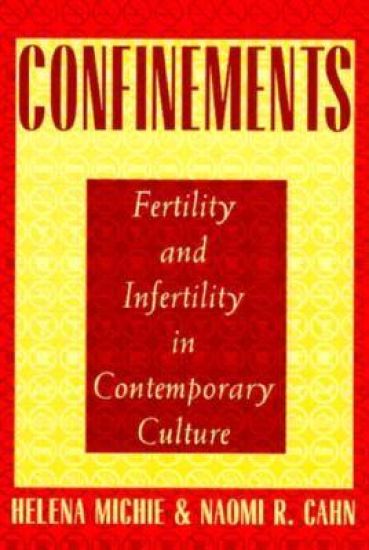
When a woman in the United States becomes pregnant or tries to become pregnant, she enters a world of information, technology, and expertise. Suddenly her body becomes public in a new way: medicine, law, and popular culture all offer her sometimes contradictory "expert" advice. Confinements explores the advice offered to pregnant and infertile women by examining assumptions about femininity, class, and the reproductive body that structure the language of expertise. Even advice books written from a specifically countercultural or feminist point of view often attempt to police the way women think about their bodies.Confinements argues that our perceptions about both pregnancy and infertility are limited by our culture's battles over the meaning of choice and control, arguments over what is natural or unnatural, and the troubled relationship between reproduction and the domestic sphere. The book breaks new ground in its analysis of gender, health, and reproduction.
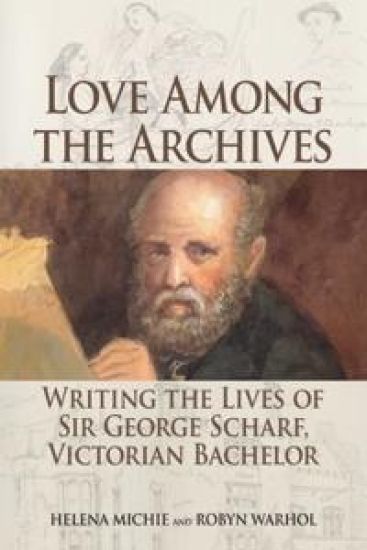
Two Literary Critics Romancing the Archive at London's National Portrait Gallery.Part biography, part detective novel, part love story, and part meditation on archival research,Love Among the Archivesis an experiment in writing a life. This is the story of two literary critics'attempts to track down Sir George Scharf, the founding director of the National Portrait Gallery in London, famous in his day and strangely obscure in our own. After discovering Scharf's scrapbook of menus and invitations from England's most stately homes, the authors began their adventures in the archives of London, searching Scharf's diaries, sketchbooks, and letters for traces of the man who so loved dining out. Addicted to Victorian novels, the authors looked for a marriage plot, but found Scharf's passionate attachment to a younger man who had hidden from him a secret engagement; they looked for a Bildungsroman, but found that Scharf never left his beloved mother.Always short of money, self-educated, talented, irascible, gregarious, prolific, and snobbish, this son of a poor immigrant artist was to become the right-hand man of an earl he called"my best friend."The written record of his nightmares, debts, gifts, and dinner partiescomes together to produce a rich Victorian character whose personal and professional lives challenge what we think we know about sex, class, and profession in his time.Helena Michie is Agnes Cullen Arnold Professor in Humanities and Professor of English at Rice University. She is the author of Victorian Honeymoons: Journeys to the Conjugal (2006), Sororophobia: Differences Among Women in Literature and Culture (1991) and The Flesh Made Word: Female Figures and Women's Bodies (1987) and co-editor with Ronald Thomas of Nineteenth-Century Geographies: From the Victorian Age to the American Century (2002).Robyn Warhol is Arts and Humanities Distinguished Professor of English at the Ohio State University, where she is a core faculty member of Project Narrative. She is the author of Having a Good Cry: Effeminate Feelings and Pop Culture Forms (2003) and Gendered Interventions: Narrative Discourse in the Victorian Novel (1989) and co-editor with Susan S. Lanser of Narrative Theory Unbound: Queer and Feminist Interventions (2015).
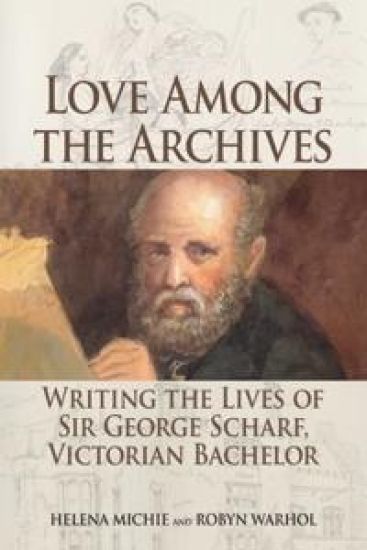
Two Literary Critics Romancing the Archive at London's National Portrait Gallery. Part biography, part detective novel, part love story, and part meta archival meditation, Love Among the Archives is an experiment in writing a life. Our subject is Sir George Scharf, the founding director of the National Portrait Gallery in London, well known and respected in the Victorian period, strangely obscure in our own. We tell of discovering Scharf's souvenirs of a social life among the highest classes, and then learning he was the self made son of an impoverished immigrant. As we comb through 50 years of daily diaries, we stumble against plots we bring to the archive from our reading of novels. We ask questions like, did Scharf have a beloved? Why did Scharf kick his aged father out of the family home? What could someone like Scharf mean when he referred to an earl as his "best friend"? The answers turn out never to be what Victorian fiction - or Victorianist Studies - would have predicted. Presents a unique approach to life writing that foregrounds the process of archival discovery; a contribution to sexuality studies of the Victorian period that focuses on domestic arrangements between middle class men; offers an intervention into identity studies going beyond class, gender, and sexuality to try out new categories like "extra man" or "perpetual son" and a humorous critique of what literary critics do when they turn to "the archive" for historical authenticity.