Kirjojen hintavertailu. Mukana 11 699 587 kirjaa ja 12 kauppaa.

Kirjahaku

Etsi kirjoja tekijän nimen, kirjan nimen tai ISBN:n perusteella.

4 kirjaa tekijältä Helena Wray

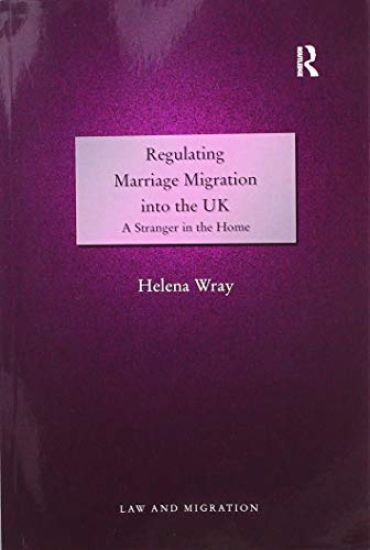
Regulating Marriage Migration into the UK
Marriage migration is a controversial and problematic issue in the UK as elsewhere in Europe. This timely analysis is a comprehensive examination of the regulation of marriage migration into the UK. With international relevance, the book uses the analysis to examine the relationship between government priorities and the dynamics of transnational family life. The book is one of the first to scrutinise the control of UK marriage migration after 1997 and explores the dilemmas faced by the post-1997 government in managing this form of migration in a changed domestic and international environment. Using high-quality sources from across the political spectrum, it analyses regulatory decisions made by government, the judiciary and the visa service, and suggests that there is an unofficial and unarticulated hierarchy predicated on assumptions and beliefs about acceptable marriages. Finally, the book establishes a principled basis for the future regulation of marriage migration.
Regulating Marriage Migration into the UK

Regulating Marriage Migration into the UK

Helena Wray

Ashgate Publishing Limited
2011
sidottu
Marriage migration is a controversial and problematic issue in the UK as elsewhere in Europe. This timely analysis is a comprehensive examination of the regulation of marriage migration into the UK. With international relevance, the book uses the analysis to examine the relationship between government priorities and the dynamics of transnational family life. The book is one of the first to scrutinise the control of UK marriage migration after 1997 and explores the dilemmas faced by the post-1997 government in managing this form of migration in a changed domestic and international environment. Using high-quality sources from across the political spectrum, it analyses regulatory decisions made by government, the judiciary and the visa service, and suggests that there is an unofficial and unarticulated hierarchy predicated on assumptions and beliefs about acceptable marriages. Finally, the book establishes a principled basis for the future regulation of marriage migration.
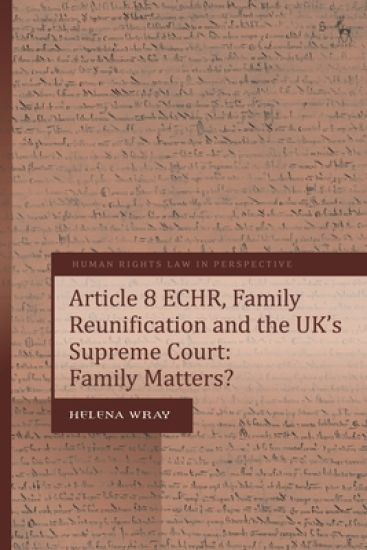
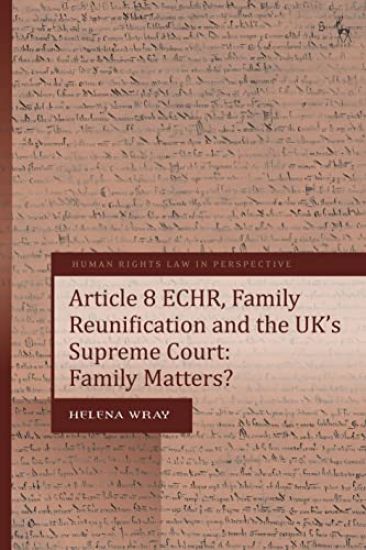
Article 8 ECHR, Family Reunification and the UK’s Supreme Court
How do courts reconcile protecting family life with immigration control in human rights cases? This book addresses that question through an analysis of 11 UK Supreme Court decisions on immigration and family life, mostly focusing on Article 8 ECHR, the right to respect for family life, and starting with Huang v SSHD in 2007. The analysis is set against a national context that includes the Human Rights Act 1998 and regular controversies over immigration.The book explains how the European Court of Human Rights jurisprudence has developed in recent years, but, particularly in the absence of children, it often still awards little weight to claims by citizens and residents to be joined by family when immigration status is an issue. This reflects governments’ resistance to encroachment on their control over borders. The Supreme Court decisions show that, despite powers conferred by the Human Rights Act, a more nuanced position in domestic law was difficult to articulate and sustain. The book explores the way in which these problems were reflected in the changing language, argumentation, and structure of judgments. These problems revealed judges to be strategic actors drawing on personal and institutional values and responding to the shifting political context.A more generous reading of Article 8 would be legally coherent but needs wider societal support to be realisable. The book ends with a discussion of how, if such support were present, the jurisprudence could give more weight to the needs of families. It is vital reading for anyone interested in families and immigration, and in the problems and potential of human rights adjudication.
Article 8 ECHR, Family Reunification and the UK’s Supreme Court
How do courts reconcile protecting family life with immigration control in human rights cases? This book addresses that question through an analysis of 11 UK Supreme Court decisions on immigration and family life, mostly focusing on Article 8 ECHR, the right to respect for family life, and starting with Huang v SSHD in 2007. The analysis is set against a national context that includes the Human Rights Act 1998 and regular controversies over immigration.The book explains how the European Court of Human Rights jurisprudence has developed in recent years, but, particularly in the absence of children, it often still awards little weight to claims by citizens and residents to be joined by family when immigration status is an issue. This reflects governments’ resistance to encroachment on their control over borders. The Supreme Court decisions show that, despite powers conferred by the Human Rights Act, a more nuanced position in domestic law was difficult to articulate and sustain. The book explores the way in which these problems were reflected in the changing language, argumentation, and structure of judgments. These problems revealed judges to be strategic actors drawing on personal and institutional values and responding to the shifting political context.A more generous reading of Article 8 would be legally coherent but needs wider societal support to be realisable. The book ends with a discussion of how, if such support were present, the jurisprudence could give more weight to the needs of families. It is vital reading for anyone interested in families and immigration, and in the problems and potential of human rights adjudication.