Kirjojen hintavertailu. Mukana 11 244 527 kirjaa ja 12 kauppaa.

Kirjahaku

Etsi kirjoja tekijän nimen, kirjan nimen tai ISBN:n perusteella.

6 kirjaa tekijältä Helene P. Foley

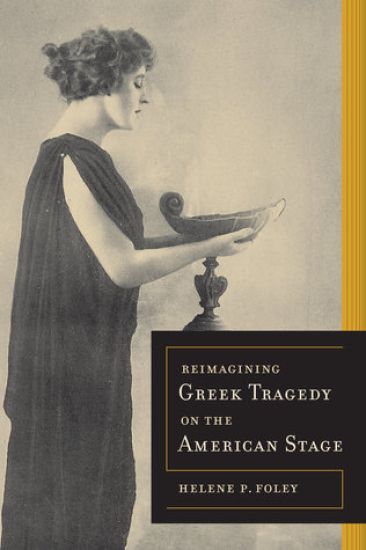
Reimagining Greek Tragedy on the American Stage

Reimagining Greek Tragedy on the American Stage

Helene P. Foley

University of California Press
2012
sidottu
This book explores the emergence of Greek tragedy on the American stage from the nineteenth century to the present. Despite the gap separating the world of classical Greece from our own, Greek tragedy has provided a fertile source for some of the most innovative American theater. Helene P. Foley shows how plays like Oedipus Rex and Medea have resonated deeply with contemporary concerns and controversies--over war, slavery, race, the status of women, religion, identity, and immigration. Although Greek tragedy was often initially embraced for its melodramatic possibilities, by the twentieth century it became a vehicle not only for major developments in the history of American theater and dance, but also for exploring critical tensions in American cultural and political life. Drawing on a wide range of sources--archival, video, interviews, and reviews--Reimagining Greek Tragedy on the American Stage provides the most comprehensive treatment of the subject available.
Reimagining Greek Tragedy on the American Stage

Reimagining Greek Tragedy on the American Stage

Helene P. Foley

University of California Press
2014
pokkari
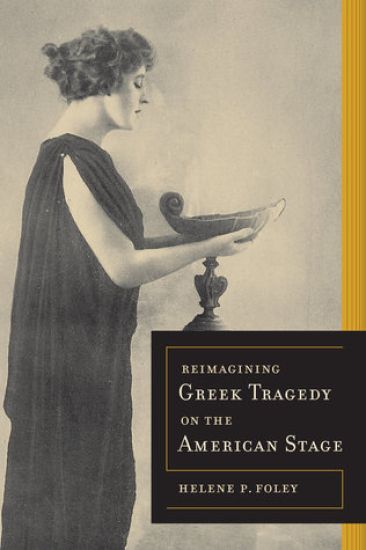
This book explores the emergence of Greek tragedy on the American stage from the nineteenth century to the present. Despite the gap separating the world of classical Greece from our own, Greek tragedy has provided a fertile source for some of the most innovative American theater. Helene P. Foley shows how plays like Oedipus Rex and Medea have resonated deeply with contemporary concerns and controversies - over war, slavery, race, the status of women, religion, identity, and immigration. Although Greek tragedy was often initially embraced for its melodramatic possibilities, by the twentieth century it became a vehicle not only for major developments in the history of American theater and dance, but also for exploring critical tensions in American cultural and political life. Drawing on a wide range of sources - archival, video, interviews, and reviews - Reimagining Greek Tragedy on the American Stage provides the most comprehensive treatment of the subject available.
Female Acts in Greek Tragedy

Female Acts in Greek Tragedy

Helene P. Foley

Princeton University Press
2002
pokkari
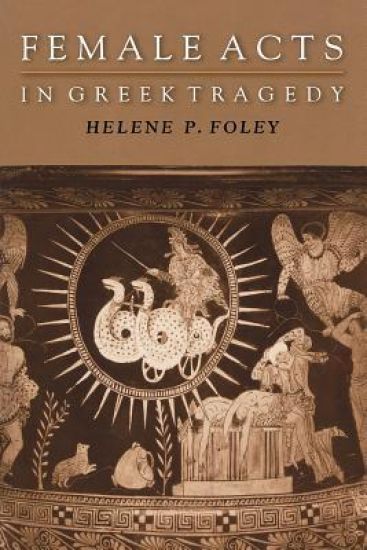
Although Classical Athenian ideology did not permit women to exercise legal, economic, and social autonomy, the tragedies of Aeschylus, Sophocles, and Euripides often represent them as influential social and moral forces in their own right. Scholars have struggled to explain this seeming contradiction. Helene Foley shows how Greek tragedy uses gender relations to explore specific issues in the development of the social, political, and intellectual life in the polis. She investigates three central and problematic areas in which tragic heroines act independently of men: death ritual and lamentation, marriage, and the making of significant ethical choices. Her anthropological approach, together with her literary analysis, allows for an unusually rich context in which to understand gender relations in ancient Greece. This book examines, for example, the tragic response to legislation regulating family life that may have begun as early as the sixth century. It also draws upon contemporary studies of virtue ethics and upon feminist reconsiderations of the Western ethical tradition. Foley maintains that by viewing public issues through the lens of the family, tragedy asks whether public and private morality can operate on the same terms. Moreover, the plays use women to represent significant moral alternatives. Tragedy thus exploits, reinforces, and questions cultural cliches about women and gender in a fashion that resonates with contemporary Athenian social and political issues.
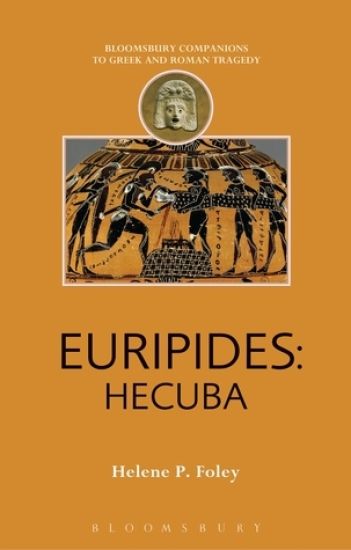
Euripides: Hecuba

Euripides: Hecuba

Helene P. Foley

Bloomsbury Academic
2014
nidottu
Chosen as one of the ten canonical plays by Euripides during the Hellenistic period in Greece, Hecuba was popular throughout Antiquity. The play also became part of the so-called 'Byzantine triad' of three plays of Euripides (along with Phoenician Women and Orestes) selected for study in school curricula, above all for the brilliance of its rhetorical speeches and quotable traditional wisdom. Translations into Latin and vernacular languages, as well as stage performances emerged early in the sixteenth century. The Renaissance admired the play for its representation of the extraordinary suffering and misfortunes of its newly-enslaved heroine, the former queen of Troy Hecuba, for the courageous sacrificial death of her daughter Polyxena, and for the beleaguered queen's surprisingly successful revenge against the unscrupulous killer of her son Polydorus. Later periods, however, developed reservations about the play's revenge plot and its unity. Recent scholarship has favorably reassessed the play in its original cultural and political context and the past thirty years have produced a number of exciting staged productions. Hecuba has emerged as a profound exploration of the difficulties of establishing justice and a stable morality in post-war situations. This book investigates the play's changing critical and theatrical reception from Antiquity to the present, its mythical and political background, its dramatic and thematic unity, and the role of its choruses.
Euripides: Hecuba

Euripides: Hecuba

Helene P. Foley

Bloomsbury Academic
2014
sidottu
Chosen as one of the ten canonical plays by Euripides during the Hellenistic period in Greece, Hecuba was popular throughout Antiquity. The play also became part of the so-called 'Byzantine triad' of three plays of Euripides (along with Phoenician Women and Orestes) selected for study in school curricula, above all for the brilliance of its rhetorical speeches and quotable traditional wisdom. Translations into Latin and vernacular languages, as well as stage performances emerged early in the sixteenth century. The Renaissance admired the play for its representation of the extraordinary suffering and misfortunes of its newly-enslaved heroine, the former queen of Troy Hecuba, for the courageous sacrificial death of her daughter Polyxena, and for the beleaguered queen's surprisingly successful revenge against the unscrupulous killer of her son Polydorus. Later periods, however, developed reservations about the play's revenge plot and its unity. Recent scholarship has favorably reassessed the play in its original cultural and political context and the past thirty years have produced a number of exciting staged productions. Hecuba has emerged as a profound exploration of the difficulties of establishing justice and a stable morality in post-war situations. This book investigates the play's changing critical and theatrical reception from Antiquity to the present, its mythical and political background, its dramatic and thematic unity, and the role of its choruses.
Ritual Irony

Ritual Irony

Helene P. Foley

Cornell University Press
2019
pokkari
Ritual Irony is a critical study of four problematic later plays of Euripides: the Iphigenia in Aulis, the Phoenissae, the Heracles, and the Bacchae. Examining Euripides' representation of sacrificial ritual against the background of late fifth-century Athens, Helene P. Foley shows that each of these plays confronts directly the difficulty of making an archaic poetic tradition relevant to a democratic society. She explores the important mediating role played by choral poetry and ritual in the plays, asserting that Euripides' sacrificial metaphors and ritual performances link an anachronistic mythic ideal with a world dominated by "chance" or an incomprehensible divinity. Foley utilizes the ideas and methodology of contemporary literary theory and symbolic anthropology, addressing issues central to the emerging dialogue between the two fields. Her conclusions have important implications for the study of Greek tragedy as a whole and for our understanding of Euripides' tragic irony, his conception of religion, and the role of his choral odes. Assuming no specialized knowledge, Ritual Irony is aimed at all readers of Euripidean tragedy. It will prove particularly valuable to students and scholars of classics, comparative literature, and symbolic anthropology.