Kirjojen hintavertailu. Mukana 11 342 296 kirjaa ja 12 kauppaa.

Kirjahaku

Etsi kirjoja tekijän nimen, kirjan nimen tai ISBN:n perusteella.

4 kirjaa tekijältä Helg Aline

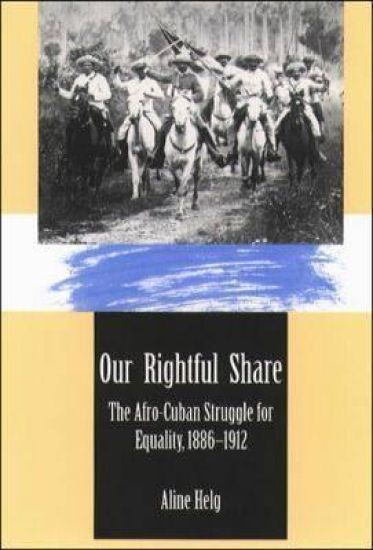
Our Rightful Share

Our Rightful Share

Helg Aline

The University of North Carolina Press
1995
nidottu
In Our Rightful Share , Aline Helg examines the issue of race in Cuban society, politics, and ideology during the island's transition from a Spanish colony to an independent state. She challenges Cuba's well-established myth of racial equality and shows that racism is deeply rooted in Cuban creole society. Helg argues that despite Cuba's abolition of slavery in 1886 and its winning of independence in 1902, Afro-Cubans remained marginalized in all aspects of society. After the wars for independence, in which they fought en masse, Afro-Cubans demanded change politically by forming the first national black party in the Western Hemisphere. This challenge met with strong opposition from the white Cuban elite, culminating in the massacre of thousands of Afro-Cubans in 1912. The event effectively ended Afro-Cubans' political organization along racial lines, and Helg stresses that although some cultural elements of African origin were integrated into official Cuban culture, true racial equality has remained elusive.
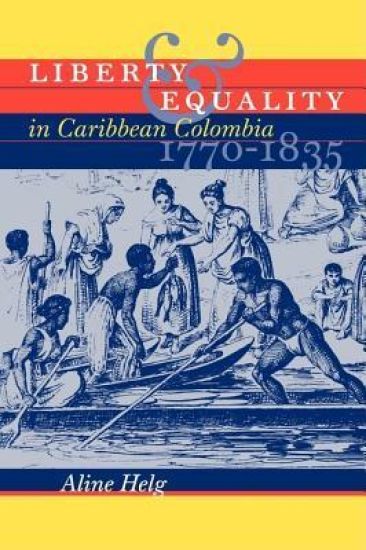
Liberty and Equality in Caribbean Colombia, 1770-1835

Liberty and Equality in Caribbean Colombia, 1770-1835

Helg Aline

The University of North Carolina Press
2004
nidottu
After Brazil and the United States, Colombia has the third-largest population of African-descended peoples in the Western hemisphere. Yet the country is commonly viewed as a nation of Andeans, whites, and mestizos (peoples of mixed Spanish and indigenous Indian ancestry). Aline Helg examines the historical roots of Colombia's treatment and neglect of its Afro-Caribbean identity within the comparative perspective of the Americas. Concentrating on the Caribbean region, she explores the role of free and enslaved peoples of full and mixed African ancestry, elite whites, and Indians in the late colonial period and in the processes of independence and early nation building. Why did race not become an organizational category in Caribbean Colombia as it did in several other societies with significant African-descended populations? Helg argues that divisions within the lower and upper classes; silence on the issue of race; and Afro-Colombians' preference for individual, local, and transient forms of resistance resulted in particular spheres of popular autonomy but prevented the development of an Afro-Caribbean identity in the region and a cohesive challenge to Andean Colombia. Considering cities such as Cartagena and Santa Marta, the rural communities along the Magdalena River, and the vast uncontrolled frontiers, Helg illuminates an understudied Latin American region and reintegrates Colombia into the history of the Caribbean.
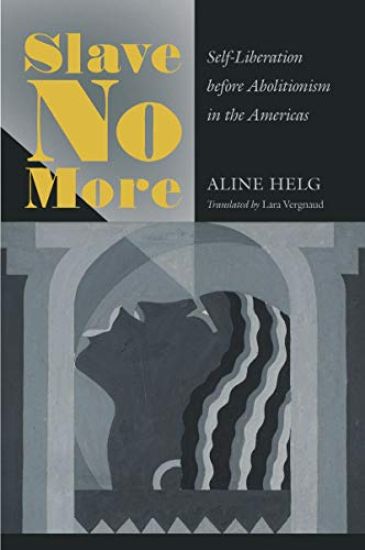
Slave No More

Slave No More

Helg Aline

The University of North Carolina Press
2019
sidottu
Commanding a vast historiography of slavery and emancipation, Aline Helg reveals as never before how significant numbers of enslaved Africans across the entire Western Hemisphere managed to free themselves hundreds of years before the formation of white-run abolitionist movements. Her sweeping view of resistance and struggle covers more than three centuries, from early colonization to the American and Haitian revolutions, Spanish American independence, and abolition in the British Caribbean. Helg not only underscores the agency of those who managed to become ""free people of color"" before abolitionism took hold but also assesses in detail the specific strategies they created and utilized.While recognizing the powerful forces supporting slavery, Helg articulates four primary liberation strategies: flight and marronage; manumission by legal document; military service, for men, in exchange for promised emancipation; and revolt—along with a willingness to exploit any weakness in the domination system. Helg looks at such actions at both individual and community levels and in the context of national and international political movements. Bringing together the broad currents of liberal abolitionism with an original analysis of forms of manumission and marronage, Slave No More deepens our understanding of how enslaved men, women, and even children contributed to the slow demise of slavery.
Slave No More

Slave No More

Helg Aline

The University of North Carolina Press
2019
nidottu
Commanding a vast historiography of slavery and emancipation, Aline Helg reveals as never before how significant numbers of enslaved Africans across the entire Western Hemisphere managed to free themselves hundreds of years before the formation of white-run abolitionist movements. Her sweeping view of resistance and struggle covers more than three centuries, from early colonization to the American and Haitian revolutions, Spanish American independence, and abolition in the British Caribbean. Helg not only underscores the agency of those who managed to become ""free people of color"" before abolitionism took hold but also assesses in detail the specific strategies they created and utilized.While recognizing the powerful forces supporting slavery, Helg articulates four primary liberation strategies: flight and marronage; manumission by legal document; military service, for men, in exchange for promised emancipation; and revolt—along with a willingness to exploit any weakness in the domination system. Helg looks at such actions at both individual and community levels and in the context of national and international political movements. Bringing together the broad currents of liberal abolitionism with an original analysis of forms of manumission and marronage, Slave No More deepens our understanding of how enslaved men, women, and even children contributed to the slow demise of slavery.