Kirjojen hintavertailu. Mukana 11 627 220 kirjaa ja 12 kauppaa.

Kirjahaku

Etsi kirjoja tekijän nimen, kirjan nimen tai ISBN:n perusteella.

11 kirjaa tekijältä Helga Nowotny

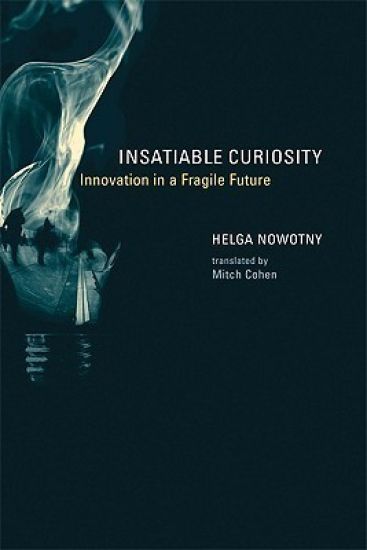
Insatiable Curiosity

Insatiable Curiosity

Helga Nowotny

MIT Press
2010
pokkari
An influential scholar in science studies argues that innovation tames the insatiable and limitless curiosity driving science, and that society's acute ambivalence about this is an inevitable legacy of modernity.Curiosity is the main driving force behind scientific activity. Scientific curiosity, insatiable in its explorations, does not know what it will find, or where it will lead. Science needs autonomy to cultivate this kind of untrammeled curiosity; innovation, however, responds to the needs and desires of society. Innovation, argues influential European science studies scholar Helga Nowotny, tames the passion of science, harnessing it to produce "deliverables." Science brings uncertainties; innovation successfully copes with them. Society calls for both the passion for knowledge and its taming. This ambivalence, Nowotny contends, is an inevitable result of modernity. In Insatiable Curiosity, Nowotny explores the strands of the often unexpected intertwining of science and technology and society. Uncertainty arises, she writes, from an oversupply of knowledge. The quest for innovation is society's response to the uncertainties that come with scientific and technological achievement. Our dilemma is how to balance the immense but unpredictable potential of science and technology with our acknowledgement that not everything that can be done should be done. We can escape the old polarities of utopias and dystopias, writes Nowotny, by accepting our ambivalence-as a legacy of modernism and a positive cultural resource.
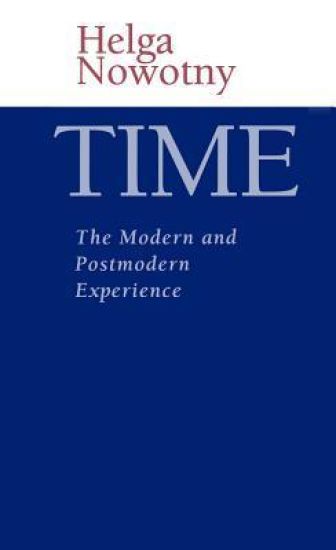
Time

Time

Helga Nowotny

Polity Press
1996
nidottu
"Helga Nowotny's exploration of the forms and meaning of time in contemporary life is panoramic without in any way partaking of the blandness of a survey. From the artificial time of the scientific laboratory to the distinctively modern yearning for one’s own time, she regards every topic in this wide-ranging book from a fresh angle of vision, one which reveals unsuspected affinities between the bravest, newest worlds of global technology and the most ancient worlds of myth." --Lorraine Daston, University of Chicago This book represents a major contribution to the understanding of time, giving particular attention to time in relation to modernity. The development of industrialism, the author points out, was based upon a linear and abstract conception of time. Today we see that form of production, and the social institutions associated with it, supplanted by flexible specialization and just-in-time production systems. New information and communication technologies have made a fundamental impact here. But what does all this mean for temporal regimes? How can we understand the transformation of time and space involved in the bewildering variety of options on offer in a postmodern world? The author provides an incisive analysis of the temporal implications of modern communication. She considers the implications of worldwide simultaneous experience, made possible by satellite technologies, and considers the reorganization of time involved in the continuous technological innovation that marks our era. In this puzzling universe of action, how does one achieve a 'time of one's own'? The discovery of a specific time perspective centred in the individual, she shows, expresses a yearning for forms of experience that are subversive of established institutional patterns. This brilliant study, became a classic in Germany, will be of interest to students and professionals working in the areas of social theory, sociology, politics and anthropology.
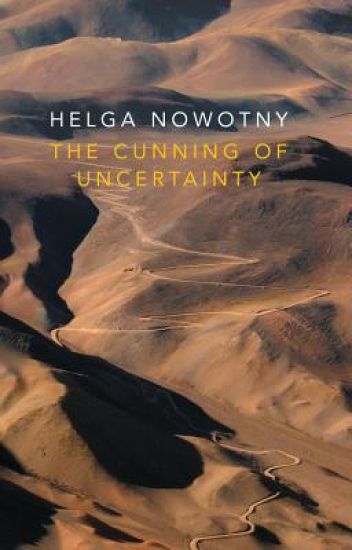
The Cunning of Uncertainty

The Cunning of Uncertainty

Helga Nowotny

Polity Press
2015
sidottu
Uncertainty is interwoven into human existence. It is a powerful incentive in the search for knowledge and an inherent component of scientific research. We have developed many ways of coping with uncertainty. We make promises, manage risks and make predictions to try to clear the mists and predict ahead. But the future is inherently uncertain - and the mist that shrouds our path an inherent part of our journey. The burning question is whether our societies can face up to uncertainty, learn to embrace it and whether we can open up to a constantly evolving future.In this new book, Helga Nowotny shows how research can thrive at the cusp of uncertainty. Science, she argues, can eventually transform uncertainty into certainty, but into certainty which remains always provisional.Uncertainty is never completely static. It is constantly evolving. It encompasses geological time scales and, at the level of human experience, split-second changes as cells divide. Life and death decisions are taken in the blink of the eye, while human interactions with the natural environment may reveal their impact over millennia.Uncertainty is cunning. It appears at unexpected moments, it shuns the straight line, takes the oblique route and sometimes the unexpected short-cut. As we acknowledge the cunning of uncertainty, its threats retreat. We accept that any scientific inquiry must produce results that are provisional and uncertain. This message is vital for politicians and policy-makers: do not be tempted by small, short-term, controllable gains to the exclusion of uncertain, high-gain opportunities.Wide-ranging in its use of examples and enriched by the author’s experience as President of the European Research Council, one of the world’s leading funding organisations for fundamental research. The Cunning of Uncertainty is a must-read for students and scholars of all disciplines, politicians, policy-makers and anyone concerned with the fundamental role of knowledge and science in our societies today.
The Cunning of Uncertainty

The Cunning of Uncertainty

Helga Nowotny

Polity Press
2017
nidottu
Uncertainty is interwoven into human existence. It is a powerful incentive in the search for knowledge and an inherent component of scientific research. We have developed many ways of coping with uncertainty. We make promises, manage risks and make predictions to try to clear the mists and predict ahead. But the future is inherently uncertain - and the mist that shrouds our path an inherent part of our journey. The burning question is whether our societies can face up to uncertainty, learn to embrace it and whether we can open up to a constantly evolving future.In this new book, Helga Nowotny shows how research can thrive at the cusp of uncertainty. Science, she argues, can eventually transform uncertainty into certainty, but into certainty which remains always provisional.Uncertainty is never completely static. It is constantly evolving. It encompasses geological time scales and, at the level of human experience, split-second changes as cells divide. Life and death decisions are taken in the blink of the eye, while human interactions with the natural environment may reveal their impact over millennia.Uncertainty is cunning. It appears at unexpected moments, it shuns the straight line, takes the oblique route and sometimes the unexpected short-cut. As we acknowledge the cunning of uncertainty, its threats retreat. We accept that any scientific inquiry must produce results that are provisional and uncertain. This message is vital for politicians and policy-makers: do not be tempted by small, short-term, controllable gains to the exclusion of uncertain, high-gain opportunities.Wide-ranging in its use of examples and enriched by the author’s experience as President of the European Research Council, one of the world’s leading funding organisations for fundamental research. The Cunning of Uncertainty is a must-read for students and scholars of all disciplines, politicians, policy-makers and anyone concerned with the fundamental role of knowledge and science in our societies today.
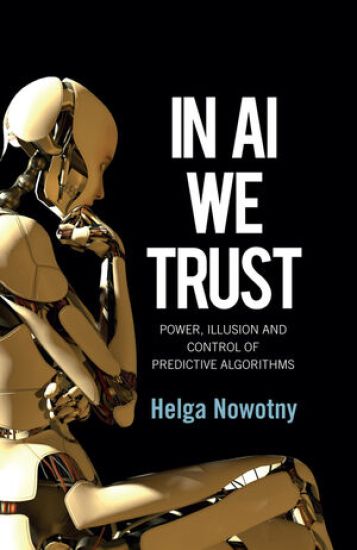
In AI We Trust

In AI We Trust

Helga Nowotny

Polity Press
2021
sidottu
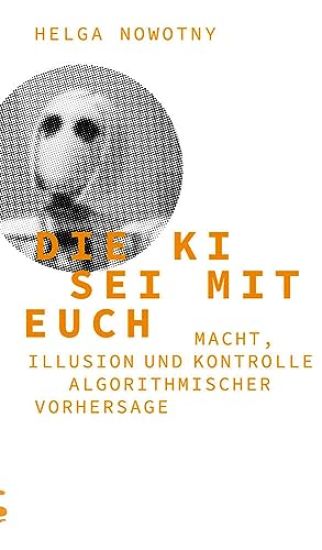
One of the most persistent concerns about the future is whether it will be dominated by the predictive algorithms of AI – and, if so, what this will mean for our behaviour, for our institutions and for what it means to be human. AI changes our experience of time and the future and challenges our identities, yet we are blinded by its efficiency and fail to understand how it affects us. At the heart of our trust in AI lies a paradox: we leverage AI to increase our control over the future and uncertainty, while at the same time the performativity of AI, the power it has to make us act in the ways it predicts, reduces our agency over the future. This happens when we forget that that we humans have created the digital technologies to which we attribute agency. These developments also challenge the narrative of progress, which played such a central role in modernity and is based on the hubris of total control. We are now moving into an era where this control is limited as AI monitors our actions, posing the threat of surveillance, but also offering the opportunity to reappropriate control and transform it into care. As we try to adjust to a world in which algorithms, robots and avatars play an ever-increasing role, we need to understand better the limitations of AI and how their predictions affect our agency, while at the same time having the courage to embrace the uncertainty of the future.
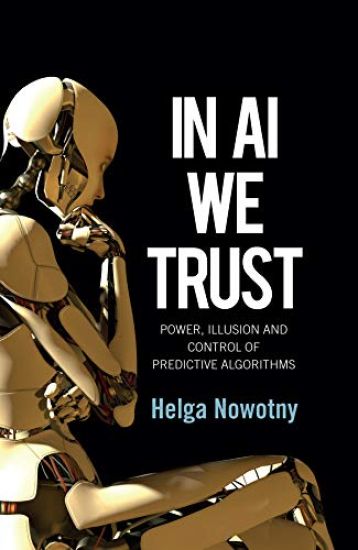
In AI We Trust

In AI We Trust

Helga Nowotny

JOHN WILEY AND SONS LTD
2024
nidottu
One of the most persistent concerns about the future is whether it will be dominated by the predictive algorithms of AI – and, if so, what this will mean for our behaviour, for our institutions and for what it means to be human. AI changes our experience of time and the future and challenges our identities, yet we are blinded by its efficiency and fail to understand how it affects us. At the heart of our trust in AI lies a paradox: we leverage AI to increase our control over the future and uncertainty, while at the same time the performativity of AI, the power it has to make us act in the ways it predicts, reduces our agency over the future. This happens when we forget that that we humans have created the digital technologies to which we attribute agency. These developments also challenge the narrative of progress, which played such a central role in modernity and is based on the hubris of total control. We are now moving into an era where this control is limited as AI monitors our actions, posing the threat of surveillance, but also offering the opportunity to reappropriate control and transform it into care. As we try to adjust to a world in which algorithms, robots and avatars play an ever-increasing role, we need to understand better the limitations of AI and how their predictions affect our agency, while at the same time having the courage to embrace the uncertainty of the future.
An Orderly Mess

An Orderly Mess

Helga Nowotny

Central European University Press
2017
nidottu
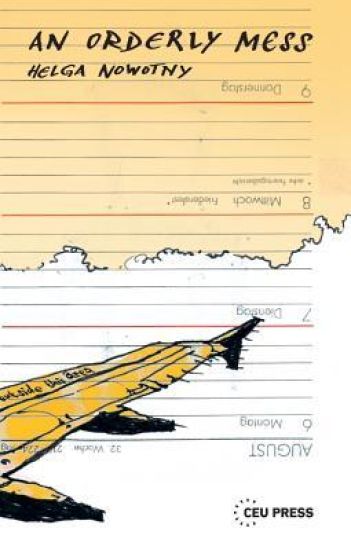
This book was triggered by the recent geopolitical shifts and the turn towards an allegedly post-factual era. An Orderly Mess is a timely diagnosis of the current dissolution of the modern order, while highlighting the opportunities of messiness. The essay focuses on the temporal and spatial dimensions in which messiness becomes apparent today: broken time lines and fragmented spaces. Messiness is framed by a blurring of the world orderings inherited from modernity. Against the backdrop of rapid digitalization, we may find ourselves again in a phase of transition toward new ways of world ordering. The focus on messiness reveals the different patterns of order and disorder that underpin the current process of transition. In the second half of the volume the author revisits her 1989 book on Eigenzeit, which explored how moderns experience time, or are exposed to it. A quarter century later she finds that the new inventions of technology have challenged the traditional meaning of time (and also of space) even more, increasing the non-simultaneity of human existence. Today, small devices channel into one’s fingertips medial eigenzeit: the time that one has to oneself in order to spend it with those who are absent. The past has shrunk and the present extends to the future: “there is no pre¬determined future, only a future that is as radically open as it is inherently uncertain”.
Future Needs Wisdom: An Intellectual Memoir

Future Needs Wisdom: An Intellectual Memoir

Helga Nowotny

Chinese University of Hong Kong Press
2025
sidottu
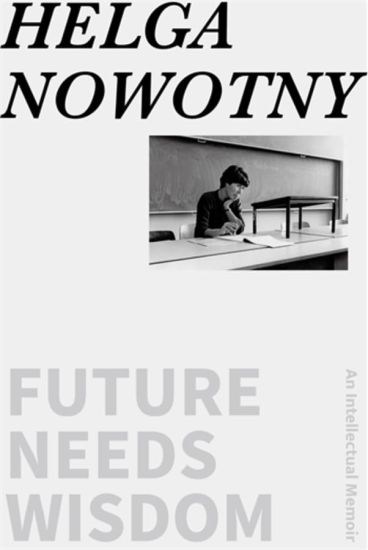
Helga Nowotny's memoir provides a detailed account of her life, highlighting the challenges and triumphs of a woman who defied convention in a male-dominated field of science. From her early days in Science and Technology Studies, where she faced bureaucratic hurdles, to her influential role in shaping the European Research Council, Nowotny offers a candid look at her career. She shares personal stories of navigating the complexities of academia and policy, revealing the uncertainties and contingencies that shaped her life and work. This memoir resonates with anyone who has pursued a path less traveled, and offers a glimpse into the resilience and ambition required to succeed in challenging environments.