Kirjojen hintavertailu. Mukana 12 016 292 kirjaa ja 12 kauppaa.

Kirjahaku

Etsi kirjoja tekijän nimen, kirjan nimen tai ISBN:n perusteella.

6 kirjaa tekijältä Helmut Puff

Sodomy in Reformation Germany and Switzerland, 1400-1600

Sodomy in Reformation Germany and Switzerland, 1400-1600

Helmut Puff

University of Chicago Press
2003
sidottu
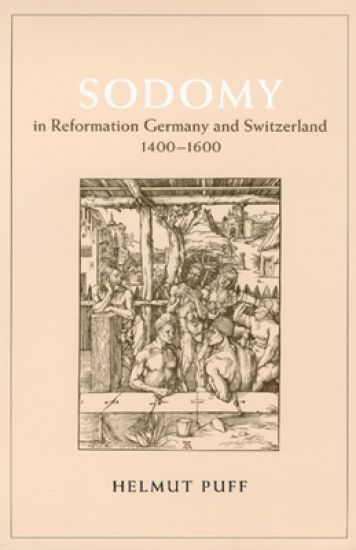
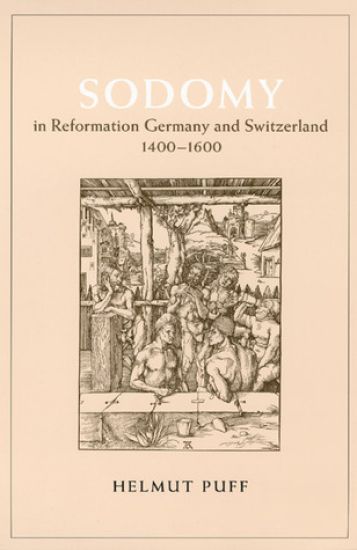
In the 14th century, a considerable number of men in Germany and Switzerland were executed for committing sodomy. In the 17th century, simply speaking of the act was cause for censorship. Here, in the first ever history of sodomy in these countries, Helmut Puff argues that accusations of sodomy in this era were actually crucial to the success of the Protestant Reformation. Drawing on both literary and historical evidence, Puff shows that speakers of German associated sodomy with Italy and, increasingly, the Catholic Church. As the Reformation gained momentum, the formerly unspeakable crime of sodomy gained a voice, as Martin Luther and others deployed accusations of sodomy to discredit the upper ranks of the Church and to create a sense of community among Protestant believers. During the 16th century, official reactions to this defamatory rhetoric, and fear that mere mention of sodomy would incite sinful acts, resulted in the suppression of court cases from public scrutiny. This eye-opening study should interest historians of gender, sexuality and religion, as well as scholars of mediaeval and early modern history and culture.
Sodomy in Reformation Germany and Switzerland, 1400-1600

Sodomy in Reformation Germany and Switzerland, 1400-1600

Helmut Puff

University of Chicago Press
2003
nidottu
In the 14th century, a considerable number of men in Germany and Switzerland were executed for committing sodomy. In the 17th century, simply speaking of the act was cause for censorship. Here, in the first ever history of sodomy in these countries, Helmut Puff argues that accusations of sodomy in this era were actually crucial to the success of the Protestant Reformation. Drawing on both literary and historical evidence, Puff shows that speakers of German associated sodomy with Italy and, increasingly, the Catholic Church. As the Reformation gained momentum, the formerly unspeakable crime of sodomy gained a voice, as Martin Luther and others deployed accusations of sodomy to discredit the upper ranks of the Church and to create a sense of community among Protestant believers. During the 16th century, official reactions to this defamatory rhetoric, and fear that mere mention of sodomy would incite sinful acts, resulted in the suppression of court cases from public scrutiny. This eye-opening study should interest historians of gender, sexuality and religion, as well as scholars of mediaeval and early modern history and culture.
The Antechamber

The Antechamber

Helmut Puff

STANFORD UNIVERSITY PRESS
2023
sidottu
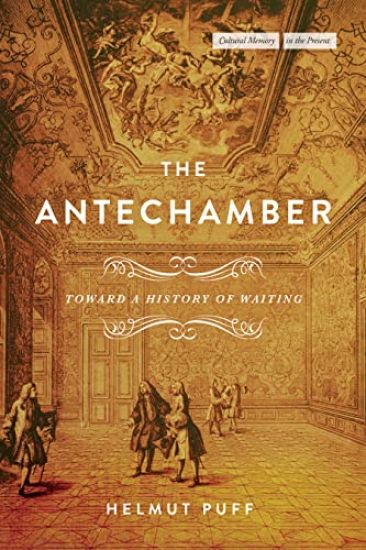
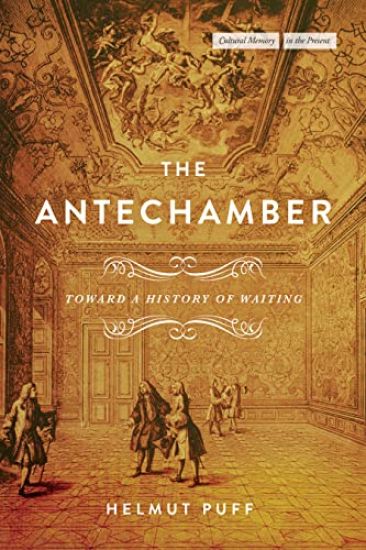
Helmut Puff invites readers to visit societies and spaces of the past through the lens of a particular temporal modality: waiting. From literature, memoirs, manuals, chronicles, visuals, and other documents, Puff presents a history of waiting anchored in antechambers—interior rooms designated and designed for people to linger. In early modern continental Western Europe, antechambers became standard in the residences of the elites. As a time-space infrastructure these rooms shaped encounters between unequals. By imposing spatial distance and temporal delays, antechambers constituted authority, rank, and power. Puff explores both the logic and the experience of waiting in such formative spaces, showing that time divides as much as it unites, and that far from what people have said about early moderns, they approached living in time with apprehensiveness. Unlike how contemporary society primarily views the temporal dimension, to early modern Europeans time was not an objective force external to the self but something that was tied to acting in time. Divided only by walls and doors, waiters sought out occasions to improve their lot. At other times, they disrupted the scripts accorded them. Situated at the intersection of history, literature, and the history of art and architecture, this wide-ranging study demonstrates that waiting has a history that has much to tell us about social and power relations in the past and present.
The Antechamber

The Antechamber

Helmut Puff

STANFORD UNIVERSITY PRESS
2023
pokkari
Helmut Puff invites readers to visit societies and spaces of the past through the lens of a particular temporal modality: waiting. From literature, memoirs, manuals, chronicles, visuals, and other documents, Puff presents a history of waiting anchored in antechambers—interior rooms designated and designed for people to linger. In early modern continental Western Europe, antechambers became standard in the residences of the elites. As a time-space infrastructure these rooms shaped encounters between unequals. By imposing spatial distance and temporal delays, antechambers constituted authority, rank, and power. Puff explores both the logic and the experience of waiting in such formative spaces, showing that time divides as much as it unites, and that far from what people have said about early moderns, they approached living in time with apprehensiveness. Unlike how contemporary society primarily views the temporal dimension, to early modern Europeans time was not an objective force external to the self but something that was tied to acting in time. Divided only by walls and doors, waiters sought out occasions to improve their lot. At other times, they disrupted the scripts accorded them. Situated at the intersection of history, literature, and the history of art and architecture, this wide-ranging study demonstrates that waiting has a history that has much to tell us about social and power relations in the past and present.
Miniature Monuments

Miniature Monuments

Helmut Puff

De Gruyter
2014
sidottu
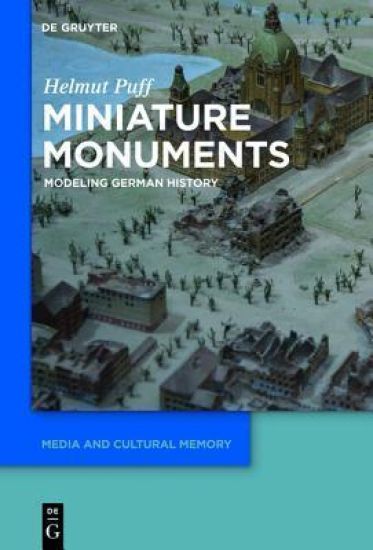
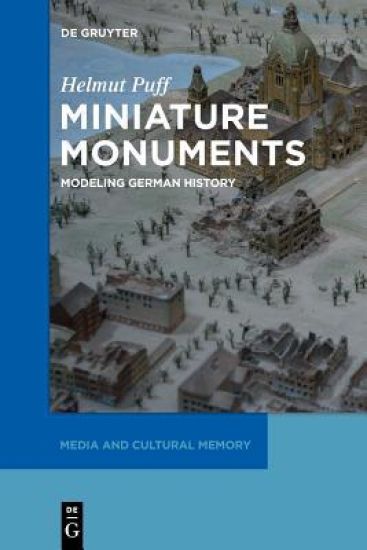
Miniature Monuments: Modeling German History offers a series of essays on small-scale models of bombed out cities. Created between 1946 and the present, these plastic renderings of places provide eerie glimpses of destruction and devastation resulting of the air war. This study thus permits fresh angles on post-war responses to the compounded losses of WW II, and it does so through considering these “miniature monuments?” (of, among others, Frankfurt, Munich, Schwetzingen, Heilbronn and Hiroshima) in a deep cultural history that interlaces the sixteenth, eighteenth, and twentieth centuries. Three-dimensional renderings in diminutive size have rarely been subjected to rigorous theoretical reflection. Conventionally, models, whether of ruins or intact spaces, have been assumed to be “easily legible”; that is, they have been assumed to be vehicles of the authentic. Yet rubble and other models should be theorized as complex simulacra of abstract realities and catalysts of memories. Miniature Monuments thus tackles a haunting paradox: building ruins. The book elucidates how utterly contingent processes of crumbling and collapse (the English words for the Latin ruina) came to command such great interest in modern Europe that tremendous efforts were taken to uncover, render, and, most of all, recreate ruins.
Miniature Monuments

Miniature Monuments

Helmut Puff

De Gruyter
2017
isokokoinen pokkari
Miniature Monuments: Modeling German History offers a series of essays on small-scale models of bombed out cities. Created between 1946 and the present, these plastic renderings of places provide eerie glimpses of destruction and devastation resulting of the air war. This study thus permits fresh angles on post-war responses to the compounded losses of WW II, and it does so through considering these “miniature monuments?” (of, among others, Frankfurt, Munich, Schwetzingen, Heilbronn and Hiroshima) in a deep cultural history that interlaces the sixteenth, eighteenth, and twentieth centuries. Three-dimensional renderings in diminutive size have rarely been subjected to rigorous theoretical reflection. Conventionally, models, whether of ruins or intact spaces, have been assumed to be “easily legible”; that is, they have been assumed to be vehicles of the authentic. Yet rubble and other models should be theorized as complex simulacra of abstract realities and catalysts of memories. Miniature Monuments thus tackles a haunting paradox: building ruins. The book elucidates how utterly contingent processes of crumbling and collapse (the English words for the Latin ruina) came to command such great interest in modern Europe that tremendous efforts were taken to uncover, render, and, most of all, recreate ruins.