Kirjojen hintavertailu. Mukana 11 342 296 kirjaa ja 12 kauppaa.

Kirjahaku

Etsi kirjoja tekijän nimen, kirjan nimen tai ISBN:n perusteella.

10 kirjaa tekijältä Henning Melber

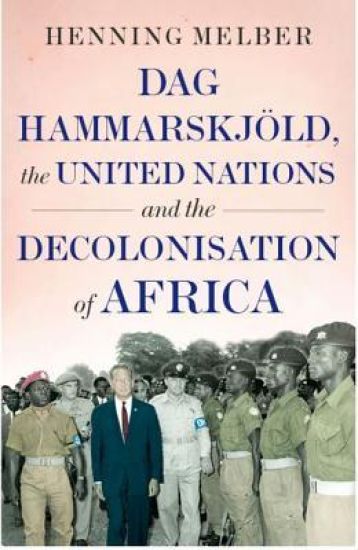
Dag Hammarskjöld, the United Nations and the Decolonisation of Africa
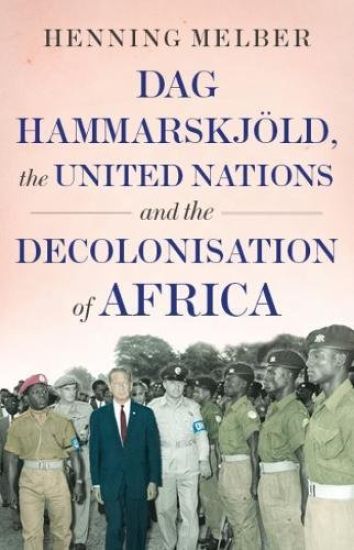
In 1953 Dag Hammarskj ld became the second Secretary-General of the United Nations--the highest international civil servant. Before his mission was cut short by a 1961 plane crash in then Northern Rhodesia (Zambia), he used his office to act on the basis of anti-hegemonic values, including solidarity and recognition of otherness. The dubious circumstances of Hammarskj ld's death have received much attention, including a new official investigation, but have perhaps overshadowed his diplomatic legacy--one that has often been hotly contested. Henning Melber explores the years of African decolonization during which Hammarskj ld was in office, investigating the scope and limits of his influence within the context of global governance. He paints a picture of a man with strong guiding principles, but limited room for maneuver, colliding with the essential interests of the big powers as the 'wind of change' blew over the African continent. His book is a critical contribution to the study of international politics and the role of the UN in the Cold War. It is also a tribute to the achievements of a cosmopolitan Swede.
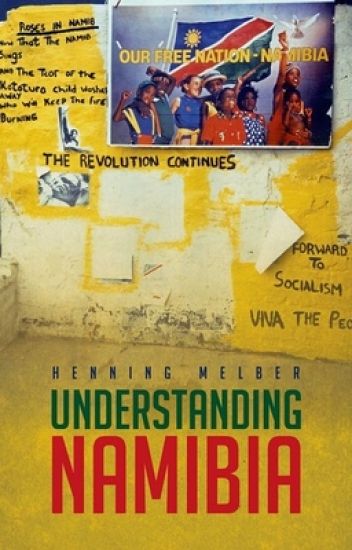
Understanding Namibia: The Trials of Independence

Understanding Namibia: The Trials of Independence

Henning Melber

Oxford University Press, USA
2015
sidottu
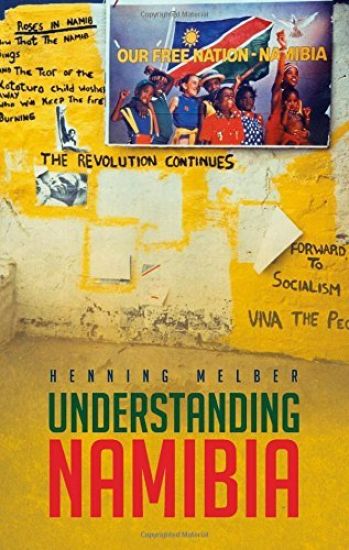
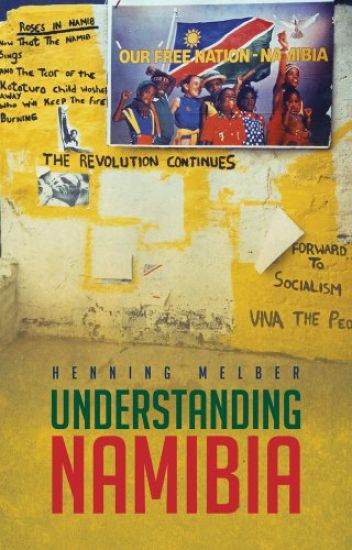
Since independence in 1990, Namibia has witnessed only one generation with no memory of colonialism - the 'born frees', who voted in the 2009 elections. The anti-colonial liberation movement, SWAPO, dominates the political scene, effectively making Namibia a de facto one-party state dominated by the first 'struggle generation'. While those in power declare their support for a free, fair, and just society, the limits to liberation are such that emancipation from foreign rule has only been partially achieved. Despite its natural resources Namibia is among the world's most unequal societies and indicators of wellbeing have not markedly improved for many among the former colonized majority, despite a constitution enshrining human rights, social equality, and individual liberty. This book analyses the transformation of Namibian society since Independence. Melber explores the achievements and failures and contrasts the narrative of a post-colonial patriotic history with the socio-economic and political realities of the nation-building project. He also investigates whether, notwithstanding the relative stability prevailing to date, the negotiation of controlled change during Namibia's decolonization could have achieved more than simply a change of those in control.
Understanding Namibia

Understanding Namibia

Henning Melber

Oxford University Press Inc
2015
pokkari
Since independence in 1990, Namibia has witnessed only one generation with no memory of colonialism - the 'born frees', who voted in the 2009 elections. The anti-colonial liberation movement, SWAPO, dominates the political scene, effectively making Namibia a de facto one-party state dominated by the first 'struggle generation'. While those in power declare their support for a free, fair, and just society, the limits to liberation are such that emancipation from foreign rule has only been partially achieved. Despite its natural resources Namibia is among the world's most unequal societies and indicators of wellbeing have not markedly improved for many among the former colonized majority, despite a constitution enshrining human rights, social equality, and individual liberty. This book analyses the transformation of Namibian society since Independence. Melber explores the achievements and failures and contrasts the narrative of a post-colonial patriotic history with the socio-economic and political realities of the nation-building project. He also investigates whether, notwithstanding the relative stability prevailing to date, the negotiation of controlled change during Namibia's decolonization could have achieved more than simply a change of those in control.
The Long Shadow of German Colonialism: Amnesia, Denialism and Revisionism
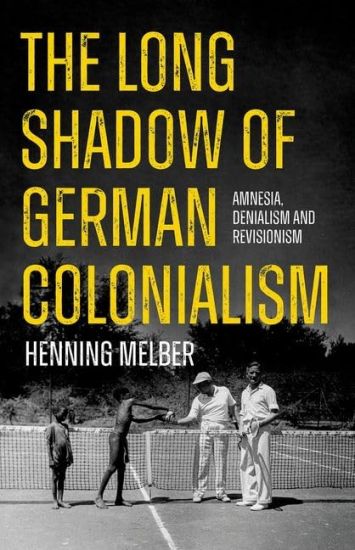
From 1884 to 1914, the world's fourth-largest overseas colonial empire was that of the German Kaiserreich. Yet this fact is little known in Germany and the subject remains virtually absent from most school textbooks. While debates are now common in France and Britain over the impact of empire on former colonies and colonizing societies, German imperialism has only more recently become a topic of wider public interest. In 2015, the German government belatedly and half-heartedly conceded that the extermination policies carried out over 1904-8 in the settler colony of German South West Africa (now Namibia) qualify as genocide. But the recent invigoration of debate on Germany's colonial past has been hindered by continued amnesia, denialism and a populist right endorsing colonial revisionism. A recent campaign against postcolonial studies sought to denounce and ostracize any serious engagement with the crimes of the imperial age. Henning Melber presents an overview of German colonial rule and analyses how its legacy has affected and been debated in German society, politics and the media. He also discusses the quotidian experiences of Afro-Germans, the restitution of colonial loot, and how the history of colonialism affects important institutions such as the Humboldt Forum.
Dag Hammarskjöld, the United Nations, and the Decolonisation of Africa
In 1953 Dag Hammarskjöld became the second Secretary-General of the United Nations--the highest international civil servant. Before his mission was cut short by a 1961 plane crash in then Northern Rhodesia (Zambia), he used his office to act on the basis of anti-hegemonic values, including solidarity and recognition of otherness. The dubious circumstances of Hammarskjöld’s death have received much attention, including a new official investigation; but have perhaps overshadowed his diplomatic legacy--one that has often been hotly contested. Henning Melber explores the years of African decolonisation during which Hammarskjöld was in office, investigating the scope and limits of his influence within the context of global governance. He paints a picture of a man with strong guiding principles, but limited room for manoeuver, colliding with the essential interests of the big powers as the ‘wind of change’ blew over the African continent. His book is a critical contribution to the study of international politics and the role of the UN in the Cold War. It is also a tribute to the achievements of a cosmopolitan Swede.
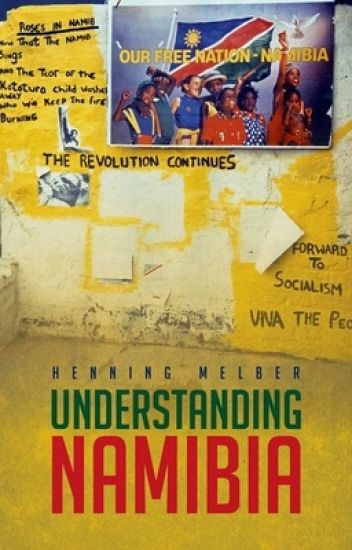
Understanding Namibia

Understanding Namibia

Henning Melber

C Hurst Co Publishers Ltd
2014
nidottu
Since independence in 1990, Namibia has witnessed only one generation with no memory of colonialism - the 'born frees', who voted in the 2009 elections. The anti-colonial liberation movement, SWAPO, dominates the political scene, effectively making Namibia a de facto one-party state dominated by the first 'struggle generation'. While those in power declare their support for a free, fair, and just society, the limits to liberation are such that emancipation from foreign rule has only been partially achieved. Despite its natural resources Namibia is among the world's most unequal societies and indicators of wellbeing have not markedly improved for many among the former colonised majority, despite a constitution enshrining human rights, social equality, and individual liberty. This book analyses the transformation of Namibian society since independence. Melber explores the achievements and failures and contrasts the narrative of a post-colonial patriotic history with the socio-economic and political realities of the nation-building project.He also investigates whether, notwithstanding the relative stability prevailing to date, the negotiation of controlled change during Namibia's decolonisation could have achieved more than simply a change of those in control.
Understanding Namibia

Understanding Namibia

Henning Melber

C Hurst Co Publishers Ltd
2014
sidottu
Since independence in 1990, Namibia has witnessed only one generation with no memory of colonialism - the 'born frees', who voted in the 2009 elections. The anti-colonial liberation movement, SWAPO, dominates the political scene, effectively making Namibia a de facto one-party state dominated by the first 'struggle generation'. While those in power declare their support for a free, fair, and just society, the limits to liberation are such that emancipation from foreign rule has only been partially achieved. Despite its natural resources Namibia is among the world's most unequal societies and indicators of wellbeing have not markedly improved for many among the former colonised majority, despite a constitution enshrining human rights, social equality, and individual liberty. This book analyses the transformation of Namibian society since independence. Melber explores the achievements and failures and contrasts the narrative of a post-colonial patriotic history with the socio-economic and political realities of the nation-building project. He also investigates whether, notwithstanding the relative stability prevailing to date, the negotiation of controlled change during Namibia's decolonisation could have achieved more than simply a change of those in control.
A Decade of Namibia: Politics, Economy and Society - The Era Pohamba, 2004-2015
Hifikepunye Pohamba has been the second Head of State since Namibia's Independence in 1990. As successor to Sam Nujoma he held office for two terms from March 2005 to March 2015. At the end of his presidency he was awarded the Mo Ibrahim Prize for good governance as the fifth statesman of the continent. This overview covers the twelve years from his election in 2004 until his retirement as documented in the chapters previously published in the Africa Yearbook. Politics, Economy and Society South of the Sahara, reviewing Namibia's development during his presidency. An introductory analysis putting the Pohamba era into the context of Namibian society precedes the chronological account.