Kirjojen hintavertailu. Mukana 11 244 527 kirjaa ja 12 kauppaa.

Kirjahaku

Etsi kirjoja tekijän nimen, kirjan nimen tai ISBN:n perusteella.

145 kirjaa tekijältä Henri Bergson

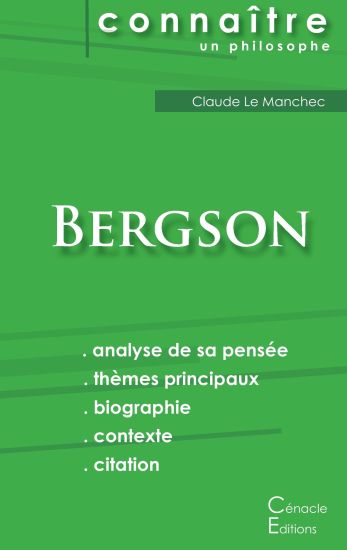
Henri Bergson (étude et analyse complète de sa pensée)

Henri Bergson (étude et analyse complète de sa pensée)

Henri Bergson

Comprendre la philosophie
2022
pokkari
Venez d couvrir la pens e d'Henri Bergson gr ce une analyse philosophique de r f rence crite par un sp cialiste universitaire, cette tude est recommand e par de nombreux enseignants. Cet ouvrage contient notamment la biographie du philosophe, le r sum d taill de sa pens e, ainsi que l'analyse de son courant philosophique. Retrouvez tous nos titres sur: www.fichedelecture.fr.
The Two Sources of Morality and Religion

The Two Sources of Morality and Religion

Henri Bergson

University of Notre Dame Press
1977
nidottu
Henri Bergson inquires into the nature of moral obligation, into the place of religion and the purpose it has served since primitive times, into static religion and its value in preserving man from the dangers of his own intelligence; into dynamic religion or mysticism as a means of producing man's forward leap beyond the limits of the closed society for which nature intended him and into the open society which is the brotherhood of man.
Time and Free Will

Time and Free Will

Henri Bergson

Routledge
2002
sidottu
First published in 2002. Henri Louis Bergson was born in Paris, October 18, 1859. He entered the Ecole normale in 1878, and was admitted agrégé de philosophie in 1881 and docteur és lettres in 1889. After holding professorships in various provincial and Parisian lycées, he became maître de conférences at the Ecole normale supérieure in 1897, and since 1900 has been professor at the Collége de France. In 1901 he became a member of the Institute on his election to the Académie des Sciences morales et politiques.
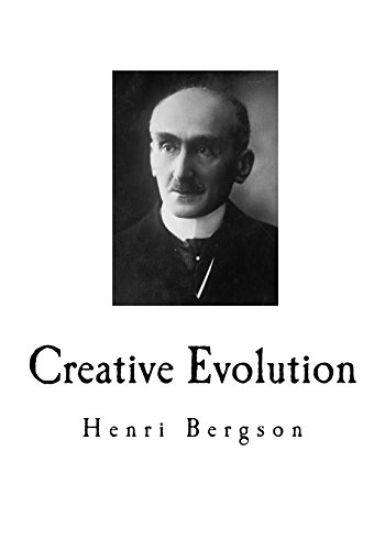
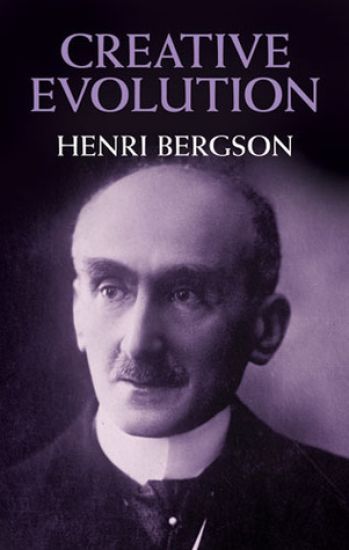
Creative Evolution

Creative Evolution

Henri Bergson

Dover Publications Inc.
2003
nidottu
The fullest expression of the distinguished French philosopher's ideas about the meaning of life. In propounding his distinctive theory of evolution, Bergson considers nature and intelligence, examines mechanisms of thought and illusion, and presents a criticism of philosophical systems from those of the ancients to those of his 19th-century contemporaries.
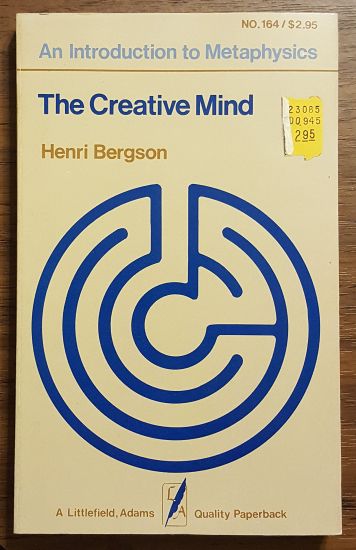
The Creative Mind

The Creative Mind

Henri Bergson

Dover Publications Inc.
2007
nidottu
The final published book by Nobel Prize-winning author and philosopher Henri Bergson (1859-1941), La pens e et le mouvant (translated here as The Creative Mind), is a masterly autobiography of his philosophical method. Through essays and lectures written between 1903 and 1923, Bergson retraces how and why he became a philosopher, and crafts a fascinating critique of philosophy itself. Until it leaves its false paths, he demonstrates, philosophy will remain only a wordy dialectic that surmounts false problems.With masterful skill and intensity, Bergson shows that metaphysics and science must be rooted in experience for philosophy to become a genuine search for truth. And in the quest for unanswered questions, the spiritual dimension of human life and the importance of intuition must be emphasized. A source of inspiration for physicists as well as philosophers, Bergson's introduction to metaphysics reveals a philosophy that is always on the move, blending man's spiritual drive with his mastery of the material world.
Introduction to Metaphysics

Introduction to Metaphysics

Henri Bergson

Hackett Publishing Co, Inc
1999
pokkari
"With its signal distinction between 'intuition' and 'analysis' and its exploration of the different levels of Duration (Bergson's term for Heraclitean flux), An Introduction to Metaphysics has had a significant impact on subsequent twentieth century thought. The arts, from post-impressionist painting to the stream of consciousness novel, and philosophies as diverse as pragmatism, process philosophy, and existentialism bear its imprint. Consigned for a while to the margins of philosophy, Bergson's thought is making its way back to the mainstream. The reissue of this important work comes at an opportune time, and will be welcomed by teachers and scholars alike." --Peter A. Y. Gunter, University of North Texas
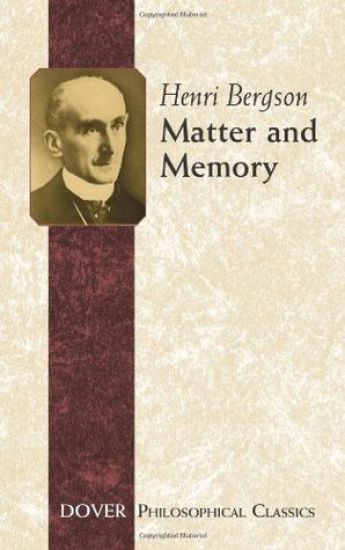
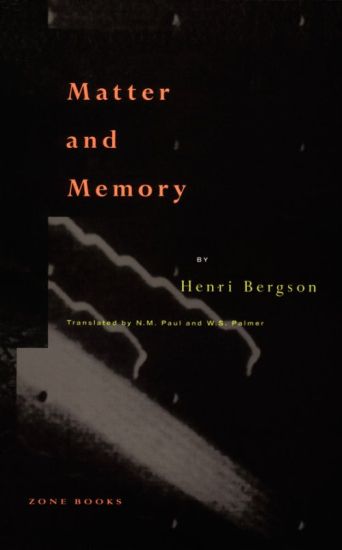
Matter and Memory

Matter and Memory

Henri Bergson

Zone Books
1988
pokkari
"Since the end of the last century," Walter Benjamin wrote, "philosophy has made a series of attempts to lay hold of the 'true' experience as opposed to the kind that manifests itself in the standardized, denatured life of the civilized masses. It is customary to classify these efforts under the heading of a philosophy of life. Towering above this literature is Henri Bergson's early monumental work, Matter and Memory."Along with Husserl's Ideas and Heidegger's Being and Time, Bergson's work represents one of the great twentieth-century investigations into perception and memory, movement and time, matter and mind. Arguably Bergson's most significant book, Matter and Memory is essential to an understanding of his philosophy and its legacy.This new edition includes an annotated bibliography prepared by Bruno Paradis.
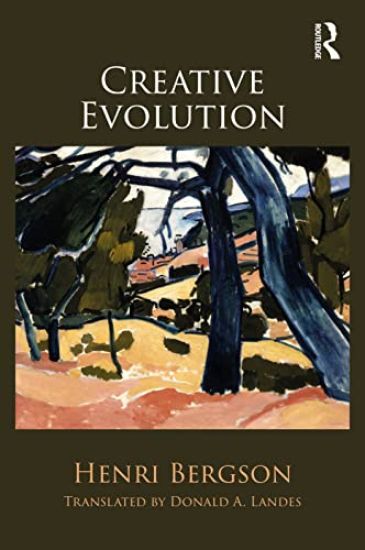
Creative Evolution

Creative Evolution

Henri Bergson

TAYLOR FRANCIS LTD
2024
nidottu
First published in French in 1907, Henri Bergson’s L’évolution créatrice is a scintillating and radical work by one of the great French philosophers of the nineteenth and twentieth centuries. This outstanding new translation, the first for over a hundred years, brings one of Bergson’s most important and ambitious works to a new generation of readers.A sympathetic though critical reader of Darwin, Bergson argues in Creative Evolution against a mechanistic, reductionist view of evolution. For Bergson, all life emerges from a creative, shared impulse, which he famously terms élan vital and which passes like a current through different organisms and generations over time. Whilst this impulse remains as forms of life diverge and multiply, human life is characterized by a distinctive form of consciousness or intellect. Yet as Bergson brilliantly shows, the intellect’s fragmentary and action- oriented nature, which he likens to the cinematograph, means it alone cannot grasp nature’s creativity and invention over time. A major task of Creative Evolution is to reconcile these two elements. For Bergson, the answer famously lies in intuition, which brings instinct and intellect together and takes us “into the very interior of life.”A work of great rigour and imaginative richness that contributed to Bergson winning the Nobel Prize for Literature in 1927, Creative Evolution played an important and controversial role in the trajectory of twentieth-century philosophy and continues to create significant discussion and debate. The philosopher and psychologist William James, who admired Bergson’s work, was writing an introduction to the first English translation of the book before his death in 1910.This new translation includes a foreword by Elizabeth Grosz and a helpful translator’s introduction by Donald Landes. Also translated for the first time are additional notes, articles, reviews and letters on the reception of Creative Evolution in biology, mathematics, and theology. This edition includes fascinating commentaries by philosophers Maurice Merleau-Ponty, Georges Canguilhem, and Gilles Deleuze.
Creative Evolution

Creative Evolution

Henri Bergson

TAYLOR FRANCIS LTD
2022
sidottu
First published in French in 1907, Henri Bergson’s L’évolution créatrice is a scintillating and radical work by one of the great French philosophers of the nineteenth and twentieth centuries. This outstanding new translation, the first for over a hundred years, brings one of Bergson’s most important and ambitious works to a new generation of readers.A sympathetic though critical reader of Darwin, Bergson argues in Creative Evolution against a mechanistic, reductionist view of evolution. For Bergson, all life emerges from a creative, shared impulse, which he famously terms élan vital and which passes like a current through different organisms and generations over time. Whilst this impulse remains as forms of life diverge and multiply, human life is characterized by a distinctive form of consciousness or intellect. Yet as Bergson brilliantly shows, the intellect’s fragmentary and action- oriented nature, which he likens to the cinematograph, means it alone cannot grasp nature’s creativity and invention over time. A major task of Creative Evolution is to reconcile these two elements. For Bergson, the answer famously lies in intuition, which brings instinct and intellect together and takes us “into the very interior of life.”A work of great rigour and imaginative richness that contributed to Bergson winning the Nobel Prize for Literature in 1927, Creative Evolution played an important and controversial role in the trajectory of twentieth-century philosophy and continues to create significant discussion and debate. The philosopher and psychologist William James, who admired Bergson’s work, was writing an introduction to the first English translation of the book before his death in 1910.This new translation includes a foreword by Elizabeth Grosz and a helpful translator’s introduction by Donald Landes. Also translated for the first time are additional notes, articles, reviews and letters on the reception of Creative Evolution in biology, mathematics, and theology. This edition includes fascinating commentaries by philosophers Maurice Merleau-Ponty, Georges Canguilhem, and Gilles Deleuze.
Time and Free Will

Time and Free Will

Henri Bergson

Routledge
2014
nidottu
First published in 2002. Henri Louis Bergson was born in Paris, October 18, 1859. He entered the Ecole normale in 1878, and was admitted agrégé de philosophie in 1881 and docteur és lettres in 1889. After holding professorships in various provincial and Parisian lycées, he became maître de conférences at the Ecole normale supérieure in 1897, and since 1900 has been professor at the Collége de France. In 1901 he became a member of the Institute on his election to the Académie des Sciences morales et politiques.
The Creative Mind

The Creative Mind

Henri Bergson

Literary Licensing, LLC
2013
sidottu
The Creative Mind is a philosophical work written by the French philosopher Henri Bergson. Originally published in 1934, the book explores the nature of creativity and the creative process. Bergson argues that creativity is not simply a matter of individual genius, but is a fundamental aspect of life itself. He suggests that creativity arises from a tension between the past and the present, and that it is the result of a continual process of invention and adaptation.Bergson draws on a wide range of examples, from the arts to the sciences, to illustrate his ideas about creativity. He discusses the role of intuition and imagination in the creative process, and explores the relationship between creativity and the unconscious mind. He also considers the social and cultural factors that can either encourage or inhibit creativity.Throughout the book, Bergson emphasizes the importance of living in the present moment, and of being open to new experiences and ideas. He argues that creativity is not something that can be taught or learned, but is instead a natural expression of the human spirit.Overall, The Creative Mind is a thought-provoking and insightful exploration of one of the most fundamental aspects of human experience. It is a must-read for anyone interested in the nature of creativity, and in the ways in which we can cultivate it in ourselves and others.This is a new release of the original 1946 edition.This scarce antiquarian book is a facsimile reprint of the old original and may contain some imperfections such as library marks and notations. Because we believe this work is culturally important, we have made it available as part of our commitment for protecting, preserving, and promoting the world's literature in affordable, high quality, modern editions, that are true to their original work.
Freedom

Freedom

Henri Bergson

BLOOMSBURY PUBLISHING PLC
2024
sidottu
For 15 years, Henri Bergson, the most important French philosopher of the early 20th-century, taught at the Collège de France. Speaking without notes, most of his classes are now lost to history, but records of a handful of courses fortuitously survived thanks to stenographic transcripts. Conveying Bergson’s very voice, these extraordinary documents are finally presented here in English.The 1904–1905 lectures are dedicated to the topic of freedom, or as Bergson put it, “the evolution of the problem of freedom.” Building on the philosophy of freedom from his first book, Time and Free Will, he proposes that freedom is not only a fundamental human experience but characteristic of all life as such. By retracing how ancient and modern philosophers have dealt with the delicate question of freedom, Bergson demonstrates the necessity, and also the radically new character, of his own theory of freedom.Bergson’s lectures are a feast for many audiences. For philosophers, they give a fuller picture of his thought and contain deep reflections on many core topics in philosophy today, from the nature of time to the difference between brain and mind, the relation between memory and perception, and the vindication of freedom over determinism. For intellectual historians, the lectures are a treasure trove: as a slice of the living thought of a great thinker; as an extended analysis of the natural and human sciences of his day; and as a rich commentary on the history of ancient and modern philosophy. Finally, for cultural historians and literary scholars, the lectures were the cultural capital of Belle Époque France, consumed by elites and a vast educated public. They are also part of an exceedingly rare genre in modern philosophy: spoken, not written, lectures and expressed as a veritable stream of philosophical consciousness that is remarkably structured and analytically lucid.