Kirjojen hintavertailu. Mukana 11 244 527 kirjaa ja 12 kauppaa.

Kirjahaku

Etsi kirjoja tekijän nimen, kirjan nimen tai ISBN:n perusteella.

245 kirjaa tekijältä Henry Adams

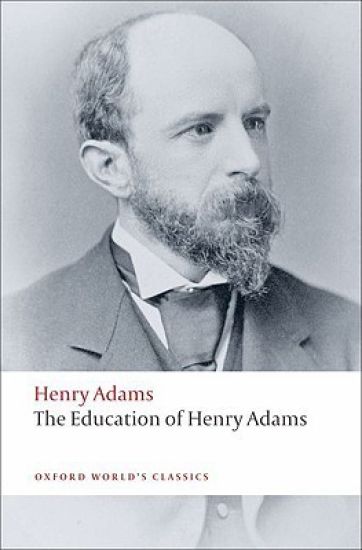
The Education of Henry Adams

The Education of Henry Adams

Henry Adams

Oxford University Press
2008
nidottu
'Every generalisation that we settled forty years ago, is abandoned' As a journalist, historian and novelist born into a family that included two past presidents of the United States, Henry Adams was constantly focused on the American experiment. An immediate bestseller awarded the Pulitzer Prize in 1919, his The Education of Henry Adams (1918) recounts his own and the country's education from 1838, the year of his birth, to 1905, incorporating the Civil War, capitalist expansion and the growth of the United States as a world power. Exploring America as both a success and a failure, contradiction was the very impetus that compelled Adams to write the Education, in which he was also able to voice his deep scepticism about mankind's power to control the direction of history. Written with immense wit and irony, reassembling the past while glimpsing the future, Adams's vision expresses what Henry James declared the `complex fate' to be an American, and remains one of the most compelling works of American autobiography today. ABOUT THE SERIES: For over 100 years Oxford World's Classics has made available the widest range of literature from around the globe. Each affordable volume reflects Oxford's commitment to scholarship, providing the most accurate text plus a wealth of other valuable features, including expert introductions by leading authorities, helpful notes to clarify the text, up-to-date bibliographies for further study, and much more.
Henry Adams

Henry Adams

Henry Adams

Harvard University Press
1992
sidottu
Henry Adams has been called an indispensable figure in American thought. Although he famously “took his own life” in the autobiographical Education of Henry Adams, his letters—more intimate and unbuttoned, though hardly unselfconscious—are themselves indispensable for an understanding of the man and his times.This selection, the first based on the authoritative 6-volume Letters, represents every major private and public event in Adams’s life from 1858 to 1918 and confirms his reputation as one of the greatest letter writers of his time. Adams knew everyone who was anyone and went almost everywhere, and—true to the Adams family tradition—recorded it all. These letters to an array of correspondents from American presidents to Henry James to 5-year-old honorary nieces reveal Adams’s passion for politics and disdain for politicians, his snobbish delight in society and sincere affection for friends, his pose of dilettantism and his serious ambitions as writer and historian, his devastation at his wife’s suicide and his acquiescence in the role of Elizabeth Cameron’s “tame cat,” his wicked humor at others’ expense and his own reflexive self-depreciation.This volume allows the reader to experience 19th-century America through the eyes of an observer on whom very little was lost, and to make the acquaintance of one of the more interesting personalities in American letters. As Ernest Samuels says in his introduction, “The letters lift the veil of old-age disenchantment that obscures the Education and exhibit Adams as perhaps the most brilliant letter writer of his time. What most engages one in the long course of his correspondence is the tireless range of his intellectual curiosity, his passionate effort to understand the politics, the science, and the human society of the world as it changed around him… It is as literature of a high order that his letters can finally be read.”
The Letters of Henry Adams

The Letters of Henry Adams

Henry Adams

Harvard University Press
1982
sidottu
Henry Adams’s letters are one of the vital chronicles of the life of the mind in America. A perceptive analyst of people, events, and ideas, Adams recorded, with brilliance and wit, sixty years of enormous change at home and abroad.Volume I shows him growing from a high-spirited but self-conscious 20-year-old to a self-assured man of the world. In Washington in the chaotic months before Lincoln’s inauguration, then in London during the war years and beyond, he serves as secretary to his statesman father and is privy to the inner workings of politics and diplomacy. English social life proves as absorbing as affairs of state.Volume II takes him from his years as a crusading journalist in Grant’s Washington, through his marriage to Clover Hooper and his pioneer work as a history professor at Harvard and editor of the North American Review, to his settling in Washington as a professional historian. There he and his wife, described by Henry James as “one of the two most interesting women in America,” establish the first intellectual salon of the capital. This halcyon period comes to a catastrophic close with Clover’s suicide.Volume III traces his gradual recovery from the shock of his wife’s death as he seeks distraction in travel—to Japan, to Cuba, and in 1891–92 to the South Seas—a recovery complicated by his falling dangerously in love with Elizabeth Cameron, beautiful young wife of a leading senator. His South Seas letters to Mrs. Cameron are the most brilliant of all.Fewer than half of Adams’s letters have been published even in part, and earlier collections have been marred by expurgations, mistranscriptions, and editorial deletions. In the six volumes of this definitive edition, readers will have access to a major document of the American past.
The Letters of Henry Adams

The Letters of Henry Adams

Henry Adams

Harvard University Press
1989
sidottu
Henry Adams’s letters are among the best in the language. They are, in Alfred Kazin’s words, “magnificent, his most spontaneous and freest literary works.” With the completion of this edition, they may well be judged his most significant achievement. “The letters are not a gloss on a life’s work; in a real sense they are his life’s work,” the reviewer for American Literature stated.We encounter Adams in 1892 at a turning point in his career, at the beginning of the period in which his leading ideas would be crystallized and his major literary works take shape. He had survived the shock of his wife’s suicide and had completed his great History of the Jefferson era, and after his long journey in the South Seas his frustrated passion for Elizabeth Cameron had begun to calm. His wanderlust now took him to the Carolinas and the Rockies, to Mexico, Cuba, Egypt, the Near East, Greece, Italy, central Europe, Russia, and the North Cape. His interest came increasingly to center on the geopolitical present and the medieval past. Prompted by the Panic of 1893, he began an intensive study of the new finance capitalism and the imperial power it created; by the end of the decade he was beginning to foresee the shift of global dominance from Britain to the United States and Russia. Meanwhile a tour of the churches and abbeys of Normandy fired his imagination and led to the absorption in the art and culture of medieval France that would bear fruit in Mont-Saint-Michel and Chartres.At his home on Lafayette Square, across from the White House, he became an informal adviser to statesmen, John Hay and Theodore Roosevelt among them. Out of his friendly association with scientists and his own study of science came his conviction that the dynamo and radium were bringing a revolution in physics. His germinating ideas about science, technology, and economic power were conveyed in his letters over many years before they were formulated into The Education of Henry Adams, his “Study of Twentieth-Century Multiplicity.”The Adams who emerges from the letters is far more complex, contradictory, and human than the protagonist of the Education. He writes to women, Mrs. Cameron above all, about politics, economics, and science as well as social news and palace gossip, just as he writes to men about art as well as power. The multiplicity of his interests, his sharp perceptions, eye for telling detail, and passion for generalization, together with his irony and wit, make his letters the engrossing record of an extraordinary life-in-progress and an incomparable commentary upon his age.
The Letters of Henry Adams

The Letters of Henry Adams

Henry Adams

Harvard University Press
1989
sidottu
Henry Adams’s letters are among the best in the language. They are, in Alfred Kazin’s words, “magnificent, his most spontaneous and freest literary works.” With the completion of this edition, they may well be judged his most significant achievement. “The letters are not a gloss on a life’s work; in a real sense they are his life’s work,” the reviewer for American Literature stated.We encounter Adams in 1892 at a turning point in his career, at the beginning of the period in which his leading ideas would be crystallized and his major literary works take shape. He had survived the shock of his wife’s suicide and had completed his great History of the Jefferson era, and after his long journey in the South Seas his frustrated passion for Elizabeth Cameron had begun to calm. His wanderlust now took him to the Carolinas and the Rockies, to Mexico, Cuba, Egypt, the Near East, Greece, Italy, central Europe, Russia, and the North Cape. His interest came increasingly to center on the geopolitical present and the medieval past. Prompted by the Panic of 1893, he began an intensive study of the new finance capitalism and the imperial power it created; by the end of the decade he was beginning to foresee the shift of global dominance from Britain to the United States and Russia. Meanwhile a tour of the churches and abbeys of Normandy fired his imagination and led to the absorption in the art and culture of medieval France that would bear fruit in Mont-Saint-Michel and Chartres.At his home on Lafayette Square, across from the White House, he became an informal adviser to statesmen, John Hay and Theodore Roosevelt among them. Out of his friendly association with scientists and his own study of science came his conviction that the dynamo and radium were bringing a revolution in physics. His germinating ideas about science, technology, and economic power were conveyed in his letters over many years before they were formulated into The Education of Henry Adams, his “Study of Twentieth-Century Multiplicity.”The Adams who emerges from the letters is far more complex, contradictory, and human than the protagonist of the Education. He writes to women, Mrs. Cameron above all, about politics, economics, and science as well as social news and palace gossip, just as he writes to men about art as well as power. The multiplicity of his interests, his sharp perceptions, eye for telling detail, and passion for generalization, together with his irony and wit, make his letters the engrossing record of an extraordinary life-in-progress and an incomparable commentary upon his age.
The Letters of Henry Adams

The Letters of Henry Adams

Henry Adams

Harvard University Press
1989
sidottu
Henry Adams’s letters are among the best in the language. They are, in Alfred Kazin’s words, “magnificent, his most spontaneous and freest literary works.” With the completion of this edition, they may well be judged his most significant achievement. “The letters are not a gloss on a life’s work; in a real sense they are his life’s work,” the reviewer for American Literature stated.We encounter Adams in 1892 at a turning point in his career, at the beginning of the period in which his leading ideas would be crystallized and his major literary works take shape. He had survived the shock of his wife’s suicide and had completed his great History of the Jefferson era, and after his long journey in the South Seas his frustrated passion for Elizabeth Cameron had begun to calm. His wanderlust now took him to the Carolinas and the Rockies, to Mexico, Cuba, Egypt, the Near East, Greece, Italy, central Europe, Russia, and the North Cape. His interest came increasingly to center on the geopolitical present and the medieval past. Prompted by the Panic of 1893, he began an intensive study of the new finance capitalism and the imperial power it created; by the end of the decade he was beginning to foresee the shift of global dominance from Britain to the United States and Russia. Meanwhile a tour of the churches and abbeys of Normandy fired his imagination and led to the absorption in the art and culture of medieval France that would bear fruit in Mont-Saint-Michel and Chartres.At his home on Lafayette Square, across from the White House, he became an informal adviser to statesmen, John Hay and Theodore Roosevelt among them. Out of his friendly association with scientists and his own study of science came his conviction that the dynamo and radium were bringing a revolution in physics. His germinating ideas about science, technology, and economic power were conveyed in his letters over many years before they were formulated into The Education of Henry Adams, his “Study of Twentieth-Century Multiplicity.”The Adams who emerges from the letters is far more complex, contradictory, and human than the protagonist of the Education. He writes to women, Mrs. Cameron above all, about politics, economics, and science as well as social news and palace gossip, just as he writes to men about art as well as power. The multiplicity of his interests, his sharp perceptions, eye for telling detail, and passion for generalization, together with his irony and wit, make his letters the engrossing record of an extraordinary life-in-progress and an incomparable commentary upon his age.
The Education of Henry Adams

The Education of Henry Adams

Henry Adams

Modern Library Inc
1999
pokkari
Selected by the Modern Library as one of the 100 best nonfiction books of all time 'I cannot remember when I was not fascinated by Henry Adams, ' said Gore Vidal. 'He was remarkably prescient about the coming horrors.' His political ideals shaped by two presidential ancestors great-grandfather John Adams and grandfather John Quincy Adams Henry Adams was one of the most powerful and original minds to confront the American scene from the Civil War to the First World War. Printed privately in 1907 and published to wide acclaim shortly after the author&'s death in 1918, The Education of Henry Adams is a brilliant, idiosyncratic blend of autobiography and history that charts the great transformation in American life during the so-called Gilded Age. With an introduction by renowned historian Edmund Morris. From the eBook edition."
The Education of Henry Adams

The Education of Henry Adams

Henry Adams

Lulu.com
2018
sidottu
The autobiography of Henry Adams is comprised of two fundamental parts: an eye-opening history of the United States as it ascended to industrial and technological greatness, and a critique of education in the 19th century. Born into an influential family and directly descended from two Presidents of the United States, Adams lived in and chronicled events in the United States for most of his life. Cognitively buoyed by an excellent education at Harvard University, and given perspective on the wider world during a great tour of Europe he undertook shortly after graduating from college, Henry Adams became a distinguished and able chronicler of the past. However, Adams was taken aback at the sheer pace of change which characterized the development of the USA throughout his lifetime. Whereas the books he had studied indicated that nations steadily developed over centuries, the USA achieved such enormous progress in a matter of decades.
The Education of Henry Adams

The Education of Henry Adams

Henry Adams

Lulu.com
2018
pokkari
The autobiography of Henry Adams is comprised of two fundamental parts: an eye-opening history of the United States as it ascended to industrial and technological greatness, and a critique of education in the 19th century. Born into an influential family and directly descended from two Presidents of the United States, Adams lived in and chronicled events in the United States for most of his life. Cognitively buoyed by an excellent education at Harvard University, and given perspective on the wider world during a great tour of Europe he undertook shortly after graduating from college, Henry Adams became a distinguished and able chronicler of the past. However, Adams was taken aback at the sheer pace of change which characterized the development of the USA throughout his lifetime. Whereas the books he had studied indicated that nations steadily developed over centuries, the USA achieved such enormous progress in a matter of decades.
The Education of Henry Adams

The Education of Henry Adams

Henry Adams

Digireads.com
2019
pokkari
Awarded the Pulitzer Prize for non-fiction in 1919, "The Education of Henry Adams" is the autobiography of Henry Adams, the grandson of President John Quincy Adams, and the great-grandson of President John Adams. First published personally at his own expense in 1907, the book was not printed commercially in large numbers until his death in 1918. Born Henry Brooks Adams in 1838, he was educated at Harvard and was introduced to politics and diplomacy at a young age, when he served as secretary to his father, Charles Francis Adams, Abraham Lincoln's ambassador to the United Kingdom. During this time he worked as an anonymous foreign correspondent for the "New York Times". Between 1868 and 1877 Adams worked as a journalist focused on exposing political corruption and as a professor of medieval history at Harvard. Despite his accomplishments, Adams saw himself as a failure. He believed that his education did not properly prepare him for the demands of a world which was modernizing at a dynamic pace. He also felt that he did not live up to the legacy established by the lofty accomplishments of his ancestors. This thoughtful and intimate book remains an important document of 19th century American history and political life. Adams, one of America's most important historians, journalists, and novelists, shows in this great work of literature that he was anything but a failure. This edition is printed on premium acid-free paper.
The Education of Henry Adams

The Education of Henry Adams

Henry Adams

Createspace Independent Publishing Platform
2013
nidottu
The Education is much more a record of Adams's introspection than of his deeds. It is an extended meditation on the social, technological, political, and intellectual changes that occurred over Adams's lifetime. Adams concluded that his traditional education failed to help him come to terms with these rapid changes, hence, his need for self-education. The organizing thread of the book is how the "proper" schooling and other aspects of his youth was time wasted, thus, his search for self-education through experiences, friendships, and reading.
The Education of Henry Adams

The Education of Henry Adams

Henry Adams

Graphic Arts Books
2021
sidottu
The Education of Henry Adams follows the life of presidential descendent Henry Adams. However, instead of serving just as an account of Adams’ deeds, The Education of Henry Adams is a series of observations and introspections Adams makes on social changes, scientific advancements, personal relationships, professional success, travel, religion, war, and education. Born into the privilege of wealth and the renowned success of his ancestors, President John Adams and President John Quincy Adams, Adams received an education from notable schools, such as Harvard. He continued his prestigious education in Berlin, studying law and the German language. Despite his formal education, Adams felt unprepared to face the changing dynamics of his country, including shifts in social, religious, political, and scientific beliefs. For this reason, Adams advocates for “self-education” through experience, friendships, and reading. In his autobiography, Adams endorses studying American history and science in school, and encourages the process of self-educating after one’s formal education. With a set of strong political and religious beliefs, Adams invokes a substantial impression with his perspectives on the on-going transformation of the United States of America. Henry Adams’ autobiography, The Education of Henry Adams, has earned remarkable acclaim, including receiving a Pulitzer Prize. As a man who had direct access to many American political offices, including the presidential cabinet, the senate, and the congress, Adams had an intimate view of the innerworkings of American politics, and lived through social changes such as the Civil War, the abolition of slavery, scientific advancements, shifts in religious views, and the first World War. Though he felt his formal education left him unprepared for such happenings, Adams encourages readers to learn from their experiences and relationships. The Education of Henry Adams offers invaluable insight on the rapid changes in society, and reminds readers that one’s education is never finished. Now with a new, eye-catching cover design and reprinted in a modern font, The Education of Henry Adams by Henry Adams is more accessible than ever and able to offer modern-day readers insight on historical events and philosophy of learning that will always be relevant.
The Education of Henry Adams

The Education of Henry Adams

Henry Adams

Graphic Arts Books
2021
pokkari
The Education of Henry Adams follows the life of presidential descendent Henry Adams. However, instead of serving just as an account of Adams’ deeds, The Education of Henry Adams is a series of observations and introspections Adams makes on social changes, scientific advancements, personal relationships, professional success, travel, religion, war, and education. Born into the privilege of wealth and the renowned success of his ancestors, President John Adams and President John Quincy Adams, Adams received an education from notable schools, such as Harvard. He continued his prestigious education in Berlin, studying law and the German language. Despite his formal education, Adams felt unprepared to face the changing dynamics of his country, including shifts in social, religious, political, and scientific beliefs. For this reason, Adams advocates for “self-education” through experience, friendships, and reading. In his autobiography, Adams endorses studying American history and science in school, and encourages the process of self-educating after one’s formal education. With a set of strong political and religious beliefs, Adams invokes a substantial impression with his perspectives on the on-going transformation of the United States of America. Henry Adams’ autobiography, The Education of Henry Adams, has earned remarkable acclaim, including receiving a Pulitzer Prize. As a man who had direct access to many American political offices, including the presidential cabinet, the senate, and the congress, Adams had an intimate view of the innerworkings of American politics, and lived through social changes such as the Civil War, the abolition of slavery, scientific advancements, shifts in religious views, and the first World War. Though he felt his formal education left him unprepared for such happenings, Adams encourages readers to learn from their experiences and relationships. The Education of Henry Adams offers invaluable insight on the rapid changes in society, and reminds readers that one’s education is never finished. Now with a new, eye-catching cover design and reprinted in a modern font, The Education of Henry Adams by Henry Adams is more accessible than ever and able to offer modern-day readers insight on historical events and philosophy of learning that will always be relevant.
The Education of Henry Adams

The Education of Henry Adams

Henry Adams

Wilder Publications
2018
sidottu
The Education is much more a record of Adams's introspection than of his deeds. It is an extended meditation on the social, technological, political, and intellectual changes that occurred over Adams's lifetime. Adams concluded that his traditional education failed to help him come to terms with these rapid changes, hence, his need for self-education. The organizing thread of the book is how the "proper" schooling and other aspects of his youth was time wasted, thus, his search for self-education through experiences, friendships, and reading.