Kirjojen hintavertailu. Mukana 11 244 527 kirjaa ja 12 kauppaa.

Kirjahaku

Etsi kirjoja tekijän nimen, kirjan nimen tai ISBN:n perusteella.

10 kirjaa tekijältä Henry Buckton

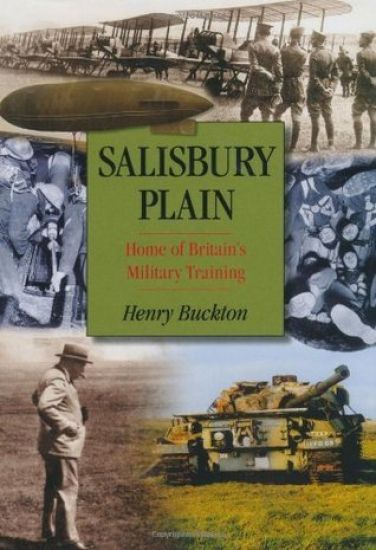
Salisbury Plain

Salisbury Plain

Henry Buckton

The History Press Ltd
2015
nidottu
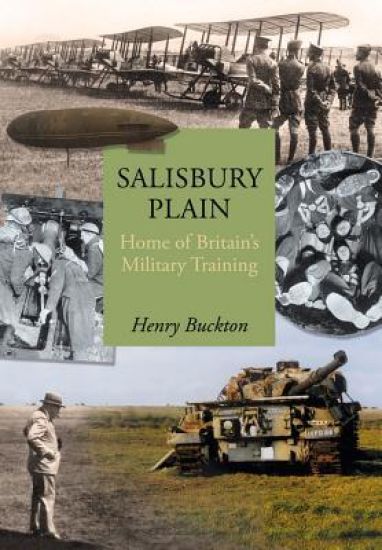
Salisbury Plain is the UK’s largest military training area, measuring approximately 25 miles across and ten miles from top to toe. The area includes four towns best described as military garrisons, of which Bulford, Larkhill and Warminster exist alongside civilian settlements sharing the same name, while Tidworth has replaced two rural villages that straddled the Wiltshire-Hampshire border before the arrival of the Army. In addition the Plain is surrounded by settlements with further strong military connections, including the city of Salisbury itself.This new history of the Plain examines how the military has used and developed the area since the land was first purchased towards the end of the 19th century. At some point in their career, the vast majority of British service personnel will spend time on Salisbury Plain. Its training grounds and military schools prepare soldiers and airmen to serve in an ever-changing and increasingly volatile world. The British armed forces are respected the world over for their training, discipline and professionalism, and Salisbury Plain is more often than not where it all begins.
Dieppe

Dieppe

Henry Buckton

AMBERLEY PUBLISHING
2022
sidottu
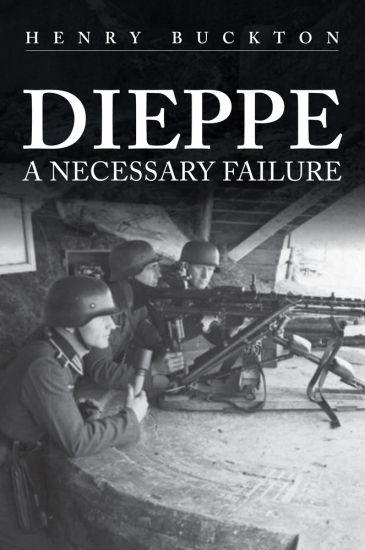
The Allied assault on the German-occupied port of Dieppe in France, code-named Operation Jubilee, took place on 19 August 1942. It was a battle that lasted for less than ten hours but it has gone down in history as a military disaster, often spoken of in the same manner as the Charge of the Light Brigade and Gallipoli. The German defences had been underestimated. The numbers killed, wounded and taken prisoner at Dieppe were shockingly high and none of the main objectives were realised. The Third Reich considered the raid as a military joke and it provided a textbook of ‘what not to do’ in future amphibious operations. Dieppe was the largest tri-service operation ever mounted up until that point, and even if the planning for the operation was woefully inadequate, it showed that the three services could coordinate their movements under one command. Many believe that Dieppe should not be looked upon as an isolated incident because then its purpose is totally obscured by its terrible cost. Put into context, it was one in a series of raids between Dunkirk and D-Day designed to test the defences of Hitler’s Atlantic Wall, the most famous and successful being the attack on St Nazaire, which is still considered to be the greatest Commando raid of all time. Author Henry Buckton has searched the voluminous records of interviews with Canadian Dieppe veterans collected by Historica Canada to shed new light on this terrible – but perhaps necessary – failure.
Somerset Industrial Heritage

Somerset Industrial Heritage

Henry Buckton

AMBERLEY PUBLISHING
2026
nidottu
Somerset is one of the most varied counties in the country. People come here for hill walking, cycling, birdwatching and many other leisure activities. Invariably while exploring this rich and diverse countryside you will stumble across the remains of industrial activity, such as ruined buildings, ivy-clad walls, the paths of bygone railways or roads seemingly going nowhere, all of which indicate that the lonely spot in which you are standing was once thronged with people going about their business. Here these lost industrial landscapes of Somerset are uncovered to reveal the great variety of industry and employment that existed in the county. They show how England has changed from the days when every corner of the land was home to some sort of manufacturing and the country was regarded as the workshop of the world. Henry Buckton details this rich tapestry, from iron-ore mining on the Brendon Hills and Exmoor to lead mining on the Mendip Hills, from quarrying at places such as Ham Hill to peat extraction on the Somerset Levels, as well as the Somerset coalfield and the isolated mills that dot the banks of rivers in the county.
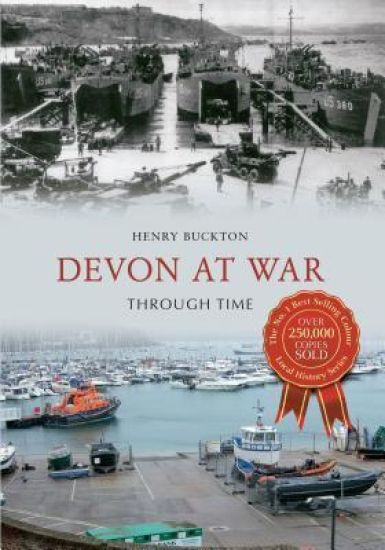
Devon at War Through Time

Devon at War Through Time

Henry Buckton

Amberley Publishing
2012
nidottu
During the Second World War Devon was reputedly the most militarized county in the country. This was particularly so just before D-Day when every town and village was bursting with American troops preparing to take part in the liberation of occupied Europe. But the story of Devon at War begins long before that and in this book we visit places that were affected at different stages of the conflict. We learn how Plymouth and Exeter experienced some of the most devastating air attacks outside London, while even smaller communities along the South Coast suffered from the shock tactics of tip and run raids. We see the crucial part that the county's ports and harbours played in keeping Britain's Navy afloat and at the forefront of operations. And perhaps most important of all, we acknowledge the county's incalculable contribution to all aspects of Operation Overlord, on land, at sea, or in the air. Of course every community has its own story to tell but it would be impossible to include them all. The examples chosen give a good summary of what took place in Devon during those dark days when the country as a whole was fighting for its very survival.
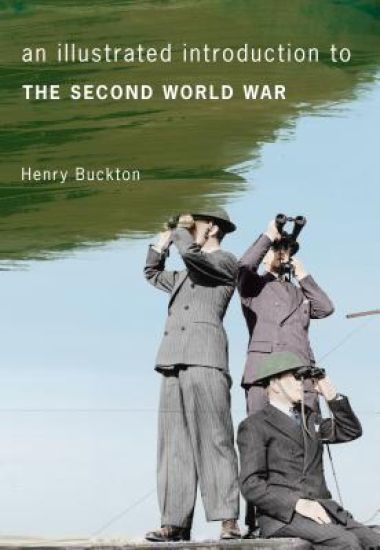
An Illustrated Introduction to the Second World War
The Second World War is so far the only truly global war that has ever taken place. It involved the vast majority of the world’s nations, with the great powers eventually forming two opposing military alliances: the Allies and the Axis. It was the most widespread war in history, with more than 100 million people from over thirty different countries serving in military units. In this state of ‘total war’, the major participants threw their entire economic, industrial and scientific capabilities behind the war effort, erasing the distinction between civilian and military resources. Marked by mass deaths of civilians, including the Holocaust and the only use of nuclear weapons in warfare, it resulted in an estimated 80 million fatalities. All of this made the Second World War the deadliest conflict in human history. This introduction to the Second World War follows the major events that led up to the war and occurred during it, year by year.
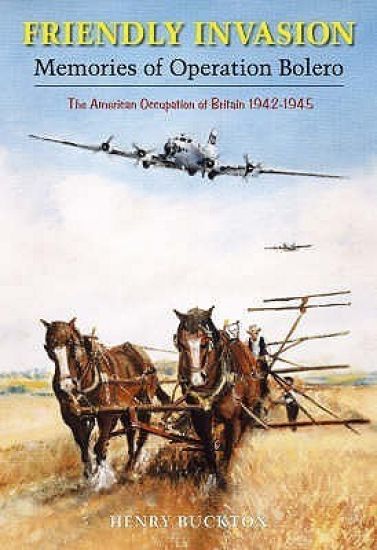
Friendly Invasion

Friendly Invasion

Henry Buckton

Phillimore Co Ltd
2006
nidottu
Between 1942 and 1945, tens of thousands of young American servicemen arrived in Britain. This book is an examination of the way their presence affected them and the local people during the Second World War. It is a social history and studies the various relationships forged between the British public and their American guests.
Salisbury Plain

Salisbury Plain

Henry Buckton

Phillimore Co Ltd
2008
sidottu
Salisbury Plain is the UK's largest military training area, measuring approximately 25 miles across and ten miles from top to toe. This book examines how the military has used and developed the area since the land was first purchased towards the end of the 19th century.
The Children's Front

The Children's Front

Henry Buckton

Phillimore Co Ltd
2009
nidottu
Those who were children during the Second World War spent their formative years amidst a quite extraordinary succession of events that cannot fail to have left a vivid impression. This proposal combines the memories of those who were young at the time with historical research to examine the major factors influencing wartime childhood and development.There are stories by people from many different backgrounds and areas of Britain but all had in common the fact they were children during this unique period. At a time when children were in mortal danger because of daily attacks on British soil, measures taken to protect them included gasmasks, air-raid shelters and the blackout. Schooling was interrupted and the land became an island fortress as military equipment and installations appeared everywhere, both in cities and in small villages. Fathers and other family members were often away from home, serving in the armed forces, but children too could ‘do their bit’ for the war effort. Others recall the experiences of evacuation and their feelings at the time, which extended from a sense of security to fear of abuse.This book looks, too, at the toys that were played with, the games enjoyed, the clubs that could be joined, and the entertainment and information that was on offer. A roller-coaster of emotions ranges from the horror of nightmare attacks on London and other cities to the exuberant relief which accompanied the final victory and the return home of loved ones.
The Lost Villages

The Lost Villages

Henry Buckton

I.B. Tauris
2008
sidottu
Across Britain there are more than 3,000 lost villages once-thriving communities that time and fortune have reduced to ivy-clad remnants and weather-worn ruins. Echoes of a former age, they evoke a natural curiosity as to who lived in them, what caused their decline. Bestselling author Henry Buckton goes in search of some of the Britain's more recent lost villages: Hallsands in Devon, swept away in a violent storm; the communities of Vatersay and Mingulay, in Scotland, victims to the changing fortunes of the local laird; and the picture-perfect village of Imber in Wiltshire, requisitioned for the nation in time of war but never given back. Combining rare photographs and the memories of those who knew the villages, the author provides a timely account of communities whose stories would otherwise soon be lost for ever.
Sussex at War Through Time

Sussex at War Through Time

Henry Buckton

Amberley Publishing
2014
nidottu
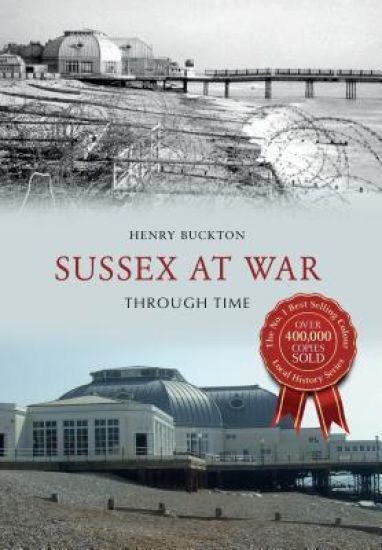
This book examines the areas of Sussex that played an important part in the Second World War. Chichester became the nerve centre for the county’s civil defence organisation and Tangmere and other airfields were involved in the Battle of Britain and provided a springboard for the Allied aerial onslaught on German occupied territories. Towns like Bognor Regis, Brighton and Hastings were repeatedly bombed by the Luftwaffe, while Eastbourne was the most targeted place in the South East outside London. The potential invasion of Britain during the Second World War had become a very real threat when Germany occupied the seaboard of northern France in 1940. The beaches of Sussex became ideal invasion hotspots, which drew the county into the very centre of Britain’s war effort. Although today Sussex is split into two counties, East and West, this book looks at both, with particular focus on the coastline which was most affected by the war.