Kirjojen hintavertailu. Mukana 11 244 527 kirjaa ja 12 kauppaa.

Kirjahaku

Etsi kirjoja tekijän nimen, kirjan nimen tai ISBN:n perusteella.

12 kirjaa tekijältä Henry Corbin

Creative Imagination in the Sufism of Ibn 'Arabi
In this volume Henry Corbin emphasizes the differences between the exoteric and esoteric forms of Islam. He also reveals that whereas in the West philosophy and religion were at odds, they were inseparably linked, at least during this period, in the Islamic world. A valuable section of notes and appendices includes original translation of numerous Sufi treatises.
History Of Islamic Philosophy

History Of Islamic Philosophy

Henry Corbin

Routledge
2014
nidottu
First published in 1993. Published here for the first time in English, this highly important work by Henry Corbin, the Islamic scholar, philosopher and historian of religion, is a definitive interpretation of traditional Islamic philosophy from the beginning to the present day. In this authoritative volume, Corbin makes clear the great themes of the doctrinal and mystical vision of lslamic philosophy through a wealth of comparative parallels and in relation to the most profound currents of Western philosophy. In Part One, From the Beginning Down to the Death of Averroes, Corbin considers the Sourc­es of Philosophical Meditation in Islam; Shi ism and Prophetic Philosophy; the Sunni Kalam; Philosophy and the Natural Sciences; the Hellenizing Philosophers; Sufism; Al-Suhrawardi and the Philosophy of Light, and the Andalusian Tradition. In Part Two, From the Death of Averroes to the Present Day, he examines Sunni Thought, the Metaphysics of Sufism, and Shiite Thought. Corbin's History of Islamic Philosophy is both an inspirational book and an essential work of reference, enabling readers to discover themselves the richness of this body of thought.
Temple & Contemplation

Temple & Contemplation

Henry Corbin

Routledge
2013
nidottu
First published in 1986. This volume brings together five lectures which were originally delivered at different sessions of the famous Eranos Conferences in Ascona, Switzer#2;land. Henry Corbin himself had outlined the plan for this book, whose title suggests that these diverse studies converge on a common spiritual centre.
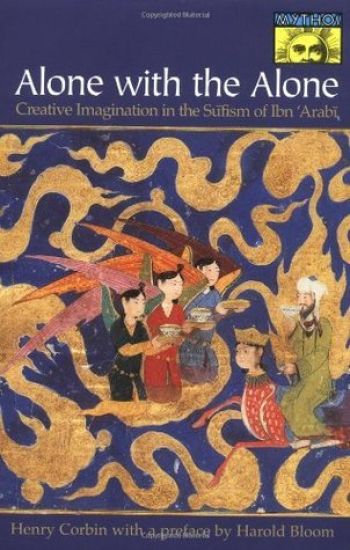
Alone with the Alone

Alone with the Alone

Henry Corbin

Princeton University Press
1998
pokkari
"Henry Corbin's works are the best guide to the visionary tradition...Corbin, like Scholem and Jonas, is remembered as a scholar of genius. He was uniquely equipped not only to recover Iranian Sufism for the West, but also to defend the principal Western traditions of esoteric spirituality."--From the introduction by Harold Bloom Ibn 'Arabi (1165-1240) was one of the great mystics of all time. Through the richness of his personal experience and the constructive power of his intellect, he made a unique contribution to Shi'ite Sufism. In this book, which features a powerful new preface by Harold Bloom, Henry Corbin brings us to the very core of this movement with a penetrating analysis of Ibn 'Arabi's life and doctrines. Corbin begins with a kind of spiritual topography of the twelfth century, emphasizing the differences between exoteric and esoteric forms of Islam. He also relates Islamic mysticism to mystical thought in the West. The remainder of the book is devoted to two complementary essays: on "Sympathy and Theosophy" and "Creative Imagination and Creative Prayer." A section of notes and appendices includes original translations of numerous Su fi treatises. Harold Bloom's preface links Sufi mysticism with Shakespeare's visionary dramas and high tragedies, such as The Tempest and Hamlet. These works, he writes, intermix the empirical world with a transcendent element. Bloom shows us that this Shakespearean cosmos is analogous to Corbin's "Imaginal Realm" of the Sufis, the place of soul or souls.
Avicenna and the Visionary Recital

Avicenna and the Visionary Recital

Henry Corbin

Princeton University Press
2014
pokkari
In this work a distinguished scholar of Islamic religion examines the mysticism and psychological thought of the great eleventh-century Persian philosopher and physician Avicenna (Ibn Sina), author of over a hundred works on theology, logic, medicine, and mathematics. Henry Corbin's discovery in an Istanbul library of the manuscript of a Persian translation of and commentary on Avicenna's Hayy ibn Yaqzan, written in Arabic, led him to an analysis of three of Avicenna's mystical "recitals." These form an initiatory cycle leading the adept along the path of spiritual progress. In Part I Corbin summarizes the great themes that show the philosophical situation of Avicennan man in the cosmos and presents translations of these three great Avicennan recitals. Part II is a complete translation, with notes, of the Persian commentary. Originally published in 1960. The Princeton Legacy Library uses the latest print-on-demand technology to again make available previously out-of-print books from the distinguished backlist of Princeton University Press. These editions preserve the original texts of these important books while presenting them in durable paperback and hardcover editions. The goal of the Princeton Legacy Library is to vastly increase access to the rich scholarly heritage found in the thousands of books published by Princeton University Press since its founding in 1905.
Creative Imagination in the Sufism of Ibn Arabi

Creative Imagination in the Sufism of Ibn Arabi

Henry Corbin

Princeton University Press
2014
pokkari
A penetrating analysis of the life and doctrines of the Spanish-born Arab theologian. A penetrating analysis of the life and doctrines of the Spanish-born Arab theologian. Originally published in 1969. The Princeton Legacy Library uses the latest print-on-demand technology to again make available previously out-of-print books from the distinguished backlist of Princeton University Press. These editions preserve the original texts of these important books while presenting them in durable paperback and hardcover editions. The goal of the Princeton Legacy Library is to vastly increase access to the rich scholarly heritage found in the thousands of books published by Princeton University Press since its founding in 1905.
Avicenna and the Visionary Recital

Avicenna and the Visionary Recital

Henry Corbin

Princeton University Press
2016
sidottu
In this work a distinguished scholar of Islamic religion examines the mysticism and psychological thought of the great eleventh-century Persian philosopher and physician Avicenna (Ibn Sina), author of over a hundred works on theology, logic, medicine, and mathematics. Henry Corbin's discovery in an Istanbul library of the manuscript of a Persian translation of and commentary on Avicenna's Hayy ibn Yaqzan, written in Arabic, led him to an analysis of three of Avicenna's mystical "recitals." These form an initiatory cycle leading the adept along the path of spiritual progress. In Part I Corbin summarizes the great themes that show the philosophical situation of Avicennan man in the cosmos and presents translations of these three great Avicennan recitals. Part II is a complete translation, with notes, of the Persian commentary. Originally published in 1960. The Princeton Legacy Library uses the latest print-on-demand technology to again make available previously out-of-print books from the distinguished backlist of Princeton University Press. These editions preserve the original texts of these important books while presenting them in durable paperback and hardcover editions. The goal of the Princeton Legacy Library is to vastly increase access to the rich scholarly heritage found in the thousands of books published by Princeton University Press since its founding in 1905.
Creative Imagination in the Sufism of Ibn Arabi

Creative Imagination in the Sufism of Ibn Arabi

Henry Corbin

Princeton University Press
2016
sidottu
A penetrating analysis of the life and doctrines of the Spanish-born Arab theologian. A penetrating analysis of the life and doctrines of the Spanish-born Arab theologian. Originally published in 1969. The Princeton Legacy Library uses the latest print-on-demand technology to again make available previously out-of-print books from the distinguished backlist of Princeton University Press. These editions preserve the original texts of these important books while presenting them in durable paperback and hardcover editions. The goal of the Princeton Legacy Library is to vastly increase access to the rich scholarly heritage found in the thousands of books published by Princeton University Press since its founding in 1905.
History Of Islamic Philosophy

History Of Islamic Philosophy

Henry Corbin

Kegan Paul
1993
sidottu
First published in 1993. Published here for the first time in English, this highly important work by Henry Corbin, the Islamic scholar, philosopher and historian of religion, is a definitive interpretation of traditional Islamic philosophy from the beginning to the present day. In this authoritative volume, Corbin makes clear the great themes of the doctrinal and mystical vision of lslamic philosophy through a wealth of comparative parallels and in relation to the most profound currents of Western philosophy. In Part One, From the Beginning Down to the Death of Averroes, Corbin considers the Sourc­es of Philosophical Meditation in Islam; Shi ism and Prophetic Philosophy; the Sunni Kalam; Philosophy and the Natural Sciences; the Hellenizing Philosophers; Sufism; Al-Suhrawardi and the Philosophy of Light, and the Andalusian Tradition. In Part Two, From the Death of Averroes to the Present Day, he examines Sunni Thought, the Metaphysics of Sufism, and Shiite Thought. Corbin's History of Islamic Philosophy is both an inspirational book and an essential work of reference, enabling readers to discover themselves the richness of this body of thought.
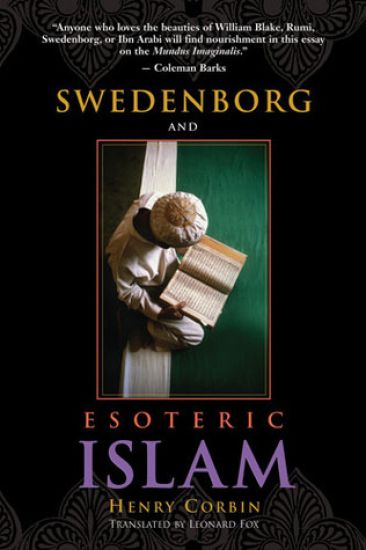
SWEDENBORG AND ESOTERIC ISLAM

SWEDENBORG AND ESOTERIC ISLAM

Henry Corbin

Swedenborg Foundation
1995
nidottu
The first English translation contains two essays by French Islamic scholar Henry Corbin: "Mundus Imaginalis, or the Imaginary and the Imaginal" and "Comparative Spiritual Hermeneutics." Corbin called Swedenborg "the prophet of the inter-nal sense of the Bible" and compared his biblical symbolism to the Quranic interpretations of the great Islamic mystics. This new edition now includes an index.
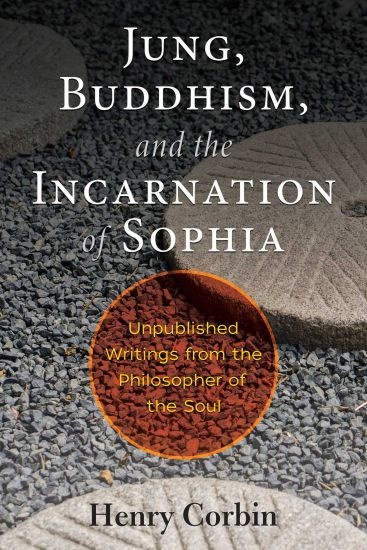
Jung, Buddhism, and the Incarnation of Sophia

Jung, Buddhism, and the Incarnation of Sophia

Henry Corbin

Inner Traditions Bear and Company
2019
pokkari
Examines the work of Carl Jung in relation to Eastern religion, the wisdom teachings of the Sophia, Sufi mysticism, and visionary spirituality Henry Corbin (1903-1978) was one of the most important French philosophers and orientalists of the 20th century. In this collection of previously unpublished writings, Corbin examines the work of Carl Jung in relationship to the deep spiritual traditions of Eastern religion, the esoteric wisdom teachings of Sophia, the transformational symbolism of alchemy, and Sufi mysticism. Looking at the many methods of inner exploration in the East, including the path of the Sufi and Taoist alchemy, Corbin reveals how the modern Western world does not have its own equivalent except in psychotherapy. Expanding Jung’s findings in light of his own studies of Gnostic and esoteric Islamic traditions, he offers a unique insight into the spiritual values underlying Jung’s psychoanalytic theories. Corbin analyzes Jung’s works on Buddhism, providing his own understanding of the tradition and its relationship to Sufi mysticism, and explores the role of the Gnostic Sophia with respect to Jung’s most controversial essay, “Answer to Job.” ? Explaining how Islamic fundamentalists have turned their back on the mystic traditions of Sufism, Corbin reveals how totalitarianism of all kinds threatens the transformative power of the imagination and the transcendent reality of the individual soul. Henry Corbin (1903-1978) was one of the most important French philosophers and orientalists of the 20th century. In this collection of previously unpublished writings, Corbin examines the work of Carl Jung in relationship to the deep spiritual traditions of Eastern religion, the esoteric wisdom teachings of Sophia, the transformational symbolism of alchemy, and Sufi mysticism. Looking at the many methods of inner exploration in the East, including the path of the Sufi and Taoist alchemy, Corbin reveals how the modern Western world does not have its own equivalent except in psychotherapy. Expanding Jung’s findings in light of his own studies of Gnostic and esoteric Islamic traditions, he offers a unique insight into the spiritual values underlying Jung’s psychoanalytic theories. Corbin analyzes Jung’s works on Buddhism, providing his own understanding of the tradition and its relationship to Sufi mysticism, and explores the role of the Gnostic Sophia with respect to Jung’s most controversial essay, “Answer to Job.” ? Explaining how Islamic fundamentalists have turned their back on the mystic traditions of Sufism, Corbin reveals how totalitarianism of all kinds threatens the transformative power of the imagination and the transcendent reality of the individual soul.