Kirjojen hintavertailu. Mukana 11 699 587 kirjaa ja 12 kauppaa.

Kirjahaku

Etsi kirjoja tekijän nimen, kirjan nimen tai ISBN:n perusteella.

10 kirjaa tekijältä Henry Glassie

The Stars of Ballymenone, New Edition

The Stars of Ballymenone, New Edition

Henry Glassie

Indiana University Press
2016
pokkari
In the time of the Troubles, when bombs blew through the night and soldiers prowled down the roads, Henry Glassie came to the Irish borderland to learn how country people endure through history. He settled into the farming community of Ballymenone, beside Lough Erne in the County Fermanagh, and listened to the old people. For a decade he heard and recorded the stories and songs in which they outlined their culture, recounted their history, and pictured their world. In their view, their world was one of love, defeat, and uncertainty, demanding the virtues of endurance: faith, bravery, and wit. Glassie's task in this book is to set the scene, to sketch the backdrop and clear the stage, so that Hugh Nolan and Michael Boyle, Peter Flanagan, Ellen Cutler, and their neighbors can tell their own tale, which explains their conditions and converts them into a tragedy of conflict and a comedy of the absurd. It gathers the saints and warriors, and celebrates the stars whose wit enabled endurance in days of violence and deprivation. With patience and respect, Glassie describes life in a time and a place exactly like no other, and yet Ballymenone is like a thousand other places where people work on the land during the day and tell their own tales at night, forgotten, while the men of power fill the newspapers and history books by sending poor boys out to be killed. The Stars of Ballymenone is an integrated analysis of the complete repertory of verbal art from a rural community where storytelling and singing of quality remained a part of daily life.
Daniel Johnston

Daniel Johnston

Henry Glassie

Indiana University Press
2020
pokkari
DANIEL JOHNSTON, raised on a farm in Randolph County, returned from Thailand with a new way to make monumental pots. Back home in North Carolina, he built a log shop and a whale of a kiln for wood-firing. Then he set out to create beautiful pots, grand in scale, graceful in form, and burned bright in a blend of ash and salt. With mastery achieved and apprentices to teach, Daniel Johnston turned his brain to massive installations.First, he made a hundred large jars and lined them along the rough road that runs past his shop and kiln. Next, he arranged curving clusters of big pots inside pine frames, slatted like corn cribs, to separate them from the slick interiors of four fine galleries in succession. Then, in concluding the second phase of his professional career, Daniel Johnston built an open-air installation on the grounds around the North Carolina Museum of Art, where 178 handmade, wood-fired columns march across a slope in a straight line, 350 feet in length, that dips and lifts with the heave while the tops of the pots maintain a level horizon.In 2000, when he was still Mark Hewitt's apprentice, Daniel Johnston met Henry Glassie, who has done fieldwork on ceramic traditions in the United States, Brazil, Italy, Turkey, Bangladesh, China, and Japan. Over the years, during a steady stream of intimate interviews, Glassie gathered the understanding that enabled him to compose this portrait of Daniel Johnston, a young artist who makes great pots in the eastern Piedmont of North Carolina.
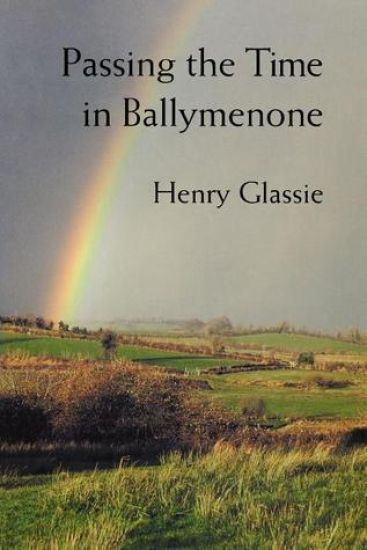
Passing the Time in Ballymenone

Passing the Time in Ballymenone

Henry Glassie

Indiana University Press
1995
pokkari
"This is an extraordinary book." —Progress in Human Geography ". . . fresh and fascinating." —Come-All-Ye " . . . an extraordinarily rich and rewarding book. . . . it is about the effort of one man to find for himself and us the life's breath of the people of Ballymenone. . . . It is certainly a remarkable tour de force." —Emmet Larkin, New York Times Book Review The life and art, the folklore, history, and common work of a rural community in Northern Ireland—through the eyes and pen of gifted folklorist Henry Glassie. It is a classic in the fullest sense, reaching beyond folklore to all of humanity.
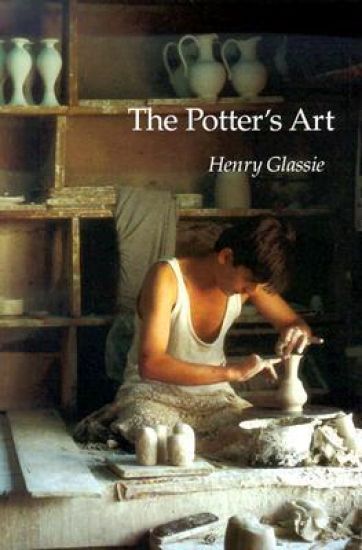
The Potter's Art

The Potter's Art

Henry Glassie

Indiana University Press
2000
pokkari
"Coming into being, the work of art, this very pot, creates relations—relations between nature and culture, between the individual and society, between utility and beauty. Governed by desire, the artist's work answers questions of value. Is nature favored, or culture? Are individual needs or social needs more important? Do utilitarian or aesthetic concerns dominate in the transformation of nature?" —from the Introduction The Potter's Art discusses and illustrates the work of modern masters of traditional ceramics from Bangladesh, Sweden, various parts of the United States, Turkey, and Japan. It will appeal to anyone interested in pottery and the study of folklore and folk art. Henry Glassie is College Professor of Folklore and Co-director of Turkish Studies at Indiana University. He has been a Guggenheim Fellow and a Fellow of the National Humanities Institute; he has also served as President of the Vernacular Architecture Forum and of the American Folklore Society. Material Culture—Henry Glassie, George Jevremovic, and William T. Sumner, editors (Note: there is an accent egue on the c Jevremovic) Contents: The Potter's Art Bangladesh Sweden Georgia Acoma Turkey Japan Hagi Work in the Clay Acknowledgments Notes Bibliography Index
All Silver and No Brass

All Silver and No Brass

Henry Glassie

Indiana University Press
1983
sidottu
Irish Christmas mumming, the subject of this carefully researched and beautifully written book, is approached in Part I through the recollections of four old people of the hamlet of Ballymenone who recall the mumming from their youth. In Part II, the author examines the form and function of the mummers' play, showing that—contrary to the theories of some folklorists—it is not a truncated fragment of a much larger whole but a complete "presentational" statement. He shows how the mummers' play functioned as a means of drawing the community closer together and as an expression of dangers and hopes in the potentially bitter Ulster situation. Glassie's study treats fully the social and cultural context of the mummers' play. It is a superb study, of obvious value to folklorists, but also of interest to literary critics, literary historians, anthropologists, and others.
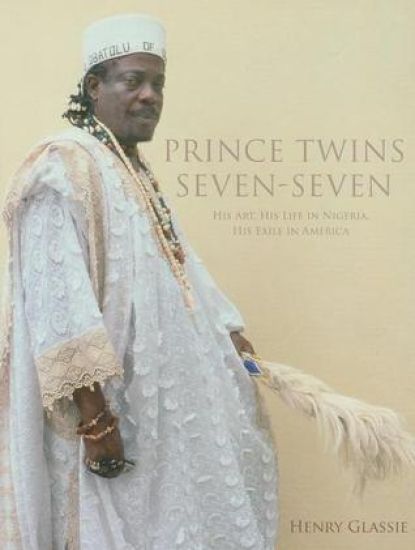
Prince Twins Seven-Seven

Prince Twins Seven-Seven

Henry Glassie

Indiana University Press
2010
sidottu
Prince Twins Seven-Seven (1944-2011) was not only one of Africa's most famous contemporary artists and the leader of the Osogbo School of Nigerian artists, he was known as the modern master of the Yoruba tradition in art. His work has been exhibited on every continent, is collected by major museums throughout the world, and in 2005, Prince was named UNESCO Artist for Peace. Henry Glassie blends life and art to create a vivid portrait of an extraordinary artist. This lavishly illustrated book, part biography and part artist's catalog, addresses tradition and innovation in Prince's art, the development of his personal style, the force of the supernatural in Nigerian life, and the hard times of the immigrant artist in the United States.
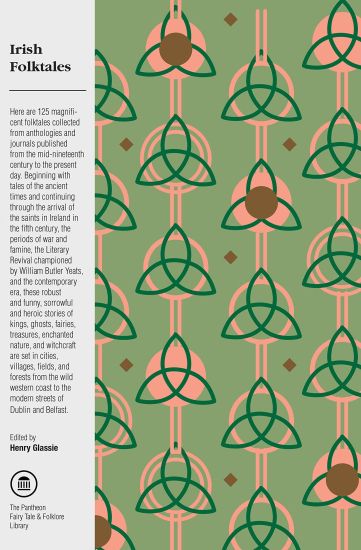
Irish Folktales

Irish Folktales

Henry Glassie

Random House Inc
1997
pokkari
Robust and funny, sorrowful and heroic, this collection of 125 lively tales tells the story of Ireland. Spanning the centuries from the first wars of the ancient Irish kings through the Celtic Renaissance of Yeats to our own time, they are set in cities, villages, fields and forestsfrom the wild Gaelic western coast to the modern streets of Dublin and Belfast. "Delightful and informative, comfortable and full of wit and fancy. It reminds us why the Irish have been known as great storytellers for a millennium."-- Roger D. Abrahams, editor of African Folktales"This latest volume of an already distinguished series maintains and even exceeds the high standards of the previous ones. The tales reveal the deep humanity of the Irish people; the commentary and notes reveal the humanity of Glassie. Very highly recommended."-- Library Journal"A marvelous assortment selected from published (but often out-of-print) collections by the likes of pioneer collectors Lady Wilde, Robin Flower, and Jeremiah Curtin, and from unpublished manuscripts in private and state-owned archives."-- Los Angeles Times Book Review"Vivid and surprising .... The Irish gift for prolixity and verbal magic glistens throughout Glassie's collection."-- Chicago Magazine
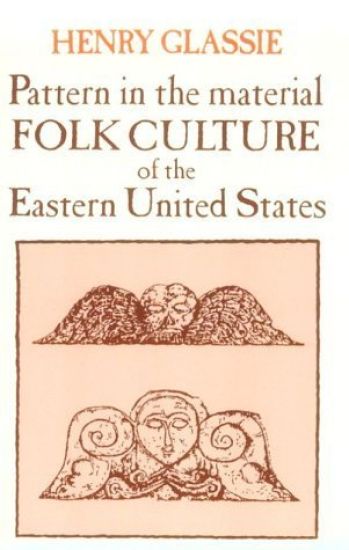
Pattern in the Material Folk Culture of the Eastern United States

Pattern in the Material Folk Culture of the Eastern United States

Henry Glassie

University of Pennsylvania Press
1971
pokkari
What is folk culture? What distinguishes true folk creations from the cultural hybrids of commerce and popular innovation? To clarify this muddled situation and to provide clear standards and visual examples for the study and appreciation of a broad range of objects, Henry Glassie has written this detailed examination of material folk culture in the United States. He isolates American material culture-that segment of our culture that embodies the people's plans, methods, and reasons for producing things that can be seen and touched-and discusses methods for determining whether an object is truly folk-as opposed, say, to merely popular-by examining its form, construction, and use. The book represents the first attempt to compare different kinds of material folk culture, including architecture, tools, and cookery, to detect common patterns and, in doing so, challenges conventional views of both folk culture and American culture.
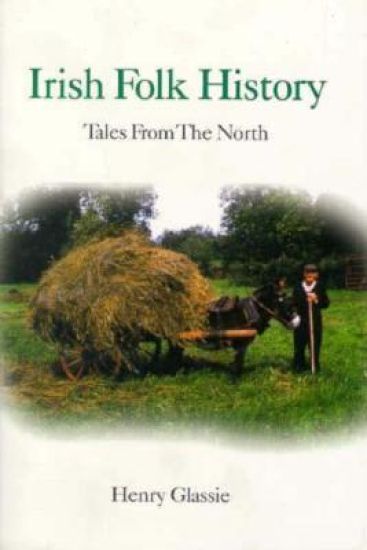
Irish Folk History

Irish Folk History

Henry Glassie

University of Pennsylvania Press
1982
pokkari
Made of the words of the people who live today in the beautiful, embattled countryside of Ulster, Irish Folk History is, in essence, the people's own statement of their past. In story, song, and spontaneous essay, these texts, selected from Passing the Time in Ballymenone, tell of the coming of Christianity, of endless war, of the hardships and delights of rural life. During a time of trouble, Henry Glassie came into a community of active story-tellers in County Fermanagh in Northern Ireland, and in this book he sets their voices-their chuckles, whispers, and anger-before us. The words of Hugh Nolan, Michael Boyle, of Peter Flanagan, Hugh Patrick Owens, and their neighbors, echo from the page to present a tale that is at once the story of their tiny community and the story of all of Ireland.
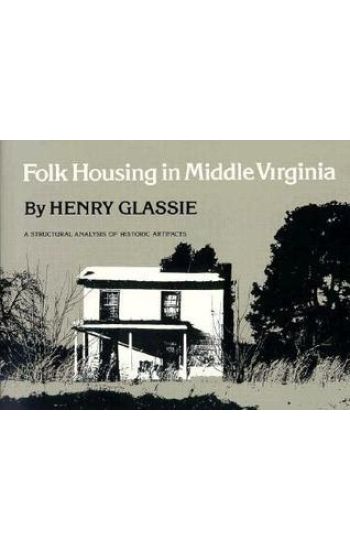
Folk Housing Middle Virginia

Folk Housing Middle Virginia

Henry Glassie

University of Tennessee Press
1976
nidottu
In this fascinating analysis of eighteenth-century vernacular houses of Middle Virginia, Henry Glassie presents a revolutionary and carefully constructed methodology for looking at houses and interpreting from them the people who built and used them. Glassie believes that all relevant historical evidence – unwritten as well as written – must be taken into account before historical truth can be found. He in convinced that any study of man’s past must make use of nonverbal and verbal evidence, since written history – the story of man as recorded by the intellectual elite – does not tell us much about the everyday life, thoughts, and fears of the ordinary people of the past. Such people have always been in the majority, however, and a way has to be found to include them in any valid history. In Folk Housing in Middle Virginia Glassie admirably sets forth such a way.The people who lived in Middle Virginia in the eighteenth century are almost unknown to history because so little has been written about them. After Glassie selected the area – roughly Goochland and Louisa counties – for study, he selected a representative part of the countryside, recorded all the older houses there, developed a transformational grammar of traditional house designs, and examined the area’s architectural stability and change. Comparing the houses with written accounts of the period, he found that the houses became more formal and lee related to their environment at the same time as the areas established political, economic, and religious institutions were disintegrating. It is as though the builders of the houses were deliberately trying to impose order on the surrounding chaotic world. Previous orthodox historical interpretations of the period have failed to note this. Glassie has provided new insights into the intellectual and social currents of the period, and at that time has rescued a heretofore little-known people from historiographical oblivion. Combining a fresh, perceptive approach with a broad interdisciplinary body of knowledge, ha has made an invaluable breakthrough in showing the way to understand the people of history who have left their material things as their only legacy.Henry Glassie is College Professor of Folklore at Indiana University. He is the author of Pattern in the Material Folk Culture of the Eastern United States, passing the Time in Ballymenone, Irish Folktales, and The Spirit of Folk Art. He has served as president of the Vernacular Architecture Forum and the American Folklore Society.