Kirjojen hintavertailu. Mukana 11 244 527 kirjaa ja 12 kauppaa.

Kirjahaku

Etsi kirjoja tekijän nimen, kirjan nimen tai ISBN:n perusteella.

6 kirjaa tekijältä Henry Spiller

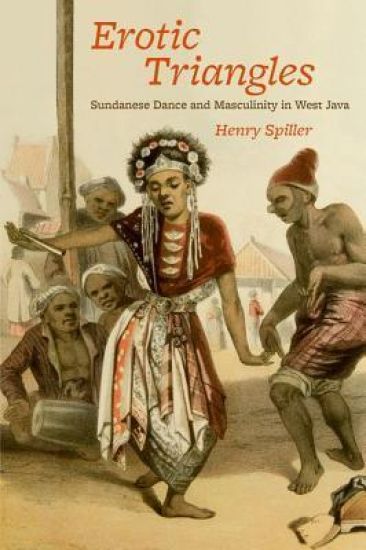
Erotic Triangles

Erotic Triangles

Henry Spiller

University of Chicago Press
2010
sidottu
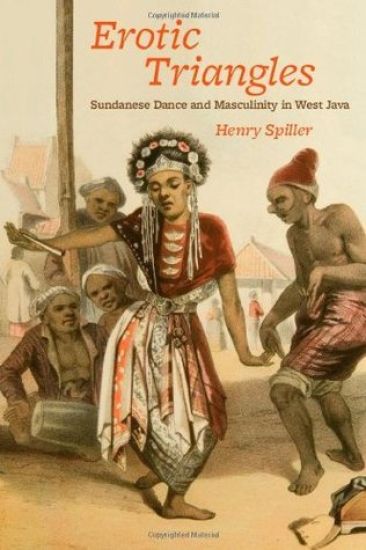
In West Java, Indonesia, all it takes is a woman's voice and a drumbeat to make a man get up and dance. Every day, men there - be they students, pedicab drivers, civil servants, or businessmen - breach ordinary standards of decorum and succumb to the rhythm at village ceremonies, weddings, political rallies, and nightclubs. The music the men dance to varies from traditional gong ensembles to the contemporary pop known as dangdut, but they consistently dance with great enthusiasm. In "Erotic Triangles", Henry Spiller draws on decades of ethnographic research to explore the reasons behind this phenomenon, arguing that Sundanese men use dance to explore and enact contradictions in their gender identities. Framing the three crucial elements of Sundanese dance - the female entertainer, the drumming, and men's sense of freedom - as a triangle, Spiller connects them to a range of other theoretical perspectives, drawing on thinkers from Eve Kosofsky Sedgwick, Levi-Strauss, and Freud to Euclid. By granting men permission to literally perform their masculinity, Spiller ultimately concludes, dance provides a crucial space for both reinforcing and resisting orthodox gender ideologies.
Erotic Triangles

Erotic Triangles

Henry Spiller

University of Chicago Press
2010
nidottu
In West Java, Indonesia, all it takes is a woman's voice and a drumbeat to make a man get up and dance. Every day, men there - be they students, pedicab drivers, civil servants, or businessmen - breach ordinary standards of decorum and succumb to the rhythm at village ceremonies, weddings, political rallies, and nightclubs. The music the men dance to varies from traditional gong ensembles to the contemporary pop known as dangdut, but they consistently dance with great enthusiasm. In "Erotic Triangles", Henry Spiller draws on decades of ethnographic research to explore the reasons behind this phenomenon, arguing that Sundanese men use dance to explore and enact contradictions in their gender identities. Framing the three crucial elements of Sundanese dance - the female entertainer, the drumming, and men's sense of freedom - as a triangle, Spiller connects them to a range of other theoretical perspectives, drawing on thinkers from Eve Kosofsky Sedgwick, Levi-Strauss, and Freud to Euclid. By granting men permission to literally perform their masculinity, Spiller ultimately concludes, dance provides a crucial space for both reinforcing and resisting orthodox gender ideologies.
Javaphilia

Javaphilia

Henry Spiller

University of Hawai'i Press
2015
sidottu
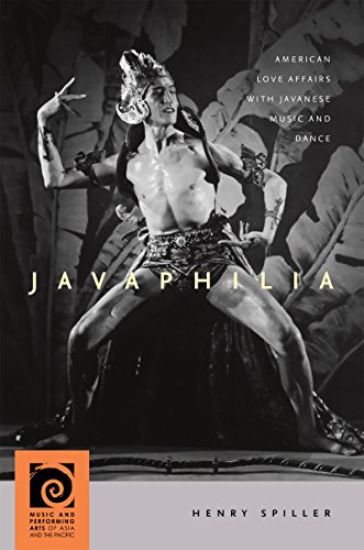
Fragrant tropical fl owers, opulent batik fabrics, magnificent bronze gamelanorchestras, and, of course, aromatic coff ee. Such are the exotic images of Java, Indonesia’s most densely populated island, that have hovered at the periphery of North American imaginations for generations. Through close readings of the careers of four “javaphiles” - individuals who embraced Javanese performing arts in their own quests for a sense of belonging - Javaphilia: American Love Affairs with Javanese Music and Dance explores a century of American representations of Javanese performing arts by North Americans. While other Asian cultures made direct impressions on Americans by virtue of fi rsthand contacts through immigration, trade, and war, the distance between Java and America, and the vagueness of Americans’ imagery, enabled a few disenfranchised musicians and dancers to fashion alternative identities through bold and idiosyncratic representations of Javanese music and dance.Javaphilia’s main subjects—Canadian-born singer Eva Gauthier (1885–1958), dancer/painter Hubert Stowitts (1892–1953), ethnomusicologist Mantle Hood (1918–2005), and composer Lou Harrison (1917–2003)—all felt marginalized by the mainstream of Western society: Gauthier by her lukewarm reception as an operatic mezzo-soprano in Europe, Stowitts by his homosexuality, Hood by conflicting interests in spirituality and scientifi c method, and Harrison by his predilection for prettiness in a musical milieu that valued more anxious expressions. All four parlayed their own direct experiences of Java into a defining essence for their own characters. By identifying aspects of Javanese music anddance that were compatible with their own tendencies, these individuals could literally perform unconventional—yet coherent—identities based in Javanese music and dance. Although they purported to represent Java to their fellow North Americans, they were in fact simply representing themselves.In addition to probing the fascinating details of these javaphiles’ lives, Javaphilia presents a novel analysis of North America’s first significant encounters with Javanese performing arts at the 1893 World’s Columbian Exposition in Chicago. An account of the First International Gamelan Festival, in Vancouver, BC (at Expo 86), almost a century later, bookends the epoch that is the focus of Javaphilia and sets the stage for a meditation on North Americans’ ongoing relationships with the music and dance of Java.
Javaphilia

Javaphilia

Henry Spiller

University of Hawai'i Press
2017
nidottu
Fragrant tropical flowers, opulent batik fabrics, magnificent bronze gamelan orchestras, and, of course, aromatic coffee. Such are the exotic images of Java, Indonesia's most densely populated island, that have hovered at the periphery of North American imaginations for generations. Through close readings of the careers of four ""javaphiles"" —individuals who embraced Javanese performing arts in their own quests for a sense of belonging— Javaphilia: American Love Affairs with Javanese Music and Dance explores a century of American representations of Javanese performing arts by North Americans. While other Asian cultures made direct impressions on Americans by virtue of firsthand contacts through immigration, trade, and war, the distance between Java and America, and the vagueness of Americans' imagery, enabled a few disenfranchised musicians and dancers to fashion alternative identities through bold and idiosyncratic representations of Javanese music and dance.Javaphilia's main subjects—Canadian-born singer Eva Gauthier (1885–1958), dancer/painter Hubert Stowitts (1892–1953), ethnomusicologist Mantle Hood (1918–2005), and composer Lou Harrison (1917–2003)—all felt marginalized by the mainstream of Western society: Gauthier by her lukewarm reception as an operatic mezzo-soprano in Europe, Stowitts by his homosexuality, Hood by conflicting interests in spirituality and scientific method, and Harrison by his predilection for prettiness in a musical milieu that valued more anxious expressions. All four parlayed their own direct experiences of Java into a defining essence for their own characters. By identifying aspects of Javanese music and dance that were compatible with their own tendencies, these individuals could literally perform unconventional—yet coherent—identities based in Javanese music and dance. Although they purported to represent Java to their fellow North Americans, they were in fact simply representing themselves.In addition to probing the fascinating details of these javaphiles' lives, Javaphilia presents a novel analysis of North America's first significant encounters with Javanese performing arts at the 1893 World's Columbian Exposition in Chicago. An account of the First International Gamelan Festival, in Vancouver, BC (at Expo 86), almost a century later, bookends the epoch that is the focus of Javaphilia and sets the stage for a meditation on North Americans' ongoing relationships with the music and dance of Java.
Archaic Instruments in Modern West Java: Bamboo Murmurs
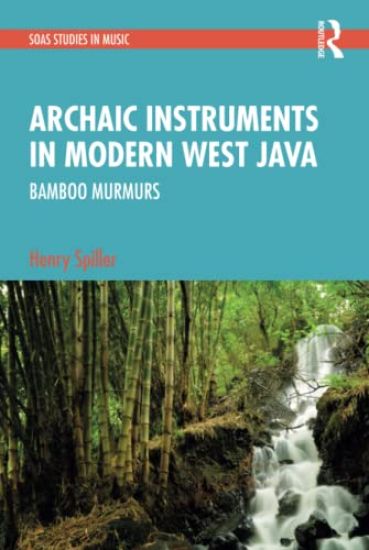
Archaic Instruments in Modern West Java: Bamboo Murmurs explores how current residents of Bandung, Indonesia, have (re-)adopted bamboo musical instruments to forge meaningful bridges between their past and present—between traditional and modern values. Although it focuses specifically on Bandung, the cosmopolitan capital city of West Java, the book grapples with ongoing issues of global significance, including musical environmentalism, heavy metal music, the effects of first-world hegemonies on developing countries, and cultural “authenticity.” Bamboo music's association with the Sundanese landscape, old agricultural ceremonies, and participatory music making, as well as its adaptability to modern society, make it a fertile site for an ecomusicological study.
Archaic Instruments in Modern West Java: Bamboo Murmurs
Archaic Instruments in Modern West Java: Bamboo Murmurs explores how current residents of Bandung, Indonesia, have (re-)adopted bamboo musical instruments to forge meaningful bridges between their past and present—between traditional and modern values. Although it focuses specifically on Bandung, the cosmopolitan capital city of West Java, the book grapples with ongoing issues of global significance, including musical environmentalism, heavy metal music, the effects of first-world hegemonies on developing countries, and cultural “authenticity.” Bamboo music's association with the Sundanese landscape, old agricultural ceremonies, and participatory music making, as well as its adaptability to modern society, make it a fertile site for an ecomusicological study.