Kirjojen hintavertailu. Mukana 11 627 630 kirjaa ja 12 kauppaa.

Kirjahaku

Etsi kirjoja tekijän nimen, kirjan nimen tai ISBN:n perusteella.

5 kirjaa tekijältä Henry Wiencek

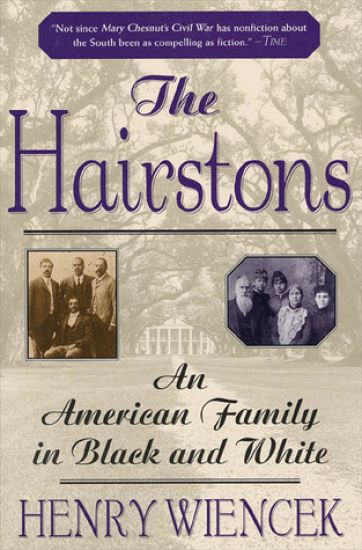
The Hairstons: An American Family in Black and White
Winner of the National Book Critics Circle Award The Hairstons is the extraordinary story of the largest family in America, the Hairston clan. With several thousand black and white members, the Hairstons share a complex and compelling history: divided in the time of slavery, they have come to embrace their past as one family. The black family's story is most exceptional. It is the account of the rise of a remarkable people--the children, grandchildren, and great-grandchildren of slaves--who took their rightful place in mainstream America. In contrast, it has been the fate of the white family--once one of the wealthiest in America--to endure the decline and fall of the Old South, and to become an apparent metaphor for that demise. But the family's fall from grace is only part of the tale. Beneath the surface lay a hidden history--the history of slavery's curse and how that curse plagued slaveholders for generations. For the past seven years, journalist Wiencek has listened raptly to the tales of hundreds of Hairston relatives, including the aging scions of both the white and black clans. He has crisscrossed the old plantation country in Virginia, North Carolina, and Mississippi to seek out the descendants of slaves. Visiting family reunions, interviewing family members, and exploring old plantations, Wiencek combs the far-reaching branches of the Hairston family tree to gather anecdotes from members about their ancestors and piece together a family history that involves the experiences of both plantation owners and their slaves. He expertly weaves the Hairstons' stories from all sides of historical events like slave emancipation, Reconstruction, school segregation, and lynching. Paradoxically, Wiencek demonstrates that these families found that the way to come to terms with the past was to embrace it, and this lyrical work, a parable of redemption, may in the end serve as a vital contribution to our nation's attempt to undo the twisted historical legacy of the past.
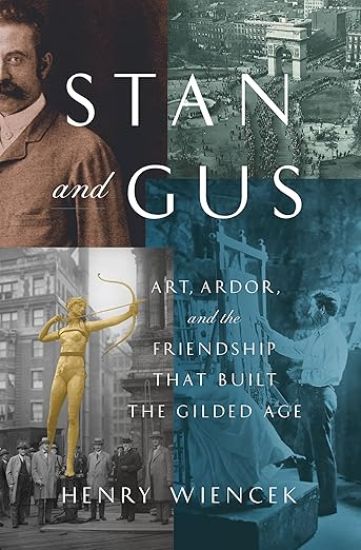
Stan and Gus

Stan and Gus

Henry Wiencek

FARRAR, STRAUS GIROUX INC
2025
sidottu
Stanford White was a louche man-about-town and a canny cultural entrepreneur - the creator of landmark buildings that elevated American architecture to new heights. Augustus Saint-Gaudens was the son of an immigrant shoemaker, a moody introvert, and a committed procrastinator whose painstaking work brought emotional depth to American sculpture. They met when Stan was walking down the street and heard Gus whistling Mozart in his studio. They pursued their own careers in Italy and France, then came together again in New York, where they maintained an intimate friendship and partnership that defined the art of the Gilded Age. Over the course of decades, White would help sustain his friend's troubled spirits and vouch for Saint-Gaudens when he failed to complete projects. Meanwhile, Saint-Gaudens would challenge White to take his artistic gifts seriously - and so it went amid brilliant commissions and sordid debaucheries all the way to White’s sensational murder by an enraged husband in 1906. In Stan and Gus, the acclaimed historian Henry Wiencek sets the two men’s relationship within the larger story of the American Renaissance, where millionaires’ commissions and delusions of grandeur collided with secret upper-class clubs, new aesthetic ideas, and two ambitious young men to yield work of lasting beauty.
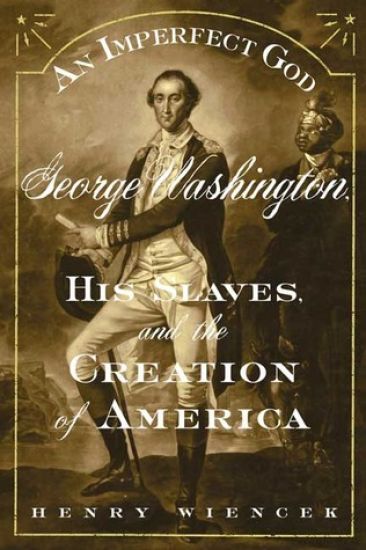
An Imperfect God: George Washington, His Slaves, and the Creation of America
An Imperfect God is a major new biography of Washington, and the first to explore his engagement with American slavery When George Washington wrote his will, he made the startling decision to set his slaves free; earlier he had said that holding slaves was his "only unavoidable subject of regret." In this groundbreaking work, Henry Wiencek explores the founding father's engagement with slavery at every stage of his life--as a Virginia planter, soldier, politician, president and statesman. Washington was born and raised among blacks and mixed-race people; he and his wife had blood ties to the slave community. Yet as a young man he bought and sold slaves without scruple, even raffled off children to collect debts (an incident ignored by earlier biographers). Then, on the Revolutionary battlefields where he commanded both black and white troops, Washington's attitudes began to change. He and the other framers enshrined slavery in the Constitution, but, Wiencek shows, even before he became president Washington had begun to see the system's evil. Wiencek's revelatory narrative, based on a meticulous examination of private papers, court records, and the voluminous Washington archives, documents for the first time the moral transformation culminating in Washington's determination to emancipate his slaves. He acted too late to keep the new republic from perpetuating slavery, but his repentance was genuine. And it was perhaps related to the possibility--as the oral history of Mount Vernon's slave descendants has long asserted--that a slave named West Ford was the son of George and a woman named Venus; Wiencek has new evidence that this could indeed have been true. George Washington's heroic stature as Father of Our Country is not diminished in this superb, nuanced portrait: now we see Washington in full as a man of his time and ahead of his time.
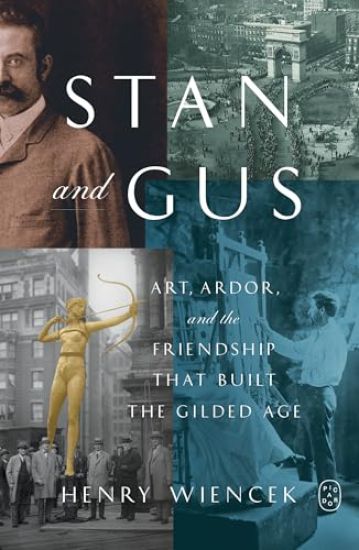
Stan and Gus: Art, Ardor, and the Friendship That Built the Gilded Age
The celebrated architect Stanford White was a louche man-about-town and a canny cultural entrepreneur, the creator of landmarks that raised the stature of the American built environment. Augustus Saint-Gaudens, a sculptor and the son of an immigrant shoemaker, was a moody introvert and a committed procrastinator whose painstaking work brought emotional depth to American statuary. Over years of acquaintance, their relationship evolved into a partnership that defined the art of the Gilded Age. In Stan and Gus, the acclaimed historian Henry Wiencek tells the story of a fruitful, complicated relationship. After pursuing their own careers in Italy and France, the two men met again back home, where they forged era-defining monuments, including White's Washington Square Arch and Park Avenue Armory in Manhattan and Saint-Gaudens's memorials to Colonel Robert Gould Shaw and Clover Adams in Boston and Washington, D.C., respectively. Over the course of decades, White helped sustain his friend's troubled spirits and protected Saint-Gaudens from impatient clients when he failed to complete projects on time. Meanwhile, Saint-Gaudens challenged White to take his artistic gifts seriously. But alongside the brilliant commissions were sordid debaucheries--and White's sensational murder in 1906. Throughout, Wiencek sets White and Saint-Gaudens within the larger story of the era known as the American Renaissance, when a new upper class sought to fortify its ascendancy, and its aspirations and delusions of grandeur collided with new aesthetic ideas and two ambitious young men to yield work of lasting beauty.
The Moodys of Galveston and Their Mansion

The Moodys of Galveston and Their Mansion

Henry Wiencek

Texas A M University Press
2010
nidottu
In 1900, just a few months after the deadly hurricane of September, W. L. Moody Jr. and his family moved into the four-story mansion at the corner of Broadway and Twenty-sixth Street in Galveston. For the next eight decades, the Moody family occupied the 28,000-square-foot home: raising a family, creating memories, building business empires, and contributing their considerable wealth and influence for the betterment of their beloved city. In 1983, Hurricane Alicia damaged the mansion, and Mary Moody Northen, eldest child of W. L. Moody Jr., moved out so a major restoration could begin. When the mansion opened to the public as a museum, education center, and location for community gatherings in 1991, it had been restored to its original grandeur. The Moody Foundation then commissioned award-winning author Henry Wiencek to write a history of the Moodys of Galveston and their celebrated home. Robert L. Moody Sr., grandson of W. L. Moody Jr. and nephew of Mary Moody Northen, contributes a foreword, giving a brief introduction and personal tone to the book, which also features fifteen color photographs of the Moodys and their home. An epilogue by E. Douglas McLeod summarizes the family's accomplishments and developments associated with the mansion since Northen's death in 1986. The Moodys of Galveston and Their Mansion is a must-read for Galvestonians, for the thousands of visitors who tour the mansion each year, and for anyone interested in the captivating tale of this influential and generous family and their magnificent house.