Kirjojen hintavertailu. Mukana 12 083 983 kirjaa ja 12 kauppaa.

Kirjahaku

Etsi kirjoja tekijän nimen, kirjan nimen tai ISBN:n perusteella.

35 kirjaa tekijältä Henry Williamson

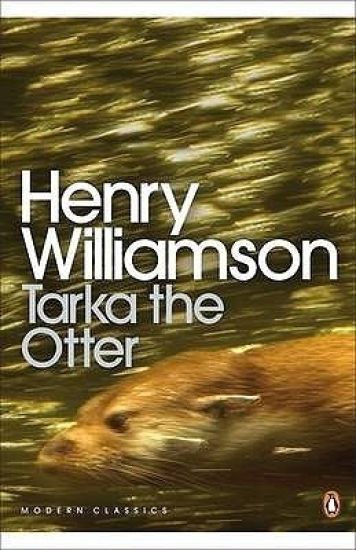
Tarka the Otter

Tarka the Otter

Henry Williamson

Penguin Classics
2009
pokkari
In the wild there is no safety. The otter cub Tarka grows up with his mother and sisters, learning to swim, catch fish - and to fear the cry of the hunter and the flash of the metal trap. Soon he must fend for himself, travelling through rivers, woods, moors, ponds and out to sea, sometimes with the female otters White-tip and Greymuzzle, always on the run. Eventually, chased by a pack of hounds, he meets his nemesis, the fearsome dog Deadlock, and must fight for his life.
Tarka the Otter

Tarka the Otter

Henry Williamson

Puffin
2014
pokkari
One of the best-loved animal stories of our time."Twilight over meadow and water, the eve-star shining above the hill, and Old Nog the heron crying kra-a-ark! as his slow dark wings carried him down to the estuary."The classic story of an otter living in the Devonshire countryside which captures the feel of life in the wild as seen through the otter's own eyes.Tarka is born in Owlery Holt, near Canal Bridge on the River Torridge, where he grows up with his mother and sisters, learning to swim and catch fish, and to beware the hunters' cry. His life is one of adventure and play, but soon he must fend for himself, travelling along streams and rivers to the open sea, sometimes with female otters White-tip and Greymuzzle. Always on the run, Tarka has many close shaves until he finally meets his nemesis, the fearsome hound Deadlock.Henry William Williamson was born in 1895 in Brockley, south-east London. The then semi-rural location provided easy access to the countryside, and he developed a deep love of nature throughout his childhood. He became a prolific author known for his natural and social history novels. He won the Hawthornden Prize for literatrure in 1928 for Tarka the Otter.Also available in A Puffin Book: GOODNIGHT MISTER TOM and BACK HOME by Michelle Magorian CHARLOTTE'S WEB, STUART LITTLE and THE TRUMPET OF THE SWAN by E. B. White THE BORROWERS by Mary NortonSTIG OF THE DUMP by Clive KingROLL OF THUNDER, HEAR MY CRY by Mildred D. TaylorA DOG SO SMALL by Philippa PearceGOBBOLINO by Ursula Moray WilliamsMRS FRISBY AND THE RATS OF NIMH by Richard C O'BrienA WRINKLE IN TIME by Madeleine L'EngleTHE CAY by Theodore TaylorWATERSHIP DOWN by Richard AdamsSMITH by Leon GarfieldTHE NEVERENDING STORY by Michael EndeANNIE by Thomas MeehanTHE FAMILY FROM ONE END STREET by Eve Garnett
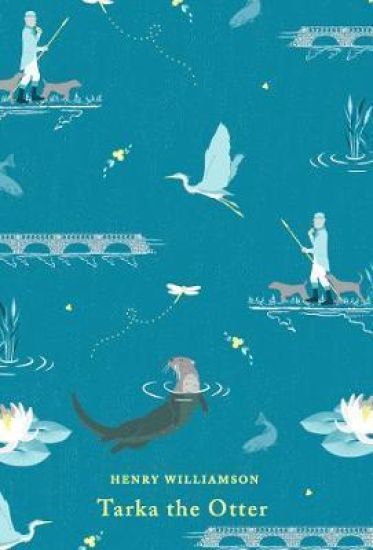
Tarka the Otter

Tarka the Otter

Henry Williamson

Puffin
2019
sidottu
"Twilight over meadow and water, the eve-star shining above the hill, and Old Nog the heron crying kra-a-ark! as his slow dark wings carried him down to the estuary."A beautiful hardback gift edition of one of the most famous animal stories in children's literature. TARKA THE OTTER is the classic story of an otter living in the Devonshire countryside which captures the feel of life in the wild as seen through the otter's own eyes. The story's atmosphere and detail make it easy to see why Tarka has become one of the best-loved creatures in world literature.Henry William Williamson was born in 1895 in Brockley, south-east London. The then semi-rural location provided easy access to the countryside, and he developed a deep love of nature throughout his childhood. He became a prolific author known for his natural and social history novels. He won the Hawthornden Prize for literatrure in 1928 for Tarka the Otter.
The Wet Flanders Plain

The Wet Flanders Plain

Henry Williamson

Faber Faber
2009
nidottu
The Wet Flanders Plain was first published in 1929 - also the year of, inter alia, Remarque's All Quiet on the Western Front, Graves's Goodbye to All That, and Hemingway's A Farewell to Arms. Henry Williamson's book stands alongside those works as a classic of the Great War. In 1928 Williamson revisited the battlefields of Flanders and Northern France in the company of a fellow veteran. He wanted to 'return to my old comrades... to the brown, the treeless, the flat and grave-set plain of Flanders - to the rolling, heat-miraged downlands of the Somme - for I am dead with them, and they live in me again.' He hoped to rid himself of the 'wraiths' of the war. Whether or not he succeeded, he produced an unforgettable testament. 'The Wet Flanders Plain emerges from the mass of War books as the most beautiful and the most terrible.' Outlook
The Beautiful Years

The Beautiful Years

Henry Williamson

Faber Faber
2010
nidottu
The Beautiful Years is a tender evocation of West Country childhood in the golden years before the First World War. It is also the first volume in Henry Williamson's tetralogy The Flax of Dream. All four volumes - The Beautiful Years, Dandelion Days, The Dream of Fair Women and The Pathway - are being reissued in Faber Finds, and together they make up the life story of Willie Maddison.The Flax of Dream is one of the major literary achievements of the twentieth century.
Dandelion Days

Dandelion Days

Henry Williamson

Faber Faber
2010
nidottu
Dandelion Days is the second novel in The Flax of Dream tetralogy describing the life of Willie Maddison. This volume continues the story of Willie's boyhood with escapades at school and idyllic adventures in the countryside. The moving, at times almost Arcadian account, of youth before the Great War is shattered at the end when we learn 10943 Private W. B. Maddison has enlisted and is serving in a territorial Infantry Battalion in the Ypres Salient.'Gets as near to the heart of a boy as anything I have read for many years. Willie Maddison is a person and a representative. His history is beautiful - and important.' The Observer Faber Finds is reissuing the four titles in The Flax of Dream sequence: The Beautiful Years, Dandelion Days, The Dream of Fair Women and The Pathway.
The Dream of Fair Women

The Dream of Fair Women

Henry Williamson

Faber Faber
2010
pokkari
This is the third novel in Henry Williamson's Flax of Dream sequence. Willie Maddison has returned from the Great War and chooses to live a recluse-like existence in a remote Devon cottage; he cares for injured animals and writes. This abruptly changes when Evelyn Fairfax enters his life. Their affair should have been therapeutic, helping to anaesthetize the horrors of war, but complications develop when Willie follows Evelyn back to Folkestone where she has a husband, a young daughter, many besotted admires, and a bad reputation.The four novels comprising the Flax of Dream sequence are: The Beautiful Years, Dandelion Days, The Dream of Fair Women and The Pathway. It has been said, 'together they must be regarded as one of the major works in English fiction of the day . . . in every respect a wonderful achievement.' Faber Finds is proud to be reissuing them.
The Pathway

The Pathway

Henry Williamson

Faber Faber
2010
pokkari
The Pathway is the fourth and concluding volume in Henry Williamson's Flax of Dream sequence.Willie Maddison fought in the First World War, and suffered fully its tragedies. Now he returns to his beloved Devon, to the wind-swept Taw estuary, with its swift alternation of sun and rain, its bird-filled saltmarshes and marram-covered sandhills. He comes here to live out, and try to express in writing, insights that have taken shape from his boyhood and wartime experience.The Flax of Dream is a masterpiece. The four novels that comprise it have been reissued in Faber Finds: The Beautiful Years, Dandelion Days, The Dream of Fair Women and The Pathway.
The Dark Lantern

The Dark Lantern

Henry Williamson

Faber Faber
2010
nidottu
The Dark Lantern (1951) was the first of Henry Williamson's fifteen-volume A Chronicle of Ancient Sunlight spanning the years from the late Victorian period to the Second World War. In it we meet Richard Maddison, a countryman working in London as a City clerk, struggling to make do on a few shillings a week. He falls for Hetty Turner, youngest daughter of a prosperous merchant, but her father rates Richard an unsuitable suitor. 'There is magic in Henry Williamson's novel . . . which raises it right out of the family saga class. The magic is of the steam train age of South London which is so lovingly described.' John Betjeman, Daily Telegraph 'Williamson's style is romantic, though rarely sentimental, and his sensuous response to nature is fresh and surprising.' Anthony Burgess, Ninety-Nine Novels: The Best in English since 1939
Donkey Boy

Donkey Boy

Henry Williamson

Faber Faber
2010
nidottu
Donkey Boy (1952) was the second entry in Henry Williamson's fifteen-volume A Chronicle of Ancient Sunlight spanning the years from the late Victorian period to the Second World War. It tells of Richard Maddison's first-born Phillip, nicknamed 'donkey boy' because his life was saved in infancy by being fed with ass's milk. The boy grows up in the Edwardian era, something of a misfit, at odds with his father. 'With extraordinary skill and precision [Williamson] rebuilds the scenery of the past... [he] seems to be engaged in a thriller whose instalments can be relied on to animate a whole section of social history.' Spectator 'Williamson's style is romantic, though rarely sentimental, and his sensuous response to nature is fresh and surprising.' Anthony Burgess, Ninety-Nine Novels: The Best in English since 1939
Young Phillip Maddison

Young Phillip Maddison

Henry Williamson

Faber Faber
2010
nidottu
Young Phillip Maddison (1953) was the third entry in Henry Williamson's fifteen-volume A Chronicle of Ancient Sunlight spanning the years from the late Victorian period to the Second World War. It carries forward the story of Phillip as he grows towards manhood in the years immediately preceding the Great War. Unpredictable and wayward, Phillip nevertheless possesses a keen love of nature, which he indulges as best he can in the nearby countryside. But as his schooldays draw to a close he seems destined to follow his father by working in the Moon Fire Office, in the smoky heart of the greatest metropolis the world has ever seen.'Williamson's style is romantic, though rarely sentimental, and his sensuous response to nature is fresh and surprising.' Anthony Burgess, Ninety-Nine Novels: The Best in English since 1939
How Dear Is Life

How Dear Is Life

Henry Williamson

Faber Faber
2010
nidottu
How Dear is Life (1954) was the fourth entry in Henry Williamson's fifteen-volume A Chronicle of Ancient Sunlight spanning the years from the late Victorian period to the Second World War. It finds Phillip Maddison in the portentous months leading to the outbreak of war in 1914.Now a clerk in the Moon Fire Office, Phillip decides to join the territorials - attracted by the money, the camp near the sea, and the prospect of a new suit of clothes. As a glorious summer slips away war seems unreal; but the old world is in peril, and before long the British Expeditionary Force is setting sail for France. 'Williamson's style is romantic, though rarely sentimental, and his sensuous response to nature is fresh and surprising.' Anthony Burgess, Ninety-Nine Novels: The Best in English since 1939
A Fox Under My Cloak

A Fox Under My Cloak

Henry Williamson

Faber Faber
2010
nidottu
A Fox under My Cloak (1954) was the fifth entry in Henry Williamson's fifteen-volume A Chronicle of Ancient Sunlight spanning the years from the late Victorian period to the Second World War. It follows Phillip Maddison into the Great War, surviving in the face of terror, from the famous Christmas Truce of 1914 to the gas attacks of the Battle of Loos the following year. While home in England on sick leave Phillip obtains his commission into a fashionable regiment in which his social inadequacies make him the butt of his fellow officers' scorn. Yet, alone among them, Phillip has tasted the bleak reality of life, and death, on the Western Front. 'Williamson's style is romantic, though rarely sentimental, and his sensuous response to nature is fresh and surprising.' Anthony Burgess, Ninety-Nine Novels: The Best in English since 1939
The Golden Virgin

The Golden Virgin

Henry Williamson

Faber Faber
2010
nidottu
The Golden Virgin (1957) was the sixth entry in Henry Williamson's fifteen-volume A Chronicle of Ancient Sunlight spanning the years from the late Victorian period to the Second World War. Its action unfolds in 1916, the year of the Somme. As war destroys the countryside Phillip Maddison loves, turning it into an inferno of mud and terror, the damaged figure of the Mother of God with her Babe on a ruined church inspires the legend that war will end only when she, the Golden Virgin, topples into the ruins below. Invalided home once again Phillip re-crosses the narrow waters of the Channel to find life continuing as before, albeit with an ever-widening gulf between those at home and those who have 'returned.' 'Williamson's style is romantic, though rarely sentimental, and his sensuous response to nature is fresh and surprising.' Anthony Burgess, Ninety-Nine Novels: The Best in English since 1939
Love and the Loveless

Love and the Loveless

Henry Williamson

Faber Faber
2011
nidottu
Love and the Loveless (1958) was the seventh entry in Henry Williamson's fifteen-volume A Chronicle of Ancient Sunlight spanning the years from the late Victorian period to the Second World War. The year covered by this novel, 1917, was perhaps the darkest of the Great War, with widespread mutinies in the French Army after the disastrous Nivelle offensive. Phillip Maddison is now a young transport officer, tending pack animals, surviving amid devastation and death. His courage, sustained by poetry, by comradeship, by the comfort of whisky and water, is perhaps unnatural; but amid the charnel house of battle he endures, in a way of life so alien to those at home that it might be the dark side of the moon. 'Williamson's style is romantic, though rarely sentimental, and his sensuous response to nature is fresh and surprising.' Anthony Burgess, Ninety-Nine Novels: The Best in English since 1939
A Test to Destruction

A Test to Destruction

Henry Williamson

Faber Faber
2011
nidottu
A Test to Destruction (1960) was the eighth entry in Henry Williamson's fifteen-volume A Chronicle of Ancient Sunlight spanning the years from the late Victorian period to the Second World War. It begins in the final year of the Great War. After the harsh winter of 1917 everyone is nearing the limits of their endurance. Hetty, temporarily relieved to have Phillip safely home, hopes desperately that her son will not be posted to France again. Phillip, however, is determined to go back, and adds his name to a list of those available for service. After returning to the Front, however, he is injured and sent on convalescent leave in the West Country, where his post-war civilian life begins. 'Williamson's style is romantic, though rarely sentimental, and his sensuous response to nature is fresh and surprising.' Anthony Burgess, Ninety-Nine Novels: The Best in English since 1939
The Innocent Moon

The Innocent Moon

Henry Williamson

Faber Faber
2011
nidottu
The Innocent Moon (1961) was the ninth volume in Henry Williamson's great roman-fleuve, A Chronicle of Ancient Sunlight. It is the early 1920s and Phillip Maddison, out of the army, is determined to become a writer. When his career as a journalist founders, he retires to Devon on his motorcycle to share a cottage with a friend and devote himself to his work. But this arrangement does not succeed and before long Phillip finds himself alone. Meanwhile, his heart is assailed by what he takes for love - but not until he has shed certain illusions does he discover what he seeks, from a source that is least expected. Set against the London literary world as well as the superbly drawn Devon landscape, The Innocent Moon paints an unforgettable picture of its times.
It Was the Nightingale

It Was the Nightingale

Henry Williamson

Faber Faber
2011
pokkari
It Was the Nightingale (1962) was the tenth volume of Williamson's great roman-fleuve, A Chronicle of Ancient Sunlight. After only a year of married happiness, Phillip Maddison experiences tragedy when his young wife Barley dies in childbirth. Left with a baby son, a cat, a dog and an otter cub he and Barley rescued while on holiday in France, Phillip endures the deepest grief. When the otter goes missing Phillip dedicates his life to searching for her, in the hope that success might grant him a new start in life. 'At times almost unbearably poignant... In It Was the Nightingale Maddison enters a world with which Williamson, on the strength of the remarkable Tarka the Otter, will always be associated.' Anthony Burgess, Ninety-Nine Novels: The Best in English Since 1939
The Power of the Dead

The Power of the Dead

Henry Williamson

Faber Faber
2011
pokkari
Volume eleven of The Chronicle of Ancient Sunlight. Twelve hundred acres of downland valley with a trout stream await an heir and Sir Hilary Maddison wants his only nephew Phillip to learn farming the hard way, beginning as a labourer and rising to a tenancy-for-life. But Phillip has other ideas. Unable to forget the early death of his wife Barley as well as his friends who died in the Great War, he needs to recreate his past in his writing. Trying to combine both worlds Phillip is bound to fail in one of them; and literary success only intensifies the dilemma. 'The finest yet in Mr Williamson's long series' Kenneth Allsop