Kirjojen hintavertailu. Mukana 11 699 587 kirjaa ja 12 kauppaa.

Kirjahaku

Etsi kirjoja tekijän nimen, kirjan nimen tai ISBN:n perusteella.

3 kirjaa tekijältä Herbert M. Sauro

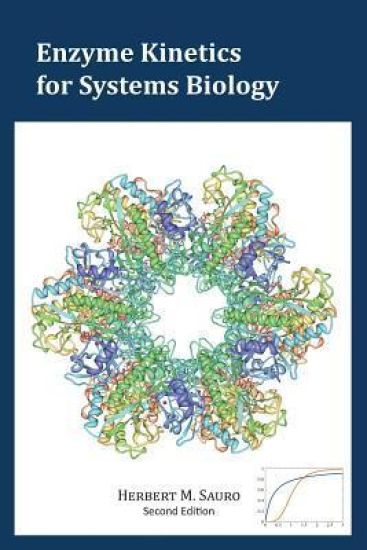
Enzyme Kinetics for Systems Biology

Enzyme Kinetics for Systems Biology

Herbert M. Sauro

Ambrosius Publishing
2012
nidottu
This is the second edition of Enzyme Kinetics for System Biology (Revision 1.17, May 2025).Reaction kinetics plays a central role in systems and synthetic biology. This monograph introduces students to some of the modern topics in kinetics that these fields employ. The book starts with an introduction to mass-action kinetics, followed by chapters on stochastic kinetics, elasticities, enzyme kinetics, generalized rate laws, cooperativity, allostery, and gene regulatory kinetics. The text can also be used as a reference guide for graduates and other researchers.
Systems Biology: Linear Algebra for Pathway Modeling

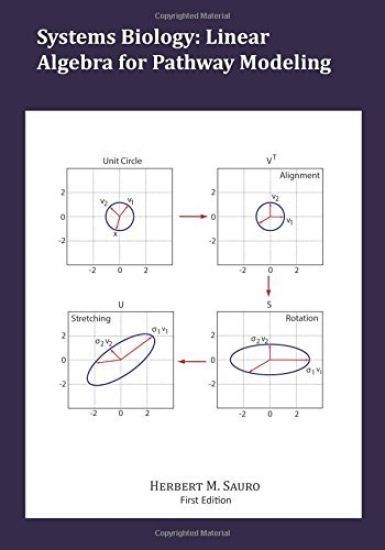
Systems Biology: Linear Algebra for Pathway Modeling

Herbert M. Sauro

Ambrosius Publishing
2015
nidottu
Revision 1.1 (Apr 2017) Linear algebra, the study of solutions to linear equations, has been required reading for engineers and most scientific disciplines. The importance of linear algebra has been growing in biology particularly with the advent of bioinformatics, biomolecular modeling, and large-scale data analysis. More recently linear algebra has found its way into systems biology through its application of understanding network structure and system dynamics. This book offers an introduction to linear algebra with examples taken from network modeling.
Writing an Interpreter in Object Pascal: Part 1: Lexical and Basic Syntax Analysis
This is part 1 of a series that will show you how to write an interactive interpreter in Object Pascal. Part 1 of the series will cover introductory material including a description of the language we'll create, a full lexical analyzer for the language, how to use DUnitX for unit testing, and an introduction to the essential concepts in syntax analysis, recursive descent, grammar, and EBNF. Along the way, we'll create a REPL, give a detailed discussion of how to parse expressions and build a simple interactive calculator to illustrate the theory. The book provides fully working code and explains in plain English how the code works and why certain decisions were made, including alternative designs. The book makes liberal use of code throughout the book chapters. Everything is done without the help of third-party tools. All you need is a standard installation of Free Pascal or Embarcaderos's excellent Delphi (including the free community edition). The text is geared to hobbyists and midlevel developers who need an easy introduction to lexical analysis and parsing. It's also for students starting out in compiler and interpreter design and need something more digestible before getting immersed in compiler theory.