Kirjojen hintavertailu. Mukana 11 699 587 kirjaa ja 12 kauppaa.

Kirjahaku

Etsi kirjoja tekijän nimen, kirjan nimen tai ISBN:n perusteella.

36 kirjaa tekijältä Herbert Marcuse

The Essential Marcuse: Selected Writings of Philosopher and Social Critic Herbert Marcuse
The Essential Marcuse provides an overview of Herbert Marcuse's political and philosophical writing over four decades, with excerpts from his major books as well as essays from various academic journals. The most influential radical philosopher of the 1960s, Marcuse's writings are noteworthy for their uncompromising opposition to both capitalism and communism. His words are as relevant to today's society as they were at the time they were written.
Technology, War and Fascism

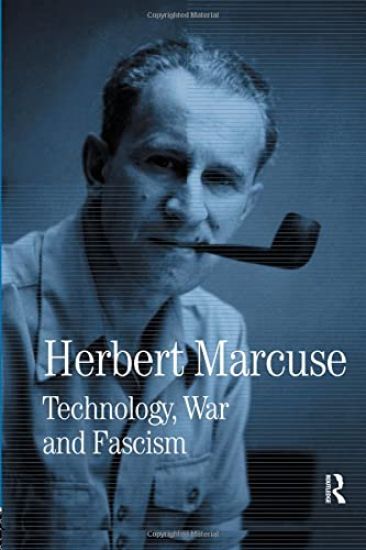
Technology, War and Fascism

Herbert Marcuse

Routledge
1998
sidottu
Herbert Marcuse is one of the most influential thinkers of our time. Born in Berlin, Marcuse studied philosophy with Husserl and Heidegger at the Universities of Freiburg and Berlin. Marcuse's critical social theory ingeniously fuses phenomenology, Freudian thought and Marxist theory; and provides a solid ground for his reputation as the most crucial figure inspiring the social activism and New Left politics of the 1960s and 1970s. The largely unpublished work collected in this volume makes clear the continuing relevance of Marcuse's thought to contemporary issues. The texts published here, dealing with concerns during the period 1942-1951, exhibit penetrating critiques of technology and analyses of the ways that modern technology produces novel forms of society and culture with new modes of social control. The material collected in Technology, War and Facism provides exemplary attempts to link theory with practice, to develop ideas that can be used to grasp and transform existing social reality.Technology, War and Fascism is the first of six volumes of Herbert Marcuse's Collected Papers to be edited by Douglas Kellner. Each volume is a collection of previously un-published or uncollected essays, unfinished manuscripts and letters by one of the greatest thinkers of our time.
Towards a Critical Theory of Society

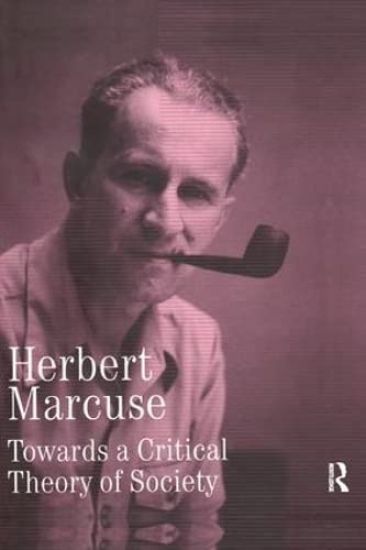
Towards a Critical Theory of Society

Herbert Marcuse

Routledge
2001
sidottu
This second volume of Marcuse's collected papers includes unpublished manuscripts from the late 1960s and early 1970s, such as Beyond One-Dimensional Man, Cultural Revolution and The Historical Fate of Bourgeois Democracy, as well as a rich collection of letters. It shows Marcuse at his most radical, focusing on his critical theory of contemporary society, his analyses of technology, capitalism, the fate of the individual, and prospects for social change in contemporary society.
The New Left and the 1960s

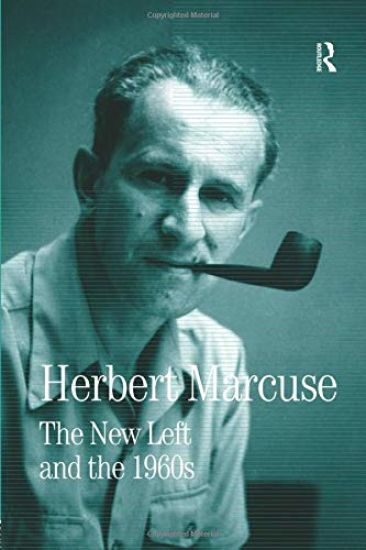
The New Left and the 1960s

Herbert Marcuse

Routledge
2004
sidottu
The New Left and the 1960s is the third volume of Herbert Marcuse's collected papers. In 1964, Marcuse published a major study of advanced industrial society, One Dimensional Man, which was an important influence on the young radicals who formed the New Left. Marcuse embodied many of the defining political impulses of the New Left in his thought and politics - hence a younger generation of political activists looked up to him for theoretical and political guidance. The material collected in this volume provides a rich and deep grasp of the era and the role of Marcuse in the theoretical and political dramas of the day.This volume contains articles, letters, talks, and interviews including: "On the New Left," a transcription of the 1968 talk at the Guardian newspaper's twentieth anniversary; "Reflections on the French Revolution," which contains comments on the 1968 French student and worker uprising; "Liberation from the Affluent Society," which presents Marcuse's contribution to the 1967 Dialectics of Liberations conference; and "United States: Questions of Organization and the Revolutionary Subject," a conversation between Marcuse and the German writer Hans Magnus Enzenberger, published here in English for the first time.Edited by Douglas Kellner, this volume will be of interest to all those previously unfamiliar with Herbert Marcuse, generally acknowledged as a major figure in the intellectual and social mileux of the 1960s and 1970s, as well as to specialists, who will here have access to papers and articles collected in one volume for the first time.
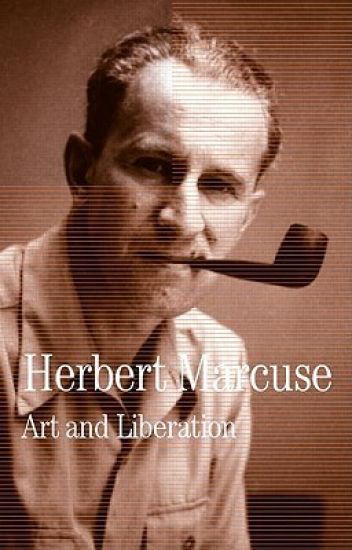
Art and Liberation

Art and Liberation

Herbert Marcuse

Routledge
2006
sidottu
The role of art in Marcuse’s work has often been neglected, misinterpreted or underplayed. His critics accused him of a religion of art and aesthetics that leads to an escape from politics and society. Yet, as this volume demonstrates, Marcuse analyzes culture and art in the context of how it produces forces of domination and resistance in society, and his writings on culture and art generate the possibility of liberation and radical social transformation.The material in this volume is a rich collection of many of Marcuse’s published and unpublished writings, interviews and talks, including ‘Lyric Poetry after Auschwitz’, reflections on Proust, and Letters on Surrealism; a poem by Samuel Beckett for Marcuse’s eightieth birthday with exchange of letters; and many articles that explore the role of art in society and how it provides possibilities for liberation.This volume will be of interest to those new to Marcuse, generally acknowledged as a major figure in the intellectual and social milieus of the 1960s and 1970s, as well as to the specialist, giving access to a wealth of material from the Marcuse Archive in Frankfurt and his private collection in San Diego, some of it published here in English for the first time.A comprehensive introduction by Douglas Kellner reflects on the genesis, development, and tensions within Marcuse’s aesthetic, while an afterword by Gerhard Schweppenhäuser summarizes their relevance for the contemporary era.
Philosophy, Psychoanalysis and Emancipation
Edited by Douglas Kellner and Clayton Pierce, Philosophy, Psychoanalysis and Emancipation is the fifth volume of Herbert Marcuse's collected papers. Containing some of Marcuse’s most important work, this book presents for the first time his unique syntheses of philosophy, psychoanalysis, and critical social theory, directed toward human emancipation and social transformation.Within philosophy, Marcuse engaged with disparate and often conflicting philosophical perspectives - ranging from Heidegger and phenomenology, to Hegel, Marx, and Freud - to create unique philosophical insights, often overlooked in favor of his theoretical and political interventions with the New Left, the subject of previous volumes. This collection assembles significant, and in some cases unknown texts from the Herbert Marcuse archives in Frankfurt, including: critiques of positivism and idealism, Dewey’s pragmatism, and the tradition of German philosophy philosophical essays from the 1930s and 1940s that attempt to reconstruct philosophy on a materialist base Marcuse’s unique attempts to bring together Freud and philosophy philosophical reflections on death, human aggression, war, and peace Marcuse’s later critical philosophical perspectives on science, technology, society, religion, and ecology.A comprehensive introduction by Douglas Kellner, Tyson Lewis and Clayton Pierce places Marcuse’s work in the context of his engagement with the main currents of twentieth century politics and philosophy. An Afterword by Andrew Feenberg provides a personal memory of Marcuse as scholar, teacher and activist, and summarizes the lasting relevance of his radical thought.
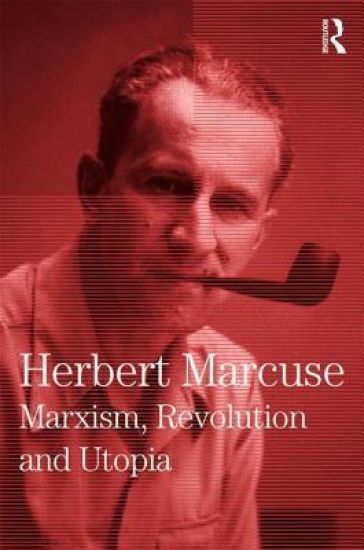
Marxism, Revolution and Utopia

Marxism, Revolution and Utopia

Herbert Marcuse

Routledge
2014
sidottu
This collection assembles some of Herbert Marcuse's most important work, and presents for the first time his responses to and development of classic Marxist approaches to revolution and utopia. This sixth and final volume of Marcuse's collected papers shows Marcuse's rejection of the prevailing twentieth-century Marxist theory and socialist practice - which he saw as inadequate for a thorough critique of Western and Soviet bureaucracy - and the development of his revolutionary thought towards a critique of the consumer society. Marcuse's later philosophical perspectives on technology, ecology, and human emancipation sat at odds with many of the classic tenets of Marx's materialist dialectic which placed the working class as the central agent of change in capitalist societies. A comprehensive introduction by Douglas Kellner and Clayton Pierce places Marcuse's philosophy in the context of his engagement with the main currents of twentieth century philosophy, and the volume concludes with an afterword by Peter Marcuse.
Reason and Revolution

Reason and Revolution

Herbert Marcuse

Routledge
1986
nidottu
This classic book is Marcuse's masterful interpretation of Hegel's philosophy and the influence it has had on European political thought from the French Revolution to the present day. Marcuse brilliantly illuminates the implications of Hegel's ideas with later developments in European thought, particularily with Marxist theory.
One-Dimensional Man

One-Dimensional Man

Herbert Marcuse

Routledge
2002
sidottu
One of the most important texts of modern times, Herbert Marcuse's analysis and image of a one-dimensional man in a one-dimensional society has shaped many young radicals' way of seeing and experiencing life. Published in 1964, it fast became an ideological bible for the emergent New Left. As Douglas Kellner notes in his introduction, Marcuse's greatest work was a 'damning indictment of contemporary Western societies, capitalist and communist.' Yet it also expressed the hopes of a radical philosopher that human freedom and happiness could be greatly expanded beyond the regimented thought and behaviour prevalent in established society. For those who held the reigns of power Marcuse's call to arms threatened civilization to its very core. For many others however, it represented a freedom hitherto unimaginable.
One-Dimensional Man

One-Dimensional Man

Herbert Marcuse

Routledge
2002
nidottu
One of the most important texts of modern times, Herbert Marcuse's analysis and image of a one-dimensional man in a one-dimensional society has shaped many young radicals' way of seeing and experiencing life. Published in 1964, it fast became an ideological bible for the emergent New Left. As Douglas Kellner notes in his introduction, Marcuse's greatest work was a 'damning indictment of contemporary Western societies, capitalist and communist.' Yet it also expressed the hopes of a radical philosopher that human freedom and happiness could be greatly expanded beyond the regimented thought and behaviour prevalent in established society. For those who held the reigns of power Marcuse's call to arms threatened civilization to its very core. For many others however, it represented a freedom hitherto unimaginable.
Heideggerian Marxism

Heideggerian Marxism

Herbert Marcuse

University of Nebraska Press
2005
pokkari
The Frankfurt School philosopher Herbert Marcuse (1898–1979) studied with Martin Heidegger at Freiburg University from 1928 to 1932 and completed a dissertation on Hegel's theory of historicity under Heidegger's supervision. During these years, Marcuse wrote a number of provocative philosophical essays experimenting with the possibilities of Heideggerian Marxism. For a time he believed that Heidegger's ideas could revitalize Marxism, providing a dimension of experiential concreteness that was sorely lacking in the German Idealist tradition. Ultimately, two events deterred Marcuse from completing this program: the 1932 publication of Marx's early economic and philosophical manuscripts, and Heidegger's conversion to Nazism a year later. Heideggerian Marxism offers rich and fascinating testimony concerning the first attempt to fuse Marxism and existentialism. These essays offer invaluable insight concerning Marcuse's early philosophical evolution. They document one of the century's most important Marxist philosophers attempting to respond to the "crisis of Marxism": the failure of the European revolution coupled with the growing repression in the USSR. In response, Marcuse contrived an imaginative and original theoretical synthesis: "existential Marxism."
An Essay on Liberation

An Essay on Liberation

Herbert Marcuse

Beacon Press
1971
pokkari
In this concise and startling book, the author of "One-Dimensional Man" argues that the time for utopian speculation has come. Marcuse argues that the traditional conceptions of human freedom have been rendered obsolete by the development of advanced industrial society. Social theory can no longer content itself with repeating the formula, "from each according to his ability, to each according to his needs," but must now investigate the nature of human needs themselves. Marcuse's claim is that even if production were controlled and determined by the workers, society would still be repressive--unless the workers themselves had the needs and aspirations of free men. Ranging from philosophical anthropology to aesthetics "An Essay on Liberation" attempts to outline--in a highly speculative and tentative fashion--the new possibilities for human liberation. The "Essay" contains the following chapters: A Biological Foundation for Socialism?, The New Sensibility, Subverting Forces--in Transition, and Solidarity.
Eros and Civilization

Eros and Civilization

Herbert Marcuse

BEACON PRESS
2025
sidottu
A dazzling collectible edition of one of the most groundbreaking thinkers of the 20th century's incisive philosophical analysis of western civilization "Herbert Marcuse taught me that it was possible to be an academic and an activist, a scholar and a revolutionary." - Angela Davis Originally published in 1955, Herbert Marcuse's Eros and Civilization has been deemed by the New York Times "the most significant general treatment of psychoanalytic theory since Freud himself ceased publication." In this classic work, the internationally celebrated social theorist, philosopher, and political activist interrogates Freud's statement that civilization is based on the permanent subjugation of the human instincts to interpret the basic trends of western civilization. What emerges is an in-depth examination of the philosophical and sociological implications of Freud's reconstruction of the prehistory of mankind. Challenging the widespread repression of his time, Marcuse imagines a utopian civilization emphasizing liberation and play. Known as the "father of the New Left," Marcuse's incisive critique of capitalist society and analysis of consumerism and social repression remain more relevant than ever.
Technology, War and Fascism

Technology, War and Fascism

Herbert Marcuse

CRC Press Inc
2017
nidottu
Herbert Marcuse is one of the most influential thinkers of our time. Born in Berlin, Marcuse studied philosophy with Husserl and Heidegger at the Universities of Freiburg and Berlin. Marcuse's critical social theory ingeniously fuses phenomenology, Freudian thought and Marxist theory; and provides a solid ground for his reputation as the most crucial figure inspiring the social activism and New Left politics of the 1960s and 1970s. The largely unpublished work collected in this volume makes clear the continuing relevance of Marcuse's thought to contemporary issues. The texts published here, dealing with concerns during the period 1942-1951, exhibit penetrating critiques of technology and analyses of the ways that modern technology produces novel forms of society and culture with new modes of social control. The material collected in Technology, War and Facism provides exemplary attempts to link theory with practice, to develop ideas that can be used to grasp and transform existing social reality.Technology, War and Fascism is the first of six volumes of Herbert Marcuse's Collected Papers to be edited by Douglas Kellner. Each volume is a collection of previously un-published or uncollected essays, unfinished manuscripts and letters by one of the greatest thinkers of our time.
Towards a Critical Theory of Society

Towards a Critical Theory of Society

Herbert Marcuse

CRC Press Inc
2017
nidottu
This second volume of Marcuse's collected papers includes unpublished manuscripts from the late 1960s and early 1970s, such as Beyond One-Dimensional Man, Cultural Revolution and The Historical Fate of Bourgeois Democracy, as well as a rich collection of letters. It shows Marcuse at his most radical, focusing on his critical theory of contemporary society, his analyses of technology, capitalism, the fate of the individual, and prospects for social change in contemporary society.
The New Left and the 1960s

The New Left and the 1960s

Herbert Marcuse

CRC Press Inc
2017
nidottu
The New Left and the 1960s is the third volume of Herbert Marcuse's collected papers. In 1964, Marcuse published a major study of advanced industrial society, One Dimensional Man, which was an important influence on the young radicals who formed the New Left. Marcuse embodied many of the defining political impulses of the New Left in his thought and politics - hence a younger generation of political activists looked up to him for theoretical and political guidance. The material collected in this volume provides a rich and deep grasp of the era and the role of Marcuse in the theoretical and political dramas of the day.This volume contains articles, letters, talks, and interviews including: "On the New Left," a transcription of the 1968 talk at the Guardian newspaper's twentieth anniversary; "Reflections on the French Revolution," which contains comments on the 1968 French student and worker uprising; "Liberation from the Affluent Society," which presents Marcuse's contribution to the 1967 Dialectics of Liberations conference; and "United States: Questions of Organization and the Revolutionary Subject," a conversation between Marcuse and the German writer Hans Magnus Enzenberger, published here in English for the first time.Edited by Douglas Kellner, this volume will be of interest to all those previously unfamiliar with Herbert Marcuse, generally acknowledged as a major figure in the intellectual and social mileux of the 1960s and 1970s, as well as to specialists, who will here have access to papers and articles collected in one volume for the first time.
Art and Liberation

Art and Liberation

Herbert Marcuse

CRC Press Inc
2017
nidottu
The role of art in Marcuse’s work has often been neglected, misinterpreted or underplayed. His critics accused him of a religion of art and aesthetics that leads to an escape from politics and society. Yet, as this volume demonstrates, Marcuse analyzes culture and art in the context of how it produces forces of domination and resistance in society, and his writings on culture and art generate the possibility of liberation and radical social transformation.The material in this volume is a rich collection of many of Marcuse’s published and unpublished writings, interviews and talks, including ‘Lyric Poetry after Auschwitz’, reflections on Proust, and Letters on Surrealism; a poem by Samuel Beckett for Marcuse’s eightieth birthday with exchange of letters; and many articles that explore the role of art in society and how it provides possibilities for liberation.This volume will be of interest to those new to Marcuse, generally acknowledged as a major figure in the intellectual and social milieus of the 1960s and 1970s, as well as to the specialist, giving access to a wealth of material from the Marcuse Archive in Frankfurt and his private collection in San Diego, some of it published here in English for the first time.A comprehensive introduction by Douglas Kellner reflects on the genesis, development, and tensions within Marcuse’s aesthetic, while an afterword by Gerhard Schweppenhäuser summarizes their relevance for the contemporary era.
Philosophy, Psychoanalysis and Emancipation

Philosophy, Psychoanalysis and Emancipation

Herbert Marcuse

CRC Press Inc
2017
nidottu
Edited by Douglas Kellner and Clayton Pierce, Philosophy, Psychoanalysis and Emancipation is the fifth volume of Herbert Marcuse's collected papers. Containing some of Marcuse’s most important work, this book presents for the first time his unique syntheses of philosophy, psychoanalysis, and critical social theory, directed toward human emancipation and social transformation.Within philosophy, Marcuse engaged with disparate and often conflicting philosophical perspectives - ranging from Heidegger and phenomenology, to Hegel, Marx, and Freud - to create unique philosophical insights, often overlooked in favor of his theoretical and political interventions with the New Left, the subject of previous volumes. This collection assembles significant, and in some cases unknown texts from the Herbert Marcuse archives in Frankfurt, including: critiques of positivism and idealism, Dewey’s pragmatism, and the tradition of German philosophy philosophical essays from the 1930s and 1940s that attempt to reconstruct philosophy on a materialist base Marcuse’s unique attempts to bring together Freud and philosophy philosophical reflections on death, human aggression, war, and peace Marcuse’s later critical philosophical perspectives on science, technology, society, religion, and ecology.A comprehensive introduction by Douglas Kellner, Tyson Lewis and Clayton Pierce places Marcuse’s work in the context of his engagement with the main currents of twentieth century politics and philosophy. An Afterword by Andrew Feenberg provides a personal memory of Marcuse as scholar, teacher and activist, and summarizes the lasting relevance of his radical thought.