Kirjojen hintavertailu. Mukana 11 699 587 kirjaa ja 12 kauppaa.

Kirjahaku

Etsi kirjoja tekijän nimen, kirjan nimen tai ISBN:n perusteella.

11 kirjaa tekijältä Herman Rapaport

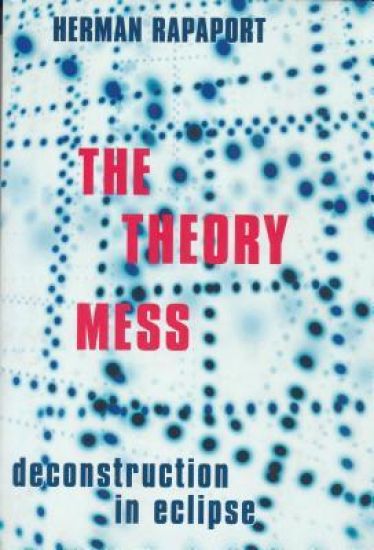
The Theory Mess

The Theory Mess

Herman Rapaport

Columbia University Press
2001
sidottu
Although deconstruction has become a popular catchword, as an intellectual movement it has never entirely caught on within the university. For some in the academy, deconstruction, and Jacques Derrida in particular, are responsible for the demise of accountability in the study of literature. Countering these facile dismissals of Derrida and deconstruction, Herman Rapaport explores the incoherence that has plagued critical theory since the 1960s and the resulting legitimacy crisis in the humanities. Against the backdrop of a rich, informed discussion of Derrida's writings-and how they have been misconstrued by critics and admirers alike-The Theory Mess investigates the vicissitudes of Anglo-American criticism over the past thirty years and proposes some possibilities for reform.
The Theory Mess

The Theory Mess

Herman Rapaport

Columbia University Press
2001
pokkari
Although deconstruction has become a popular catchword, as an intellectual movement it has never entirely caught on within the university. For some in the academy, deconstruction, and Jacques Derrida in particular, are responsible for the demise of accountability in the study of literature. Countering these facile dismissals of Derrida and deconstruction, Herman Rapaport explores the incoherence that has plagued critical theory since the 1960s and the resulting legitimacy crisis in the humanities. Against the backdrop of a rich, informed discussion of Derrida's writings-and how they have been misconstrued by critics and admirers alike-The Theory Mess investigates the vicissitudes of Anglo-American criticism over the past thirty years and proposes some possibilities for reform.
Later Derrida

Later Derrida

Herman Rapaport

Routledge
2002
sidottu
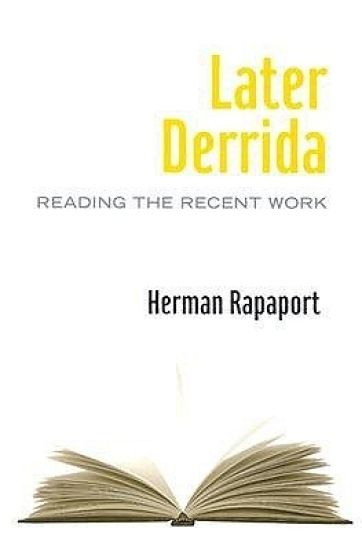
For many readers of Jacques Derrida, the philosopher's work since the appearance of The Post Card in 1987 has been enriched by a new set of concerns and questions. In Later Derrida, Herman Rapaport offers four extended essays that examines Derrida's work of the past fifteen years. Drawing on his own deep familiarity with theory and with Derrida's work in particular, he shows what Derrida has to say on such subjects as postcolonialism, monolingualism, trauma, memory, and the archive. Of particular interest to readers of Derrida will be Rapaport's explanation of the concepts of Gemeinschaft (sect, society, etc.) and Gesellschaft (democracy, globalization, etc.) in the French philosopher's work. The essays also consider Derrida's relation to the work of Trinh Minh-ha, Gayatri Spivak, Artaud, and Heidegger. This lucid book will be a necessary companion to all readers of Derrida's writing.
Later Derrida

Later Derrida

Herman Rapaport

Routledge
2002
nidottu
For many readers of Jacques Derrida, the philosopher's work since the appearance of The Post Card in 1987 has been enriched by a new set of concerns and questions. In Later Derrida, Herman Rapaport offers four extended essays that examines Derrida's work of the past fifteen years. Drawing on his own deep familiarity with theory and with Derrida's work in particular, he shows what Derrida has to say on such subjects as postcolonialism, monolingualism, trauma, memory, and the archive. Of particular interest to readers of Derrida will be Rapaport's explanation of the concepts of Gemeinschaft (sect, society, etc.) and Gesellschaft (democracy, globalization, etc.) in the French philosopher's work. The essays also consider Derrida's relation to the work of Trinh Minh-ha, Gayatri Spivak, Artaud, and Heidegger. This lucid book will be a necessary companion to all readers of Derrida's writing.
Between the Sign and the Gaze

Between the Sign and the Gaze

Herman Rapaport

Cornell University Press
1994
pokkari
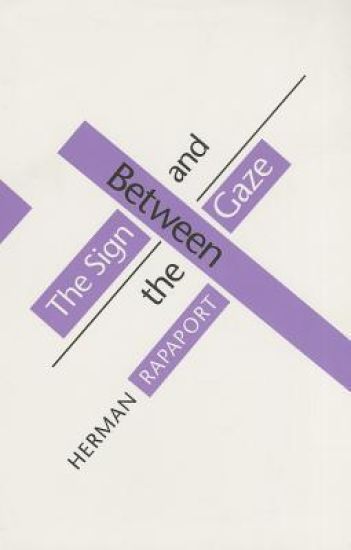
A woman turns into a piece of furniture (Theodor Fontane's Effi Briest); a writer of children's books takes photos of naked little girls (Lewis Carroll); Mont Blanc becomes the maternal breast (Shelley); Hamlet mistakes Ophelia for a phallus (Lacan's Hamlet seminar); and mom turns out to have thermonuclear arms (Laurie Anderson's United States). Reviewing the ways in which women have been fantasized in nineteenth- and twentieth-century Western culture, Herman Rapaport offers a series of brilliant insights into the concept of the fantasm in modern art.
Is There Truth in Art?

Is There Truth in Art?

Herman Rapaport

Cornell University Press
1996
pokkari
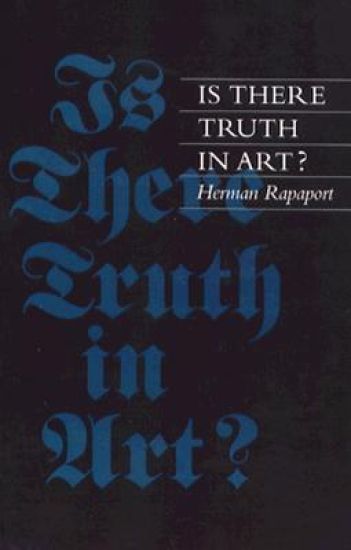
The question posed by Herman Rapaport, in the title of this book, is intended both seriously and ironically. It is not Rapaport's purpose to debate whether or not truth resides in art. The title points rather to his belief that truth needs to be reconceptualized in the light of continuing efforts to deconstruct and to discredit the notion of truthfulness in art. The question of art's truthfulness persists because truth in art is neither an entity or content that has been injected into the work, nor a transcendental concept or ground that exists outside it. Moreover, when used in relation to art, Rapaport says, truth means something quite different from conventional definitions of the term. Indeed, a central question that informs the book is the return of truth at the far side of its deconstruction. Is There Truth in Art? includes chapters on atonal music, environmental art, modern German and French poetry, contemporary French fiction, experimental French film, and a photograph taken by the National Socialists during the destruction of the Warsaw ghetto. Determining how truth can be said to occur in these examples, Rapaport maintains, requires analysis in each instance. He draws chiefly upon the thinkers who have radically reformulated questions about truth—Nietzsche, Heidegger, Derrida, and Levinas—and uses their writings to explore the works under analysis.
Heidegger and Derrida

Heidegger and Derrida

Herman Rapaport

University of Nebraska Press
1991
pokkari
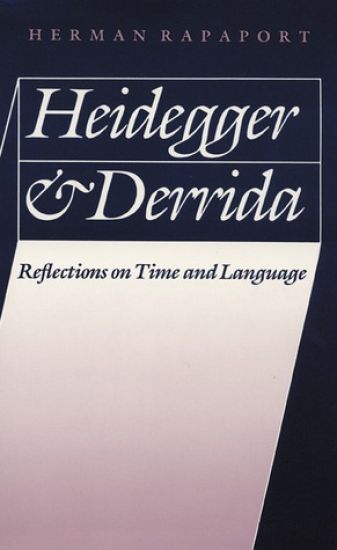
As the spell of Jacques Derrida grows stronger, with more translations and analyses appearing every season, it is possible--and necessary--to determine what in his work is truly new and what continues philosophical and literary traditions. Although Martin Heidegger ahs been mentioned before as a precursor of deconstruction, Herman Rapaport is the first to develop the connections between the writings of the German philosopher and Derrida. Heidegger and Derrida discusses the French philosopher's adoption of certain Heideggerean themes and his extension or overturning of them. But Rapaport does more than show how deconstruction builds on the philosophical foundations laid by Heidegger (and also by Hegel, Nietzsche, and Freud). In the most comprehensive study of Derrida's works to date, he tackles the problem of writing an intellectual history about a figure who has put into question the possibility of such a construction and acknowledges Derrida's concerns with Jewish history in relation to Western thought.
Derrida on Exile and the Nation

Derrida on Exile and the Nation

Herman Rapaport

Bloomsbury Academic
2020
sidottu
Providing crucial scholarship on Derrida’s first series of lectures from the Nationality and Philosophical Nationalism cycle, Herman Rapaport brings all 13 parts of the Fantom of the Other series (1984-85) to our critical attention. The series, Rapaport argues, was seminal in laying the foundations for the courses given, and ideas explored, by Derrida over the next twenty years. It is in this vein that the full explication of Derrida’s lectures is done, breathing life into the foundational lecture series which has not yet been published in its entirety in English.Derrida’s examination of a master signifier of the social relation, Geschlecht, acts as the critical entry point of the series into wide-ranging meditations on the social construction and deconstruction of all possible relations denoted by the core concept, including race, gender, sex, and family. The lecture series’ vast engagement with a range of major thinkers, including philosophers and poets alike – Arendt, Adorno, Heidegger, Wittgenstein, Trakl, and Adonis – tackles core themes and debates about philosophical nationalism. Presenting Derrida’s lectures on the implications of key 20th century philosopher’s understandings of nationalism as they relate to concerns over idiomatic language, notions of race, exile, return, and social relations, adds richly to the literature on Derrida and reveals the potential for further application of his work to current polarising debates between universalism and tribalism.
Derrida on Exile and the Nation

Derrida on Exile and the Nation

Herman Rapaport

BLOOMSBURY PUBLISHING PLC
2022
nidottu
Providing crucial scholarship on Derrida’s first series of lectures from the Nationality and Philosophical Nationalism cycle, Herman Rapaport brings all 13 parts of the Fantom of the Other series (1984-85) to our critical attention. The series, Rapaport argues, was seminal in laying the foundations for the courses given, and ideas explored, by Derrida over the next twenty years. It is in this vein that the full explication of Derrida’s lectures is done, breathing life into the foundational lecture series which has not yet been published in its entirety in English.Derrida’s examination of a master signifier of the social relation, Geschlecht, acts as the critical entry point of the series into wide-ranging meditations on the social construction and deconstruction of all possible relations denoted by the core concept, including race, gender, sex, and family. The lecture series’ vast engagement with a range of major thinkers, including philosophers and poets alike – Arendt, Adorno, Heidegger, Wittgenstein, Trakl, and Adonis – tackles core themes and debates about philosophical nationalism. Presenting Derrida’s lectures on the implications of key 20th century philosopher’s understandings of nationalism as they relate to concerns over idiomatic language, notions of race, exile, return, and social relations, adds richly to the literature on Derrida and reveals the potential for further application of his work to current polarising debates between universalism and tribalism.
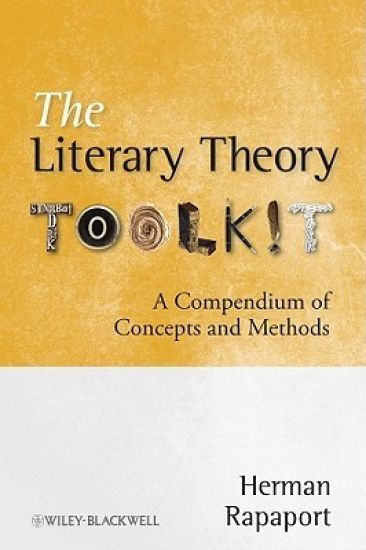
The Literary Theory Toolkit

The Literary Theory Toolkit

Herman Rapaport

Wiley-Blackwell (an imprint of John Wiley Sons Ltd)
2011
nidottu
The Literary Theory Toolkit offers readers a rich compendium of key terms, concepts, and arguments necessary for the study of literature in a critical-theoretical context. Includes varied examples drawn from readily available literary texts spanning all periods and genresFeatures a chapter on performance, something not usually covered in similar textsCovers differing theories of the public sphere, ideology, power, and the social relations necessary for the understanding of approaches to literature
The Literary Theory Toolkit

The Literary Theory Toolkit

Herman Rapaport

Wiley-Blackwell (an imprint of John Wiley Sons Ltd)
2011
sidottu
The Literary Theory Toolkit offers readers a rich compendium of key terms, concepts, and arguments necessary for the study of literature in a critical-theoretical context. Includes varied examples drawn from readily available literary texts spanning all periods and genresFeatures a chapter on performance, something not usually covered in similar textsCovers differing theories of the public sphere, ideology, power, and the social relations necessary for the understanding of approaches to literature