Kirjojen hintavertailu. Mukana 11 244 527 kirjaa ja 12 kauppaa.

Kirjahaku

Etsi kirjoja tekijän nimen, kirjan nimen tai ISBN:n perusteella.

19 kirjaa tekijältä Hermann Broch

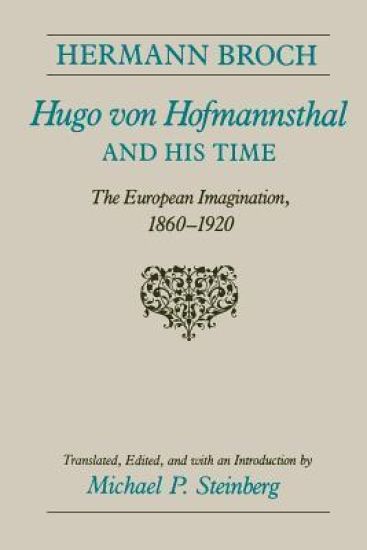
Hugo Von Hofmannsthal and His Time

Hugo Von Hofmannsthal and His Time

Hermann Broch

University of Chicago Press
1984
nidottu
Hermann Broch (1886-1951) is remembered among English-speaking readers for his novels The Sleepwalkers and The Death of Virgil, and among German-speaking readers for his novels as well as his works on moral and political philosophy, his aesthetic theory, and his varied criticism. This study reveals Broch as a major historian as well, one who believes that true historical understanding requires the faculties of both poet and philosopher. Through an analysis of the changing thought and career of the Austrian poet, librettist, and essaist Hugo von Hofmannsthal (1874-1929), Broch attempts to define and analyze the major intellectual issues of the European fin de siecle, a period that he characterizes according to the Nietzschean concepts of the breakdown of rationality and the loss of a central value system. The result is a major examination of European thought as well as a comparative study of political systems and artistic styles.
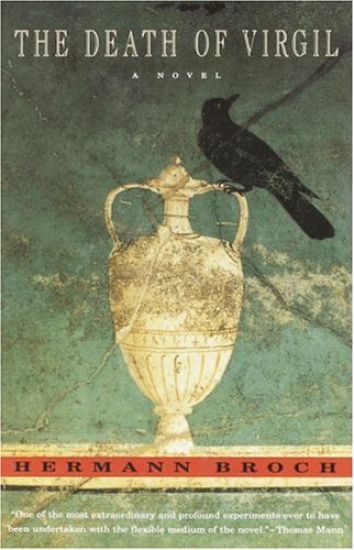
The Death of Virgil

The Death of Virgil

Hermann Broch

Vintage Books
1995
nidottu
It is the reign of the Emperor Augustus, and Publius Vergilius Maro, the poet of the Aeneid and Caesar's enchanter, has been summoned to the palace, where he will shortly die. Out of the last hours of Virgil's life and the final stirrings of his consciousness, the Austrian writer Hermann Broch fashioned one of the great works of twentieth-century modernism, a book that embraces an entire world and renders it with an immediacy that is at once sensual and profound. Begun while Broch was imprisoned in a German concentration camp, The Death of Virgil is part historical novel and part prose poem -- and always an intensely musical and immensely evocative meditation on the relation between life and death, the ancient and the modern. "Broch is the greatest novelist European literature has produced since Joyce, and...The Death of Virgil represents the only genuine technical advance that fiction has made since Ulysses." -- George Steiner"Hermann Broch belongs in that tradition of great twentieth-century novelists who have transformed, almost beyond recognition, one of the classic art forms of the nineteenth century."-- Hannah Arendt
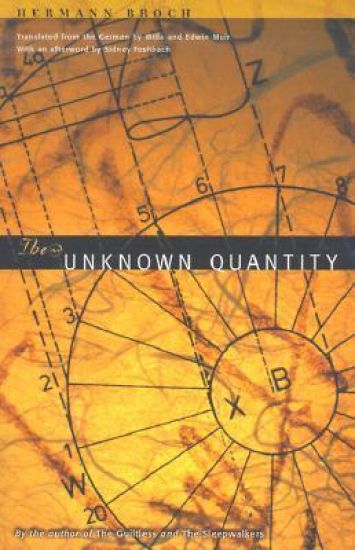
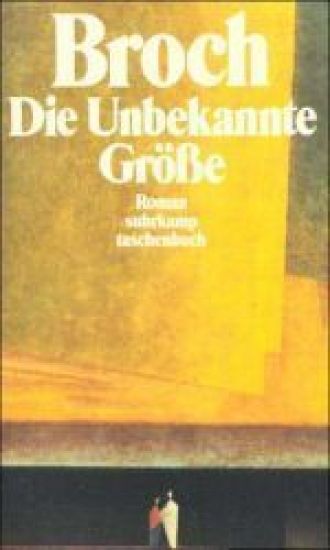
The Unknown Quantity

The Unknown Quantity

Hermann Broch

Northwestern University Press
2000
nidottu
Mild and sensitive Richard Hieck endured a quietly difficult childhood in Germany. But from his father Richard inherited an interest in the night sky, learning to love the constellations and to take comfort in the strength of Orion and the warm radiance of Venus. His choice to pursue mathematics offers him the discipline he craved as a child.Published in 1933, The Unknown Quantity is Hermann Broch's study of the underlying chaos-and finally the impossibility-of life within a society whose values are in decay. As Richard seeks to reconcile the conflicting demands of love and science, of passion and reason, societal and family values begin to undermine him and those in orbit around him.
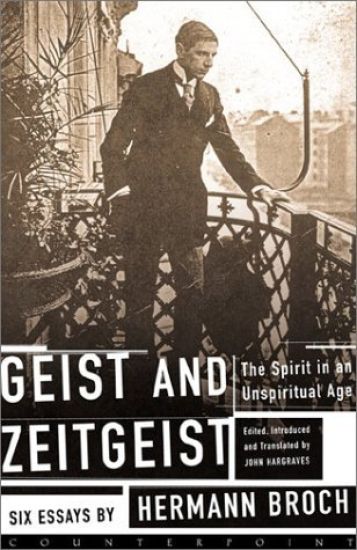
Geist and Zeitgeist

Geist and Zeitgeist

Hermann Broch

Counterpoint
2002
sidottu
From one of the giants of European literature, six essays never before published in English. Hermann Broch achieved international recognition for his brilliant use of innovative literary techniques to present the entire range of human experience, from the biological to the metaphysical. Concerned with the problem of ethical responsibility in a world with no unified system of values, he turned to literature as the appropriate form for considering those human problems not subject to rational treatment.Late in life, Broch began questioning his artistic pursuits and turned from literature to devote himself to political theory. While he is well known and highly regarded throughout the world as a novelist, he was equally accomplished as an essayist. These six essays give us a fascinating glimpse into the mind of one of the twentieth century's most original thinkers.
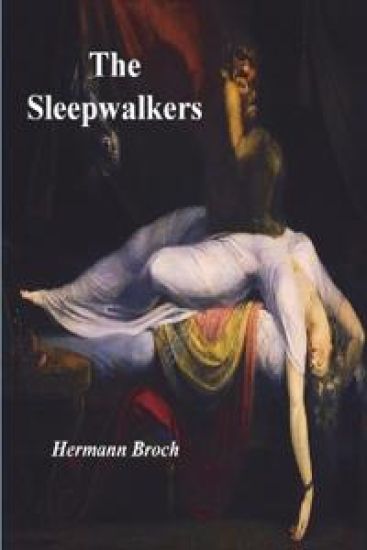
The Sleepwalkers

The Sleepwalkers

Hermann Broch

Must Have Books
2023
nidottu
First published in the US in 1932, The Sleepwalkers is about three protagonists "sleepwalking", that is, living between vanishing and emerging ethical systems just as the somnambulist exists in a state between sleeping and waking. Together they present a panorama of German society and its progressive deterioration of values that culminated in defeat and collapse at the end of World War I.The novel explores what Broch described as "the loneliness of the I" in its three parts.The protagonists of the first two parts of the book are represented as holding to certain sets of values. Broch describes the struggles they undergo as their codes for living, or values, prove inadequate to the realities of the social environment they find themselves in. Joachim von Pasenow in the first part is "the romantic". In the second part, August Esch tries to live according to the motto "business is business".Eventually, in the third part, the amoral Huguenau's only standard for behavior is his personal profit. He follows this maxim in all his actions, swindling and murdering without remorse. Ultimately, he reaches a point of zero values without remorse and his dealings bring him finally to the zero point of values. Although Broch doesn't hold Huguenau up as someone to admire, he does present him as the inevitable harbinger of fascism.As one reviewer noted, "His characters are sleepwalkers because their own lives are shaped by the forces of the nightmare reality in which they live."
Briefe an Erich von Kahler (1940-1951)
Die Briefe vermitteln ein Bild von Brochs politischen Diskussionen mit Kahler im amerikanischen Exil. In ihnen geht es u.a. um den Eintritt der USA in den Zweiten Weltkrieg, die Gefahr der Atombombe für die Menschheit, um den Kalten Krieg mit den Folgen der McCarthy-Ära, die Einstellung zu Deutschland und Österreich in den Nachkriegsjahren und die Frage der Hilfe für diese beiden Länder, die Gründung Israels und die Rolle des Intellektuellen allgemein. Zudem schildert Broch die Intentionen seiner Romane „Der Tod des Vergil“ und „Die Schuldlosen“ sowie seiner Studien zu den internationalen Menschenrechten, seiner Überlegungen zur demokratischen Erziehung, zur „Massenwahntheorie“ und seines kulturhistorischen Werks „Hofmannsthal und seine Zeit“. Im Persönlichen werden jüdisch-altösterreichische Retrospektiven eingeschaltet, aktuelle Frauenfreundschaften, die ihn überfordern, geschildert und die Bemühungen seiner Gönner kommentiert, die ihm den Nobelpreis verschaffen wollen, Stellen an deutschen Universitäten vermitteln möchten und ihn zum Mitglied der Darmstädter Akademie gewählt haben, dies meistens mit ironischem Unterton und einer für den Autor typischen Selbstkritik.
Die Schlafwandler

Die Schlafwandler

Hermann Broch

SUHRKAMP VERLAG
2007
pokkari
Im ersten Teil, Pasenow oder die Romantik, geraten unter dem Einfluss des Kaufmanns Eduard von Bertrand die religiösen Überzeugungen und das patriotische Pflichtgefühl des Gutsbesitzersohns Joachim von Pasenow ins Wanken. Dennoch entzieht er sich der unglücklichen Affäre mit dem Animiermädchen Ruzena, um in der Ehe mit der zum Tugendideal verklärten Elisabeth von Baddensen einen den starren gesellschaftlichen Konventionen entsprechenden Ersatz für die metaphysische Leere seiner Existenz zu finden. Der entlassene Buchhalter August Esch, Vertreter des kleinbürgerlich-proletarischen Milieus, begegnet seiner als willkürlich erlebten Umwelt im zweiten Teil, Esch oder die Anarchie, mit zunehmendem Realitätsverlust. Eine >>anarchische>falschen
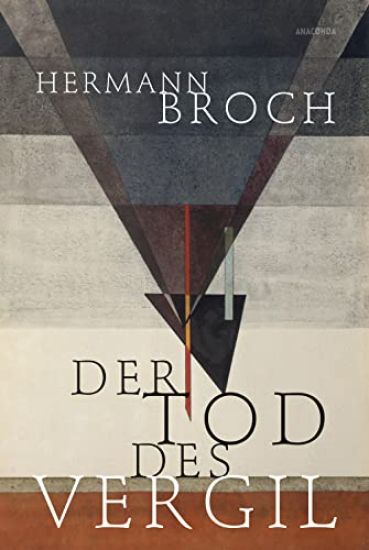
Der Tod des Vergil

Der Tod des Vergil

Hermann Broch

SUHRKAMP VERLAG
1995
pokkari
Der erste Teil (Wasser - Die Ankuft) beschreibt die Rückkehr des todkranken Dichters Vergilius Publius Maro mit der kaiserlichen Flotte des Augustus in Brundisium. In Kontrast zum sonst entrückten Dasein des Künstlers führt der Weg durch die Elendsviertel am Hafen und die sich in >>Massentiere>Scheinweg>Äneis>Erkenntnistat>Auge
Barbara

Barbara

Hermann Broch

Bokvennen
2007
sidottu
I et ikke fullført romanprosjekt fra 1930-årene, satte Broch denne novellen som et midtpunkt. Historiens jeg-person forelsker seg i barnelegen Barbara. Konfliktstoffet bunner i kvinnens samfunnsengasjement som er uforenelig med private lengsler om lykke, famile og egne barn.
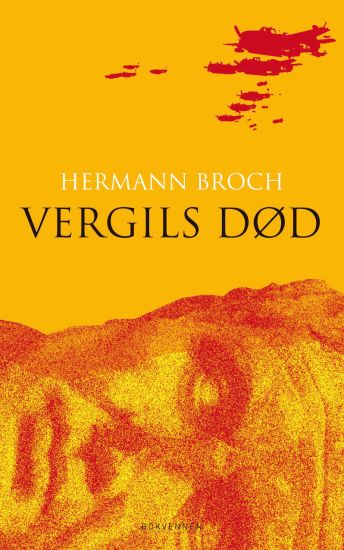
Vergils død

Vergils død

Hermann Broch

Bokvennen
2007
sidottu
Storslått, kompleks, symfonisk - og samtidig nærværende, lyrisk, drømmende - er karakterisitikker som tas i bruk om Hermann Brochs ambisiøse romanverk fra 1945. Sammen med James Joyce, Robert Musil og Marcel Proust var Hermann Broch blant dem som fornyet romantradisjonen språklig, tematisk og strukturelt i første halvdel av det 20. århundret. Rammen om fortellingen er den romerske dikteren Vergils siste timer, og i beste stream-of-conciousness-tradisjon føres leseren fra Augustus' flåte og landgangen i Brundisium via tilbakeblikk til Vergils liv, verk og tenkning. I denne sammenheng blir hans rolle som Aeneidens opphavsmann og Romas hoffpoet en kilde til en vedvarende indre kamp hos den døende kunstner. I et verk som langt overskrider sitt historiske motiv, trekkes usynlige linjer fra Vergils samtid til våre dager. Her møter et gjennomestetisert verdensbilde en brutal virkelighet. Oversatt og med forord av Sverre Dahl. Hermann Broch (1886-1951) var av jødisk herkomst og vokste opp i et Wien preget av en kunstnerisk og vitenskapelig nyorientering som i løpet av noen tiår spredte seg vidt og bredt, ikke bare i Brochs eget Østerrike, men i hele Europa. Broch skal ha kommet inn i den wienerske litterære kretsen rundt 1917, og i 1918 debuterte han med en novelle i tidsskriftet Summa. Mest kjent er han for trilogien Søvngjengerne fra 1931-32, men vel så viktig for hans internasjonale ry var nok hans andre storverk, som her foreligger på norsk. Det er Sverre Dahl som har begitt seg ut på den faglige og kunstneriske utfordringen det er å gi Hermann Brochs "uoversettelige" roman norsk språkdrakt. Hermann Brochs Vergils død er blitt sammenlignet med James Joyces Ulysses, og Thomas Mann har karakterisert den som "et av de uvanligste og grundigste eksperimenter som noen gang er foretatt med romanens fleksible medium". Vergils død setter fokus på den tematikk som Broch hele livet skulle sysle med, nemlig det 20. århundrets verdikrise.
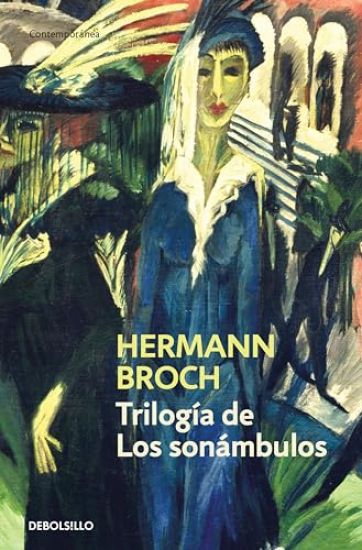
Trilogía de Los Sonámbulos / The Sleepwalkers
La obra capital de Hermann Broch, la trilog a de Los son mbulos, en un solo volumen.La trilog a de Los son mbulos, uno de los pilares de la literatura europea del siglo XX, descubre a tres seres arrojados al incandescente fragor de la historia, incautos defensores de unos valores ya caducos. As , el personaje principal de Pasenow o el romanticismo es el arquetipo del hombre ab lico y so ador que busca en la carrera militar una falsa seguridad que le proteja del desorden del mundo. Esch o la anarqu a narra la historia de un empleado de comercio dominado por la idea de emigrar a Am rica, s mbolo de libertad y redenci n. Finalmente, Huguenau o el realismo nos presenta la encarnaci n de la l gica y la moral propias del comerciante, por ellas convertido impunemente en desertor, arribista y asesino. ENGLISH DESCRIPTION "Broch performs with an impeccable virtuosity." --Aldous Huxley With his epic trilogy, Hermann Broch established himself as one of the great innovators of modern literature, a visionary writer-philosopher equivalent of James Joyce, Thomas Mann, or Robert Musil. Even as he grounded his narratives in the intimate daily life of Germany, Broch was identifying the oceanic changes that would shortly sweep that life into the abyss. Whether he is writing about a neurotic army officer (The Romantic), a disgruntled bookkeeper and would-be assassin (The Anarchist), or an opportunistic war-deserter (The Realist), Broch immerses himself in the twists of his characters&; psyches, and at the same time soars above them, to produce a prophetic portrait of a world tormented by its loss of faith, morals, and reason.
Den romantiske löjtnanten

Den romantiske löjtnanten

Hermann Broch

Modernista
2025
nidottu
I det sena 1800-talets Berlin slits löjtnant Joachim von Pasenow mellan två kvinnor från helt olika delar av samhället. Ruzena Hruska är prostituerad men väcker intensiva känslor till liv, medan den rika Elisabeth von Baddensen är ett mer socialt accepterat val av hustru. I sina tvivel vänder han sig till historiska seder och försöker luta sig mot adelns hederskodex för att fatta ett beslut. Den romantiske lötjnanten [1930] är första delen i Hermann Brochs trilogi Sömngångare, som utforskar hur det tyska folkets värderingar förändrats i takt med samhällets utveckling. Denna första del fokuserar på den gamla världens tankar om moral och hur användbara de är för en modern människa. I översättning av Torsten Nordström.HERMANN BROCH [1886-1951] var en österrikisk författare. Han fängslades av nazistyret för innehav av socialistisk litteratur, men släpptes efter en kampanj startad av hans vänner, bland andra James Joyce. Broch prisades för sin modernistiska stil och nominerades till Nobelpriset i litteratur 1950. Till hans mest hyllade verk hör Vergilii död [1945] och trilogin Sömngångare [1930-1932].