Kirjojen hintavertailu. Mukana 11 448 672 kirjaa ja 12 kauppaa.

Kirjahaku

Etsi kirjoja tekijän nimen, kirjan nimen tai ISBN:n perusteella.

12 kirjaa tekijältä Hilary Spurling

The Girl from the Fiction Department

The Girl from the Fiction Department

Hilary Spurling

Penguin Books Ltd
2003
pokkari
Absorbing and provocative, a biography of George Orwell's controversial second wife from the Whitbread Prize-winning author of Matisse the Master and Anthony PowellJust three months before his death, the author of Nineteen Eighty-Four took a new wife. Sonia Brownell was model for Julia in Orwell's most famous novel, she was fifteen years younger than her husband, and after his death she was hounded and pilloried as a manipulative gold-digger who would stop at nothing to keep control of the literary legacy. But the truth about Sonia was altogether different.Beautiful, intelligent and fiercely idealistic, she lived at the heart of London's literary and artistic scene before her marriage to Orwell changed her life for ever. Those who knew her - Lucien Freud and Francis Bacon, Jean-Paul Sartre and Albert Camus - witnessed her great personal generosity. And yet, burdened with the almost impossible task of protecting Orwell's intellectual estate, Sonia's loyalty to her late husband brought her nothing but poverty and despair.
Matisse

Matisse

Hilary Spurling

Penguin Books Ltd
2009
pokkari
'Inspired, innovative, remarkable' Independent 'Spurling has done better than anyone else at uncovering intimate information about Matisse' GuardianThe abridged, one-volume edition of Hilary Spurling's critically acclaimed biography of Henri Matisse, one of the greatest artistic geniuses of the twentieth centuryHenri Matisse was one of the most important and beloved artists of the twentieth century, rivalled only by his friend and competitor Pablo Picasso. Hilary Spurling's The Unknown Matisse and Matisse the Master were together heralded as the definitive biography of the artist, and Matisse the Master went on to win the Whitbread Book of the Year award in 2005.This essential abridged edition of the Life reveals the origins of Matisse's astonishing talent, provides a unique insight into his life and work, and, by documenting the difficult path he took alone, clearly places him at the front rank of those who made art modern.
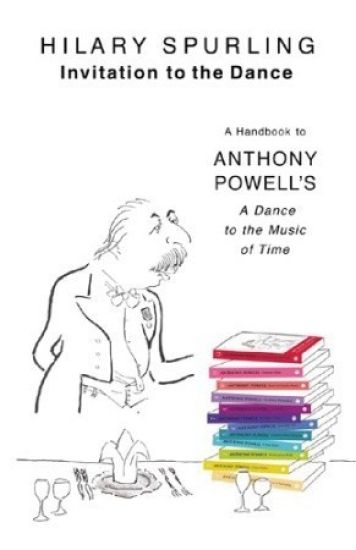
Anthony Powell

Anthony Powell

Hilary Spurling

Penguin Books Ltd
2018
pokkari
BOOKS OF THE YEAR 2017 in The Sunday Times, Spectator, Mail on Sunday, Observer and Financial Times'A landmark biography' The Times, Books of the Year'One of our generation's greatest biographers' London Review of Books'Witty, spirited, richly crowded with incident and character - a joy to read' ProspectFrom the author of the prize-winning Matisse The Master comes an essential biography of one of 20th century Britain's greatest literary mindsAnthony Powell: the literary genius who gave us A Dance to the Music of Time, an epic twelve spectacular volume cyle of novels about twentieth century British society. This comic masterpiece teems with idiosyncratic characters, capturing Britain through war and peace in all its eccentricity. And it was inspired by the author's own life immersed in rich social intrigue - debutante balls, penniless muses, publisher feuds, summers on the French Riviera, weekend parties at country houses, and friendships with everyone from Evelyn Waugh to Graham Greene to VS Naipaul...Hilary Spurling brings all this back to vivid life, investigating the friends, relations, lovers and acquaintances, fools and savants who surrounded Anthony Powell, and who he immortalised in his magnificent literary legacy. *Discover Anthony Powell's A Dance to the Music of Time series, available in paperback and e-book from Arrow.
The Unknown Matisse: A Life of Henri Matisse: The Early Years, 1869-1908
Henri Matisse is one of the masters of twentieth-century art and a household word to millions of people who find joy and meaning in his light-filled, colorful images--yet, despite all the books devoted to his work, the man himself has remained a mystery. Now, in the hands of the superb biographer Hilary Spurling, the unknown Matisse becomes visible at last. Matisse was born into a family of shopkeepers in 1869, in a gloomy textile town in the north of France. His environment was brightened only by the sumptuous fabrics produced by the local weavers--magnificent brocades and silks that offered Matisse his first vision of light and color, and which later became a familiar motif in his paintings. He did not find his artistic vocation until after leaving school, when he struggled for years with his father, who wanted him to take over the family seed-store. Escaping to Paris, where he was scorned by the French art establishment, Matisse lived for fifteen years in great poverty--an ordeal he shared with other young artists and with Camille Joblaud, the mother of his daughter, Marguerite. But Matisse never gave up. Painting by painting, he struggled toward the revelation that beckoned to him, learning about color, light, and form from such mentors as Signac, Pissarro, and the Australian painter John Peter Russell, who ruled his own art colony on an island off the coast of Brittany. In 1898, after a dramatic parting from Joblaud, Matisse met and married Am lie Parayre, who became his staunchest ally. She and their two sons, Jean and Pierre, formed with Marguerite his indispensable intimate circle. From the first day of his wedding trip to Ajaccio in Corsica, Matisse realized that he had found his spiritual home: the south, with its heat, color, and clear light. For years he worked unceasingly toward the style by which we know him now. But in 1902, just as he was on the point of achieving his goals as a painter, he suddenly left Paris with his family for the hometown he detested, and returned to the somber, muted palette he had so recently discarded. Why did this happen? Art historians have called this regression Matisse's "dark period," but none have ever guessed the reason for it. What Hilary Spurling has uncovered is nothing less than the involvement of Matisse's in-laws, the Parayres, in a monumental scandal which threatened to topple the banking system and government of France. The authorities, reeling from the divisive Dreyfus case, smoothed over the so-called Humbert Affair, and did it so well that the story of this twenty-year scam--and the humiliation and ruin its climax brought down on the unsuspecting Matisse and his family--have been erased from memory until now. It took many months for Matisse to come to terms with this disgrace, and nearly as long to return to the bold course he had been pursuing before the interruption. What lay ahead were the summers in St-Tropez and Collioure; the outpouring of "Fauve" paintings; Matisse's experiments with sculpture; and the beginnings of acceptance by dealers and collectors, which, by 1908, put his life on a more secure footing. Hilary Spurling's discovery of the Humbert Affair and its effects on Matisse's health and work is an extraordinary revelation, but it is only one aspect of her achievement. She enters into Matisse's struggle for expression and his tenacious progress from his northern origins to the life-giving light of the Mediterranean with rare sensitivity. She brings to her task an astonishing breadth of knowledge about his family, about fin-de-si cle Paris, the conventional Salon painters who shut their doors on him, his artistic comrades, his early patrons, and his incipient rivalry with Picasso. In Hilary Spurling, Matisse has found a biographer with a detective's ability to unearth crucial facts, the narrative power of a novelist, and profound empathy for her subject.
Elinor Fettiplace's Receipt Book

Elinor Fettiplace's Receipt Book

Hilary Spurling

Faber Faber
2008
nidottu
Brilliantly compiled and presented by the celebrated biographer, Hilary Spurling, Elinor Fettiplace's Receipt Book has become a classic in the history of English cooking, and an extraordinarily intimate glimpse into the fabric of everyday Elizabethan life.'Hilary Spurling has done brilliantly ... Being both a scholar and a cook seems to be a rare combination than one might have expected.' Jane Grigson'Few cookery books are as important or as fascinating as this ... (Hilary Spurling's) scholarly and practical skills combined make the book much more than an antiquarian curiosity. It is a cookery book to use.' Victoria Glendinning, The Times'Hilary Spurling's research into Lady Fettiplace's family and background is stunning. She and her household do really come to life ... Hilary Spurling's pinpointing of her precise social standing and that of her intimates and acquaintances, of the kind of lives they led, consequently the kind of food they ate, the way it was prepared, preserved and so on, are all subjects of the greatest interest.' Elizabeth David
Ivy

Ivy

Hilary Spurling

Faber Faber
2009
pokkari
'It is a real cause for celebration when the best and most subtle literary biography of our time comes back into print, and in a single volume instead of the original two. What Hilary Spurling does, in a beautifully-written book, is to relate the life [of Ivy Compton-Burnett] intimately to the work and show in fascinating details, and with wonderful perception, how her subject's characters mirror aspects of her own nature. The book sends one back to read or re-read the novels - unfashionable, toweringly original tragic-comedies - the most individual novels, it may be, of our time.' The Good Book Guide'Atrue classic of the genre.' The Times'A biographical triumph ... Hilary Spurling's portrait - elegant, stylist, witty, tender, immensely acute -dazzles and exhilarates.' Literary Review
Pearl Buck in China: Journey to the Good Earth
One of the twentieth century's most extraordinary Americans, Pearl Buck was the first person to make China accessible to the West. She recreated the lives of ordinary Chinese people in The Good Earth, an overnight worldwide bestseller in 1932, later a blockbuster movie. Buck went on to become the first American woman to win the Nobel Prize for Literature. Long before anyone else, she foresaw China's future as a superpower, and she recognized the crucial importance for both countries of China's building a relationship with the United States. As a teenager she had witnessed the first stirrings of Chinese revolution, and as a young woman she narrowly escaped being killed in the deadly struggle between Chinese Nationalists and the newly formed Communist Party. Pearl grew up in an imperial China unchanged for thousands of years. She was the child of American missionaries, but she spoke Chinese before she learned English, and her friends were the children of Chinese farmers. She took it for granted that she was Chinese herself until she was eight years old, when the terrorist uprising known as the Boxer Rebellion forced her family to flee for their lives. It was the first of many desperate flights. Flood, famine, drought, bandits, and war formed the background of Pearl's life in China. "Asia was the real, the actual world," she said, "and my own country became the dreamworld." Pearl wrote about the realities of the only world she knew in The Good Earth. It was one of the last things she did before being finally forced out of China to settle for the first time in the United States. She was unknown and penniless with a failed marriage behind her, a disabled child to support, no prospects, and no way of telling that The Good Earth would sell tens of millions of copies. It transfixed a whole generation of readers just as Jung Chang's Wild Swans would do more than half a century later. No Westerner had ever written anything like this before, and no Chinese had either. Buck was the forerunner of a wave of Chinese Americans from Maxine Hong Kingston to Amy Tan. Until their books began coming out in the last few decades, her novels were unique in that they spoke for ordinary Asian people-- "translating my parents to me," said Hong Kingston, "and giving me our ancestry and our habitation." As a phenomenally successful writer and civil-rights campaigner, Buck did more than anyone else in her lifetime to change Western perceptions of China. In a world with its eyes trained on China today, she has much to tell us about what lies behind its astonishing reawakening.
The Girl from the Fiction Department

The Girl from the Fiction Department

Hilary Spurling

Counterpoint
2004
nidottu
"Praising . The portrait of George Orwell's second wife drawn by his biographers is a travesty. Determined to set the record straight, her friend Hilary Spurling, herself an acclaimed biographer, reveals the whole story of Sonia Orwell's sad and splendid life.Beautiful, intelligent, and idealistic, but also, as she grew older, belligerent and intimidating, Sonia was the model for Julia, heroine of Orwell's . Her friends and admirers included W.H. Auden, Lucian Freud, and Frances Bacon. She was Cyril Connolly's indispensable assistant on the influential literary magazine Horizon during the 1940s and in the '60s she co-edited the groundbreaking four-volume collection of Orwell's nonfiction writings. Nonetheless, she has most frequently been depicted as mean and mercenary. Spurling portrays the real Sonia Orwell in all her generous, spirited, ferocious, and self-doubting complexity.