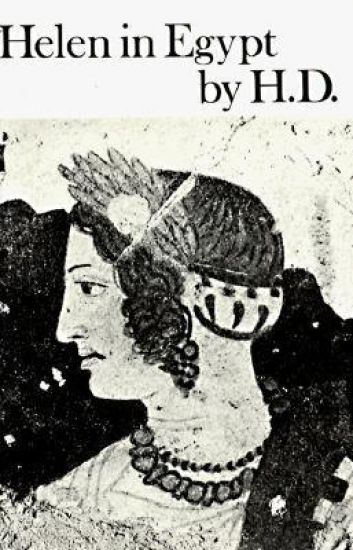
H. D.'s (Hilda Doolittle, 1884-1961) late poems of search and longing represent the mature achievement of a poet who has come increasingly to be recognized as one of the most important of her generation. The title poem and other long pieces in this collection ("Sagesse" and "Winter Love") were written between 1957 and her death four years later, and are heretofore unpublished, except in fragments. We can see now in proper context her fine ear for the free line, and understand why other poets, such as Denise Levertov, Robert Creeley, and Robert Duncan, find so much to admire in H. D.'s work. As in her earlier books, one level of H.D.'s significant poetic statement derives from her intimate knowledge of and identification with classical Greek and arcane cultures; taken together, these elements make up the poet's own personal myth. Norman Holmes Pearson, H. D's friend and literary executor, has contributed an illuminating foreword to this impressive collection. H. D.'s (Hilda Doolittle, 1884-1961) late poems of search and longing represent the mature achievement of a poet who has come increasingly to be recognized as one of the most important of her generation. The title poem and other long pieces in this collection ("Sagesse" and "Winter Love") were written between 1957 and her death four years later, and are heretofore unpublished, except in fragments. We can see now in proper context her fine ear for the free line, and understand why other poets, such as Denise Levertov, Robert Creeley, and Robert Duncan, find so much to admire in H. D.'s work. As in her earlier books, one level of H.D.'s significant poetic statement derives from her intimate knowledge of and identification with classical Greek and arcane cultures; taken together, these elements make up the poet's own personal myth. Norman Holmes Pearson, H. D's friend and literary executor, has contributed an illuminating foreword to this impressive collection.
In recapturing her memories of being a very little girl in Bethlehem, Pennsylvania, and later on a country place outside Philadelphia, H.D. "let the story tell itself or the child tell it." It is this voice or child's-eye view that lends The Gift its special charm as H.D. recreates the ordinary and extraordinary occasions of her early youth, the nightmares and delights. A road-company presentation of Uncle Tom's Cabin, Christmas Eve with its particular family ritual, a family outing, a disturbing accident--the happenings and incidents, perceptions and misconceptions with which a child's life is crowded are the substance of this most winning book. As she did for the H.D. novel HERmione, H.D.'s daughter, Perdita Schaffner, provides a fine introduction.
Written by H. D. in 1930 and only published in a 100-copy edition for friends in 1934, Kora and Ka marked a new level of intensity in the poet's experiments with prose fiction. The two long stories contained in this volume, Kora and Ka and Mira-Mare, are at once profoundly autobiographical yet, through H. D.'s unusual brand of modernist story-telling, pushed beyond personality. The men and women who haunt these tales are wraiths in spiritual exile, wanderers in a Europe still recovering from the devastations of World War I. Her descriptions of the beaches at Monte Carlo are triumphs of vivid detail - bright watercolors set against brooding psychological portraits. In its exploration of the broken dualities of self and civilization, Kora and Ka looks forward to H. D.'s masterpieces, Tribute to Freud and Trilogy.
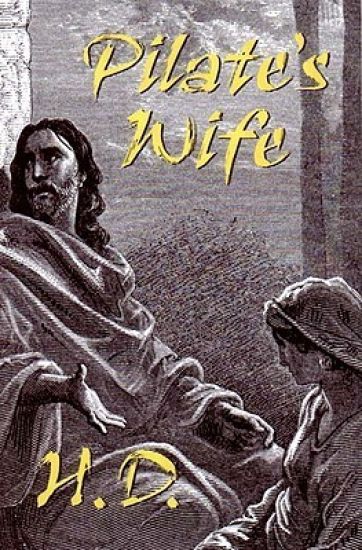
Veronica--Pontius Pilate's wife--is beautiful, brilliant, and weary of a life spent in her boudoir and the Roman court. When one of her lovers sends her disguised as a servant to a seer, she feels suddenly alive, experiencing "sudden pre-visions of inner splendor." The seer, Mnevis, arouses the artist, the dreamer in her, eventually telling her of a Jew, a "love-god," who believes women have an important place in the spiritual hierarchy. What follows is a chain of events in which Veronica commits the one genuine act of her life, offering Jesus a "way out" before his crucifixion.This revision of biblical history--in the tradition of D. H. Lawrence's The Man Who Died and Kazantzakis's The Last Temptation of Christ--is not just a novel; but part of the ongoing dialogue about the feminine and divine. Pilate's Wife was written by H.D. in 1929, revised in 1934, and is now finally published by New Directions, edited with an introduction by H.D. scholar Joan Burke. It is a testament to Alicia Ostriker's claim that, among the women poets and novelists of this century, "H.D. is the most profoundly religious, the most seriously engaged in spiritual quest."
Brilliant reworkings of Euripides' classic dramas by the great modernist poet H.D., now available in one volume. H.D.'s 1927 adaptation of Euripides's Hippolytus Temporizes and her 1937 translation of Ion appeared midpoint in her career. These two verse dramas can both be considered as "freely adapted" from plays by Euripides; they constitute a commentary in action, and in this regard resemble the Oedipus plays of W. B. Yeats and Ezra Pound's Women of Trachis. In the first play, the young man Hippolytus is obsessed with the virgin goddess Artemis and discovers the depth of his passion with the sensual Phaedra, his disguised stepmother: this experience brings self-knowledge and death. The heroine Kreousa in Ion attempts to poison Ion when she fails to recognize him as her son by Apollo and sees instead an outsider and possible usurper of her throne. H.D.'s translations of the Greek were greatly admired by T. S. Eliot. In her reworkings, she creates modern versions of classic plays, enabling her to explore her favorite poetic themes. Sigmund Freud (with whom H.D. was undergoing analysis just before she embarked on Ion) commended her translations; and after writing them, H.D. was able to go on to write Helen in Egypt, "a sweeping epic of healing and integration." These marvelous versions attest to H.D.'s claim that "the lines of this Greek poet (and all Greek poets if we have but the clue) are today as vivid and as fresh as they ever were."
Vale Ave — Latin for “Farewell, Hail” — is a hymn to Eros that unfolds as a gorgeous palimpsest of eternal recurrence and reincarnation, charting the course of two lovers who each seek the other across cultures, myths, and centuries. Vale Ave is alchemical — “mystery and portent, yes, but at the same time,” as H. D. writes, “there is Resurrection and the hope of Paradise.”
This autobiographical novel by the Imagist poet H. D. (1886-1961) is a rare and hallucinatory treasure. In writing HERmione, H. D. returned to a year in her life that was "peculiarly blighted." She was in her early twenties--"a disappointment to her father, an odd duckling to her mother, an importunate, overgrown, unincarnated entity that had no place." She had failed at Bryn Mawr, she felt hemmed in by her family, and she did not yet know what she was going to do with her life. The return from Europe of the wild-haired George Lowndes (Ezra Pound) expanded her horizons but threatened her sense of self. An intense new friendship with Fayne Rabb (Frances Josepha Gregg), an odd girl, brought an atmosphere that made our heroine's hold on everyday reality more tenuous. As Francesca Wade writes in her new introduction, "HERmione is H. D.'s rejoinder to mythic authority: her portrait of an artist groping her way slowly towards self-expression ends with her sexuality and artistic powers awoken, ready to name herself so all the world might know who she is."
""Tribute to Freud: With Unpublished Letters by Freud"" is a book written by Hilda Doolittle, an American poet, novelist and memoirist. The book is a tribute to Sigmund Freud, the founder of psychoanalysis, and explores his life and work. It includes a collection of unpublished letters written by Freud, which provide insight into his personal life and relationships. The book also discusses the impact of Freud's theories on modern psychology and society. Doolittle's writing is both informative and personal, as she reflects on her own experiences with psychoanalysis and her admiration for Freud's contributions to the field. This book is a must-read for anyone interested in the history of psychology and the life and work of Sigmund Freud.This is a new release of the original 1956 edition.This scarce antiquarian book is a facsimile reprint of the old original and may contain some imperfections such as library marks and notations. Because we believe this work is culturally important, we have made it available as part of our commitment for protecting, preserving, and promoting the world's literature in affordable, high quality, modern editions, that are true to their original work.
The second set of New Directions Poetry Pamphlet series, which includes Vale Ave by H. D.; Eiko & Koma by Forrest Gander; A Musical Hell by Alejandra Pizarnik; The Beautiful Contradictions by Nathaniel Tarn.
H.D. (Hilda Doolittle) var en amerikansk poet som levde mellan åren 1886–1961. År 1916 debuterade hon med Sea Garden, Havsträdgård, som vann kritikernas uppskattning. Den storartade debuten kom dock att bli en börda eftersom hon framgent inte ansågs »utveckla« sin poesi. Numera tillhör dock H.D. de stora modernisterna. Havsträdgård är märkt av första världskriget och poesin tematiserar människans destruktiva sidor, något som gör henne ständigt aktuell. Havsträdgård är översatt av Bo Gustavsson som också skrivit ett efterord.