Kirjojen hintavertailu. Mukana 12 459 402 kirjaa ja 12 kauppaa.

Kirjahaku

Etsi kirjoja tekijän nimen, kirjan nimen tai ISBN:n perusteella.

172 kirjaa tekijältä Horace, Charles Stephens Mathews

Odes, Epodes, and the secular Song

Odes, Epodes, and the secular Song

Horace; Charles Stephens Mathews

Hansebooks
2017
pokkari
Odes, Epodes, and the secular Song is an unchanged, high-quality reprint of the original edition of 1867. Hansebooks is editor of the literature on different topic areas such as research and science, travel and expeditions, cooking and nutrition, medicine, and other genres. As a publisher we focus on the preservation of historical literature. Many works of historical writers and scientists are available today as antiques only. Hansebooks newly publishes these books and contributes to the preservation of literature which has become rare and historical knowledge for the future.
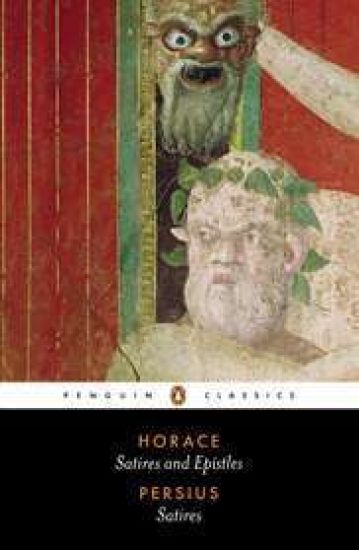
The Satires of Horace and Persius

The Satires of Horace and Persius

Horace

Penguin Classics
2005
pokkari
The Satires of Horace (65-8 BC), written in the troubled decade ending with the establishment of Augustus' regime, provide an amusing treatment of men's perennial enslavement to money, power, glory and sex. Epistles I, addressed to the poet's friends, deals with the problem of achieving contentment amid the complexities of urban life, while Epistles II and the Ars Poetica discuss Latin poetry - its history and social functions, and the craft required for its success. Both works have had a powerful influence on later Western literature, inspiring poets from Ben Jonson and Alexander Pope to W. H. Auden and Robert Frost. The Satires of Persius (AD 34-62) are highly idiosyncratic, containing a courageous attack on the poetry and morals of his wealthy contemporaries - even the ruling emperor, Nero.
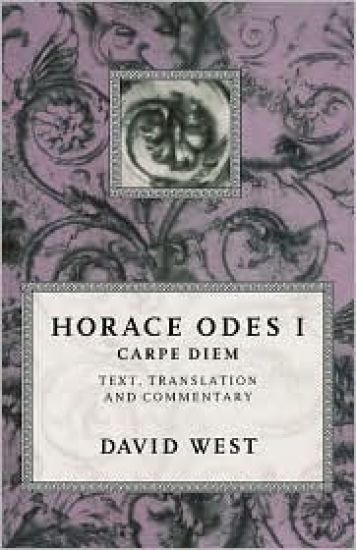
Horace: Odes I: Carpe Diem

Horace: Odes I: Carpe Diem

Horace

Clarendon Press
1995
sidottu
Horace is a great poet, much loved and imitated in the past, and in recent years much better understood as a result of the learned commentaries of Nisbet and Hubbard (1970, 1978). and Syndikus (1972, 1973). Yet today he is little read. This is partly because he had never been translated into English which is both close to the Latin and readable. The aim of this book is to provide such a translation and support it by a basic commentary which will help newcomers to Horace, whether or not they know any Latin, to understand how the poetry works. It should also stimulate and provoke students of Latin and of Roman history by propounding interpretations which are not always in line with current orthodoxies.
Horace: Odes I: Carpe Diem

Horace: Odes I: Carpe Diem

Horace

Clarendon Press
1995
nidottu
Horace is the greatest Latin lyric poet, and certainly the most influential. This book provides a new translation of the famous first book of Odes which is both accurate and readable, supported by a basic commentary for students showing how the poems work. The book includes the Oxford Classical Text edition of the Latin text. This book is intended for students, mainly undergraduate but some sixth form, of Latin Literature on Classics courses and Classics and English courses. Latin text with translation and commentary by: West, David (Professor Emeritus of Latin, University of Newcastle);
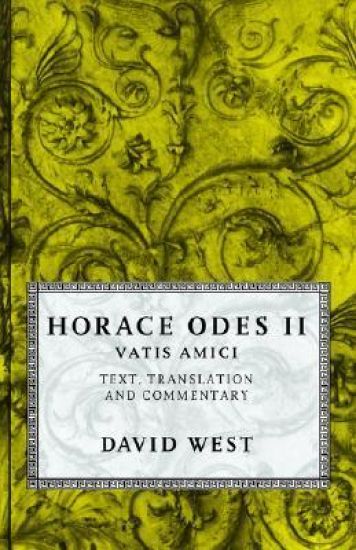
Horace: Odes II: Vatis Amici

Horace: Odes II: Vatis Amici

Horace

Clarendon Press
1998
sidottu
In these odes Horace creates lyric poetry in Latin which stands comparison with anything written by his brilliant predecessors in Greek. Of the three books published together in 23 BC the second is in many ways the most rewarding. The first ode, for instance, looks back at the civil wars fought by Caesar and Pompey, and by Octavian and Antony, from the point of view of Horace and his friend Pollio who both took part in them. There are also poems of friendship which give insight into the social and intellectual tone of the age of the first Roman emperor Augustus, and Horace's unique, elusive sense of humour is in evidence throughout. This book contains the Latin text (from the Oxford Classical Text), a translation which attempts to be close to the Latin while catching as much as possible of the flavour of the original, and a commentary which tries to suggest how these poems work as poetry.
Horace: Odes II: Vatis Amici

Horace: Odes II: Vatis Amici

Horace

Clarendon Press
1998
nidottu
In these odes Horace creates lyric poetry in Latin which stands comparison with anything written by his brilliant predecessors in Greek. Of the three books published together in 23 BC the second is in many ways the most rewarding. The first ode, for instance, looks back at the civil wars fought by Caesar and Pompey, and by Octavian and Antony, from the point of view of Horace and his friend Pollio who both took part in them. There are also poems of friendship which give insight into the social and intellectual tone of the age of the first Roman emperor Augustus, and Horace's unique, elusive sense of humour is in evidence throughout. This book contains the Latin text (from the Oxford Classical Text), a translation which attempts to be close to the Latin while catching as much as possible of the flavour of the original, and a commentary which tries to suggest how these poems work as poetry.
The Epistles of Horace (Bilingual Edition)

The Epistles of Horace (Bilingual Edition)

Horace

Farrar, Straus and Giroux
2002
nidottu
My aim is to take familiar things and makePoetry of them, and do it in such a wayThat it looks as if it was as easy as could beFor anybody to do it . . . the power of makingA perfectly wonderful thing out of nothing much.--from "The Art of Poetry" When David Ferry's translation of The Odes of Horace appeared in 1997, Bernard Knox, writing in The New York Review of Books, called it "a Horace for our times." Now Ferry has translated Horace's two books of Epistles, in which Horace perfected the conversational verse medium that gives his voice such dazzling immediacy, speaking in these letters with such directness, wit, and urgency to young writers, to friends, to his patron Maecenas, to Emperor Augustus himself. It is the voice of a free man, talking about how to get along in a Roman world full of temptations, opportunities, and contingencies, and how to do so with one's integrity intact. Horace's world, so unlike our own and yet so like it, comes to life in these poems. And there are also the poems -- the famous "Art of Poetry" and others -- about the tasks and responsibilities of the writer: truth to the demands of one's medium, fearless clear-sighted self-knowledge, and unillusioned, uncynical realism, joyfully recognizing the world for what it is.
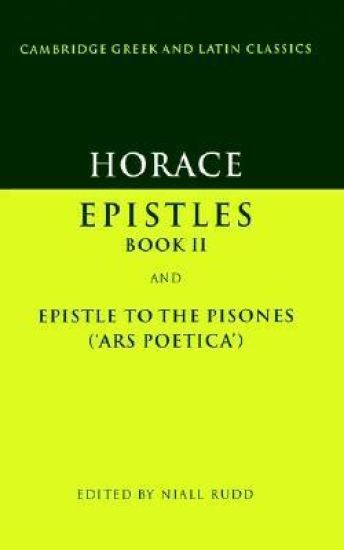
Horace: Epistles Book II and Ars Poetica

Horace: Epistles Book II and Ars Poetica

Horace

Cambridge University Press
1989
pokkari
This commentary fulfils the need for a student edition of Horace’s literary epistles, which have recently been the subject of renewed scholarly interest. Professor Rudd provides a clear introduction to each of the three poems: the Epistles to Augustus, to Florus, and to the Pisones (the so-called ‘Ars Poetica’). He sketches the historical context in which the poems were written, and comments on their structure and purpose. Attention is paid to the literary preoccupations of the individual epistles: the relations of poet and patron, and the role of poetry in the state (Augustus), the problems of a (professedly) tiring poet (Florus), and the presentation of classical poetic theory in the ‘Ars Poetica’. Horace’s influence on later criticism is noted, and there is a brief section on one of Alexander Pope’s Imitations. In his commentary on the text Professor Rudd addresses problems of grammar and style, focusing on linguistic difficulties and on the subtle movement of the poet’s thought.
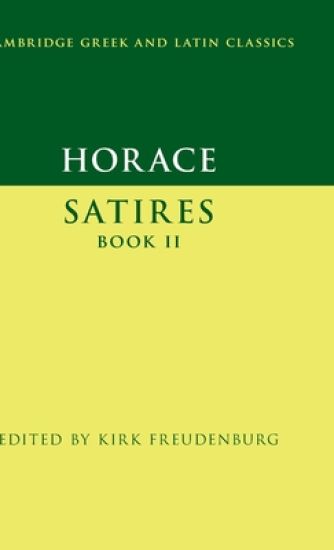
Horace: Satires Book II

Horace: Satires Book II

Horace

Cambridge University Press
2021
sidottu
The satires explored in this volume are some of the trickiest poems of ancient Rome's trickiest poet. Horace was an ironist, sneaky smart, and prone to hiding things under the surface. His Latin is dense and difficult. The challenges posed by these satires are especially acute because their voices, messages, and stylistic habits are many, and their themes range from the poet's anxieties about the limits of satiric free speech in the first poem to the ridiculous excesses of an outrageously overdone dinner party in the last. For students working at intermediate and advanced levels of Latin, this book makes the satires of Horace's second book of Sermones readable by explaining difficult issues of grammar, syntax, word-choice, genre, period, and style. For scholars who already know these poems well, it offers fresh insights into what satire is, and how these poems communicate as uniquely 'Horatian' expressions of the genre.
Horace: Satires Book II

Horace: Satires Book II

Horace

Cambridge University Press
2021
pokkari
The satires explored in this volume are some of the trickiest poems of ancient Rome's trickiest poet. Horace was an ironist, sneaky smart, and prone to hiding things under the surface. His Latin is dense and difficult. The challenges posed by these satires are especially acute because their voices, messages, and stylistic habits are many, and their themes range from the poet's anxieties about the limits of satiric free speech in the first poem to the ridiculous excesses of an outrageously overdone dinner party in the last. For students working at intermediate and advanced levels of Latin, this book makes the satires of Horace's second book of Sermones readable by explaining difficult issues of grammar, syntax, word-choice, genre, period, and style. For scholars who already know these poems well, it offers fresh insights into what satire is, and how these poems communicate as uniquely 'Horatian' expressions of the genre.
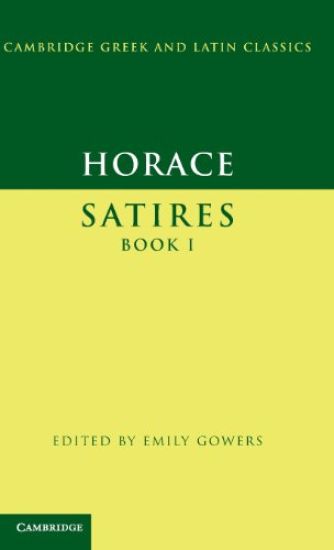
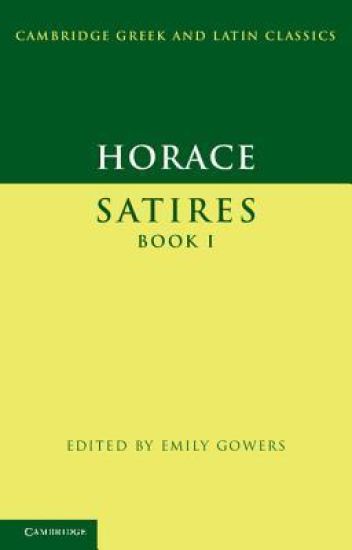
Horace: Satires Book I

Horace: Satires Book I

Horace

Cambridge University Press
2012
sidottu
Horace's first book of Satires is his debut work, a document of one man's self-fashioning on the cusp between republic and empire, and a pivotal text in the history of Roman satire. It wrestles with the problem of how to define and assimilate satire and justifies the poet's own position in a suspicious society. The commentary gives full weight to the dense texture of these poems while helping readers interpret their most cryptic aspects and appreciate their technical finesse. The introduction puts Horace in context as late-Republican newcomer and a vital figure in the development of satire, and discusses the structure and meaning of Satires I, literary and philosophical influences, style, metre, transmission and Horace's rich afterlife. Each poem is followed by an essay offering overall interpretation. This work is designed for upper-level students and scholars of classics but contains much of interest to specialists in later European literature.
Horace: Satires Book I

Horace: Satires Book I

Horace

Cambridge University Press
2012
pokkari
Horace's first book of Satires is his debut work, a document of one man's self-fashioning on the cusp between republic and empire, and a pivotal text in the history of Roman satire. It wrestles with the problem of how to define and assimilate satire and justifies the poet's own position in a suspicious society. The commentary gives full weight to the dense texture of these poems while helping readers interpret their most cryptic aspects and appreciate their technical finesse. The introduction puts Horace in context as late-Republican newcomer and a vital figure in the development of satire, and discusses the structure and meaning of Satires I, literary and philosophical influences, style, metre, transmission and Horace's rich afterlife. Each poem is followed by an essay offering overall interpretation. This work is designed for upper-level students and scholars of classics but contains much of interest to specialists in later European literature.
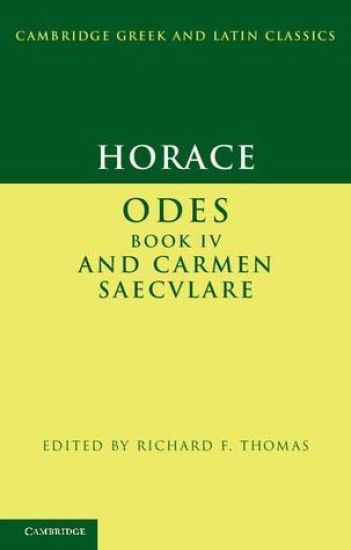
Horace: Odes IV and Carmen Saeculare

Horace: Odes IV and Carmen Saeculare

Horace

Cambridge University Press
2011
sidottu
The Carmen Saeculare was composed and published in 17 BCE as Horace was returning to the genre of lyric which he had abandoned six years earlier; the fourth book of Odes is in part a response to this poem, the only commissioned poem we know from the period. The hardening of the political situation, with the Republic a thing of the past and the Augustan succession in the air, threw the problematic issue of praise into fresh relief, and at the same time provided an impulse towards the nostalgia represented by the poet's private world. Professor Thomas provides an introduction and commentary (the first full commentary in English since the nineteenth century) to each of the poems, exploring their status as separate lyric artefacts and their place in the larger web of the book. The edition is intended primarily for upper-level undergraduates and graduate students, but is also important for scholars.
Horace: Odes IV and Carmen Saeculare

Horace: Odes IV and Carmen Saeculare

Horace

Cambridge University Press
2011
pokkari
The Carmen Saeculare was composed and published in 17 BCE as Horace was returning to the genre of lyric which he had abandoned six years earlier; the fourth book of Odes is in part a response to this poem, the only commissioned poem we know from the period. The hardening of the political situation, with the Republic a thing of the past and the Augustan succession in the air, threw the problematic issue of praise into fresh relief, and at the same time provided an impulse towards the nostalgia represented by the poet's private world. Professor Thomas provides an introduction and commentary (the first full commentary in English since the nineteenth century) to each of the poems, exploring their status as separate lyric artefacts and their place in the larger web of the book. The edition is intended primarily for upper-level undergraduates and graduate students, but is also important for scholars.
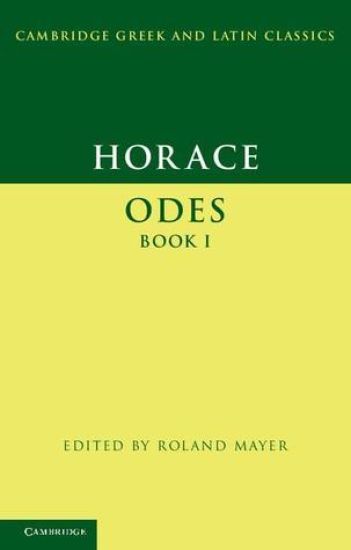
Horace: Odes Book I

Horace: Odes Book I

Horace

Cambridge University Press
2012
pokkari
In the first book of odes, Horace presents himself to his Roman readers in a novel guise, as the appropriator of the Greek lyric tradition. He aspired to add a new province to the empire of the national literature. The first book is designed both to establish Horace's engagement with his Greek predecessors and to create a role for lyric poetry in contemporary Rome. The collection of thirty-eight poems is therefore a dazzling feat of poetic appropriation and innovation, a blend of the public and the private voice of the poet. Classic Greek songs are evoked so as to provide a springboard for reflections on moral and political issues, for the praises of gods and men, friends and public figures, for celebration of love and drinking. This edition will enable students and their instructors to enter and enjoy Horace's lyric world.