Kirjojen hintavertailu. Mukana 11 627 469 kirjaa ja 12 kauppaa.

Kirjahaku

Etsi kirjoja tekijän nimen, kirjan nimen tai ISBN:n perusteella.

20 kirjaa tekijältä Horst Bredekamp

The Lure of Antiquity and the Cult of the Machine

The Lure of Antiquity and the Cult of the Machine

Horst Bredekamp

Markus Wiener Publishing Inc
1995
nidottu
The Kunstkammer was a programmatic display of art and oddities amassed by wealthy Europeans during the sixteenth to the eighteenth centuries. These nascent museums reflected the ambitions of such thinkers as Descartes, Locke, and Kepler to unite the forces of nature with art and technology. Bredekamp advances a radical view that the baroque Kunstkammer is also the nucleus of modern cyberspace.
Aby Warburg and America – The Art Historian as Ethnographer
To a greater extent than still widely assumed, the German scholar Aby Warburg drew, throughout his life, on the lessons of two of its early episodes: his travels of 1895-96 among Pueblo Indian communities in the North American Southwest, and his residence of 1896-97 in Berlin, which he prized as a center for the study of ethnography, ethnology, and anthropology. Over the next three decades, this pioneering thinker was able to affect a fruitful amalgamation of those disciplines with that of art history (in which he had himself been trained): the origin of a form of cultural studies that continues to exert an extraordinary intellectual allure. Quoting from Warburg's diaries, notebooks, and correspondence, this newly translated study throws fresh light on a most eventful journey through the realm of ideas.
Galileis denkende Hand

Galileis denkende Hand

Horst Bredekamp

De Gruyter
2014
sidottu
Galileis denkende Hand stellt eine grundlegende Überarbeitung des im Jahr 2007 erschienenen Werkes Galilei, der Künstler dar. Bereinigt um eine fehlerhafte Zuschreibung, entfaltet es auf stark erweiterter Grundlage das künstlerische Element von Galileis Forscherleben. Nach einer Rekonstruktion von Galileis künstlerischer Ausbildung erschließt es mit seinem künstlerischen Freundeskreis auch seinen zeitkritischen Stilbegriff und seine Kunsttheorie. Die Untersuchung von Galileis Darstellungs- und Analysemittel bei der Erkundung des Mondes, der Sonne, der Jupitermonde und der Fixsterne führt zu zahlreichen neuen Ergebnissen; so erweisen sich die berühmtem Florentiner Mondzeichnungen nicht als Modelle, sondern als Korrekturen der Mondradierungen im Sternenboten von 1610. Schließlich revidiert das Buch die herkömmliche Deutung von Galileis Diktum, dass die Philosophie im geometrischen Buch der Natur ihr Ziel finde. Galilei zufolge besteht die Natur nicht nur aus geometrischer Präzision, sondern auch aus dem Überfluss des Wirren und Wuchernden. Da die Kunst beide Elemente im Blick hat, ist sie für Galilei das Modell aller Philosophie.
Galileo’s Thinking Hand

Galileo’s Thinking Hand

Horst Bredekamp

De Gruyter
2019
sidottu
Contemporary biographies of Galilei emphasize, in several places, that he was a masterful draughtsman. In fact, Galilei studied at the art academy, which is where his friendship with Ludovico Cigoli developed, who later became the official court artist. The book focuses on this formative effect – it tracks Galilei’s trust in the epistemological strength of drawings. It also looks at Galilei’s activities in the world of art and his reflections on art theory, ending with an appreciation of his fame; after all, he was revered as a rebirth of Michelangelo. For the first time, this publication collects all aspects of the appreciation of Galilei as an artist, contemplating his art not only as another facet of his activities, but as an essential element of his research.
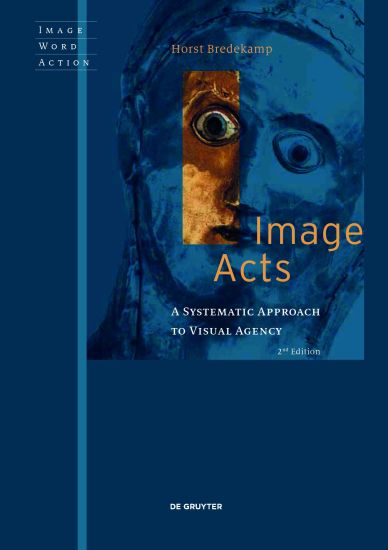
Image Acts

Image Acts

Horst Bredekamp

De Gruyter
2017
isokokoinen pokkari
Heavily represented sections of contemporary philosophy subscribe to the notion of "embodiment". However promising this pragmatic turn of events may be, it remains limited in that it interprets the world as a projection of the cognizing "I". By contrast, Image Acts focuses on the counterforce of the form of images. The book subdivides this sphere into three parts: imitation, substitution, and the pure effect of the form. All three parts are contemplated with examples from antiquity through to the present and the iconoclastic controversies of our times. From this reconstruction of the image act springs the element of a new philosophy of affordance.
Ursprung des Bildakts

Ursprung des Bildakts

Horst Bredekamp

De Gruyter
2022
nidottu
Der Ursprung des Bildakts bindet die in den letzten drei Jahrzehnten erzielten Forschungsergebnisse der Vor- und Frühgeschichte kunsthistorisch ein und ist als anthropologische Grundlegung einer Wirkmacht der Form konzipiert. Fossilien-Inklusionen in Faustkeilen erlauben eine materiale und philosophische Bestimmung der «ikonischen Differenz» (Boehm), die für das Verständnis des Bildakts fundamental ist.
Die Fenster der Monade

Die Fenster der Monade

Horst Bredekamp

De Gruyter
2020
isokokoinen pokkari
Das Buch steht im Zusammenhang des Versuches, die zentrale Rolle der Bilder für die Ausbildung der modernen Philosophie am Beispiel bedeutender Gestalten des siebzehnten Jahrhunderts zu rekonstruieren. Das Projekt begann mit der Erschließung der Staatstheorie aus der Bildpolitik des "Leviathan" von Thomas Hobbes. Mit Gottfried Wilhelm Leibniz' Ideen, ein Theater der Natur und Kunst sowie einen Atlas der Einbildungskraft zu errichten, folgt nun die Rekonstruktion eines Projektes, das für das Verständnis seiner Philosophie von tiefgreifender Bedeutung sein könnte. Obwohl Leibniz diese Idee so hartnäckig und ausdauernd wie kaum ein anderes Unternehmen betrieben hat, ist sie in der Forschung bislang so gut wie unbekannt geblieben. Für diesen Umstand war die zersplitterte und unvollständige Überlieferung von Leibniz' Schriften ebenso verantwortlich wie ein mächtiger Strang der Philosophiegeschichte, der die Welt des Haptischen und Visuellen immer dann favorisiert, wenn sie transzendiert wird. Die jüngsten Bände der Akademie-Ausgabe bieten jedoch erstmals die Möglichkeit, Leibniz' Wertschätzung der tastenden und zeichnenden Hand und des neugierigen und geschulten Auges im Zusammenhang zu verfolgen. Seine schier unbegreiflich vielfältigen Denkbewegungen und Aktivitäten erhalten mit dem Projekt des Theaters der Natur und Kunst daher nicht nur eine Ergänzung, sondern einen neuen Rahmen. Leibniz' Faible für das Theatrum Naturae et Artis könnte das Gesamtbild seiner Philosophie verwandeln, weil es die Kluft zwischen Kalkül und Anschauung wie auch zwischen der "Fensterlosigkeit" der Monade und der körperlichen Form ihrer Perzeptionsweisen zugleich vertieft und überbrückt.
Thomas Hobbes - Der Leviathan

Thomas Hobbes - Der Leviathan

Horst Bredekamp

De Gruyter
2020
isokokoinen pokkari
Von Natur aus ist der Mensch so frei wie wölfisch. Um sich selbst zu bändigen, muß er folglich einen künstlichen Riesen schaffen, den Staat, der als übergeordnete Instanz den permanenten Bürgerkrieg zu unterdrücken und Frieden zu schaffen vermag. Diese Essenz von Thomas Hobbes'"Leviathan" ist bis heute ebenso vehement verworfen wie bekräftigt worden. In den letzten Jahrzehnten wurden vor allem die historischen Bedingungen erschlossen, unter denen Hobbes sein epochales Werk verfaßte; aber seine bestürzende Grundthese, daß es des Schreckens bedarf, um inneren Frieden zu erzeugen, ist eine Herausforderung für jedwede Staats- und Gesellschaftstheorie geblieben. Zu den Mitteln, mit denen der Leviathan die Menschen vom Unfrieden abhält, gehören Bilder, und aus diesem Grund steht dem Leviathan ein Frontispiz voran. Obwohl seit Jahrhunderten selbst entfernteste Aspekte von Hobbes' Werk ausgeleuchtet wurden, ist dieses grundlegende Element seiner Lehre bislang nicht erörtert worden. Eine systematische Untersuchung seiner Wertschätzung des Augensinnes fehlt ebenso wie eine umfassende Analyse seiner Bildmittel. Horst Bredekamp erschließt mit Abraham Bosse den Künstler des Frontispizes, stellt sämtliche Varianten dieses Urbildes des modernen Staates zusammen und versucht, die Vorgeschichte seiner politischen Ikonographie zu klären. Im Zentrum stehen die königlichen Kunstleiber von Westminster Abbey sowie optische Geräte, mit deren Hilfe Hobbes neben dem Körper und dem Raum auch eine künstliche Zeit als Wirkmittel des Leviathan zu etablieren suchte. Gegen Ende seiner prägnanten Analyse erörtert der Autor die Wiederkehr der Hobbesschen Staatsikone im neunzehnten und zwanzigsten Jahrhundert sowie die Zukunft des Staates als Bild.
Darwin's Corals

Darwin's Corals

Horst Bredekamp

De Gruyter
2019
sidottu
To this day Charles Darwin’s evolutionary theory of the "survival of the fittest" has been visualized with the universal model of a tree of life. But early on in Darwin’s thinking the coral provided a fascinating alternative to the tree as a depiction of the evolution of the species. Horst Bredekamp shows how Darwin, a coral enthusiast and collector, found in it a more adequate illustration of evolution through natural selection: It grows anarchically in all directions and no longer upholds mankind as the "crown of creation." Using this example Darwin is proving himself to be both a destroyer and consummator of traditional natural philosophy. Since antiquity the coral had been a symbol of nature as a whole.
Leviathan

Leviathan

Horst Bredekamp

De Gruyter
2020
sidottu
Horst Bredekamp’s subject is the astute deployment and perennial resonance of the startling image of the body politic that dominates the frontispiece to Leviathan: a treatise on the psychology of the individual and the dynamic of the multitude, published in 1651 by the English philosopher Thomas Hobbes. Affirming the centrality of such a figural device for this pioneering theorist of the state, Bredekamp goes on to address the art-historical dimension of the mesmerising etched title-page. In his central chapters he explores the extraordinary range of sources – from socio-cultural tradition to scientific advances – on which the author and his artist-collaborator may have drawn. In conclusion, he reveals Hobbes to be no less passionate than shrewd in his belief that the constraints and amenities of a tolerable life in common attest to the potency of the visual. As appendices, two essays and catalogues explore the portraits made of Hobbes as well as illustrations that appeared in his other works, thus systematically completing the exploration of the images connected with this exceptional philosopher.
Image Acts

Image Acts

Horst Bredekamp

De Gruyter
2021
isokokoinen pokkari
Heavily represented sections of contemporary philosophy subscribe to the notion of "embodiment". However promising this pragmatic turn of events may be, it remains limited in that it interprets the world as a projection of the cognizing "I". By contrast, Image Acts focuses on the counterforce of the form of images. The book subdivides this sphere into three parts: imitation, substitution, and the pure effect of the form. All three parts are contemplated with examples from antiquity through to the present and the iconoclastic controversies of our times. From this reconstruction of the image act springs the element of a new philosophy of affordance.
Sigmund Freud's Figural Psychoanalysis

Sigmund Freud's Figural Psychoanalysis

Horst Bredekamp

De Gruyter
2025
isokokoinen pokkari
Sigmund Freud's research into Michelangelo's Moses and the collection of small sculpted figures from Antiquity that he amassed attest to a visual psychoanalysis that contradicted the reputed iconoclasm of that discipline. Freud himself drew inspiration from items in his collection; but he also incorporated these into the treatment of his patients. As revealed by this book, what we now know of these aspects of his life and work may serve as a key to a deeper understanding of his theory of the unconscious. In order to use to best advantage his preoccupation with the visual, Freud was obliged to conceal this aspect of his psychoanalytic method, to "veil" it. This in itself reveals how far psychoanalysis, as a space of liberation, could nonetheless be subject to cultural constraints, not least the prohibition of images in the Mosaic tradition. In nonetheless persisting in his transgression, Freud was able to establish a space beneficially invested with imagery, in which the images of trauma could be overcome. Freud’s collection of ancient small-scale sculptures interpreted in light of newly discovered sources In-depth analysis of Edmund Engelman’s photographs of Freud’s studies
Sigmund Freuds Figurliche Psychoanalyse: Der Moses Michelangelos Und Die Sammlung Von Idolen
Sigmund Freuds Untersuchung des Moses von Michelangelo sowie seine Sammlung antiker Kleinskulpturen bieten, gemeinsam betrachtet, Elemente einer visuellen Psychoanalyse, die dem ikonoklastischen Grundzug dieser Wissenschaft widerspricht. Freud bezog seine Statuetten in die Behandlungspraxis ein und liea sich auch selbst von ihnen inspirieren. Seine Sammlung, das zeigt dieser Band, ist ein Schlussel fur seine Wissenschaft des Unbewussten. Um ihre Wirkung zu nutzen, musste Freud diese Form der Behandlungspraxis verbergen, sie verhullen. Nur wenn man diese Motive berucksichtigt, ist zu erschlieaen, wie stark die Psychoanalyse als ein Ort der Befreiung von kulturellen Zwangen gedeutet werden kann: Freuds Beschaftigung mit dem Moses und seine Sammlung waren die Antipoden zum mosaischen Bilderverbot. Erst so konnte er den unterkundigen Bildern der Traumata einen Freiheitsraum vermitteln, in dem sich diese bewaltigen lieaen.