Kirjojen hintavertailu. Mukana 11 244 527 kirjaa ja 12 kauppaa.

Kirjahaku

Etsi kirjoja tekijän nimen, kirjan nimen tai ISBN:n perusteella.

264 kirjaa tekijältä Hourly History

The Olmecs: A History from Beginning to End

The Olmecs: A History from Beginning to End

Hourly History

Independently Published
2019
nidottu
Discover the remarkable history of The Olmecs...Many ancient civilizations are described as mysterious, but none provide as many puzzles and unanswered questions as the Olmecs. These people arrived in lands near the Gulf of Mexico around 1500 BCE, and they brought with them entirely new concepts in terms of engineering, agriculture, and religion. The problem is, we have no idea where they came from or how they developed these new ideas. Then, around 400 BCE, the Olmecs vanished as suddenly and inexplicably as they appeared, leaving behind no written records but providing a legacy of beliefs and ideas which permeated virtually every Mesoamerican culture which followed. Respected scholars take very different views on the Olmec civilization. Some feel that the Olmecs must have come to Central America from somewhere else entirely, while others are adamant that they are indigenous people. Some historians believe that the Olmecs were simply one of several cultures which emerged at around the same time, while others are vehement that this is the mother culture from which all subsequent Mesoamerican cultures descended. Less than one hundred years ago, there wasn't even agreement on whether these people had existed at all.There are very few cultures as important as the Olmecs about which we know so little. This book attempts to convey the story of the mysterious Olmecs and their unique and fascinating artifacts. Discover a plethora of topics such as Origins The Olmec Enigma The Fall of San Lorenzo Were-Jaguars and Feathered Serpents The Rise of La Venta The Disappearance of the Olmecs And much more So if you want a concise and informative book on The Olmecs, simply scroll up and click the "Buy now" button for instant access
Native American History

Native American History

Hourly History

Independently Published
2019
pokkari
Discover the remarkable history of the Native Americans...Until surprisingly recently, most history books noted that America was discovered in 1492 by Christopher Columbus. The truth was that by the time that Columbus arrived in America, people had been living there for more than 12,000 years. During this time, the indigenous people of North America lived without contact with other continents. Different groups developed separate and distinct ways of life, cultures, and societies but all shared one common characteristic: they relied on the land to provide them with food, and they developed a series of religions that, while separate, shared a respect for nature and imbued many animals and natural features with spiritual characteristics. These beliefs, combined with the fact that most of these societies were relatively primitive compared to those emerging in other parts of the world, meant that the Native Americans were able to live in harmony with the natural world. These people had sophisticated and complex belief systems, but they built no cities, no wheeled vehicles, and developed nothing beyond the most basic written language. Although many millions of people lived in North America, their impact on the landscape and the natural systems was minimal.Then, abruptly, white settlers arrived, bringing with them new technologies and weapons, new religions, and an indifference towards nature. They also brought with them diseases to which the Native Americans had never before been exposed. Within two hundred years, the Native American population dwindled to a fraction of what it had been; the survivors were herded onto reservations on which they could not follow their traditional ways of life and where they were denied the most basic human rights. Only in the twentieth century did the population of Native American people begin to recover, and only then did the general population of America begin to regard these cultured and sophisticated people as anything but savages. This is the story of the gradual rise, sudden destruction, and slow recovery of the native people of North America. Discover a plethora of topics such asThe Emergence of Native American Peoples and CulturesLife before the White MenEuropean Settlers ArriveEarly Wars in AmericaAmerican ExpansionGhost Dancing and the Wounded Knee MassacreAnd much more So if you want a concise and informative book on Native American History, simply scroll up and click the "Add to cart" button
American Indian Wars: A History From Beginning to End

American Indian Wars: A History From Beginning to End

Hourly History

Independently Published
2019
nidottu
Discover the remarkable history of the American Indian Wars...The American Indian Wars, a series of conflicts between white settlers and Native Americans which took place in the seventeenth, eighteenth and nineteenth centuries, were complex, brutal and many. An official United States Census report published in 1898 noted at least 40 wars which had taken place in the previous 100 years. The total number of individual wars probably numbers well over 100, though many were localized and on a very small scale. The American Indian Wars were often bafflingly different, each with its own specific causes and precipitating factors. Yet each was also essentially similar: These wars was fought for possession of land. As white settlers gradually spread over what is now the United States of America, they encountered Native American tribes. The white settlers wanted to create farms and ranches. The tribes wanted the land for hunting. There could be no compromise-these were wars to the death for the right to establish or retain a way of life. The conflicts which resulted were numerous, violent, and localized. Although both sides suffered setbacks, this series of wars gradually pushed Native Americans out of their homelands to make way for the expansion of white settlement. This is a concise telling of the American Indian Wars, from the earliest Beaver Wars in the seventeenth century between French, Dutch, and British settlers and their Native American allies to the tragic confrontation at Wounded Knee Creek at the end of the nineteenth century. Discover a plethora of topics such as The Colonial Period Washington Takes on the Northwest Territory Andrew Jackson and the Seminole Wars Wars in the Wild West Sheridan's Wars The Road to the Wounded Knee Massacre And much more So if you want a concise and informative book on the American Indian Wars, simply scroll up and click the "Buy now" button for instant access
Pirates: The Golden Age of Piracy: A History from Beginning to End
PiratesPirates dominate movie box office profits, they are theme park entertainment, and they occupy a place in popular culture that has outlasted the era when they originally ruled the seas. Contemporary audiences who are safe from the pistols and cutlasses of the men who sailed the Caribbean, Indian, and Atlantic Oceans to prey upon ships and claim their cargo may find it hard to reconcile the perceived glamor of Captain Jack Sparrow with the authentic bloodlust and greed of the real pirates who killed without conscience, kidnapped innocent victims for ransom, and ravaged, bribed, and robbed their way into legend. Tragut Rais, Grace O'Malley, William Kidd, Blackbeard and their colleagues were dangerous adventurers who lived at a time when piracy was an economic enterprise which yielded both wealth and a hangman's noose. Inside you will read about...- When Pirates Owned the Seas- The Roots of Piracy- The Original Pirates of the Caribbean- The Pirate Round- Piracy after the Spanish War of Succession- The Pirates of the Barbary Coast- The Modern-Day Pirates Most pirates had a short life before they were captured and executed. A few lucky ones did die of natural causes, but they were rare. Nonetheless, those tales of swashbuckling adventure under the Jolly Roger continue to mesmerize us. Read more about the reality of the Golden Age of Piracy to find out whether or not Hollywood's version can possibly compare with the truth.
French and Indian War: A History From Beginning to End

French and Indian War: A History From Beginning to End

Hourly History

Independently Published
2017
nidottu
French and Indian War The French and Indian War is one of the most significant, yet least acknowledged and understood, periods of American history. Fought chiefly between the two imperial powers of England and France in the mid-18th century, the struggle would also draw in native Indian nations who sought to exert their own strength and sovereignty over the North American continent. Inside you will read about... ✓ Imperial Appetites ✓ Sparks Ignite ✓ Rumours of War ✓ Pitt Rising ✓ The Montcalm Before the Storm ✓ Fortresses Fall ✓ From the Plains of Abraham to Peace From the first shots fired in the Ohio Valley wilderness in 1754 until the Treaty of Paris signed in 1763, the French and Indian War became a conflict that encircled the globe, drawing in nation after nation and inciting battles from the Caribbean to the Philippines. This book tells the story of this mighty struggle and how its outcome ultimately laid the foundations for the modern world we inhabit today.
The Inquisition: A History From Beginning to End

The Inquisition: A History From Beginning to End

Hourly History

Independently Published
2017
nidottu
The Inquisition The Roman Catholic Inquisition was one of the most controversial organizations in human history. Although it has been painted in a negative light, the Inquisition was too broad in scope to define as simply good or bad. It was a period where conflict and bloodshed were inevitable. It was a time where war, famine, plague, and poverty were common factors of human life. From the 1180s to the 1830s, the Inquisition was the judicial arm of the Catholic Church. Created to root out and punish heretics within the Catholic faith, the Inquisition became an institution that would carve its name into history. Inside you will read about... ✓ The Conception of the Inquisition ✓ The Hammer of Witches ✓ The Spanish Inquisition ✓ The Portuguese Inquisition ✓ The Roman Inquisition ✓ Shades of the Inquisition in Modern Society And much more Throughout its many variations, the Inquisition took hold in France, Spain, Portugal, and Italy and in the process, both hastened and stunted progress in Western society. The Inquisition was as multi-faceted in its failure as it was in its successes. Though it was responsible for the deaths of thousands, it was also responsible for the sparing of thousands more. The Inquisition put to death some of the brightest minds of the time, and yet their brutality quickened the pace of the Renaissance and the Enlightenment. In short, the Inquisition was many things
American History: The Ultimate Box Set on American History
Discover the remarkable history of The United States of America...Seven Books in One American Revolution War of 1812 American Civil War The Great Depression Pearl Harbor The Space Race Vietnam WarSo if you want a concise and informative book on the history of The United States of America, simply click the "Buy now" button for instant access American RevolutionThe American Revolution, which took place between 1765 and 1783, was an uprising by British colonists in North America against the rule of Great Britain. The colonists were fighting for rights they felt they deserved, not only as British citizens, but as human beings. War of 1812In 1812, Americans held two distinctly different visions of their country. Some saw growing production, manufactures, trade, and merchant ships traversing the globe bringing a vast array of staple and luxury goods to commercial centers and riches to American captains living in cities like the capitals of Europe. Others saw a vast agrarian paradise spreading from the eastern coast into the western wilderness where innumerable American farmers and their families could be independent and equal, free of government impediments and corruption. American Civil WarBeginning with the birth of the nation, slavery divided and caused conflict for the United States of America, worsening during the country's early decades as the practice became more economically vital. Finally, in 1861, the American Civil War erupted after the election of President Abraham Lincoln. The Great DepressionThe Great Depression was one of the most trying eras in American history. All aspects of the United States were affected. After the stock market crash of 1929, the nation was thrust into a decade of turmoil and change-in government, the economy, and culture. Many of the changes brought about by the Great Depression remain today. Pearl HarborPresident Franklin D. Roosevelt described December 7, 1941, the date when the Japanese launched a surprise attack against the United States while the two countries were still officially at peace, as a day that would live in infamy. The action hurled the United States into the global conflict of World War II, a violent conflagration that the nation, fiercely isolationist, had intended to ignore. The Space RaceDuring fourteen years, from 1955 to 1969, the Soviet Union and the United States of America were engaged in a dramatic race against each other to conquer space. This period encompassed dramatic victories, humbling defeats, and more than one tragedy. Vietnam WarThe Vietnam War remains one of the most iconic events of the twentieth century. In the United States, it polarized public opinion and changed foreign policy. It destroyed the presidency of Lyndon Johnson and was the catalyst for a massively impactful protest movement. More importantly, in Vietnam, as well as surrounding areas, it caused untold destruction, death, and suffering.
East India Company and Dutch East India Company: A History From Beginning to End
East India Company and Dutch East India Company* * *Download for FREE on Kindle Unlimited + Free BONUS Inside * * * The East India CompanyFounded at the dawn of the seventeenth century as European nations were establishing global empires, the English East India Company would become a vital part of burgeoning British supremacy. Begun as a joint-stock company for trade with the East Indies, this organization would evolve into one of the world's first capitalistic corporations. Inside you will read about...✓ The English in the Atlantic Era and the Founding of the East India Company✓ The 17th Century: Struggling, Building, and Growing with Violence✓ The East India Company Enters the 18th Century✓ The British Government Steps In✓ China and the Opium Trade✓ Growing British Involvement in the 19th Century✓ The End of the East India CompanyAnd much more Over the course of their 250+ years, the East India Company had built a global trading empire, raised an army and waged war, and conquered vast territory, including the entire subcontinent of India. Without their involvement, the British presence in India would look very different in the historical record. Though the company was dissolved by 1874, their influence on world history cannot be overstated. The Dutch East India CompanyOnce valued at close to seven trillion dollars by today's standards, the Dutch East India Company, formed in 1602, became the world's first multinational corporation. In the nearly 200-year reign of their empire at sea, the Dutch East India Company amassed unfathomable fortunes, laid the foundation of the modern globalized world, and built monopolies that controlled the economy of the seventeenth and eighteenth centuries in Europe and the East Indies. Inside you will read about...✓ The Superstructure of the VOC✓ The Growth of VOC's Colonies and Trade Routes✓ The Golden Age✓ Reorientation and the Expansion Age✓ The Great Wars and Conquests of the VOC✓ Decline and FallAnd much more The rich history of the Verenigde Oostindische Compagnie commonly referred to as the VOC, and its titanic exploits are as astonishing as the twelve labors of Hercules. Uncover the organization that in no small part built the world we live in from the ground up.
The Progressive Era: A History From Beginning to End

The Progressive Era: A History From Beginning to End

Hourly History

Independently Published
2018
nidottu
Progressive EraThe Progressive Era was the period of American history between the 1890s and 1920s. It was movement dedicated to political and social reform largely driven by the middle class. In a world that was dominated by wealthy industrialists and threatened by radical ideas of laborers, the middle class strived for order. Inside you will read about...✓ Stirred to Action✓ Women's Suffrage✓ Temperance and Anti-Alcohol Campaigns✓ The Dark Side of Progressivism: Forced Sterilizations and Eugenics✓ The African-American Experience✓ Progressive Presidents and the Start of WWIAnd much more Women played a prominent role in the movement. Their main objective was gaining the right to vote, but they also worked tirelessly on temperance, urban reform, and other social reforms. Women gained a strong influence even before they achieved suffrage.Progressivism was dominated by optimism for the future and the ability of civilization to find solutions to age-old problems. Those in the movement had an overriding faith particularly in Western civilization and its apparent greatness. The end of the era embodied a severe questioning of that faith. Ultimately, the Progressive Era left a legacy of hope, but also a warning against hubris.
The Opium Wars: A History From Beginning to End

The Opium Wars: A History From Beginning to End

Hourly History

Independently Published
2018
nidottu
Discover the remarkable history of the Opium Wars...Violent confrontation between armed groups over the supply of illegal narcotics is something we commonly associate with criminal gangs in modern cities, but in the mid-nineteenth century Great Britain went to war with Imperial China in order to continue to supply Chinese addicts with opium. The two wars which followed have become known as the Opium Wars, and they led to the utter defeat of China, the establishment of a British colony in Hong Kong, and the continuation of a narcotics trade that was worth millions of pounds each year to the British. The Opium Wars exposed the weaknesses of the Chinese Qing dynasty in terms of its military abilities and internal corruption. They also exposed divisions in Victorian Britain where people were beginning to question the morality of going to war to support an illegal narcotics trade which caused misery and death for millions of Chinese. In the end, the British were able to overcome their reservations and prosecuted these two wars with great success. British casualties were small and the gains enormous-the British opium trade to China would continue for more than fifty years after the end of the Second Opium War. For the Chinese Qing dynasty, the Opium Wars marked the beginning of the end. Imperial China had endured for two thousand years, but within fifty years of the humiliations of the Opium Wars, a revolution overthrew the imperial court and turned China into a republic. Although they are little remembered today, the Opium Wars changed the face not just of China but also of the whole of Asia. This is the story of those wars. Discover a plethora of topics such as The Joy Plant Outbreak of the First Opium War British Superiority and the Devil Ship The Treaty of Nanking: First of the Unequal Treaties The Inevitable Second Opium War The Fall of Beijing And much more So if you want a concise and informative book on the Opium Wars, simply scroll up and click the "Buy now" button for instant access
The Mexican Revolution: A History From Beginning to End

The Mexican Revolution: A History From Beginning to End

Hourly History

Independently Published
2018
nidottu
Mexican RevolutionOver a period of more than ten years, following the overthrow of the government in 1910, Mexico experienced a period of intense and bloody warfare as a bewildering array of factions in ever-changing alliances took power and then lost it. Presidents were elected (or elected themselves) and were then deposed or assassinated. New factions appeared with impressive sounding slogans, took to the field, and were either wiped out and never heard of again or became the next government. Inside you will read about...✓ The Porfiriato✓ The Unlikely Revolutionary✓ Reign and Assassination of Madero✓ The Iron Hand of Huerta✓ Carranza Takes on Zapata and Villa✓ Last Man StandingAnd much more The Mexican Revolution is confusing and difficult to understand-there is, for example, still no agreement between scholars and historians on when it ended-but it is essential in understanding the national identity of modern Mexico. The civil war produced heroes whose names live on in legend and villains whose bloody exploits are still horrifying. It also caused anything up to two million casualties both as a direct result of the fighting and in the famine, economic hardship, and disease which followed in its wake.Modern Mexico was created out of the turmoil of the Mexican Revolution; this is the story of la revoluci n mexicana.
The Gilded Age: A History From Beginning to End

The Gilded Age: A History From Beginning to End

Hourly History

Independently Published
2019
nidottu
The Gilded AgeThe period from 1870 to 1900 in the United States has become known as the Gilded Age, during which America was transformed almost beyond recognition. In the 1870s, the country was still recovering from a horrendously destructive Civil War. The nation was still mainly agrarian; cities were relatively small and large-scale industry almost non-existent. Thirty years later, the U.S. had become an industrial powerhouse with massive cities featuring skyscrapers, electric lights, automobiles on the streets, and subways running below. An influx of immigrants from different parts of the world had changed the very nature of American society which featured almost unimaginable wealth living side-by-side with abject poverty. Inside you will read about...✓ Taming the Wild West✓ Robber Barons and Captains of Industry✓ Emergence of Labor Unions and Women's Movements✓ The New Immigrants✓ Invention and InnovationAnd much more The Gilded Age was an era of entrepreneurs, inventions, industrial development, and new ideas. Most of all, it was a period of rapid and profound change which came at a high cost for the working class. In a Golden Age, life is good for everyone. But in a Gilded Age, there is only a thin surface of gold over underlying base metal, a metaphor for a small number of fabulously wealthy people who grew rich by exploiting vast numbers who lived in poverty. This is the story of the Gilded Age of America.
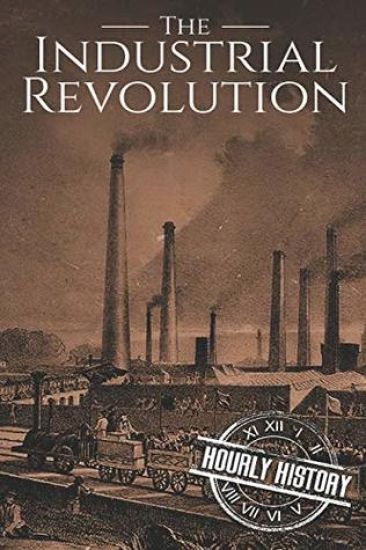
The Industrial Revolution: A History From Beginning to End
The Industrial RevolutionThe Industrial Revolution which took place in Great Britain between the middle of the eighteenth century and the middle of the nineteenth transformed British industry and society and made Great Britain the most powerful nation in the world. The Industrial Revolution didn't happen due to one, single factor but rather to a number of separate yet related developments which interacted to change the world profoundly and completely. Improvements in the production of iron allowed the construction of efficient, reliable steam engines. These steam engines were then used in the production of iron to improve the quality and quantity of iron production even further. Manufacturing became concentrated in factories filled with automated machinery while canals and improved roads allowed raw materials to be brought to these factories and for finished products to be distributed. Inside you will read about...✓ Transport and the Rise of Global Trade✓ The Iron Heart of the Industrial Revolution✓ The Power of Steam✓ The Lives of Workers during the Industrial Revolution✓ The Rise of Labor MovementsAnd much more During the the Industrial Revolution, people became used to the availability of cheap, mass-produced items transported to the point of sale from other parts of the country or even other parts of the world. However, people also became used to living in large cities and working in factories and mills, often for meager wages and in dangerous and exhausting conditions. Progress made a small number of people very wealthy, but it also condemned a large portion of the British population to living and working in danger and squalor. Opposition to the Industrial Revolution came from skilled workers who saw their jobs being replaced by machines and from influential poets who deplored the loss of what they regarded as an idyllic, rural, agrarian way of life. This opposition was brutally repressed, and even those who tried to champion the rights of workers sometimes found themselves under attack by the British Army. The Industrial Revolution changed almost everything about the British way of life, and it spread from Great Britain to most of the developed countries of the world. This is the story of a revolution which continues to affect all of us in the modern world.
History of India: A History In 50 Events

History of India: A History In 50 Events

Hourly History

Createspace Independent Publishing Platform
2018
nidottu
The History of India in 50 EventsIn The History of India in 50 Events you will explore the rich and storied culture of the Indian subcontinent. This region of the world, largely considered to be one of the cradles of civilization, has developed over a period of over 5,000 years. Consequently, this long run of history has drawn up a national history filled with intrigue, philosophy, art, architectural wonders, and the births and deaths of great men and women. Inside you will read about...- Dawn of Civilization- Vedic Period- Mauryan Empire and Gupta Empire- Medieval India- Age of Exploration and Colonialism- Independence and the Modern AgeAnd much more From Buddha to Gandhi this account of Indian history is but a taste of the full spectrum of historical flavor that one can experience when exploring Indian history.
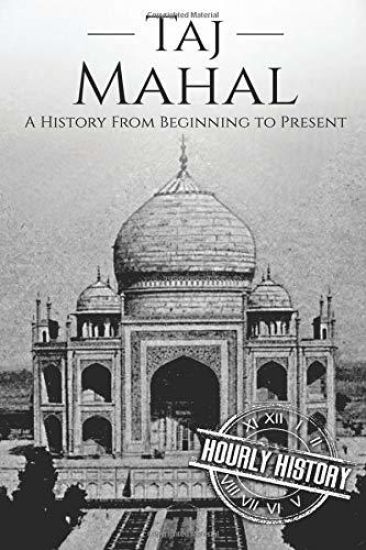
Taj Mahal: A History From Beginning to Present

Taj Mahal: A History From Beginning to Present

Hourly History

Createspace Independent Publishing Platform
2018
nidottu
Taj Mahal The Taj Mahal in Agra is arguably the most iconic image of India and is visited by eight million tourists annually. It was characterized as "pure, perfect and unutterably lovely" by the British Viceroy, Lord Curzon, and in 1983, UNESCO declared it a World Heritage Site of "outstanding universal value." For centuries the world has believed that it was built by Shah Jahan in 1631 to immortalize his love for his wife, Mumtaz Mahal. Certain mysteries and myths that surround the monument have recently come to the fore in the country, stimulating a public debate about the place it holds as a true representation of Indian culture. Inside you will read about... - The Life of Mumtaz Mahal: The Jewel of the Palace - The Building of the Taj Mahal - A UNESCO World Heritage Site - Myths, Conjecture, and Controversy - The 22 Locked Rooms in the Basement And much more This book presents the five main historical figures of the Mughal Empire in India during that period as well as many details of how the Taj Mahal was built. It traces the events that have led to the present controversy.
Mary Baker Eddy

Mary Baker Eddy

Hourly History

Independently Published
2019
pokkari
Mary Baker EddyMary Baker Eddy stands unique in our collective remembrances of supposed prophets of the bygone past. She was a girl that quite literally felt a calling at an early age when she thought she heard a supernatural voice call her name. Shortly thereafter she was intermittently beset with chronic illnesses and remarkable bouts of healing. Mary Baker Eddy did not claim to understand where her spontaneous remissions were coming from until much later in life; it was in old age, when no one expected Mary Baker Eddy to do much of anything except retire, that she entered into her great final act, and in doing so, she rocked the entire religious world to its core.Inside you will read about...✓ Healed by Prayer✓ Early Love and Loss✓ Separated from Her Son✓ Mary during the American Civil War✓ The Birth of Christian ScienceAnd much more Whether or not you believe her claims of healing and divine intervention, the story of Mary Baker Eddy, founder of the Church of Christ, Scientist, is a riveting one all the same.
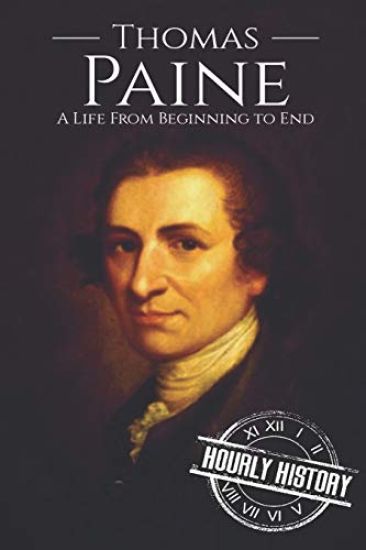
Thomas Paine

Thomas Paine

Hourly History

Independently Published
2019
pokkari
Thomas PaineThe mind of Thomas Paine was gifted to the American Revolution at just the right time. Right when the fervor of the revolutionary spirit was beginning to subside, the pen of Thomas Paine came along and ignited the fires of American liberty once again. Yet decades later, when Paine returned to the American shores that he helped liberate, he was met with a bitter homecoming. Paine had arrived right on the heels of his association with bloody upheavals in revolutionary France and the publication of his unapologetically anti-Christian tracts, which did go over well in an America swept by the Second Great Awakening. Both of these aspects of his intellectual life made him an insufferable outcast, shunned by nearly all of his former associates. But Thomas Paine always knew that life was a gamble, and depending on the factors involved he was variously known as the greatest hero of the republic, or the greatest villain. Inside you will read about...✓ On the Seas during the Seven Years' War✓ The Loss of His Wife and Child✓ The Father of the American Revolution✓ Rallying Behind the French Revolution✓ Escaping the Guillotine✓ An American OutcastAnd much more Now that the dust of history has finally begun to settle, we can get a much clearer view of who Thomas Paine was. This book seeks to cut through the hype and hyperbole to present to you the life of an unapologetic patriot and inveterate freethinker-Thomas Paine, the father of the American Revolution.
The Great Famine

The Great Famine

Hourly History

Independently Published
2019
pokkari
The Great FamineThe Great Famine which afflicted Ireland from 1845 to 1849 was one of the most catastrophic events in Europe during the nineteenth century. More than one-quarter of the population of Ireland died of starvation or associated disease, or were forced to emigrate. Ireland after the famine was a completely different country in many ways.The direct causes of the famine are simple to understand-a large part of the population of Ireland, mainly the poorest families, had become completely dependent on the potato as a source of food. In 1845, the blight appeared, a disease which affected the potato crop. Successive failures of the potato crop in Ireland led to more than one million people dying as a direct result.What is less easy to understand is why this famine was confined to Ireland and why the British government did not do more to help. The potato blight affected parts of Great Britain and other countries in Europe, but nowhere else did it lead to famine. For much of the famine, food continued to be exported from Ireland, and at its height, there was food stored in warehouses which could have been used to alleviate the suffering of the starving-that it was not represents at the very least a complete failure of understanding on the part of the British government. Inside you will read about...✓ Farming in Ireland✓ The Blight Arrives✓ Full-blown Famine✓ Mass Emigration✓ Poor Laws, Revolt, and the Return of the Blight✓ Aftermath and LegacyAnd much more The Great Famine left a legacy of distrust and animosity between large segments of the population of Ireland and Great Britain, and this in part led to the movements which finally produced Irish independence. The famine also left a deep impression on the psyche of the people of Eire, and even today, Ireland remains at the forefront of international famine relief.This is the story of the Irish Potato Famine.