Kirjojen hintavertailu. Mukana 11 342 296 kirjaa ja 12 kauppaa.

Kirjahaku

Etsi kirjoja tekijän nimen, kirjan nimen tai ISBN:n perusteella.

14 kirjaa tekijältä Howard Caygill

Walter Benjamin

Walter Benjamin

Howard Caygill

Routledge
1997
sidottu
This book analyses the development of Benjamin's concept of experience in his early writings showing that it emerges from an engagement with visual experience, and in particular the experience of colour.
Walter Benjamin

Walter Benjamin

Howard Caygill

Routledge
1997
nidottu
This book analyzes the development of Walter Benjamin's concept of experience in his early writings showing that it emerges from an engagement with visual experience, and in particular the experience of colour. It represents Benjamin as primarily a thinker of the visual field.
Levinas and the Political

Levinas and the Political

Howard Caygill

Routledge
2002
sidottu
Howard Caygill systematically explores for the first time the relationship between Levinas' thought and the political. From Levinas' early writings in the face of National Socialism to controversial political statements on Israeli and French politics, Caygill analyses themes such as the deconstruction of metaphysics, embodiment, the face and alterity. He also examines Levinas' engagement with his contemporaries Heidegger and Bataille, and the implications of his rethinking of the political for an understanding of the Holocaust.
Levinas and the Political

Levinas and the Political

Howard Caygill

Routledge
2002
nidottu
Howard Caygill systematically explores for the first time the relationship between Levinas' thought and the political. From Levinas' early writings in the face of National Socialism to controversial political statements on Israeli and French politics, Caygill analyses themes such as the deconstruction of metaphysics, embodiment, the face and alterity. He also examines Levinas' engagement with his contemporaries Heidegger and Bataille, and the implications of his rethinking of the political for an understanding of the Holocaust.
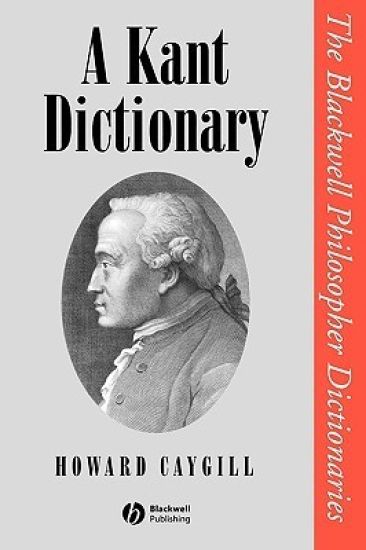
A Kant Dictionary

A Kant Dictionary

Howard Caygill

Blackwell Publishers
1995
sidottu
In this new lexical survey of Kant's works, Howard Caygill presents Kantian concepts and terminology in terms that will introduce and clarify his ideas for students and general readers alike.
A Kant Dictionary

A Kant Dictionary

Howard Caygill

Blackwell Publishers
1995
nidottu
In this new lexical survey of Kant's works, Howard Caygill presents Kantian concepts and terminology in terms that will introduce and clarify his ideas for students and general readers alike.
Walter Benjamin

Walter Benjamin

Howard Caygill

Routledge
2016
sidottu
This book analyzes the development of Walter Benjamin's concept of experience in his early writings showing that it emerges from an engagement with visual experience, and in particular the experience of colour. It represents Benjamin as primarily a thinker of the visual field.
The Aesthetics of Madness

The Aesthetics of Madness

Howard Caygill

BLOOMSBURY PUBLISHING PLC
2025
nidottu
This crucial history explores the role of philosophical thought in transforming the way that artwork emerging from mental hospitals in the early 20th century was treated. At first seen purely as a documentation of patients’ symptoms, these expressions of creativity and often resistance gradually came to be assessed as art objects in their own right.Howard Caygill plots the philosophical re-evaluation of the art of the mentally ill, from the reforms in psychiatric classification at the turn of the 19th century to the new aesthetic categories of Art Brut, Art Fou, and Artaud’s theatre of cruelty some fifty years later. Shifting focus from the work of the ‘illustrious mad’ like August Strindberg and Friedrich Nietzsche to the outpouring of work by anonymous patients shows how philosophy responded to the challenge that these artworks posed to the existing aesthetic structures. While this period of unprecedented creative output from an unfamiliar source reshaped ideas of resistance and authenticity in art, it was relatively short-lived. The book concludes with Foucault’s and Heidegger’s visits to the asylums at Munsterlingen, Bellevue and Zollikon in the 1950s, as the advent of increasingly pharmacological treatment marked the end of what had become known as ‘mad art’.
The Aesthetics of Madness

The Aesthetics of Madness

Howard Caygill

BLOOMSBURY PUBLISHING PLC
2025
sidottu
This crucial history explores the role of philosophical thought in transforming the way that artwork emerging from mental hospitals in the early 20th century was treated. At first seen purely as a documentation of patients’ symptoms, these expressions of creativity and often resistance gradually came to be assessed as art objects in their own right.Howard Caygill plots the philosophical re-evaluation of the art of the mentally ill, from the reforms in psychiatric classification at the turn of the 19th century to the new aesthetic categories of Art Brut, Art Fou, and Artaud’s theatre of cruelty some fifty years later. Shifting focus from the work of the ‘illustrious mad’ like August Strindberg and Friedrich Nietzsche to the outpouring of work by anonymous patients shows how philosophy responded to the challenge that these artworks posed to the existing aesthetic structures. While this period of unprecedented creative output from an unfamiliar source reshaped ideas of resistance and authenticity in art, it was relatively short-lived. The book concludes with Foucault’s and Heidegger’s visits to the asylums at Munsterlingen, Bellevue and Zollikon in the 1950s, as the advent of increasingly pharmacological treatment marked the end of what had become known as ‘mad art’.
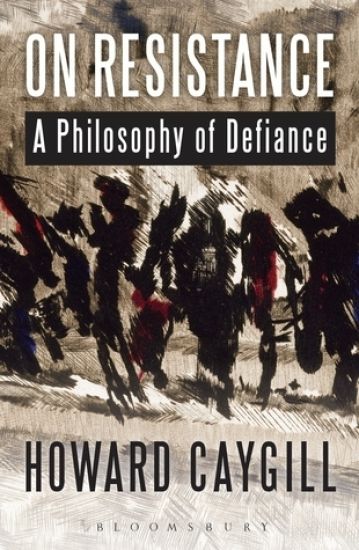
On Resistance

On Resistance

Howard Caygill

Bloomsbury Academic
2013
sidottu
No word is more central to the contemporary political imagination and action than ‘resistance’. In its various manifestations - from the armed guerrilla to Gandhian mass pacifist protest, from Wikileaks and the Arab Spring to the global eruption and violent repression of the Occupy movement - concepts of resistance are becoming ubiquitous and urgent. In this book, Howard Caygill conducts the first ever systematic analysis of ‘resistance’: as a means of defying political oppression, in its relationship with military violence and its cultural representation. Beginning with the militaristic doctrine of Clausewitz and the evolution of a new model of guerrilla warfare to resist the forces of Napoleonic France, On Resistance elucidates and critiques the contributions of seminal resistant thinkers from Marx and Nietzsche to Mao, Gandhi, Sartre and Fanon to identify continuities of resistance and rebellion from the Paris Commune to the Greenham Women’s Peace Camp. Employing a threefold line of inquiry, Caygill exposes the persistent discourses through which resistance has been framed in terms of force, violence, consciousness and subjectivity to evolve a critique of resistance. Tracing the features of resistance, its strategies, character and habitual forms throughout modern world history Caygill identifies the typological consistencies which make up resistance. Finally, by teasing out the conceptual nuances of resistance and its affinities to concepts of repression, reform and revolution, Caygill reflects upon contemporary manifestations of resistance to identify whether the 21st century is evolving new understandings of protest and struggle.
On Resistance

On Resistance

Howard Caygill

Bloomsbury Academic
2015
nidottu
No word is more central to the contemporary political imagination and action than ‘resistance’. In its various manifestations - from the armed guerrilla to Gandhian mass pacifist protest, from Wikileaks and the Arab Spring to the global eruption and violent repression of the Occupy movement - concepts of resistance are becoming ubiquitous and urgent. In this book, Howard Caygill conducts the first ever systematic analysis of ‘resistance’: as a means of defying political oppression, in its relationship with military violence and its cultural representation. Beginning with the militaristic doctrine of Clausewitz and the evolution of a new model of guerrilla warfare to resist the forces of Napoleonic France, On Resistance elucidates and critiques the contributions of seminal resistant thinkers from Marx and Nietzsche to Mao, Gandhi, Sartre and Fanon to identify continuities of resistance and rebellion from the Paris Commune to the Greenham Women’s Peace Camp. Employing a threefold line of inquiry, Caygill exposes the persistent discourses through which resistance has been framed in terms of force, violence, consciousness and subjectivity to evolve a critique of resistance. Tracing the features of resistance, its strategies, character and habitual forms throughout modern world history Caygill identifies the typological consistencies which make up resistance. Finally, by teasing out the conceptual nuances of resistance and its affinities to concepts of repression, reform and revolution, Caygill reflects upon contemporary manifestations of resistance to identify whether the 21st century is evolving new understandings of protest and struggle.
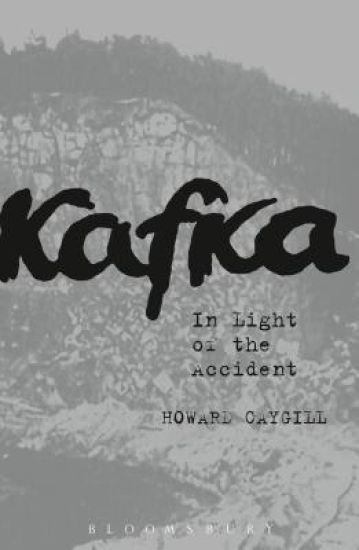
Kafka

Kafka

Howard Caygill

Bloomsbury Academic
2017
sidottu
By challenging many of the assumptions, misguided presuppositions and even legends that have surrounded the legacy and reception of Franz Kafka’s work during the 20th century, Howard Caygill provides us with a radical new way of reading Kafka. Kafka: In the Light of the Accident advances a unique philosophical interpretation via the pivotal theme of the accident, understood both philosophically and in a broader cultural context, that includes the philosophical and sociological basis of accident insurance and the understanding of the concepts of chance and necessity. Caygill reveals how Kafka’s reception was governed by a series of accidents - from the order of Max Brod’s posthumous publication of the novels and the correction of ‘misprints’, to many other posthumous editorial strategies. The focus on the accident casts light on the role of media in Kafka’s work, particularly visual media and above all photography. By stressing the role of contingency in his authorship, Caygill also fundamentally questions the 20th century view of Kafka’s work as ‘kafkaesque’. Instead of a narration of domination, Kafka: In the Light of the Accident argues that Kafka’s work is best read as a narration of defiance, one which affirms (often comically) the role of error and contingency in historical struggle. Kafka’s defiance is situated within early 20th century radical culture, with particular emphasis lent to the roles of radical Judaism, the European socialist and feminist movements, and the subaltern histories of the United States and China.